Researchers using CERN and UK laboratories found metal-rich meteorite samples became stronger after exposure to 27 intense proton-beam pulses, showing increased yield strength and a self-stabilizing damping response. The results suggest that, for certain metal-rich asteroids, a larger nuclear device might deflect rather than catastrophically fragment the body—keeping nuclear deflection as a possible emergency option for very large objects or short warning times. The study applies so far only to specific materials; follow-up tests on more complex rocks (like pallasites) and observational data from Apophis’s 2029 flyby will be critical.
Lab Tests Reopen Nuclear Option For Asteroid Deflection — Metal-Rich Rocks May Resist Fragmentation
Getty / Futurism
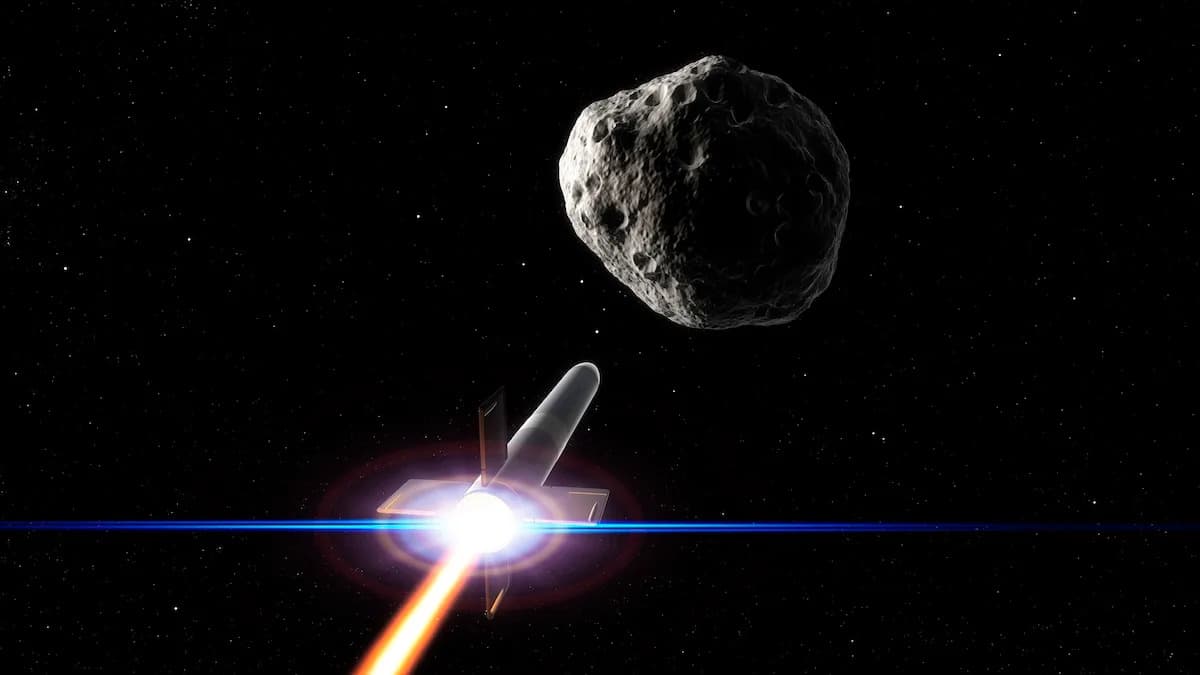
Scientists revisited the controversial idea of using a nuclear device as an emergency option to deflect a planet-threatening asteroid and report surprising laboratory results that could change how we evaluate that choice.
What the Study Did
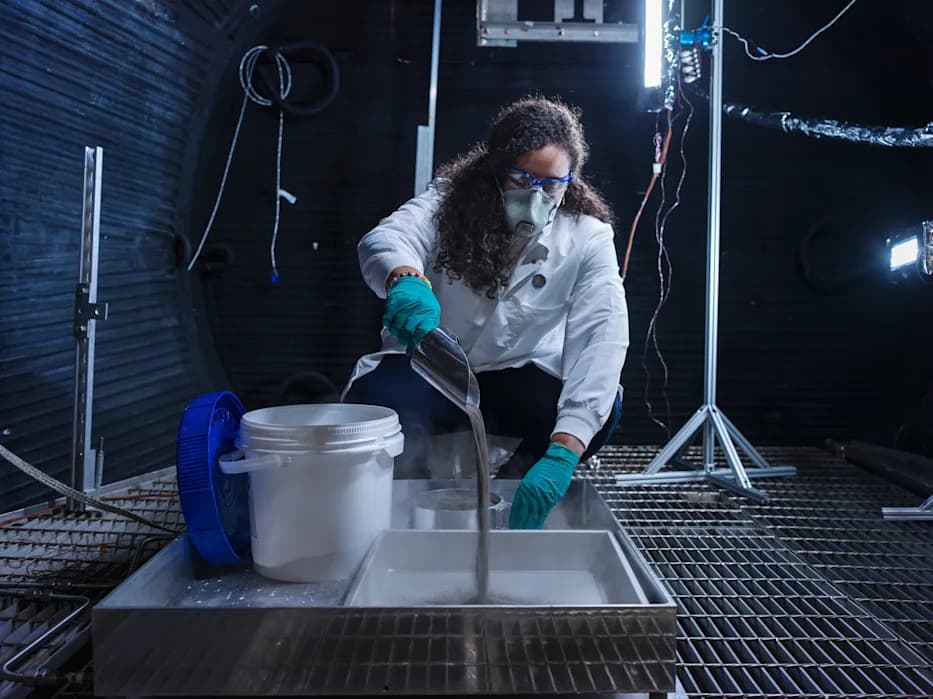
An international research team, including scientists from CERN and the University of Oxford, published new work in Nature Communications that combines large-scale simulations of nuclear deflection with experiments on meteorite material. The team exposed samples of a metal-rich meteorite to 27 short, intense pulses of a proton beam at CERN’s HiRadMat facility and then examined microscopic changes at the ISIS Neutron and Muon Source at the Rutherford Appleton Laboratory (UK).
Key Findings
Contrary to common intuition, the treated meteorite samples showed an increase in yield strength and exhibited self-stabilizing damping behavior rather than catastrophic fragmentation. In other words, the metal-rich material became tougher after extreme, rapid stress, suggesting some asteroids might survive—or at least avoid shattering—from certain high-energy interventions.
“Planetary defense represents a scientific challenge,” said Karl-Georg Schlesinger, cofounder of nuclear-deflection startup Outer Solar System Company (OuSoCo). “The world must be able to execute a nuclear deflection mission with high confidence, yet cannot conduct a real-world test in advance.”
OuSoCo cofounder Melanie Bochmann added that, for metal-rich targets, a larger device than previously modeled might be usable without turning a single large threat into an uncontrollable cloud of dangerous fragments.
Context And Caveats
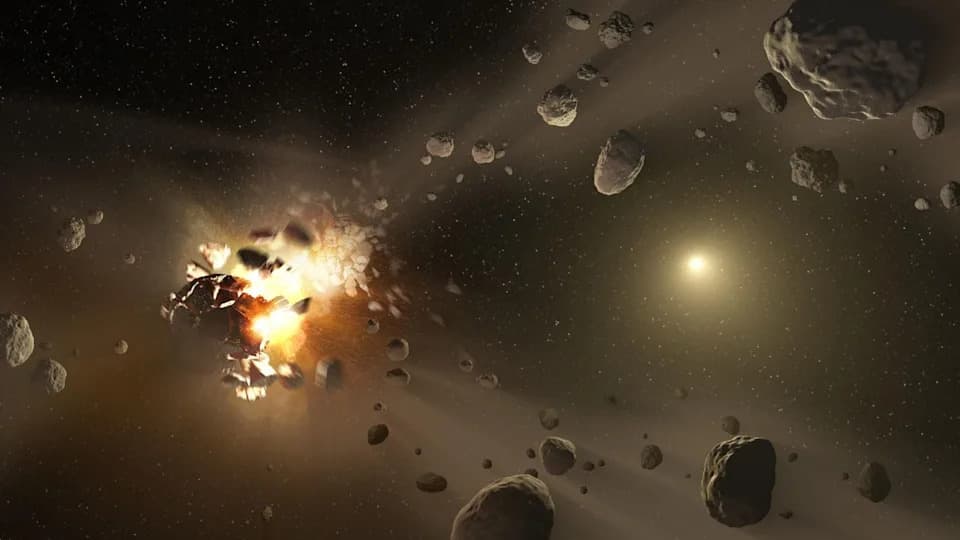
This result applies so far to metal-rich meteorite analogues and to the specific experimental conditions used. The researchers caution that many asteroids are rocky or rubble piles with very different internal structures; fragmentation risks remain significant for those. The study does not advocate deploying nuclear weapons lightly—rather, it updates the physics models used to assess extreme, last-resort options when warning times are extremely short or the object is very large.
Why This Matters
Non-nuclear mitigation options, like NASA’s DART kinetic-impact test in 2022, remain the preferred, lower-risk approaches when time and target knowledge allow. But the new findings keep nuclear deflection on the table as a potential emergency tool for specific, high-risk scenarios.
Next Steps
The team plans to test more compositionally complex meteorites such as pallasites—metal matrices containing centimeter-scale magnesium-rich crystals—that better represent certain asteroid interiors. Observationally, NASA and ESA will study the large near-Earth asteroid Apophis during its unusually close 2029 flyby (roughly 20,000 miles), which will provide valuable data on composition, structure, and risk assessment.
Broader Implications
Beyond planetary defense, studying how metal-rich samples respond to extreme stress can shed light on early planetary formation processes. Pallasites and similar meteorites are thought to form near core–mantle boundaries of early planetesimals, so these experiments could inform models of planetary differentiation.
Bottom line: For some metal-rich asteroids, a sufficiently large, well-characterized energetic intervention may deflect rather than fragment the body—keeping nuclear deflection as a narrowly defined emergency option pending more data.
Help us improve.