Summary: NASA plans to launch four astronauts on Artemis II aboard the Orion capsule despite a known vulnerability in its Avcoat heat shield discovered after the uncrewed Artemis I flight in 2022. Investigation shows low permeability and trapped gases caused spalling and cracking; NASA will use a modified "loft" reentry profile and improved manufacturing for future shields to mitigate risk. Experts remain divided—some support flying after detailed analysis, while others urge postponement until the design is fully validated.
NASA To Fly Artemis II Despite Known Orion Heat‑Shield Flaw — Experts Split Over Crew Safety
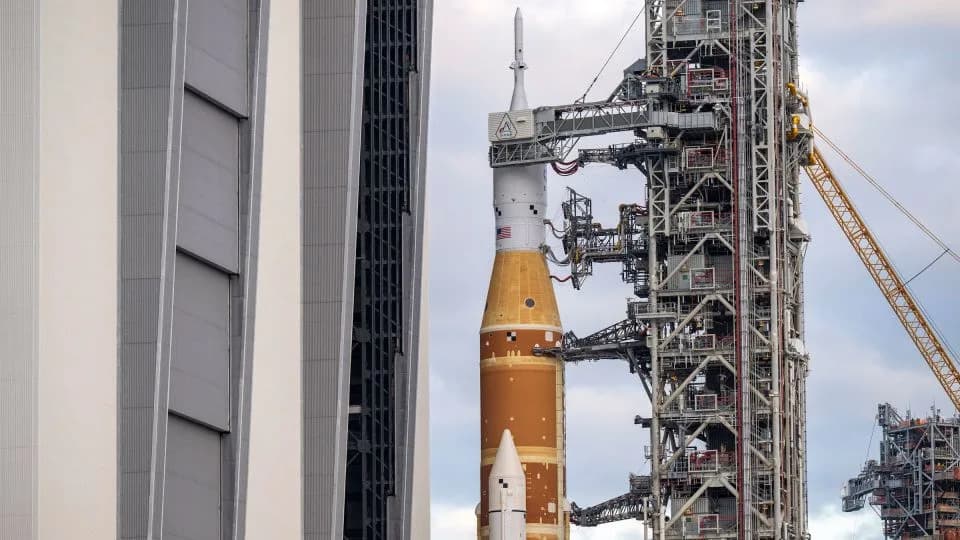
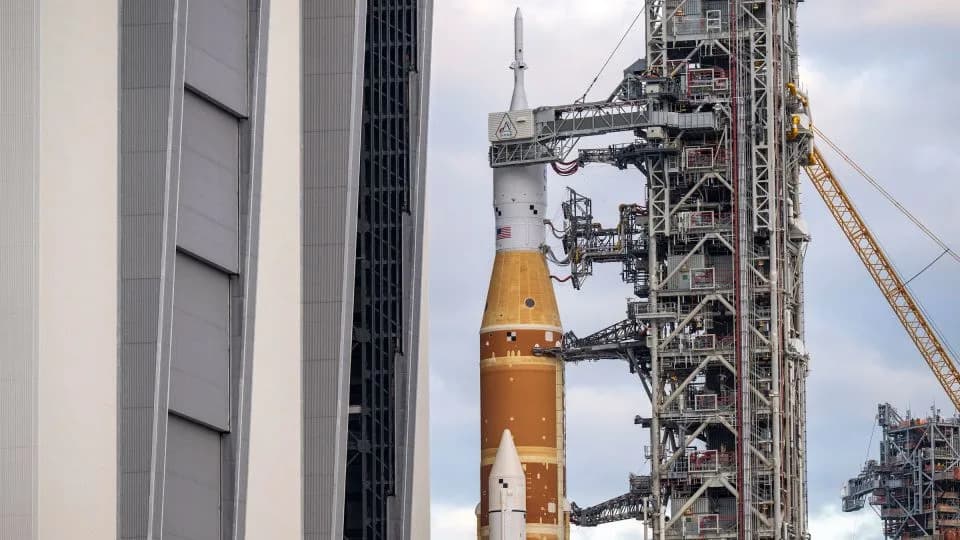
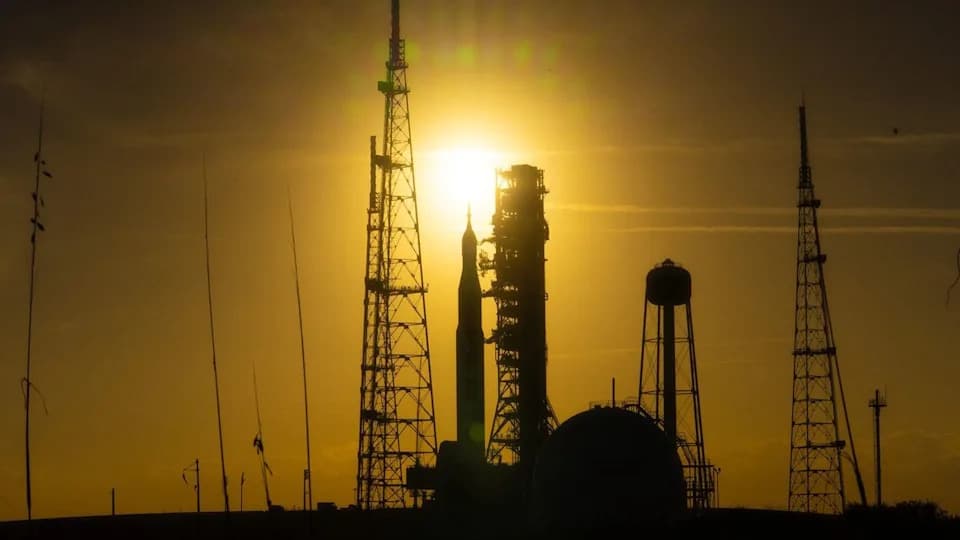
NASA’s Orion spacecraft, which sits atop the Space Launch System rocket for liftoff, are seen at Kennedy Space Center in Florida on January 17. - Keegan Barber/NASA
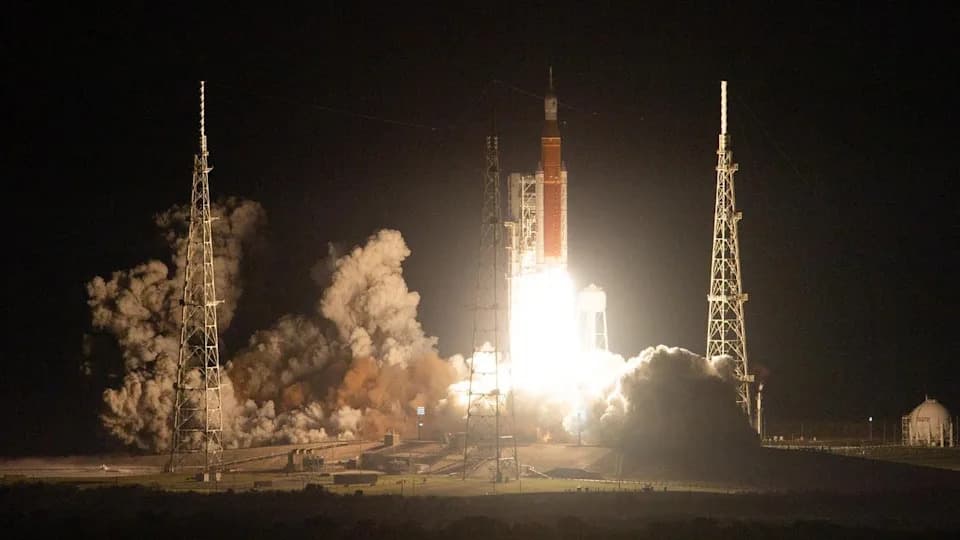
As soon as February 6, four astronauts are scheduled to fly around the Moon aboard NASA’s 16.5-foot-wide Orion spacecraft on the Artemis II mission — even though the vehicle carries a known vulnerability in its heat shield that emerged after the uncrewed Artemis I flight in 2022. NASA leaders say they understand the issue, have adjusted the mission profile, and are confident the crew can return safely. Some former NASA engineers and heat‑shield specialists strongly disagree.
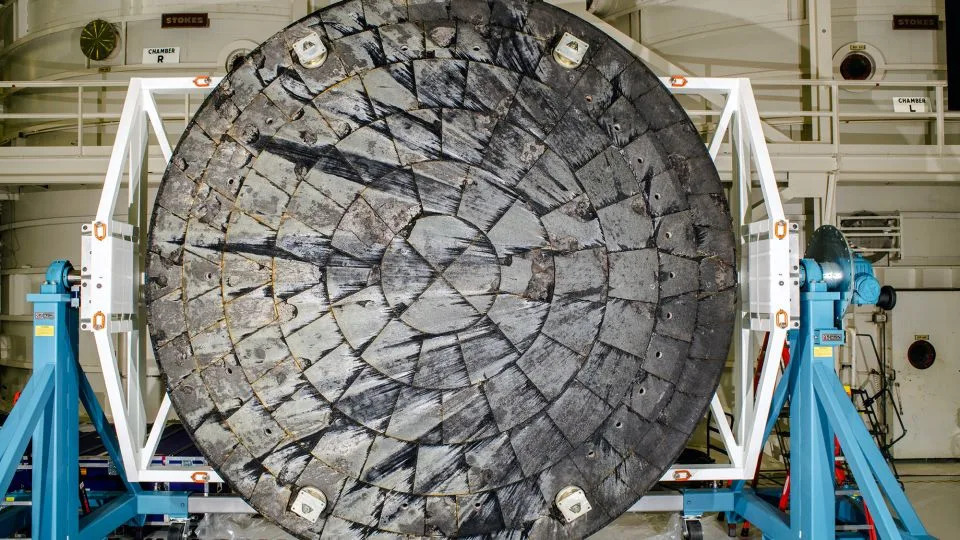
At the conclusion of the Artemis I test flight, the recovered Orion spacecraft was transported to Kennedy Space Center, where its heat shield was removed and inspected. - NASA
What went wrong on Artemis I
The concern centers on Orion’s lower surface: the Avcoat ablative heat shield. Avcoat is designed to char and erode in a controlled way as a crew capsule reenters the atmosphere at lunar return speeds, where external temperatures can exceed 5,000°F (about 2,760°C). After Artemis I, engineers found chunks of Avcoat had broken away and the heat shield bore unexpected divots and cracking — behavior inconsistent with normal, controlled ablation.

The Artemis II crew: Canadian Space Agency's Jeremy Hansen and NASA's Christina Koch, Victor Glover and Reid Wiseman, seen in November 2023. - NASA
NASA’s investigation concluded the primary cause was low permeability in the Avcoat used on Artemis I. During reentry, gases produced by heating accumulated beneath the material, creating pressure that contributed to spalling (large pieces breaking away) and cracks. That finding was broadly accepted by independent reviewers and technical experts interviewed in the subsequent probe.
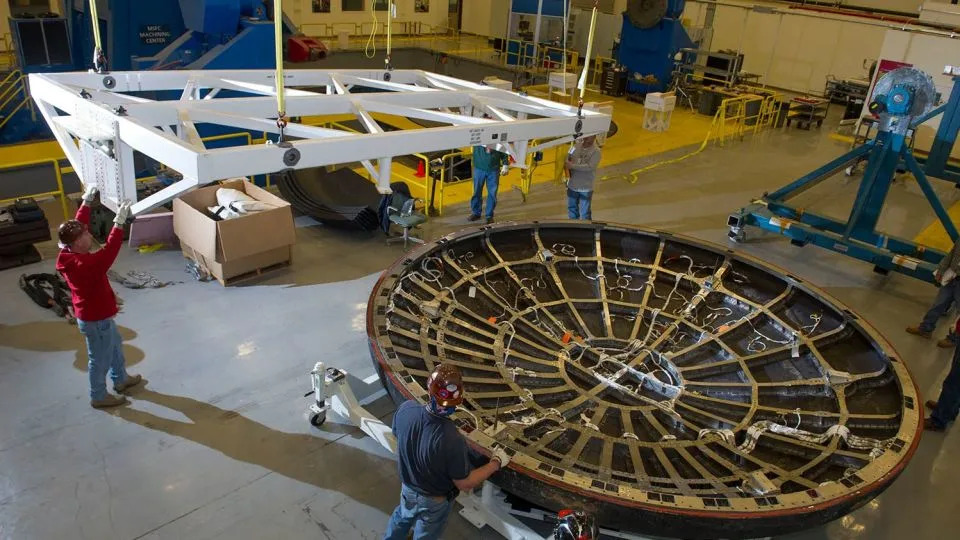
For the first test flight of Orion, the heat shield ablative material reached temperatures of about 4,000 degrees Fahrenheit (2,200 degrees Celsius). - Emmett Given/NASA/MSFC
Design and manufacturing choices
The current Artemis heat shield departs from Apollo‑era practices. Early Orion tests used a honeycomb application of Avcoat similar to Apollo, but that method proved labor intensive. To improve producibility, program managers moved to a block‑style Avcoat application that is easier to manufacture and install.
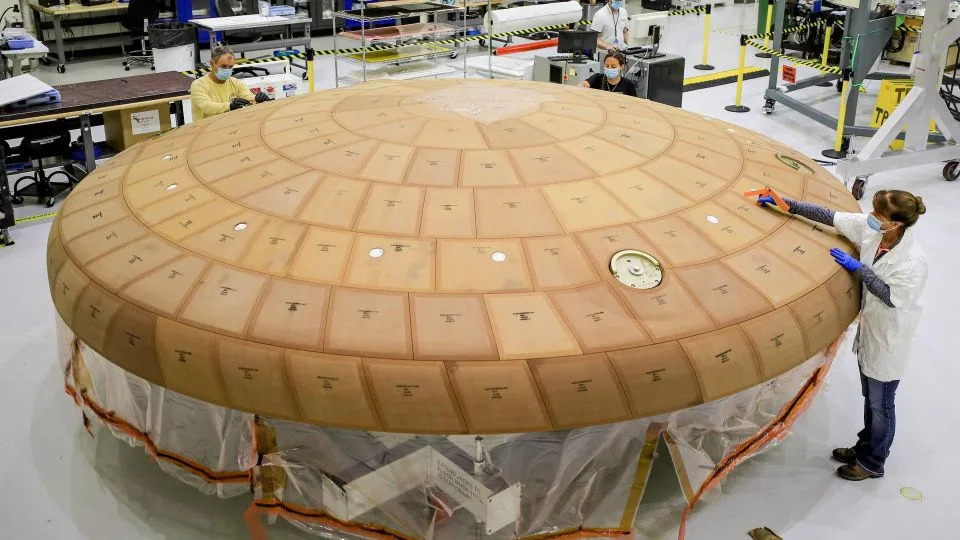
An Orion heat shield configured using the block structure is seen. - Isaac Watson/NASA
Textron Systems licensed Avcoat production to Lockheed Martin, which altered the Avcoat structure to increase manufacturing efficiency. Lockheed Martin and NASA say blocks simplified production and drew on prior experience with block designs used on Mars missions.
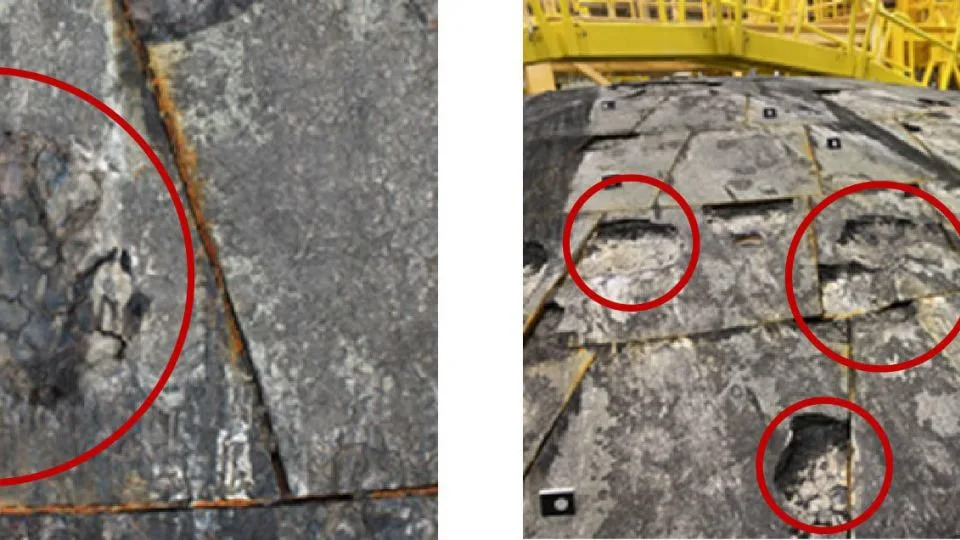
Images show the heat shield post-Artemis I mission, including cavities resulting from the loss of large chunks of the heat shield during reentry. - NASA
Why Artemis II will fly with the existing shield
Because Artemis II’s heat shield was already installed before Artemis I flew, replacing it was not feasible in the available schedule. After a yearlong investigation and a series of lab tests and analyses, NASA convened a Tiger Team to model the damage mechanisms and to test mitigation strategies.
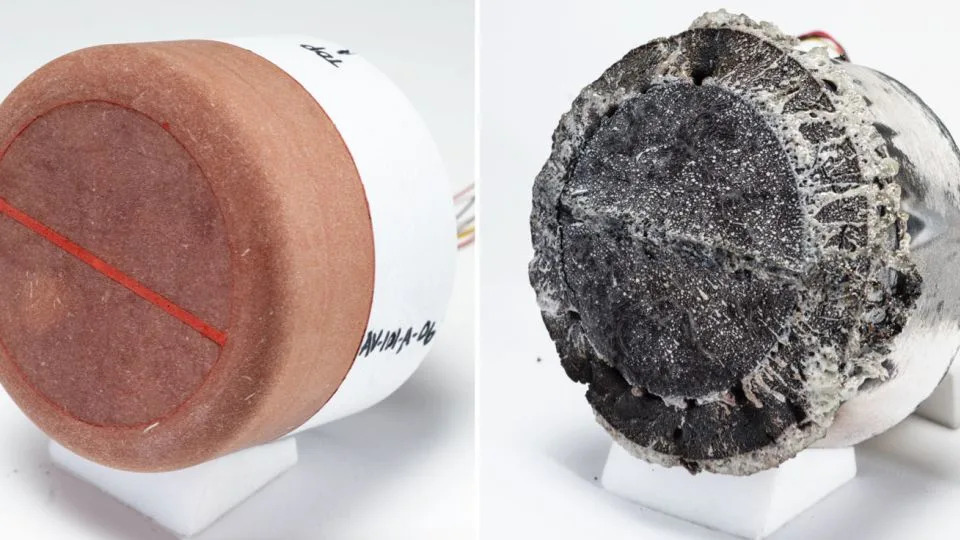
Before and after photographs show test results of heating Avcoat material for 660 seconds. - NASA
Instead of replacing the shield, NASA plans to modify the reentry trajectory for Artemis II — trading the higher "skip" reentry for a lower "loft" profile — to avoid the aerothermal conditions that produced the Artemis I damage. Program leaders say the adjusted trajectory, combined with a detailed understanding of Avcoat behavior and validated modeling, restores sufficient safety margin for crewed flight.
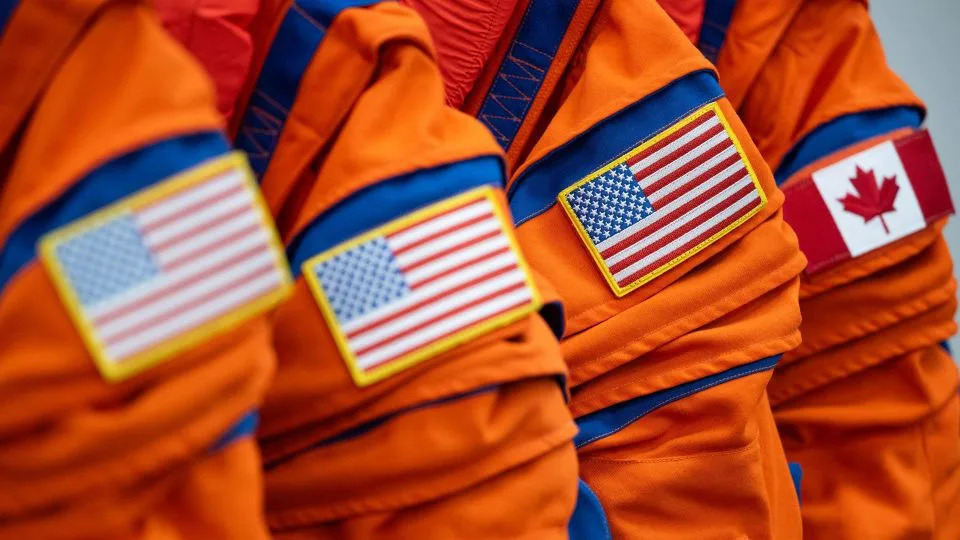
The flags of the United States and Canada are seen on the left shoulder of the Orion Crew Survival System suits on January 17 at Kennedy Space Center. - Joel Kowsky/NASA
"This is a deviant heat shield," said Dr. Danny Olivas, a former NASA astronaut who served on an independent review team. "There’s no doubt about it: This is not the heat shield that NASA would want to give its astronauts." But after reviewing the Tiger Team’s analysis, Olivas said he believes engineers now have "their arms around the problem."
Experts divided
Opinions among former NASA personnel and heat‑shield experts are split. Some — including members of the investigation team and program leaders — say the combination of analysis, lab testing and the revised reentry profile makes Artemis II acceptably safe. Reid Wiseman, the mission commander, and other NASA officials have expressed confidence in the plan.
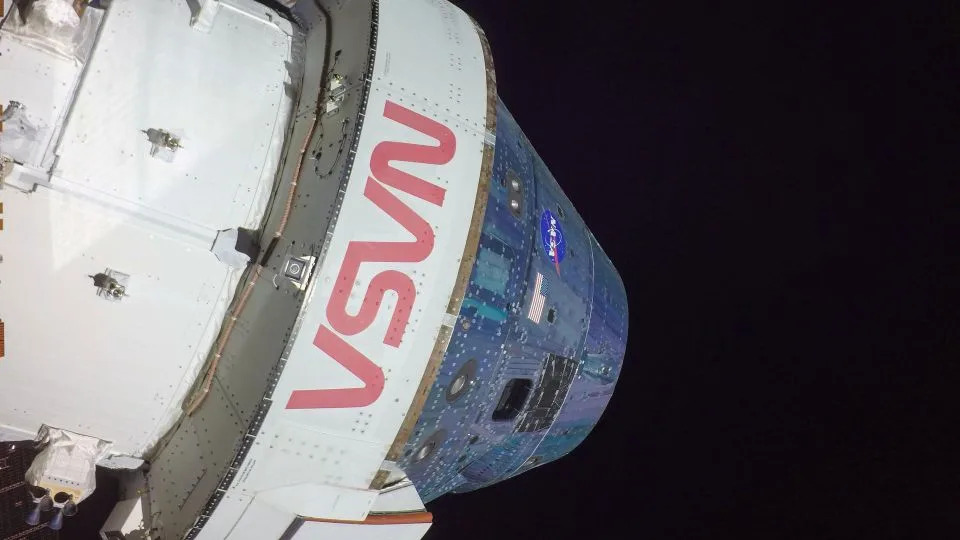
On the fifth day of the Artemis I mission, a camera on the tip of one of Orion’s solar arrays captures the spacecraft with the moon beyond in November 2022. - NASA
Others, including Dr. Charlie Camarda and Dr. Dan Rasky, argue NASA is taking unacceptable risk by flying crew before the shield design is fully validated. Camarda criticizes the analysis tool the Tiger Team used — the Crack Indication Tool (CIT) —calling it too simplistic to predict crack growth and the complex interactions of heat, gas production and mechanical stresses. He and other former employees worry that a successful flight could validate management decisions without addressing underlying design uncertainties.
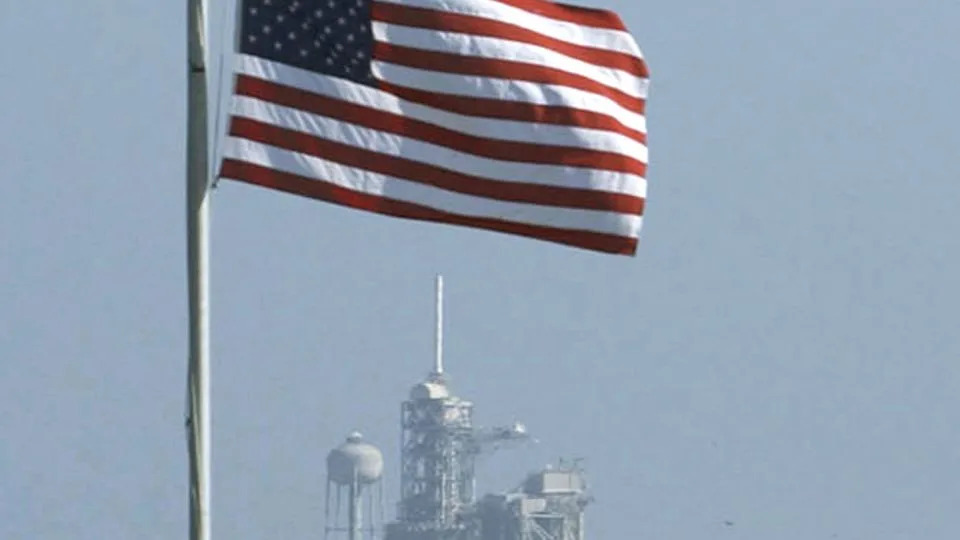
The American flag is lowered to half staff at the press site with launchpad 39A in the background, at Kennedy Space Center on February 1, 2003, following the Space Shuttle Columbia disaster. - Duffin McGee/Reuters
Technical safeguards and remaining uncertainties
Engineers point to additional safeguards: beneath the Avcoat layer is a composite structure that testing shows can briefly tolerate extreme reentry heating. While that composite was not designed as a backup heat shield, investigators say its presence provides an extra margin if Avcoat performance degrades more than expected.
Still, experts acknowledge uncertainties. Avcoat changes phase and chemistry rapidly during reentry, and lab data are limited. The Artemis II heat shield is reportedly less permeable than Artemis I’s: about 6% of Artemis I’s surface had intentionally permeable areas (which did not show cracking); Artemis II’s shield has no such permeable regions. NASA plans to manufacture future Artemis shields with improved permeability and upgraded techniques.
Program tradeoffs and culture
Critics frame the dispute as a broader tension within NASA between engineering caution and program schedules, budgets and political expectations. Some former employees say risk‑assessment processes and cultural pressures can favor continuing missions rather than pausing to redesign hardware. NASA maintains safety is its top priority and says the decision to proceed with Artemis II was made after careful technical review.
What’s next
The Orion capsule was rolled to the launch pad atop the Space Launch System rocket on January 17. Program leaders are conducting final risk assessments and a flight readiness review to determine whether the rocket and spacecraft are cleared to fly with the Artemis II crew: Reid Wiseman, Victor Glover and Christina Koch from NASA, and Jeremy Hansen from the Canadian Space Agency.
Whether Artemis II launches will hinge on the flight readiness review and NASA leadership’s willingness to accept the assessed risks. If the mission proceeds and returns safely, it may ease pressure on program schedules — but some former experts warn that a successful outcome should not substitute for deeper design and cultural fixes.
Bottom line: NASA faces a difficult choice between flying a crew on a tightly scheduled mission using a known, partially understood heat‑shield configuration and delaying to implement more definitive design changes. Engineers who studied the problem say the risks have been reduced; skeptics say unknowns remain.
Help us improve.