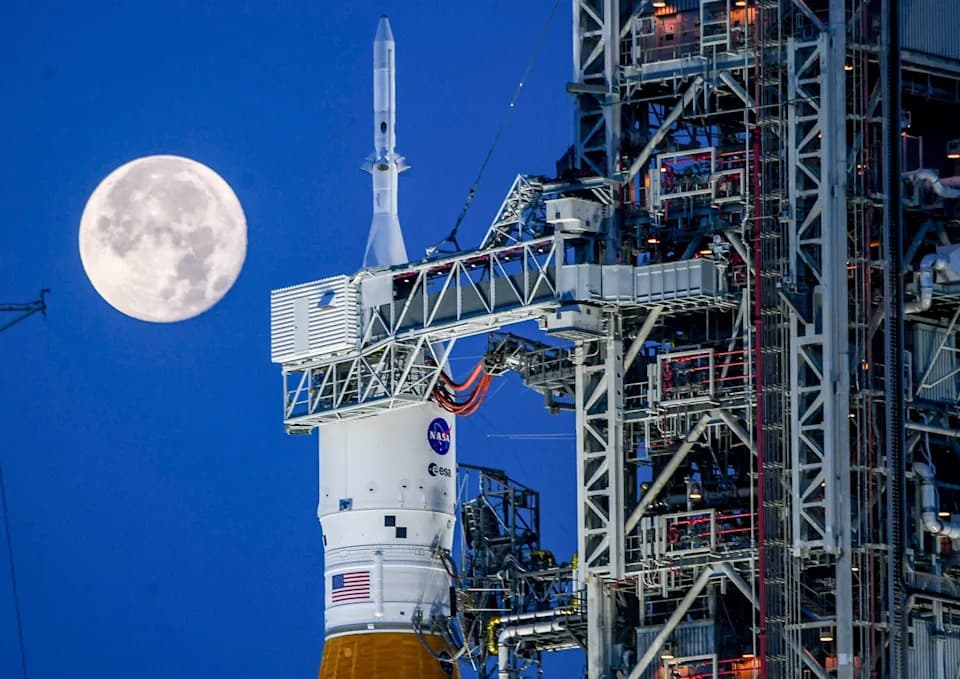
The article explains NASA's multi-decade effort to solve the lunar dust problem with an electrodynamic dust shield (EDS). The moon's regolith is ultrafine, abrasive and electrically active, posing health and hardware risks seen during Apollo. The EDS uses alternating Coulomb and dielectrophoretic forces to eject dust and has shown up to 99% clearance in tests, including trials on the ISS and a successful demonstration on the moon via Blue Ghost Mission 1 in March 2025. Its flexibility makes it a leading candidate to protect cameras, radiators, solar panels and suit fabrics on Artemis missions.
How NASA Plans to Beat Moon Dust — The Electrodynamic Shield That Could Save Artemis
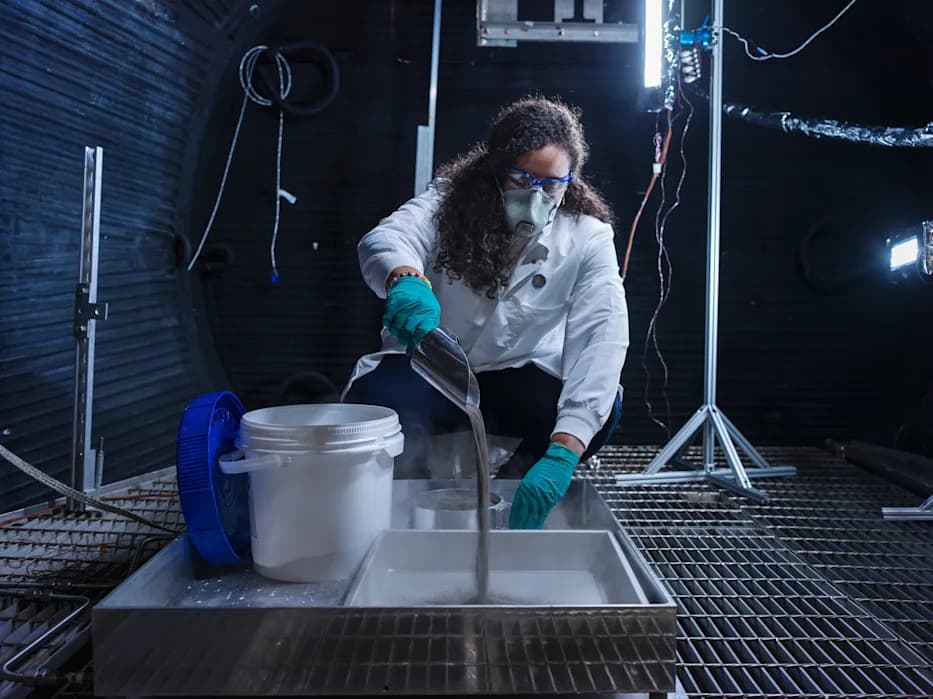
Amy Fritz, a dust-mitigation researcher at Johnson Space Center, pours simulated lunar dust into a bed tray for testing hardware in a 15-foot dusty thermal vacuum chamber.
Inside NASA's Johnson Space Center in Houston, a cluster of laboratories nicknamed the "dirty labs" is dedicated to one of the agency's most stubborn problems: lunar dust. Hidden behind corridors, in large hangars and sealed rooms, scientists study a fine, gray-black simulant that mimics the moon's regolith. Visitors are sometimes invited to plunge a bare hand into a translucent container and feel what astronauts must face on the lunar surface.
The simulant feels like talc but far more adhesive and abrasive. A hand withdrawn from it remains coated; brushing and shaking do little to remove the powder. That sensation is intentional: the material is produced by pulverizing basaltic volcanic rock to replicate the jagged, electrostatically active grains found on the moon.
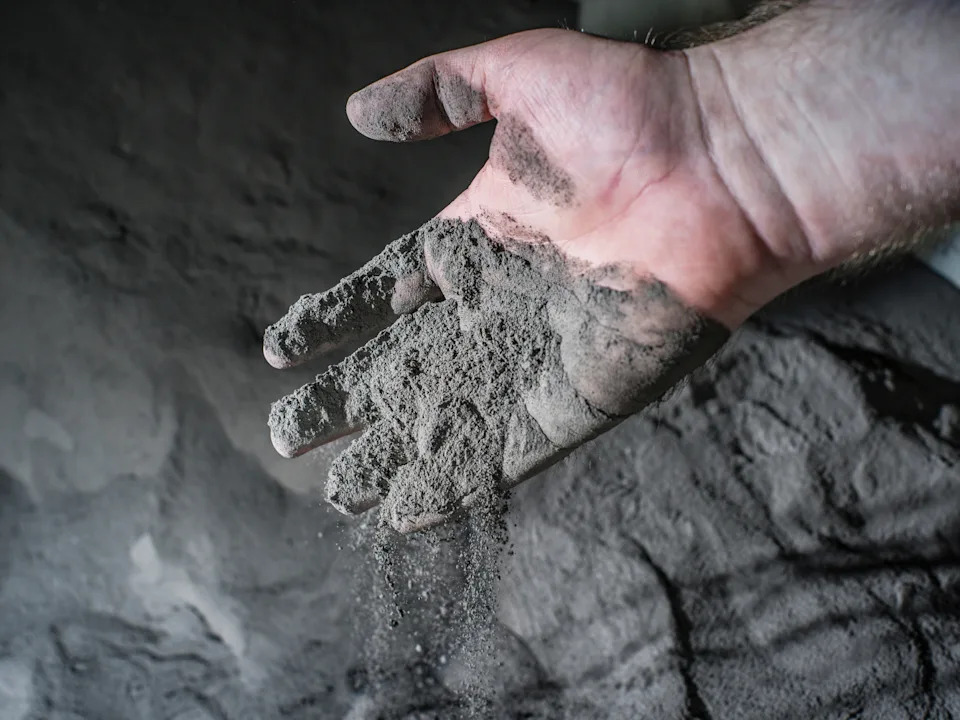
Fine particles of simulated moon dust cling to a human hand, illustrating one of the fundamental challenges of lunar regolith—its tendency to adhere to nearly everything it touches.
Why Lunar Dust Is Dangerous
The lunar surface is an ancient volcanic desert. Billions of years of lava flows and relentless micrometeorite impacts have ground rock and glass into ultrafine, razor-edged particles. When disturbed or exposed to radiation, many grains become electrically charged, allowing them to levitate and to cling stubbornly to astronauts and equipment.
"It’s very, very sharp. It’s very aggravating and agitating. It gets everywhere," says Amy Fritz, a dust-mitigation researcher at Johnson Space Center.
During Apollo, inhaled regolith caused a condition nicknamed "lunar hay fever": sneezing, nasal congestion and a pervasive smell of burned gunpowder. The dust also abrades and corrodes hardware—vacuum seals, boots, and suit fabrics showed rapid wear. Cleaning tools such as brushes often made things worse by electrostatically charging and redistributing the grains.
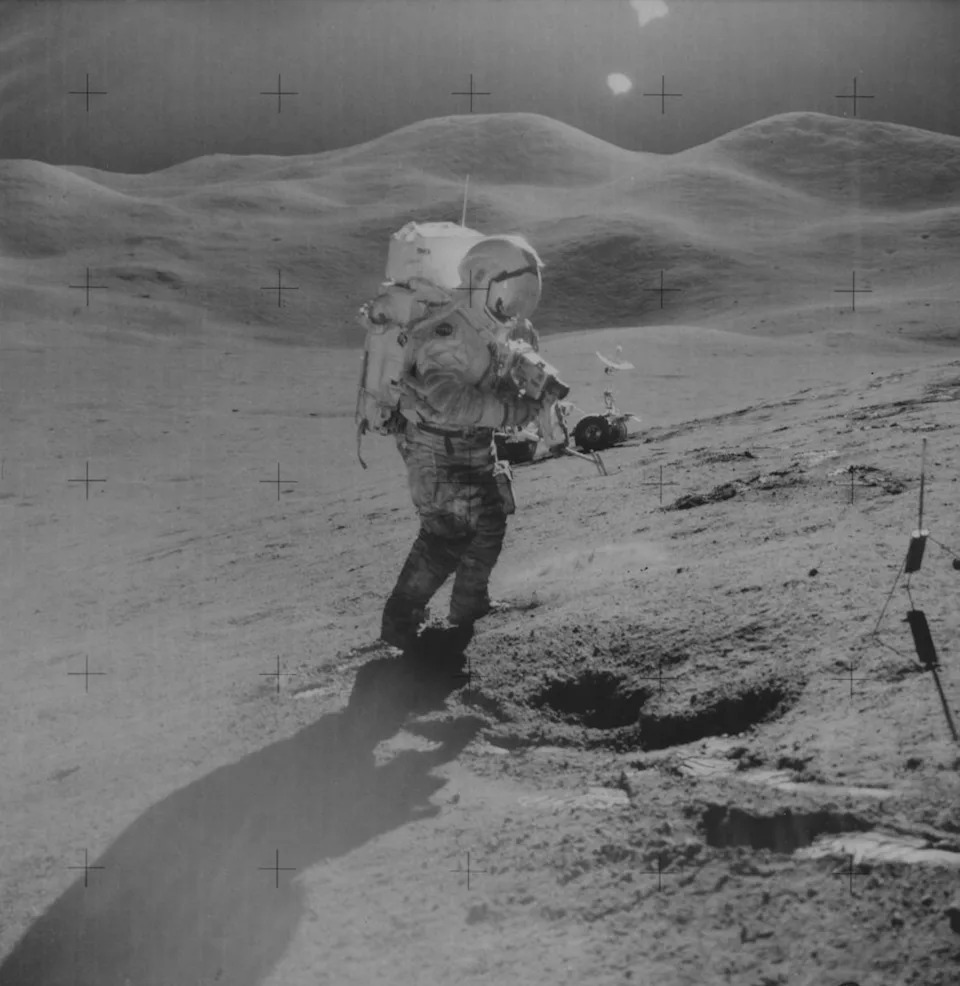
Mission Commander David R. Scott gets lunar dust all over his spacesuit during Apollo 15 in 1971.
The Electrodynamic Dust Shield (EDS)
To protect Artemis astronauts and their gear, NASA has developed several countermeasures. The most promising is the electrodynamic dust shield (EDS): a thin, transparent grid of electrodes that can be layered onto or woven into surfaces. Powered by a small battery or solar feed and activated with a switch, the EDS uses time-varying electric fields to eject adhered dust into space.
The EDS exploits two complementary electrical effects:
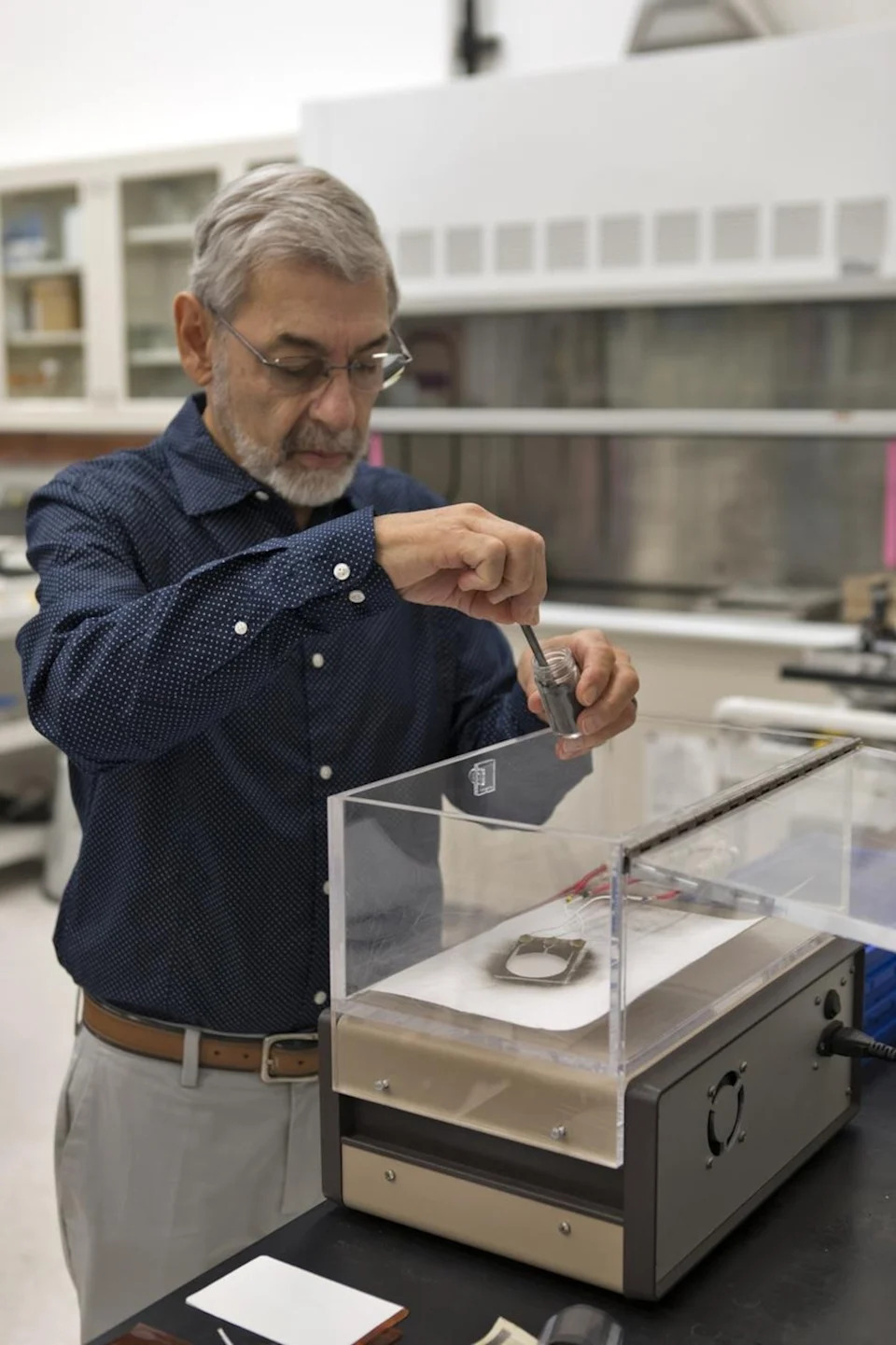
Dr. Carlos Calle, lead scientist in the Electrostatics and Surface Physics Laboratory at NASA's Kennedy Space Center in Florida, prepares an Electrostatic Dust Shield for testing on Thursday, July 19, 2018. Scientists are developing the Electrostatic Dust Shield to help mitigate the problem of dust on equipment, astronauts' space suits and helmet visors of astronauts exploring the Moon or Mars. The device is slated for analysis aboard International Space Station in the spring of 2019 to verify the effects of the space environment. Photo : NASA
- Coulomb Forces: Charged particles experience attraction or repulsion to charged electrodes. By rapidly alternating the electrode polarity, the EDS can repel both positively and negatively charged dust grains in quick succession.
- Dielectrophoretic (DEP) Forces: Dust particles are polarizable. Changing electric-field shapes induce polarized poles in grains and apply directional forces so both induced poles are pushed away, preventing temporary attraction during polarity switches.
Combined, these forces allow the EDS to clear surfaces efficiently: vacuum-chamber tests with lunar simulant report up to 99% removal of adhered particles.
Testing and Real-World Validation
Because Apollo samples are scarce, much testing uses terrestrial volcanic rock simulants that closely match lunar chemistry and texture when ground fine. The EDS was also flown to the International Space Station in 2019, where embedded prototypes cleared particles from a variety of materials. Still, ground chambers cannot fully reproduce lunar gravity or the exact surface vacuum, so in-situ testing on the moon is the ultimate validation.
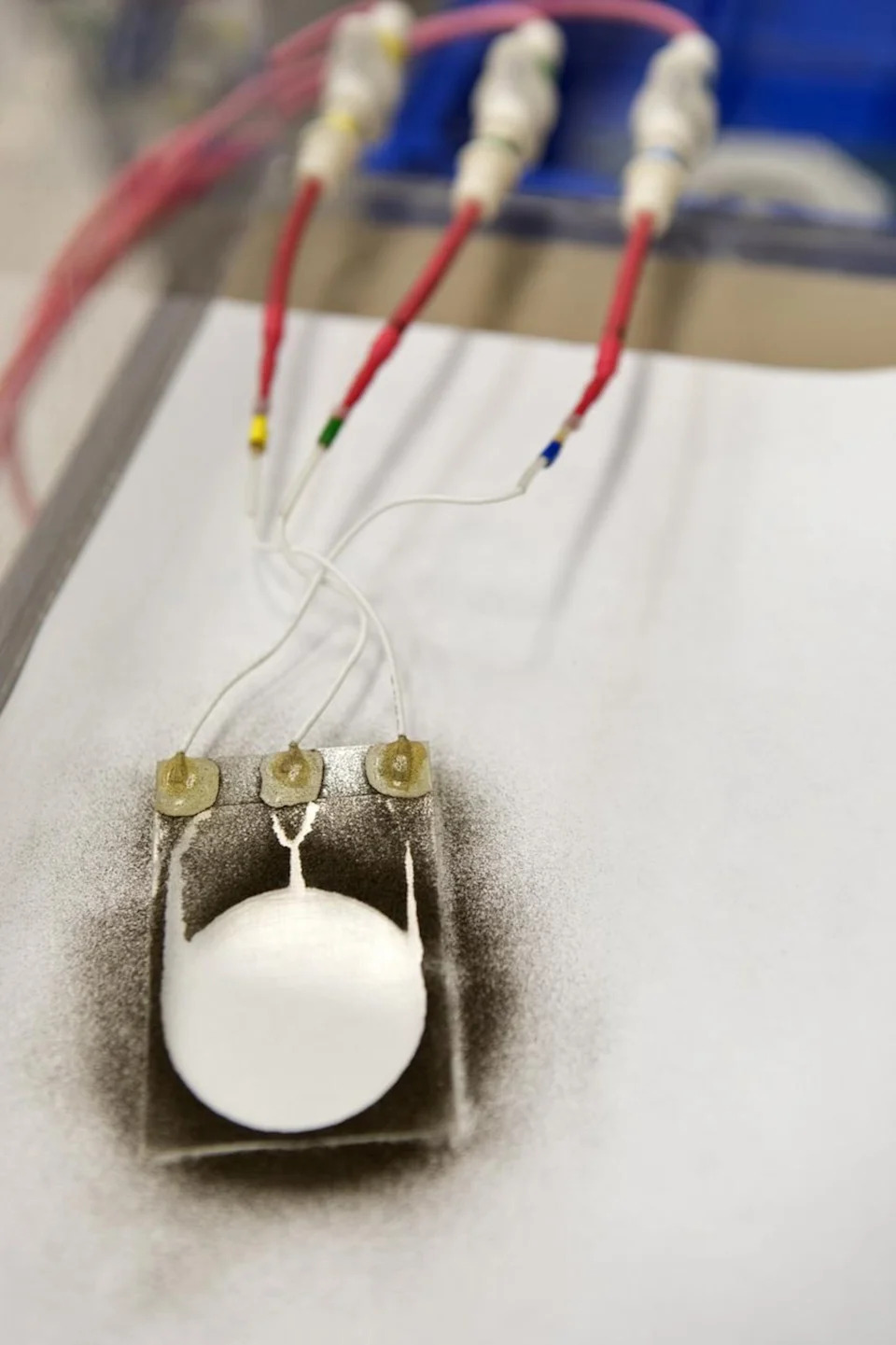
In the Electrostatics and Surface Physics Laboratory at NASA's Kennedy Space Center in Florida on Thursday, July 19, 2018, an experiment is underway in which an Electrostatic Dust Shield was been covered with dust similar to that which may be encountered by astronauts exploring the Moon or Mars. When activated, the device shook off the dust. Scientists are developing the dust shield to help mitigate the problem of dust on equipment, astronauts' space suits and helmet visors. The device is slated for analysis aboard International Space Station in the spring of 2019 to verify the effects of the space environment. Photo: NASA
That real-world test came via NASA's Commercial Lunar Payload Services program. Firefly Aerospace launched the Blue Ghost Mission 1 lander in January 2025; it touched down in March 2025 carrying an EDS payload. When activated, cameras and sensors showed lunar dust being expelled from glass and radiator surfaces—clear evidence the EDS works on the actual lunar surface.
Practical Benefits and Future Use
The EDS is highly adaptable. Transparent electrode arrays can protect camera lenses, thermal radiators, and solar panels, or be woven into suit fabrics and soft goods. Multiple industry partners are already pursuing EDS integration for rovers, instruments and next-generation spacesuits. While EDS will not be the only dust-mitigation tool, it is poised to be a primary, versatile defense on Artemis missions and beyond.
"Working on something for 20 years, and finally seeing it come to fruition … It’s fantastic. It’s a sigh of relief, more than anything," says Charles Buhler, lead scientist at NASA's Electrostatics and Surface Physics Laboratory.
The EDS story highlights how a blend of fundamental physics and engineering can solve an unexpectedly severe problem—protecting human explorers and critical systems from the tiny, abrasive particles of an airless world.
Help us improve.