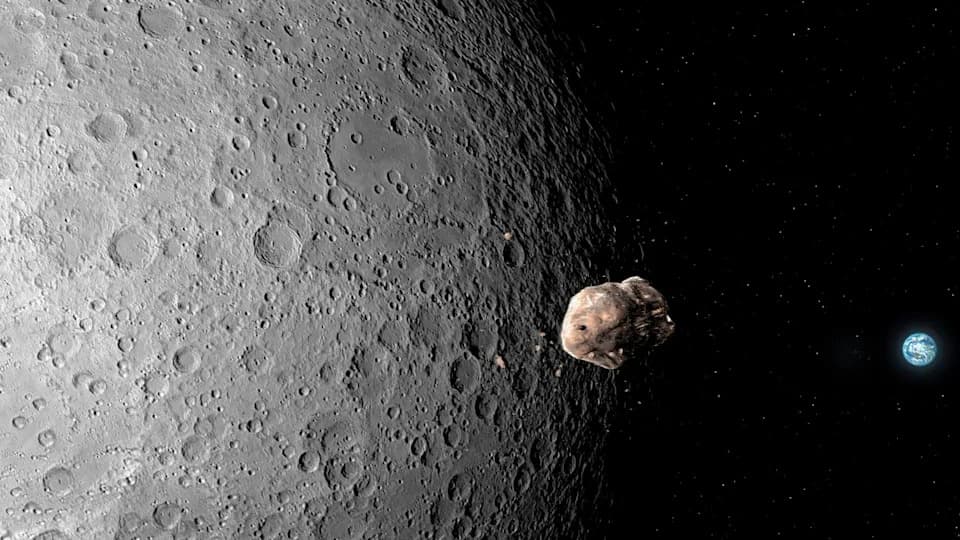
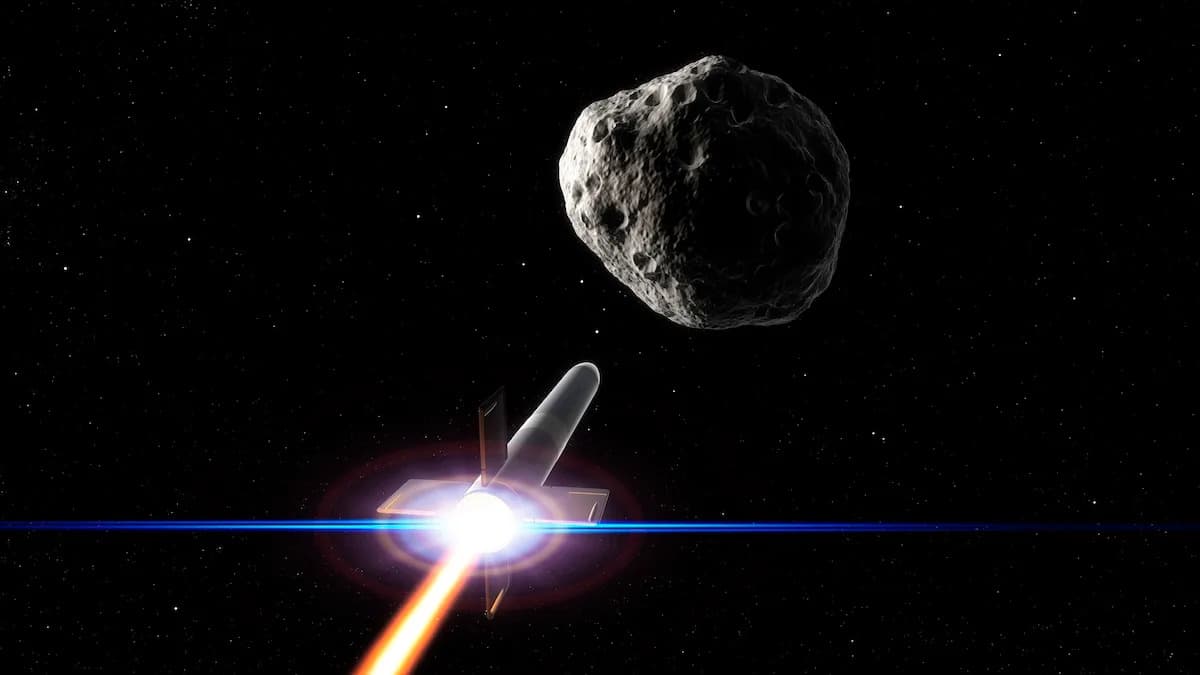
An asteroid roughly 200 feet (60 m) wide, designated 2024 YR4, has about a 4% chance of striking the Moon in 2032 rather than Earth. A recent preprint on arXiv.org predicts a bright optical flash visible from Earth followed by hours of infrared afterglow, and estimates a crater of about 1 km and ~100 million metric tons of ejected material. The study is not yet peer-reviewed and the impact probability may change as astronomers refine the orbit, but if it happens the event would be a landmark for planetary science.
200-Foot Asteroid 2024 YR4 Has ~4% Chance Of Hitting The Moon In 2032 — Impact Could Be Visible From Earth
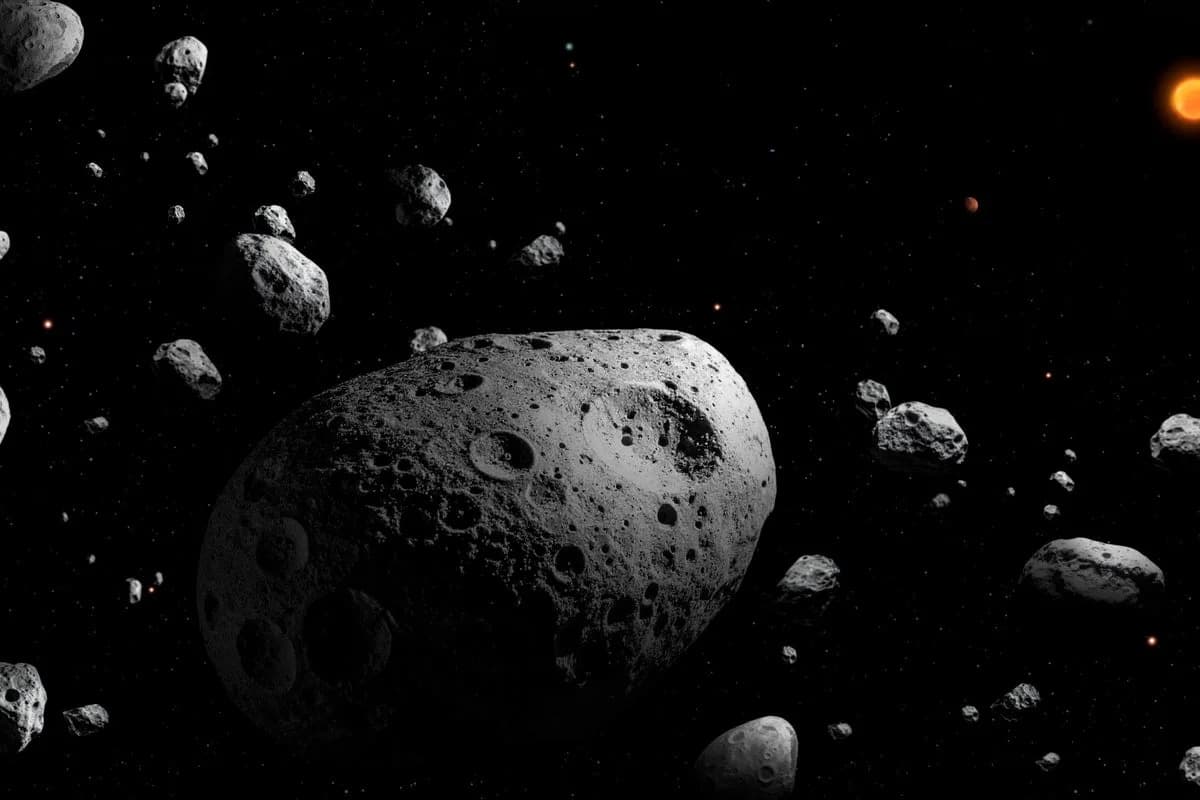
Last year astronomers tracked an asteroid roughly 200 feet (about 60 meters) across that briefly raised concern about a potential Earth impact in 2032. Further analysis ruled out an Earth strike but found a roughly 4% chance the object — designated 2024 YR4 — could collide with the Moon instead. Researchers have now modelled what such a lunar collision might look like and how it would appear to observers on Earth.
What The Study Says
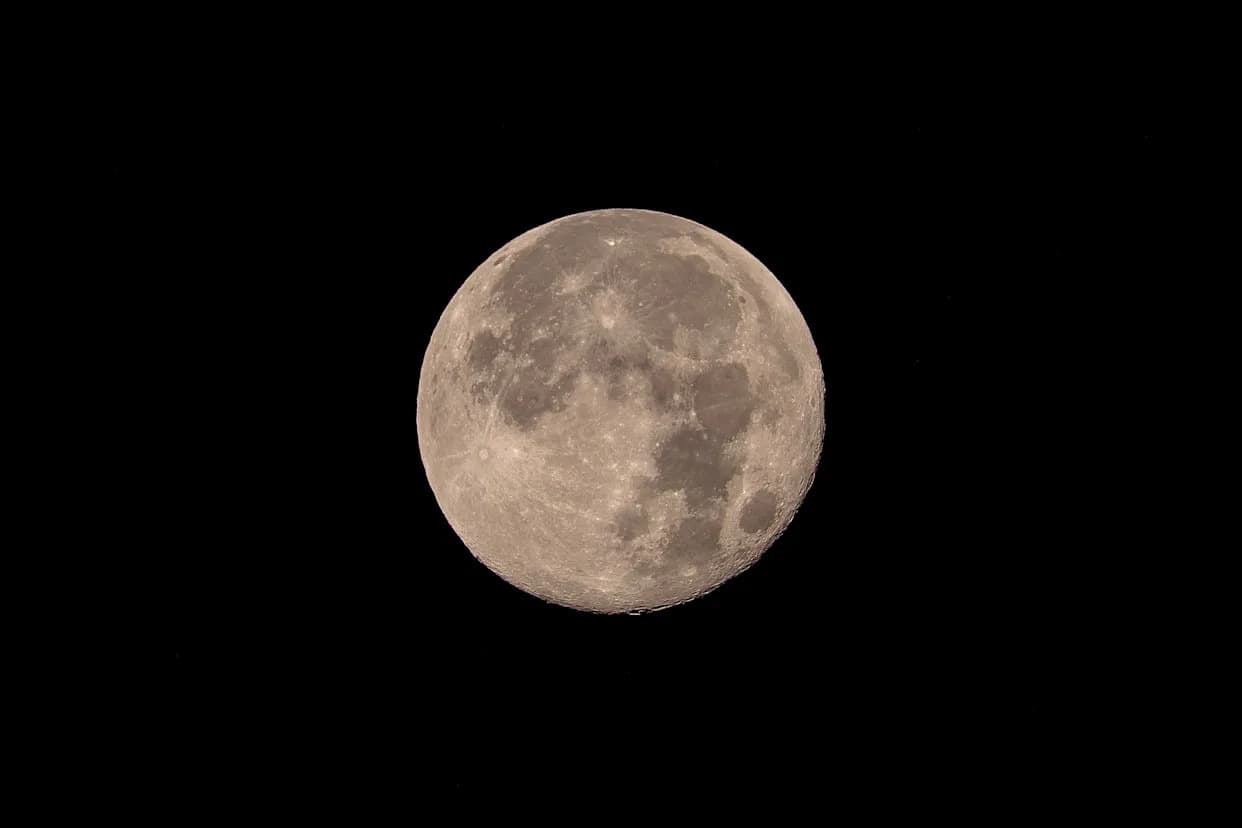
In a paper recently posted to the preprint server arXiv.org (not yet peer-reviewed), astronomers estimate that if 2024 YR4 strikes the Moon it would produce an intense optical flash visible from Earth followed by hours of infrared afterglow. The impact could excavate a crater on the order of ~1 kilometer across and eject roughly 100 million metric tons of material. The authors describe such an event as potentially "the most energetic lunar impact event ever recorded in human history."
How It Would Look From Earth
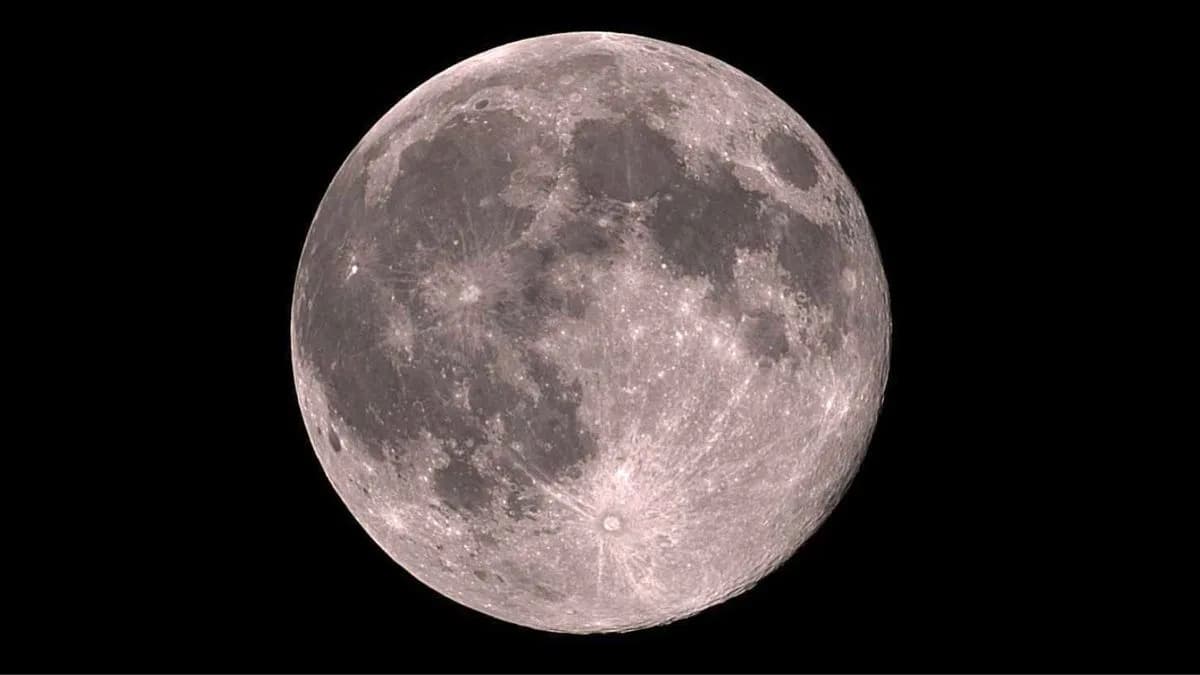
If the collision occurs, observers with telescopes — and possibly some naked-eye viewers under dark skies depending on viewing conditions — could see a brief, bright optical flash at the point of impact. Over the following hours, infrared emission from hot ejecta and freshly exposed material on the lunar surface would fade as the heat dissipates, offering a rare opportunity to study the thermal and physical properties of freshly excavated lunar material.
Scientific Importance
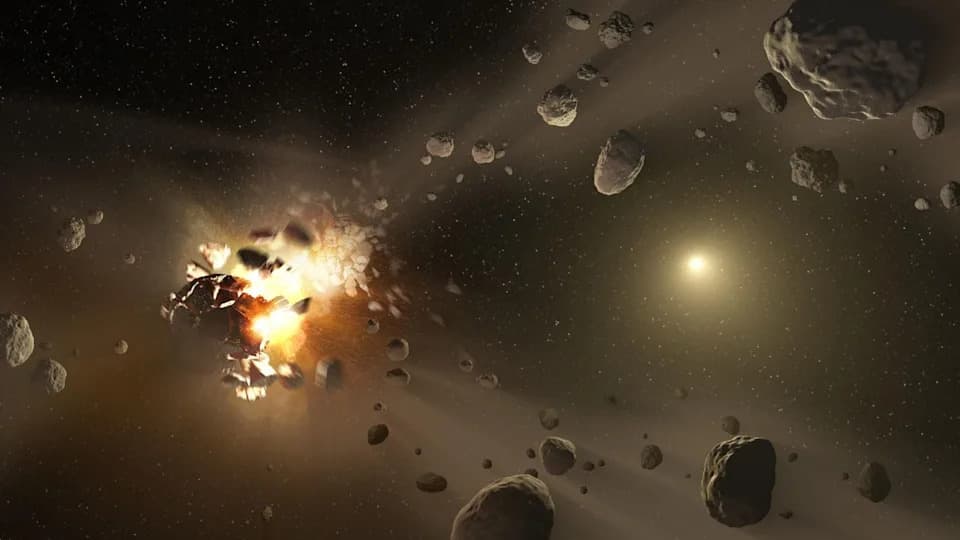
An impact of this energy would be scientifically valuable: it would provide an unprecedented real-time test of impact models, crater formation physics, and the behavior of ejecta in the Earth–Moon environment. Instruments across wavelengths — optical, infrared, radar — could capture complementary data that would improve our understanding of small-body collisions and surface processes on airless worlds.
"If this scenario plays out, it will be a milestone for planetary science, turning the Earth–Moon system into a grand stage for validating our understanding of asteroid impacts." — Yixuan Wu, Tsinghua University
Uncertainties And Public Impact
The collision remains uncertain: the estimate comes from orbital calculations with inherent uncertainties and the study is currently a preprint awaiting peer review. Astronomers will continue to track 2024 YR4 and refine its trajectory, which could raise or lower the impact probability. While some ejecta could potentially travel toward Earth as meteoritic debris, experts do not expect a direct hazard to people or infrastructure on Earth; any arriving material would most likely be small fragments that burn up in the atmosphere or fall as harmless meteorites.
What To Watch For
If the impact probability remains non-negligible closer to 2032, professional observatories and coordinated amateur networks will plan observations to capture the flash and afterglow. Such a campaign could deliver an extraordinary dataset for planetary scientists and an unusual celestial event for the public to observe.
Help us improve.