Curiosity used the last of its TMAH solvent in a rare three-stage wet-chemistry soak on a powdered rock sample from the clay-bearing Nevado Sajama boxwork. The redesigned procedure, refined after a 2020 test, aims to free a broader range of organic molecules for detection. Two of the three phases are complete; interpreting the complex results will take several months. The clay-rich site increases the chance that preserved organics, if present, could be detected.
Curiosity Uses Its Last Drop of Rare Solvent in a High-Stakes Search for Martian Organics
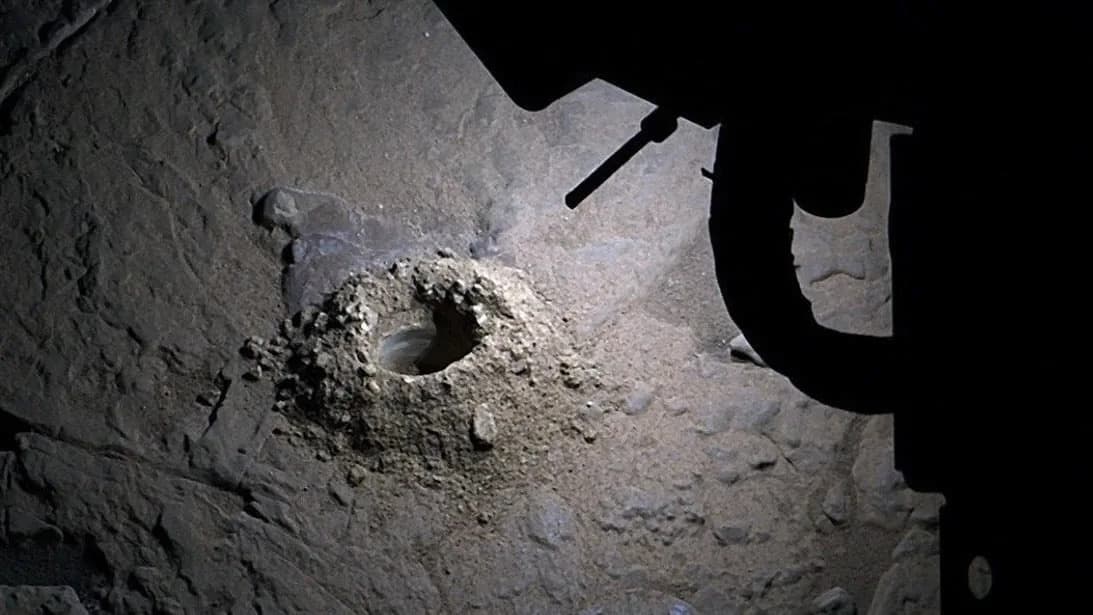
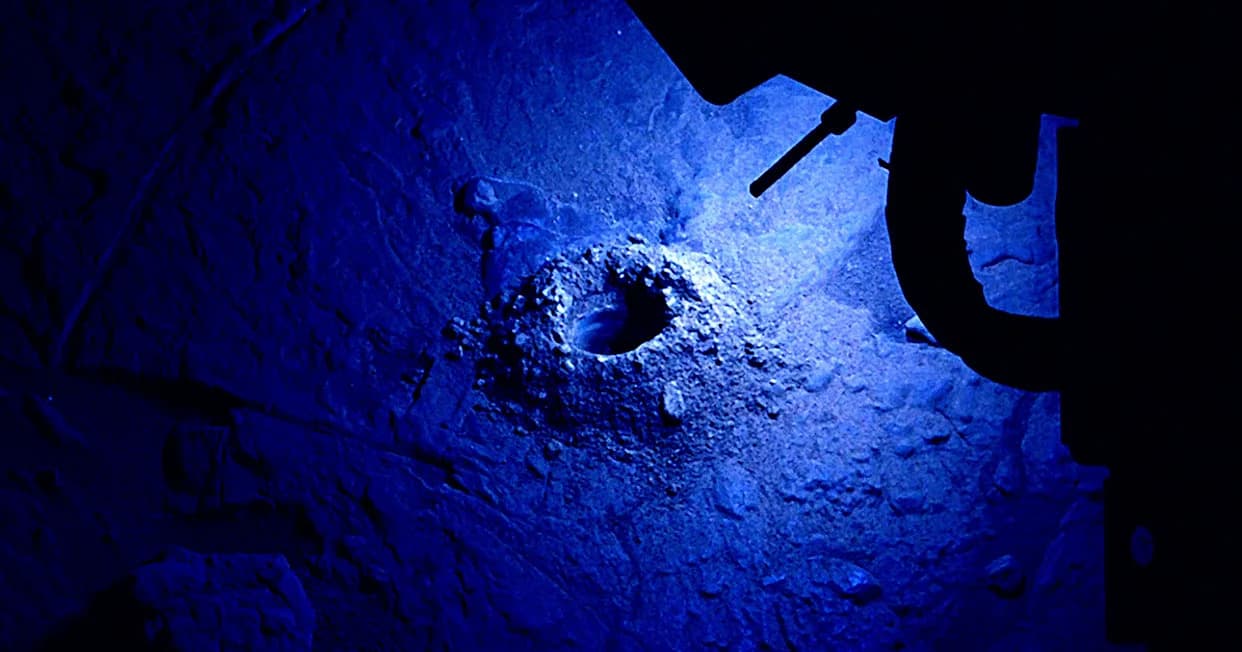
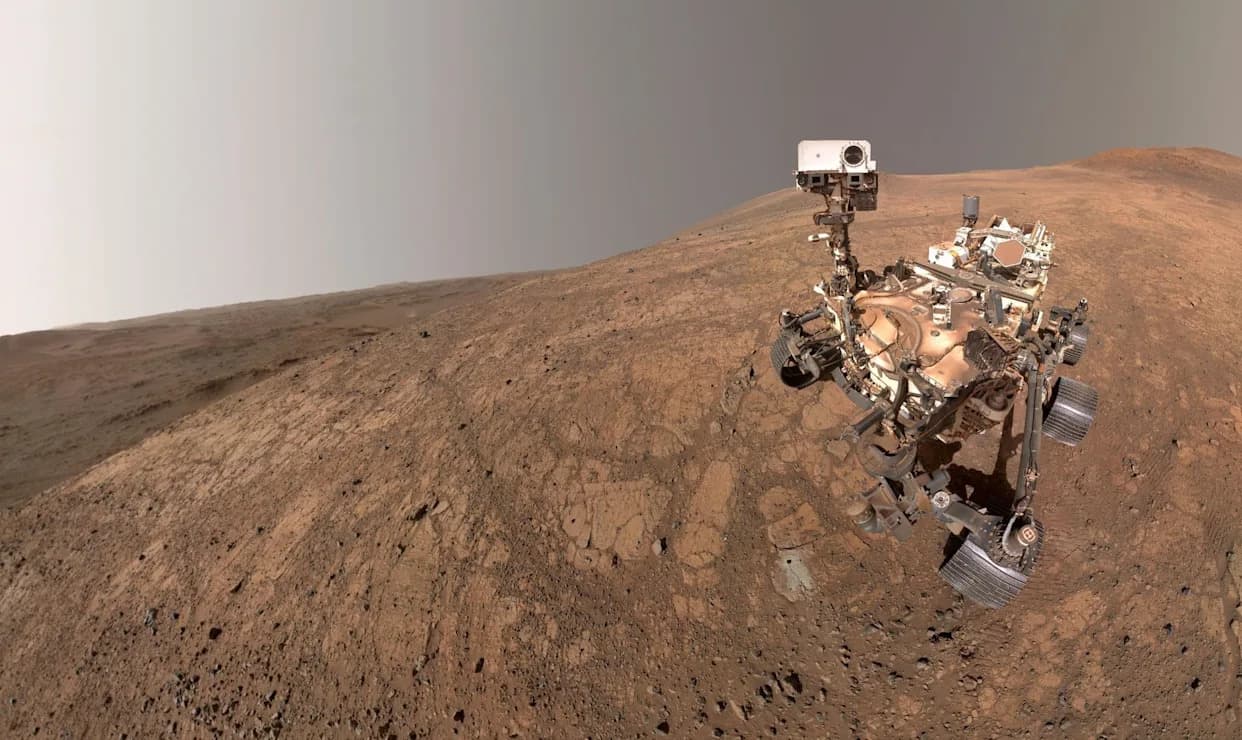
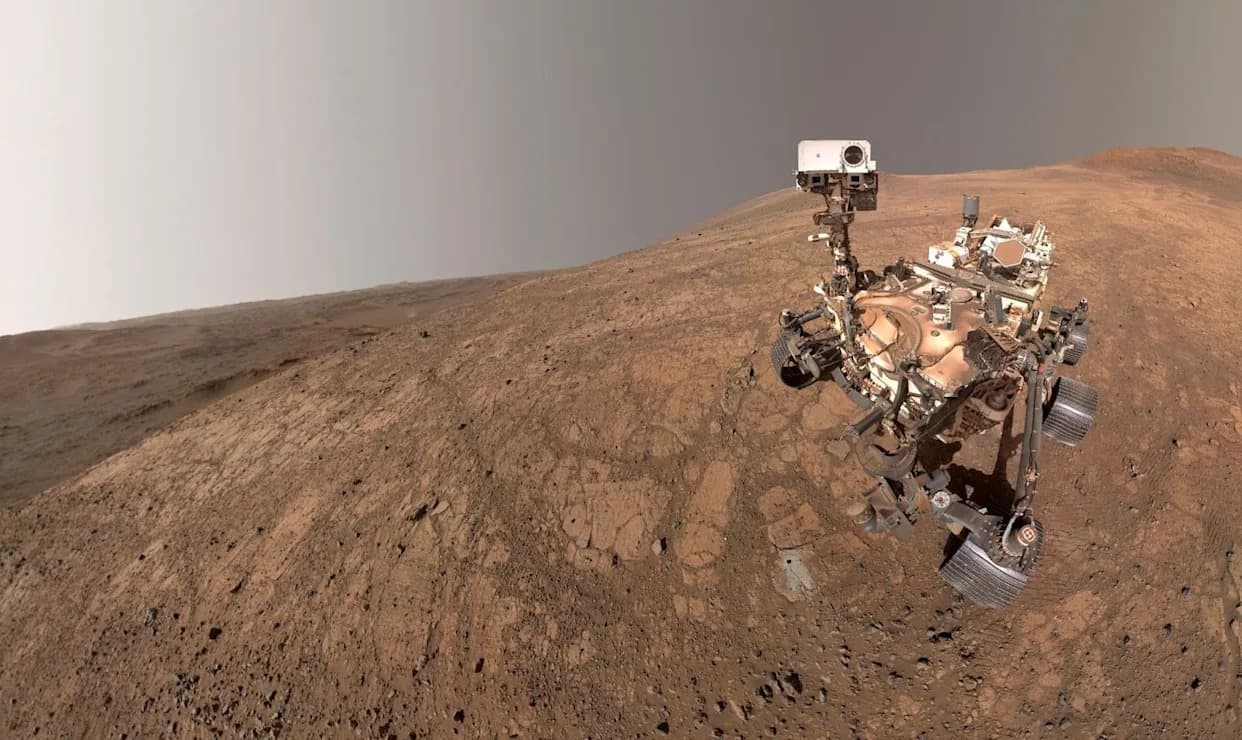
The Curiosity rover used LED lights on the end of its robotic arm at night to illuminate a hole it had drilled into a rock, Nevado Sajama, in November 2025. Scientists wanted to know if they could see layers within the hole at a time when the site wouldn't be deep in shadow. - NASA / JPL-Caltech / MSSS
NASA's Curiosity rover has applied the final portion of a scarce reagent — tetramethylammonium hydroxide (TMAH) in methanol — to a powdered Martian rock sample from the Nevado Sajama site in a bid to reveal organic molecules that routine tests might miss.
What the Experiment Does
The TMAH ``wet chemistry'' soak is designed to free certain carbon-bearing compounds from powdered rock, making them easier to detect with Curiosity's onboard instruments. Curiosity carried only two small containers of TMAH at landing; one was used almost six years ago, and this recent soak consumed the last supply.
Why This Site Was Chosen
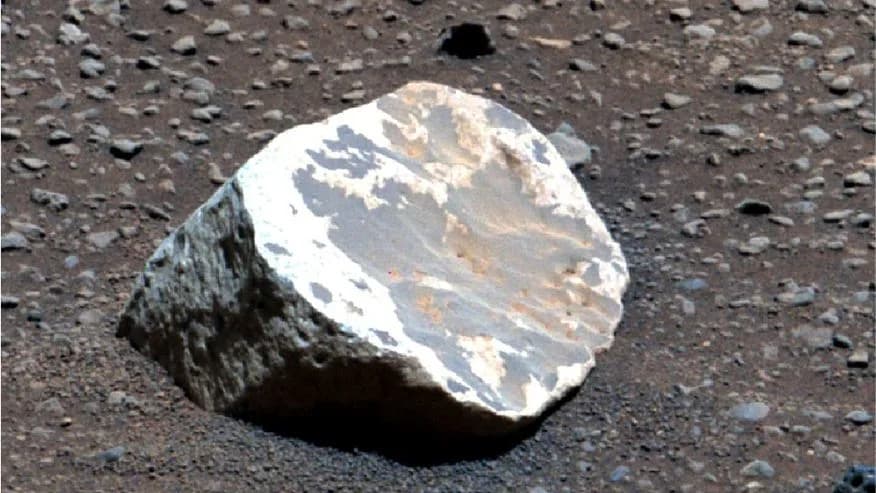
Curiosity collected the sample near a November drill hole in a fine-grained, clay-bearing sedimentary rock at a region the team calls Nevado Sajama. The area is part of a broader "boxwork" landscape of low ridges where clay minerals — which can help preserve organics — were identified. Those signs, plus favorable results from the initial drill, convinced the team to run the final TMAH experiment here.
Redesigned, Three-Stage Procedure
After the rover's first TMAH soak in 2020 at a clay-rich outcrop dubbed Mary Anning, scientists at Goddard Space Flight Center refined the method to limit unwanted solvent reactions and to better match lab workflows on Earth. The updated approach splits the process into three stages, allowing the reagent to interact with the powdered rock at different temperatures. Two of those stages have already been executed.
NASA's Mars Reconnaissance Orbiter has taken pictures of boxwork ridges on the Red Planet that Curiosity is now exploring up close on the ground.
“We want to be very certain that everything will go well,” said Alex Innanen, an atmospheric scientist at York University in Toronto. The team rehearsed the sample handoff before committing to the real transfer.
Context And Caution
The 2020 TMAH soak took months to interpret and revealed a wider variety of organic molecules than heating alone had produced, improving scientists' view of complex chemistry in Gale Crater. However, researchers continue to evaluate whether any detected organics could originate from the rover itself or from non-biological chemistry.
Separately, NASA's Perseverance team has reported finding fossilized material in a sample that could have been produced by ancient microbes, but officials emphasize that non-biological explanations have not been ruled out.
What Comes Next
The Curiosity team expects it will take several months to fully process and interpret the TMAH results because these analyses are complex. Although Curiosity is out of TMAH, it still has cups of another solvent (commonly referred to as MTBSTFA) available for other wet-chemistry tests.
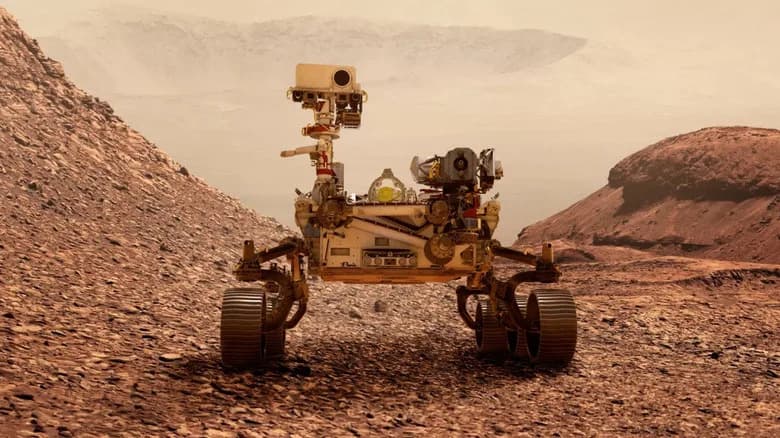
Mission Note: Since launching in 2011, Curiosity — a six-wheeled rover about the size of a small car — has traveled on the order of a few hundred million miles, including its cruise from Earth and surface drives on Mars.
Scientists hope this final TMAH soak will deepen their understanding of whether ancient Mars had the chemical ingredients and preservation conditions needed to host — or preserve evidence of — past life as we know it.
Help us improve.