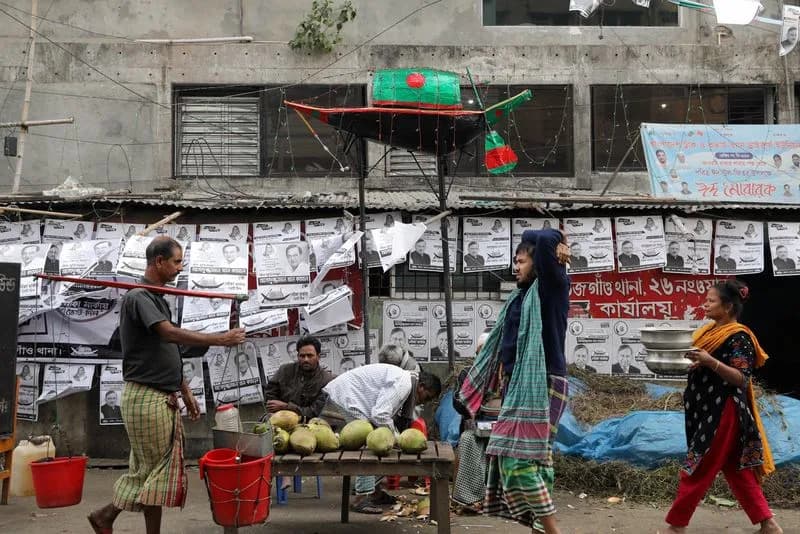
Bangladesh will hold parliamentary elections on February 12, its first since the 2024 student protests and a violent crackdown that toppled former Prime Minister Sheikh Hasina. More than 127 million voters are registered, and for the first time about 15 million expatriates may vote by post. An interim government led by Nobel laureate Muhammad Yunus is overseeing a contest with 1,981 candidates for 350 seats amid international scrutiny and concerns about possible unrest.
Bangladesh Votes Feb. 12: Timeline of Elections and the Rise and Fall of Its Leaders
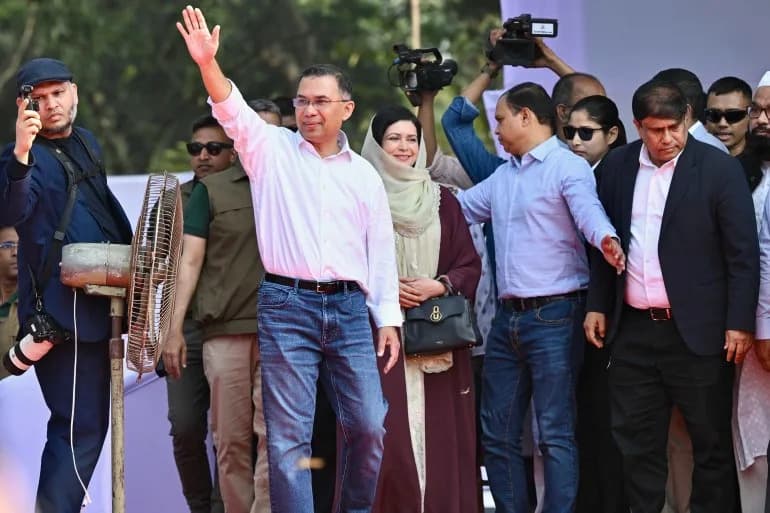
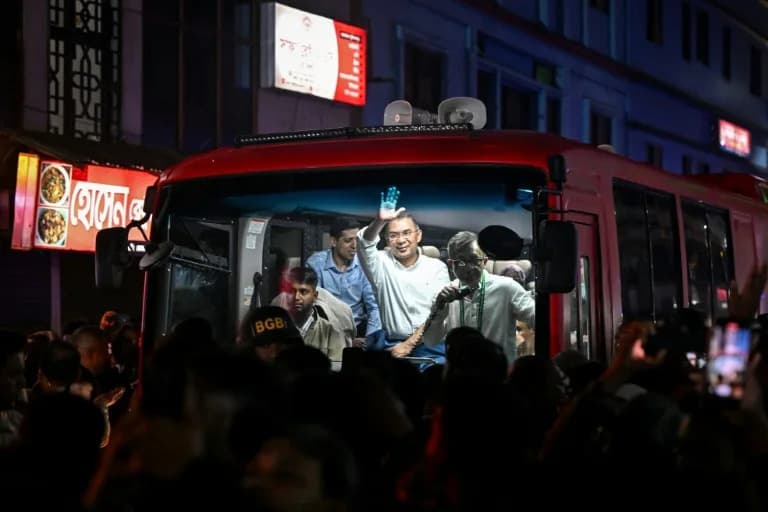
Bangladesh Nationalist Party (BNP) chairman Tarique Rahman, third from left, waves to supporters during a rally as he begins campaigning ahead of the upcoming national election, in Sylhet on January 22, 2026 [AFP]
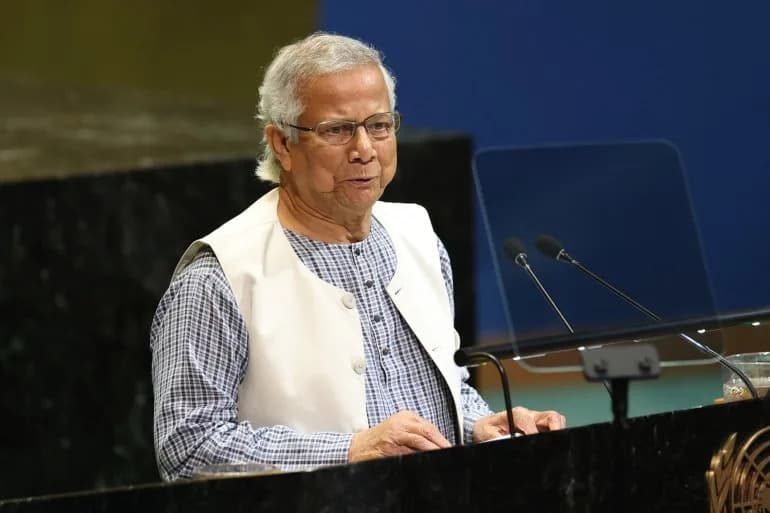
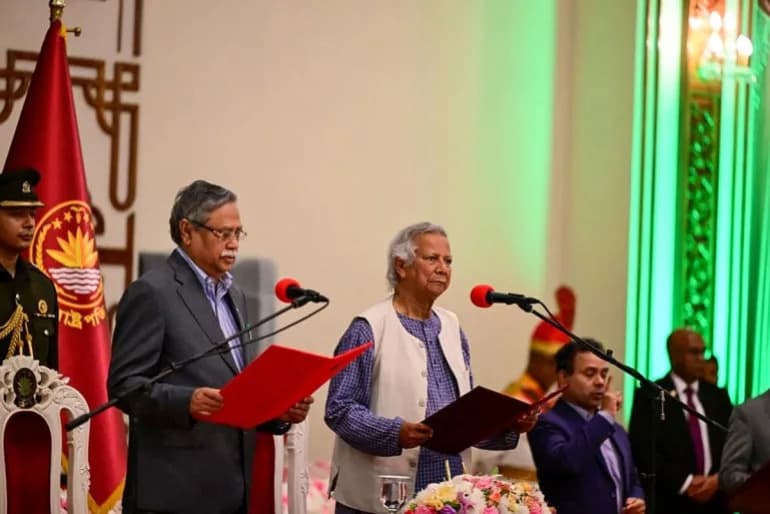
Bangladesh will hold parliamentary elections on February 12 — its first national vote since mass student demonstrations in 2024 toppled long-time leader and former Prime Minister Sheikh Hasina. Those protests were met with a violent crackdown that forced Hasina to flee the country and prompted criminal proceedings against her and other senior officials. An interim government led by Nobel laureate Muhammad Yunus is now steering the country toward the ballot.
Key facts: More than 127 million people are registered to vote, and for the first time roughly 15 million expatriate Bangladeshis will be eligible to vote by post. A total of 1,981 candidates are contesting 350 seats in the Jatiya Sangsad (national assembly). Observers are watching closely amid fears of unrest and concern over the rule of law.
Political Context
Bangladesh uses a single‑chamber parliamentary system in which the prime minister holds executive power and typically appoints a largely ceremonial president. Politics has long been dominated by two camps: Sheikh Hasina's Awami League and the Bangladesh Nationalist Party (BNP). Since the 2024 crackdown, the Awami League has been suspended while Hasina and several associates face criminal trials. Hasina was tried in absentia and sentenced to death by a domestic court for ordering killings during the crackdown; India, where she is reported to have taken refuge, has not agreed to extradite her.
Why This Vote Matters
The February 12 election will test whether Bangladesh can return to competitive, credible national politics after a period marked by boycotts, bans on major parties, internet shutdowns and repeated allegations of vote‑rigging. The outcome will shape the country's domestic stability and its international relationships, including major migration and remittance flows tied to millions of expatriate workers.
Timeline Of Major Elections And Political Turning Points
1970–1973: From Pakistan's Polls To Independence
In December 1970, elections to Pakistan's National Assembly gave Sheikh Mujibur Rahman's Awami League a decisive victory in East Pakistan. When the West Pakistani authorities blocked Mujib from taking office, conflict escalated into the 1971 war of independence. After a brutal campaign and a devastating humanitarian toll, Bangladesh declared independence in December 1971. A provisional government operated from exile until Mujib's return; he became prime minister and led post‑war reconstruction.
1973–1975: Early Dominance And One‑Party Rule
The first post‑independence election in March 1973 handed the Awami League an overwhelming majority. Allegations of election irregularities and consolidation of power followed. In 1974 Mujib established a one‑party state and curtailed political freedoms. He and much of his family were assassinated in a coup in August 1975, ushering in a period of rapid leadership changes and military influence.
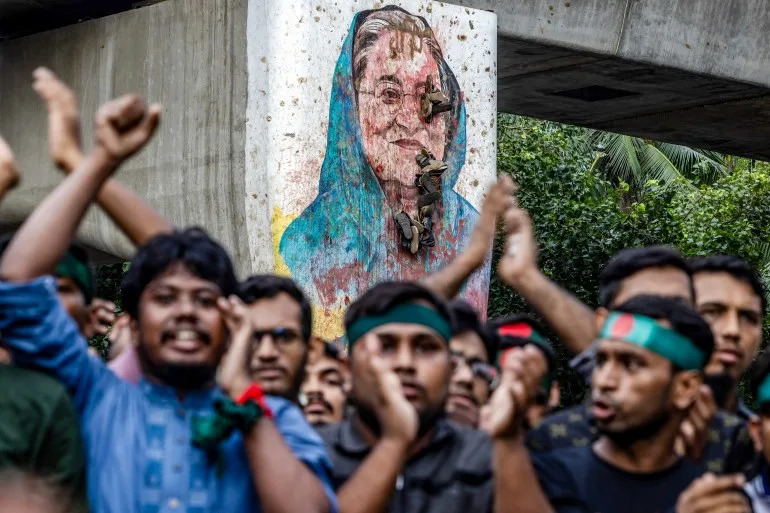
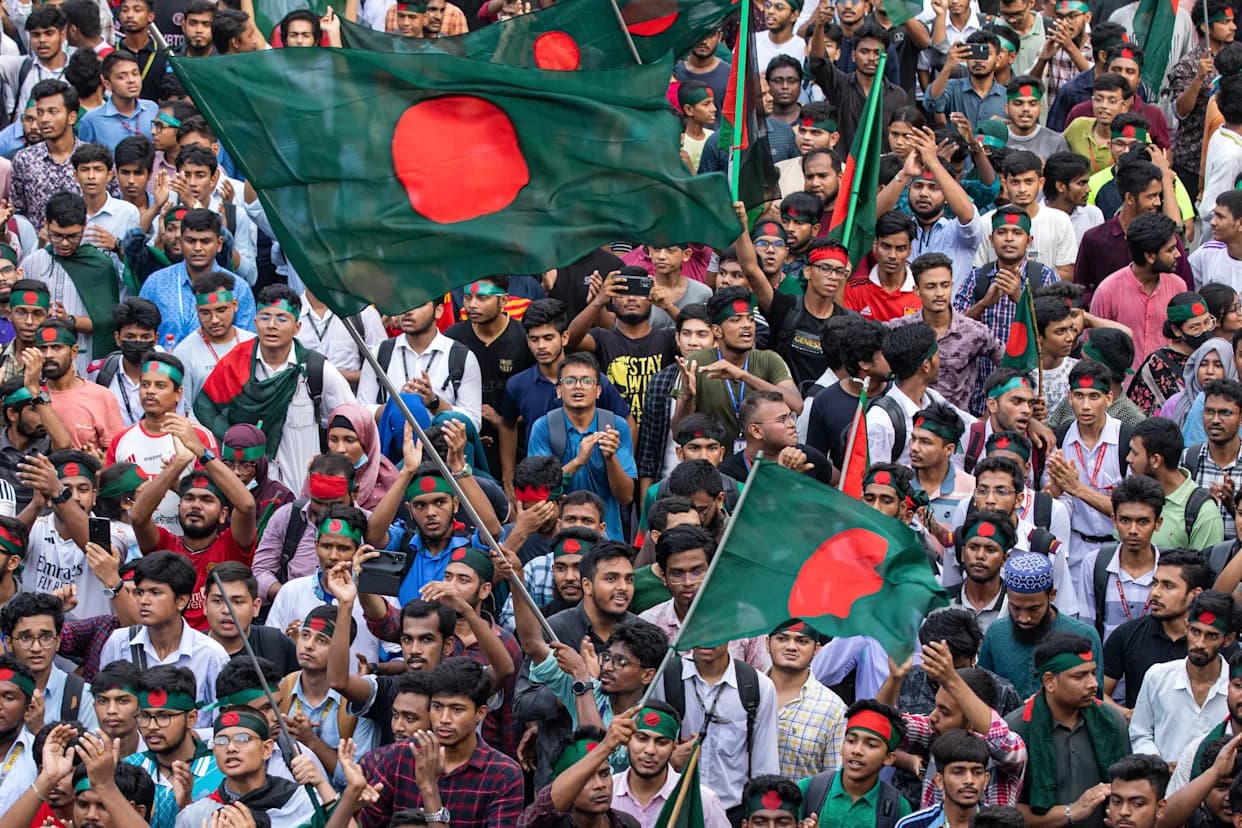
Students chant slogans near a vandalised mural of Bangladesh’s ousted Prime Minister Sheikh Hasina, during a protest demanding accountability and a trial against Hasina, near Dhaka University on August 12, 2024 [AFP]
1977–1988: Zia, Ershad And A Return To Multi‑Party Politics
Army chief Ziaur Rahman emerged as a key leader and founded the BNP, winning elections in 1979. After Zia's assassination in 1981, political instability continued; Hussain Muhammad Ershad seized power in 1982 and ruled through the 1980s. Elections held under Ershad (1986, 1988) were marred by boycotts and allegations of manipulation, fueling street protests that eventually toppled him.
1990–2001: Democratic Transition And Alternating Governments
Mass protests in 1990 brought down Ershad. A neutral caretaker administration oversaw the widely accepted 1991 election that returned the BNP to power and made Khaleda Zia prime minister. Political rivalry between the BNP and Awami League intensified through the 1990s, culminating in the controversial February 1996 vote (boycotted by the opposition) and a follow‑up election in June 1996 that delivered Sheikh Hasina her first term as prime minister. The BNP returned to power in 2001.
2006–2009: Crisis, Emergency Rule And A New Mandate
Dispute over the caretaker mechanism ahead of the planned 2007 polls sparked nationwide unrest. A state of emergency and a military-backed caretaker administration intervened. Elections were delayed, and a December 2008 vote — widely regarded as free — returned the Awami League to power in a landslide, with Sheikh Hasina becoming prime minister again in January 2009.
2011–2018: Abolition Of Caretaker System And Contested Polls
The Awami League government abolished the caretaker‑government provision by constitutional amendment in 2011, a change the BNP opposed. The January 2014 election was boycotted by the main opposition and criticized internationally for lacking competitiveness. The December 2018 vote, which introduced new technology and e‑voting elements, produced an Awami League supermajority amid opposition allegations of widespread rigging, targeted arrests, restricted internet access and bans on key parties such as Jamaat‑e‑Islami.
2024: Protests, Crackdown And Leadership Change
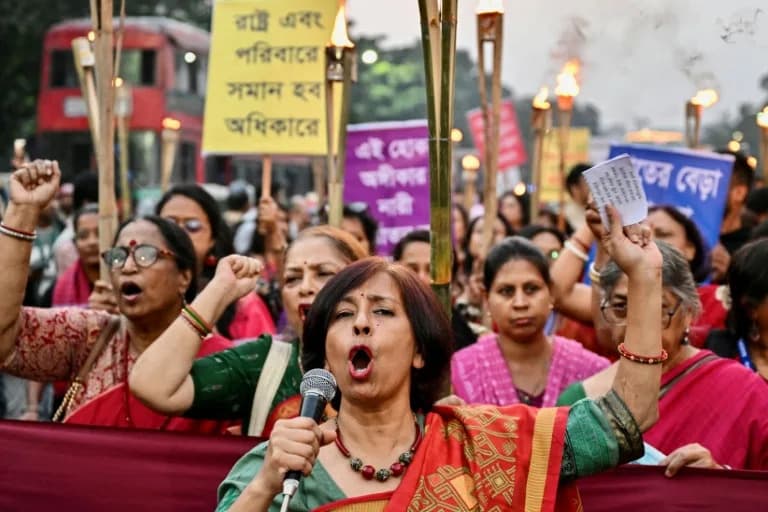
On January 7, 2024, elections held under Hasina's government saw major opposition boycotts and accusations of illegitimacy. In July 2024, the Supreme Court's reinstatement of a quota system favoring descendants of liberation‑war veterans triggered large student demonstrations known as the July Revolution. Security forces' response was violent; investigative and other reports put the death toll at least 1,400. In August 2024, Hasina resigned and left the country. On August 8, 2024, Muhammad Yunus, Nobel Peace Prize laureate and economist, assumed leadership of an interim administration charged with overseeing the transition to new elections.
Current Contest
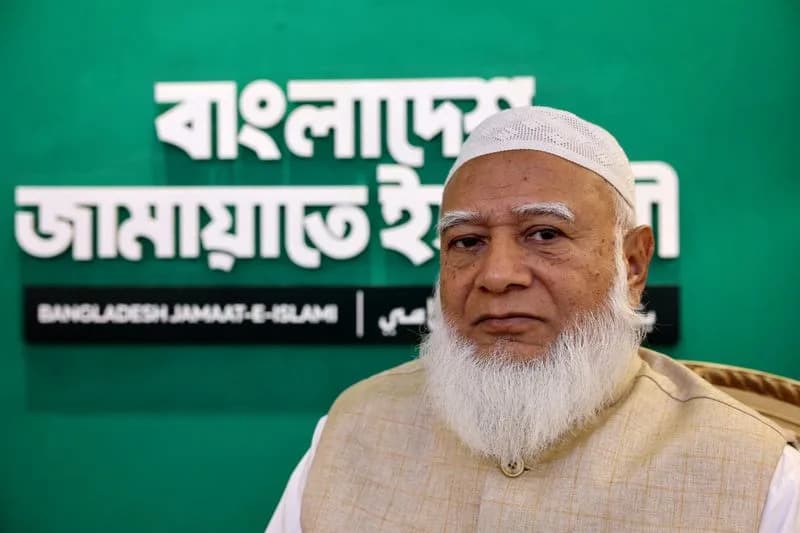
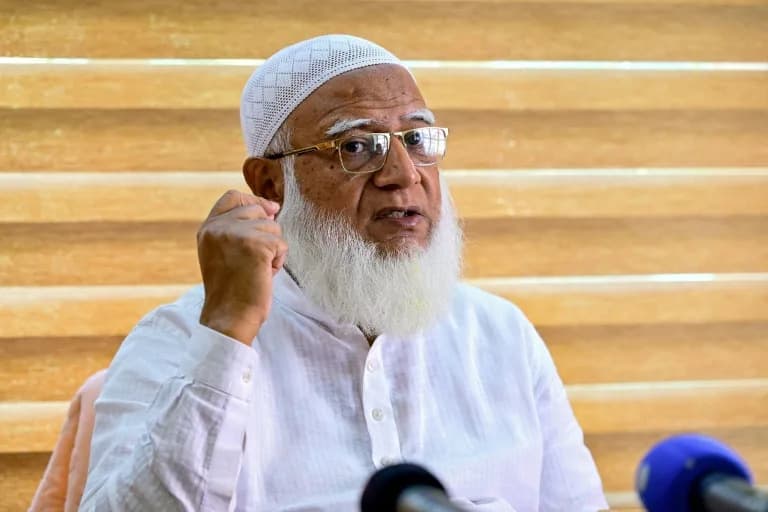
For the February 12 vote, nearly 2,000 candidates are competing for 350 parliamentary seats. The BNP and other parties have reorganized their strategies following the 2024 upheaval; some previously influential groups, such as Jamaat‑e‑Islami, remain banned. Domestic observers and international actors will be closely monitoring the process for transparency, freedom of expression and peaceful conduct.
Looking Ahead: The election is a pivotal moment for Bangladesh: it will determine whether the country can restore credible, competitive politics and stabilize after one of the most turbulent periods in its modern history.
Help us improve.