NASA plans to fly Artemis II as early as Feb. 6 with four astronauts aboard Orion despite a known Avcoat heat‑shield issue identified after the uncrewed Artemis I mission. Investigators determined insufficient permeability in the Ablative layer caused gas buildup and spalling; NASA will modify the reentry trajectory and rely on lab tests and simulations rather than replacing the installed shield. Experts are split: some trust the testing and structural margins, while others warn the models and trade‑offs leave unresolved risks.
Artemis II Poised to Launch Despite Known Orion Heat‑Shield Flaw — Experts Remain Split
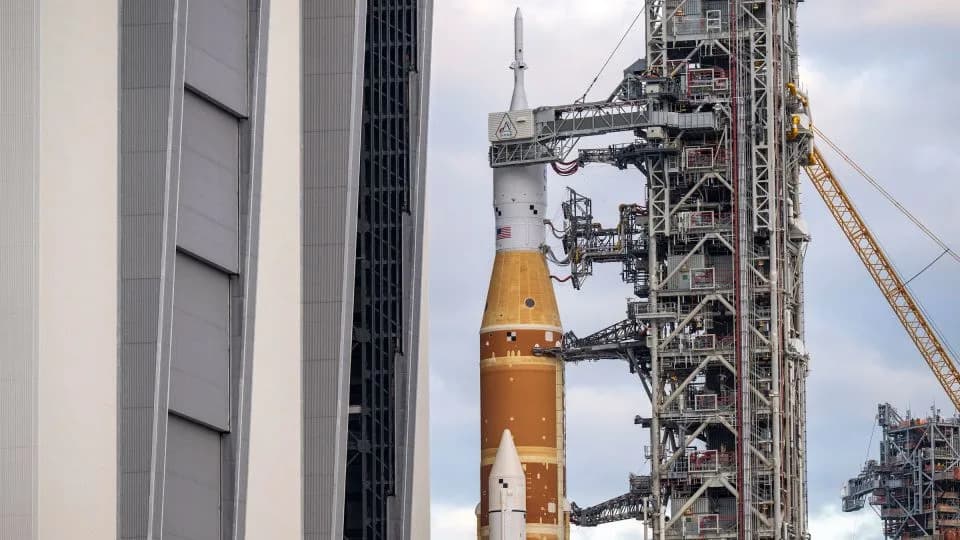
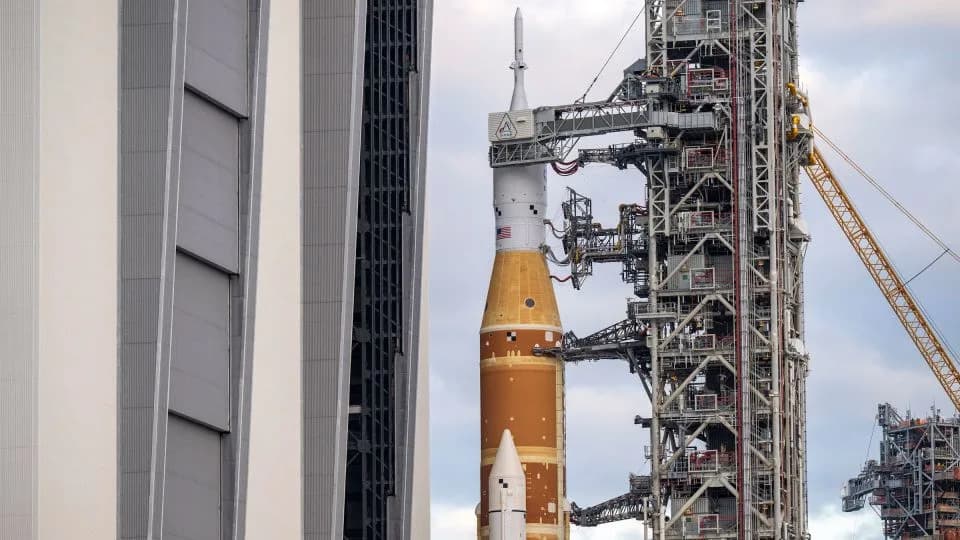
NASA’s Orion spacecraft, which sits atop the Space Launch System rocket for liftoff, are seen at Kennedy Space Center in Florida on January 17. - Keegan Barber/NASA
NASA is preparing to send four astronauts around the moon on Artemis II as soon as Feb. 6 aboard the 16.5‑foot‑wide Orion capsule — even though the spacecraft’s Avcoat ablative heat shield has a known manufacturing issue that produced unexpected damage on the uncrewed Artemis I test flight in 2022. Agency leaders say rigorous analysis, laboratory testing and a modified reentry profile provide acceptable margins for crew safety; some former engineers and astronauts strongly disagree.
What Went Wrong
The problem centers on Orion’s Avcoat layer, the ablative material bonded to the heat shield that is designed to char and erode in a controlled way during lunar reentry. After Artemis I, inspectors found chunks of Avcoat had spalled off and left divots in the outer surface — behavior traced to insufficient permeability in the material, which allowed gases to build up beneath the layer during high heating.
Decisions, Trade‑Offs And Timeline
NASA chose Avcoat for Orion in 2009 and moved away from the labor‑intensive honeycomb installation used on Apollo, adopting a block‑based approach to improve producibility. That block design worked for manufacturing but was implicated in the Artemis I anomalies. By the time investigators identified the issue, the Artemis II capsule already had its shield installed, making replacement impractical in the available schedule.
How NASA Plans To Manage The Risk
- Trajectory Change: NASA will fly a lower, steeper reentry 'loft' rather than a high skip to reduce time at peak heating and the conditions that caused cracking.
- Analyses And Tests: A Tiger Team used lab experiments, simulations and the Crack Indication Tool (CIT) to reproduce Artemis I conditions and validate the flight rationale.
- Future Production Fixes: For later missions, NASA plans manufacturing changes (altering billet mold loading) to increase Avcoat permeability.
Expert Views: Confidence And Concern
Opinions are divided. Former astronaut and investigator Dr. Danny Olivas and researcher Dr. Steve Scotti say the agency’s testing, modeling and the capsule’s composite substrate (beneath the Avcoat) give them confidence the crew will be safe. Olivas called the shield “deviant” but said the Tiger Team’s analysis convinced him that managers understand the risk.
“There’s uncertainty whichever path you take,” Olivas said. “No flight ever takes off where you don’t have a lingering doubt.”
By contrast, Dr. Charlie Camarda and Dr. Dan Rasky — both long‑time NASA engineers and former astronauts — argue the modeling is oversimplified and that relying on a trajectory change is risky. Camarda criticized the CIT for not fully modeling crack growth and multi‑physics interactions (aerothermal loads, material phase changes and gas generation).
Bottom Line
NASA asserts that laboratory validation, simulation, and a revised reentry plan provide sufficient justification to fly Artemis II without redesigning the installed heat shield. Critics warn that the agency may be trading schedule and program momentum for unresolved technical risk. Regardless of the outcome, NASA plans manufacturing improvements for subsequent missions. The debate highlights broader tensions about institutional decision‑making, test data limits and acceptable risk when human lives are involved.
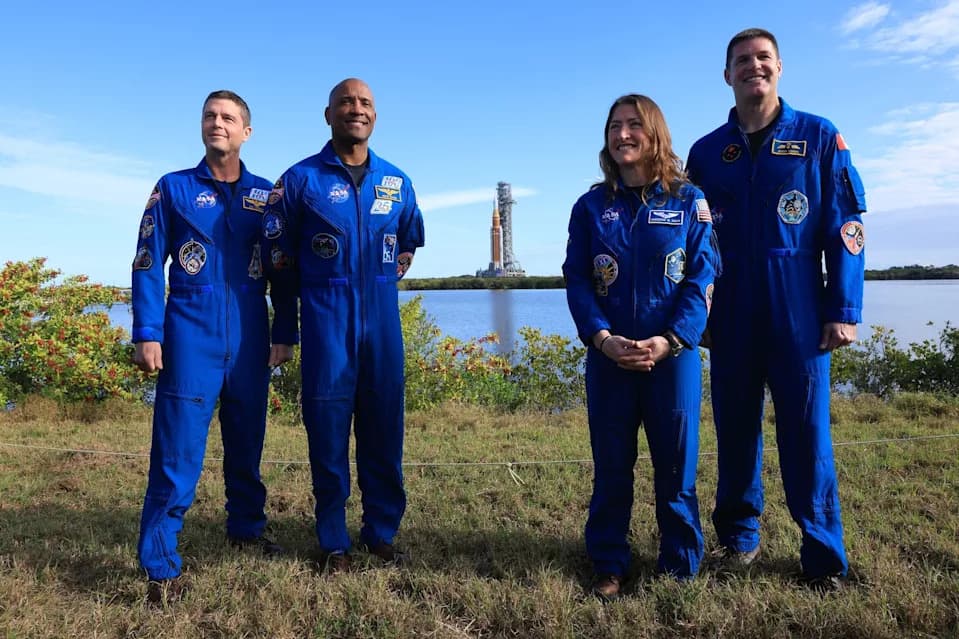
Planned Crew: Reid Wiseman (commander), Victor Glover, Christina Koch, Jeremy Hansen (Canadian Space Agency).
Editor’s Note: Story updated with additional information.
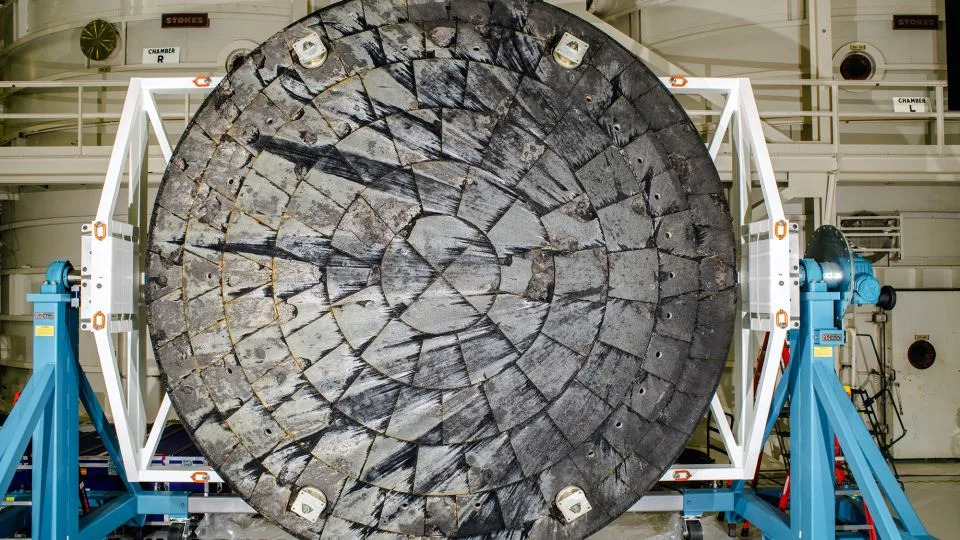
At the conclusion of the Artemis I test flight, the recovered Orion spacecraft was transported to Kennedy Space Center, where its heat shield was removed and inspected. - NASA

The Artemis II crew: Canadian Space Agency's Jeremy Hansen and NASA's Christina Koch, Victor Glover and Reid Wiseman, seen in November 2023. - NASA
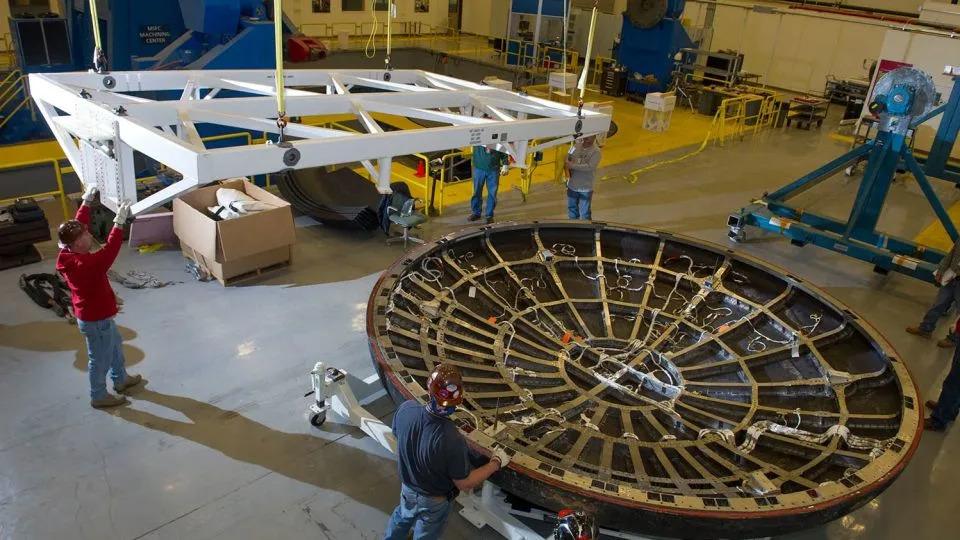
For the first test flight of Orion, the heat shield ablative material reached temperatures of about 4,000 degrees Fahrenheit (2,200 degrees Celsius). - Emmett Given/NASA/MSFC
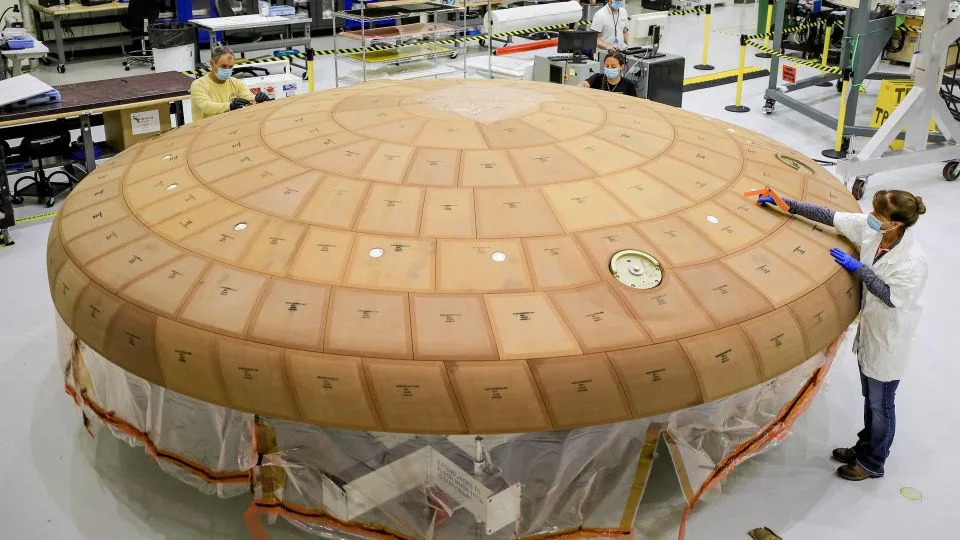
An Orion heat shield configured using the block structure is seen. - Isaac Watson/NASA
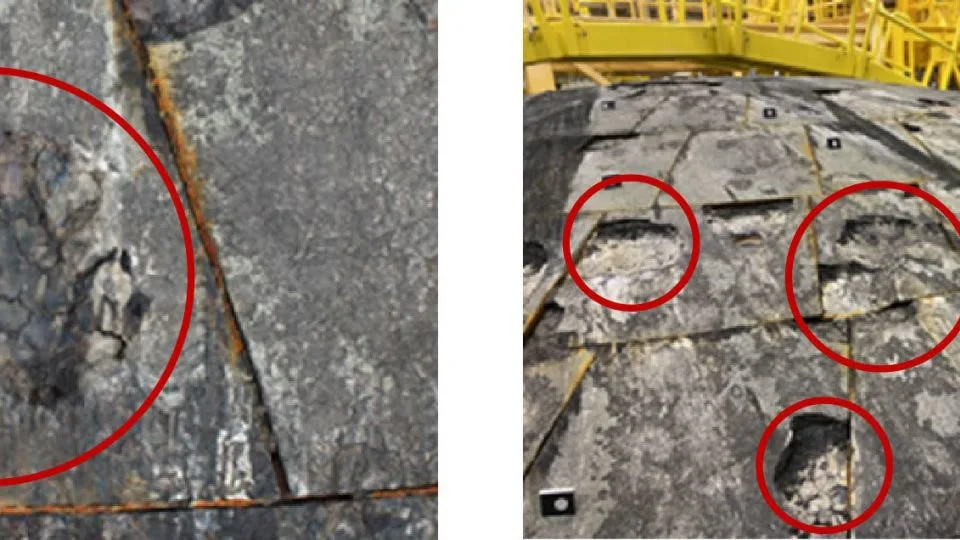
Images show the heat shield post-Artemis I mission, including cavities resulting from the loss of large chunks of the heat shield during reentry. - NASA
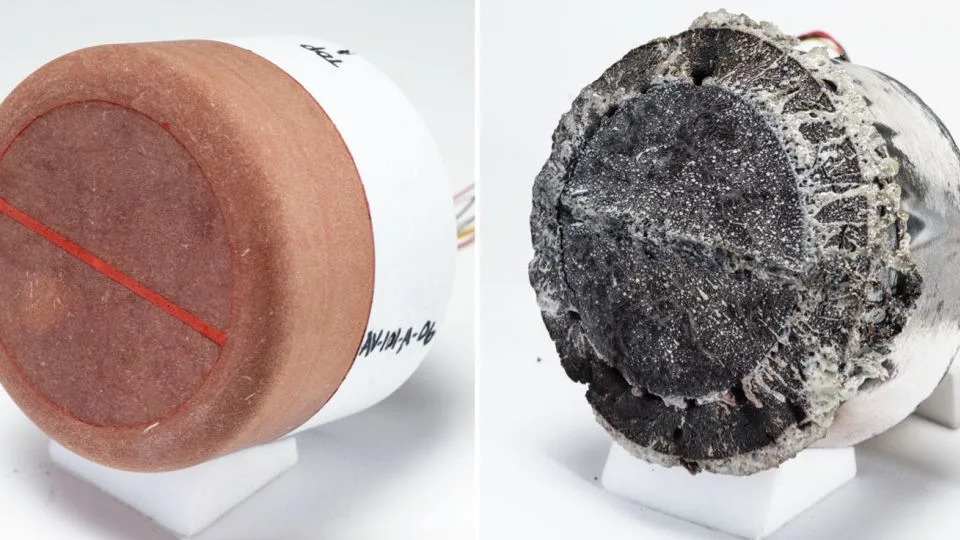
Before and after photographs show test results of heating Avcoat material for 660 seconds. - NASA
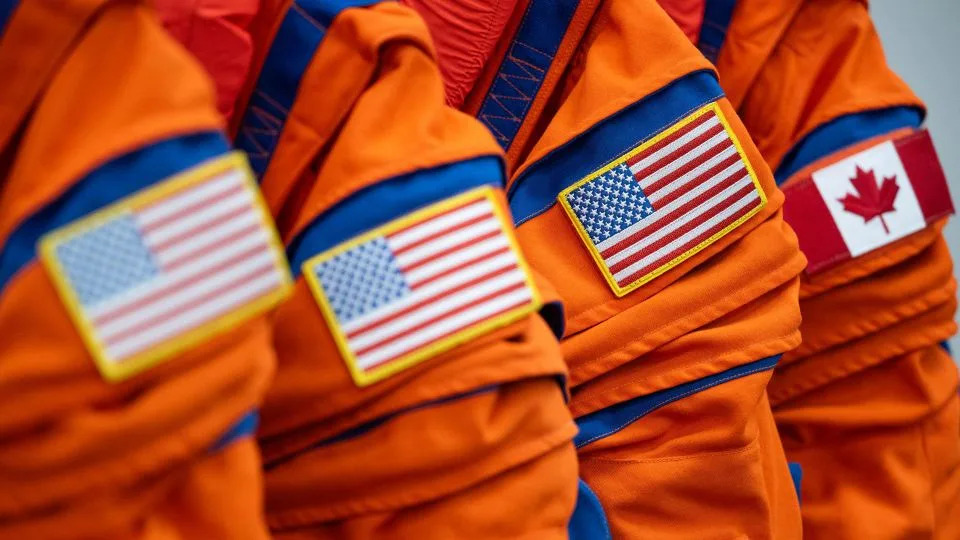
The flags of the United States and Canada are seen on the left shoulder of the Orion Crew Survival System suits on January 17 at Kennedy Space Center. - Joel Kowsky/NASA
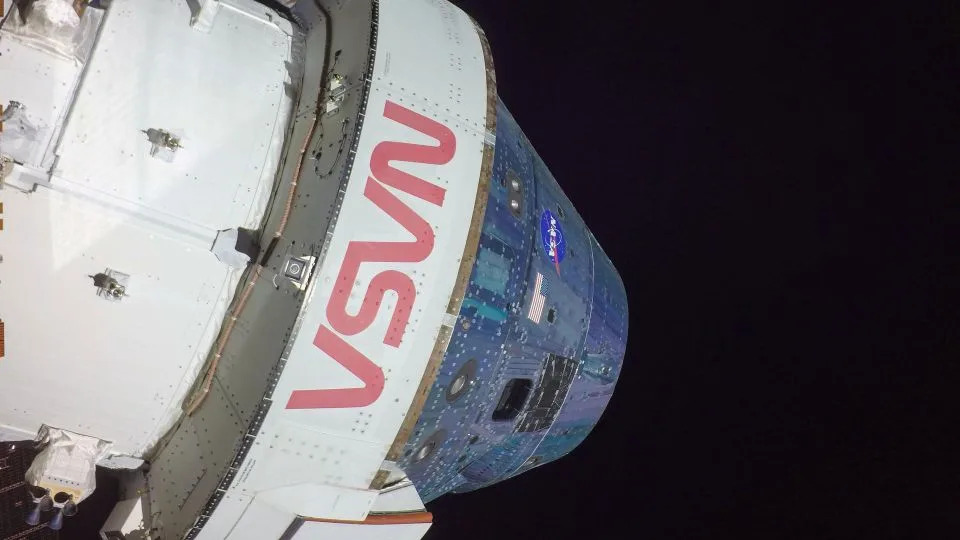
On the fifth day of the Artemis I mission, a camera on the tip of one of Orion’s solar arrays captures the spacecraft with the moon beyond in November 2022. - NASA
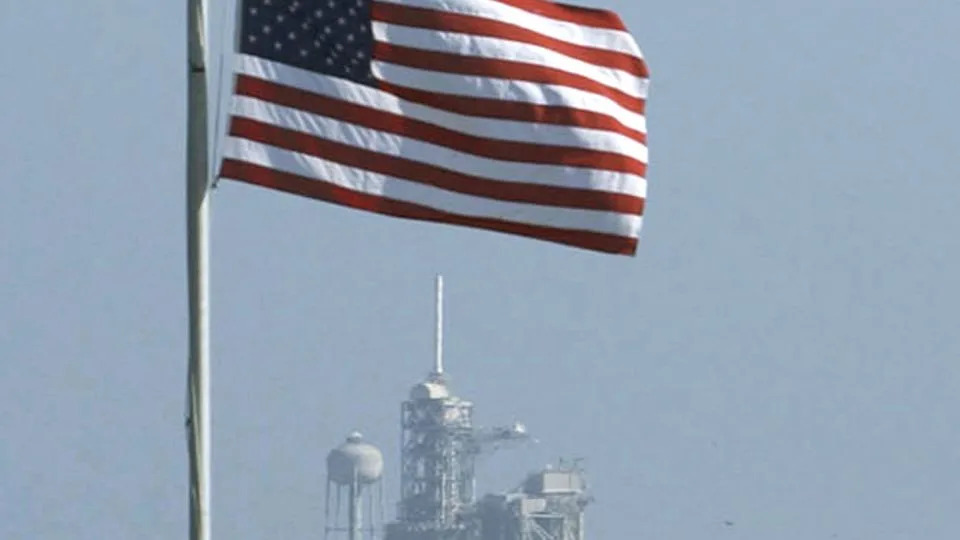
The American flag is lowered to half staff at the press site with launchpad 39A in the background, at Kennedy Space Center on February 1, 2003, following the Space Shuttle Columbia disaster. - Duffin McGee/Reuters
Help us improve.