Researchers modeled 10,000 trajectories for asteroid 2024 YR4 (≈200 ft / 60 m) and estimate a 4.3% chance it could strike the Moon on Dec. 22, 2032. If the collision occurs, simulations predict a primary flash as bright as Venus (magnitude −2.5 to −3) lasting several minutes and a 1,900‑mile impact corridor north of Tycho crater. The strike could loft up to ~100 million kg of lunar debris toward Earth, potentially causing intense meteor storms 2–100 days later; results are from an arXiv preprint and are not yet peer‑reviewed.
Asteroid 2024 YR4 Could Strike the Moon in 2032 — Impact May Produce a Venus‑Bright Flash and Follow-Up Meteor Storms
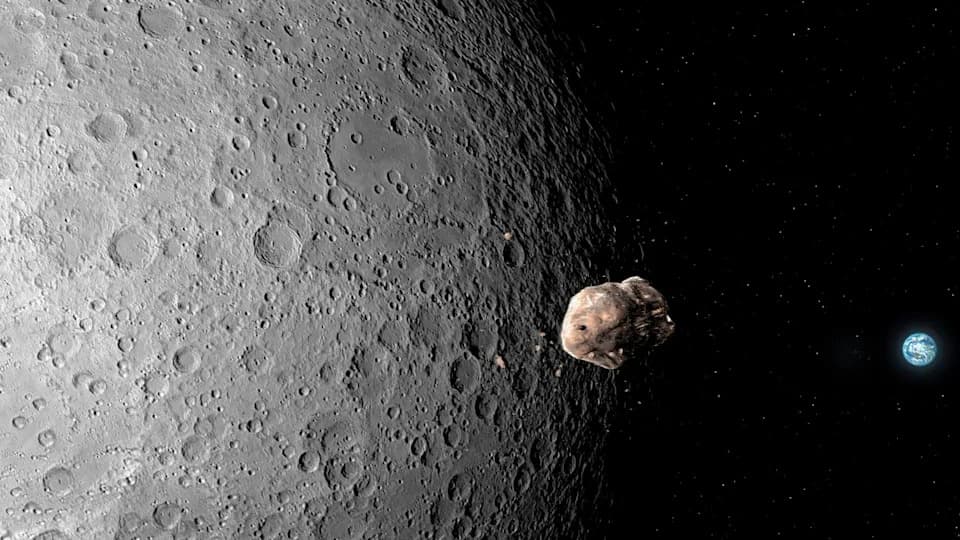
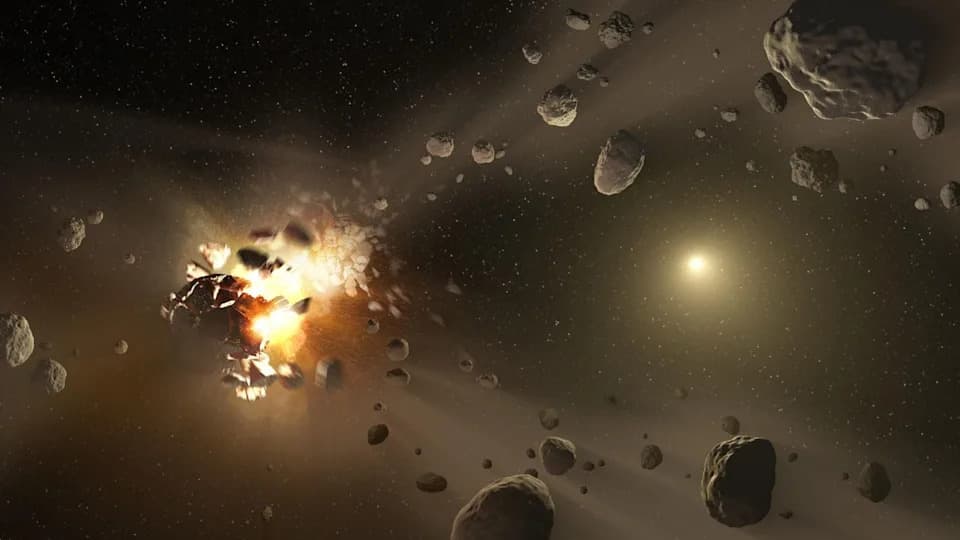
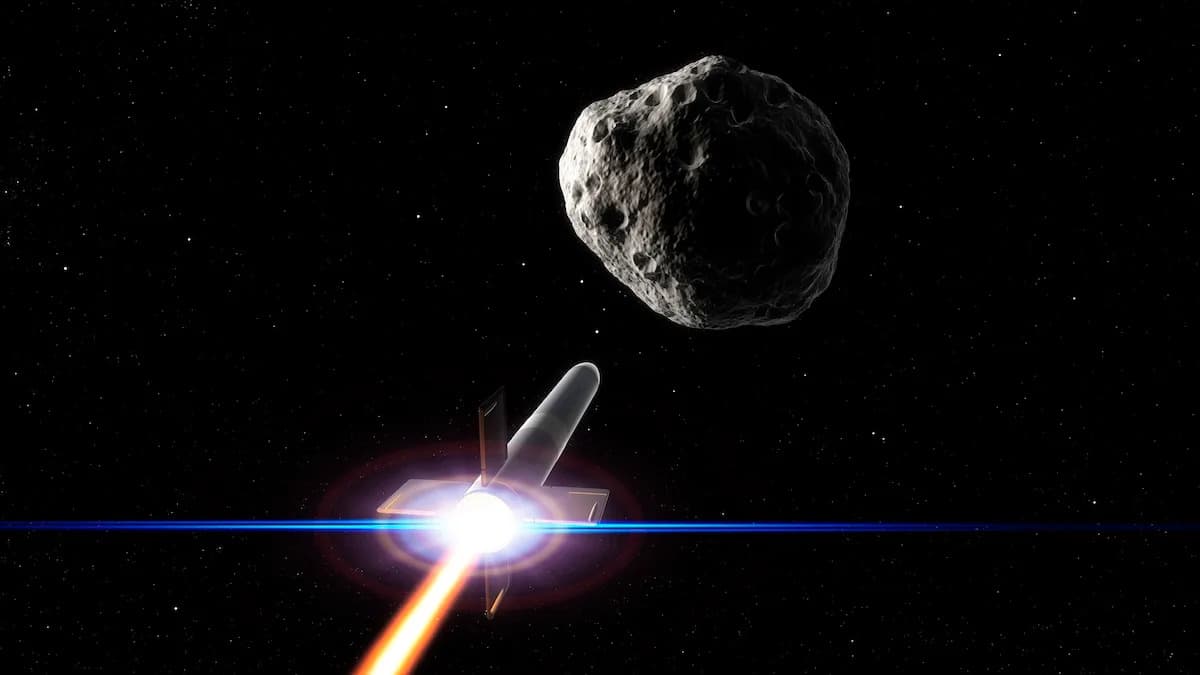
An illustration of a near-Earth asteroid. Asteroid 2024 YR4 has a 4.3% chance of striking the moon, as of February 2026. These odds are likely to remain the same until the space rock swings closer in 2028. . | Credit: Getty Images
A building‑sized asteroid known as 2024 YR4 carries a small but notable chance of striking the Moon on Dec. 22, 2032, and a new study predicts the collision could produce a bright, Venus‑like flash visible from Earth as well as thousands of secondary flashes and intense meteor storms in the weeks that follow.
What We Know
2024 YR4 is roughly 200 feet (60 meters) across — about the height of a 15‑story building — and was discovered on Dec. 27, 2024. Early orbit solutions in February 2025 briefly put its Earth impact probability as high as 3.1%, but more refined calculations have since ruled out an Earth collision during the asteroid’s close pass on Dec. 22, 2032. NASA currently estimates a 4.3% chance the object could instead hit the Moon.
Simulations and Predicted Impact Zone
Researchers led by Yifei Jiao (UC Santa Cruz) and Yifan He and Yixuan Wu (Tsinghua University) treated a potential strike as a "rare natural experiment" and ran detailed simulations to evaluate outcomes. The team ran 10,000 orbital simulations that included the Sun, planets, Earth, Moon and 2024 YR4, plus higher‑resolution impact models that simulated the collision dynamics over a 500‑second interval and tracked debris that escaped the Moon’s gravity.
The most likely impact corridor spans roughly 1,900 miles (about 3,000 km) just north of the Moon’s Tycho crater. From the Northern Hemisphere this corridor would appear on the Moon’s lower hemisphere (the opposite for Southern Hemisphere observers).
Brightness, Timing and Viewing Conditions
The study predicts the primary collision could produce a star‑like flash with an apparent magnitude between about −2.5 and −3 — comparable in brightness to Venus — lasting roughly 200–300 seconds (3–5 minutes). The flash should be clearly noticeable for at least about 10 seconds when it rises sufficiently above the lunar background, the authors say.
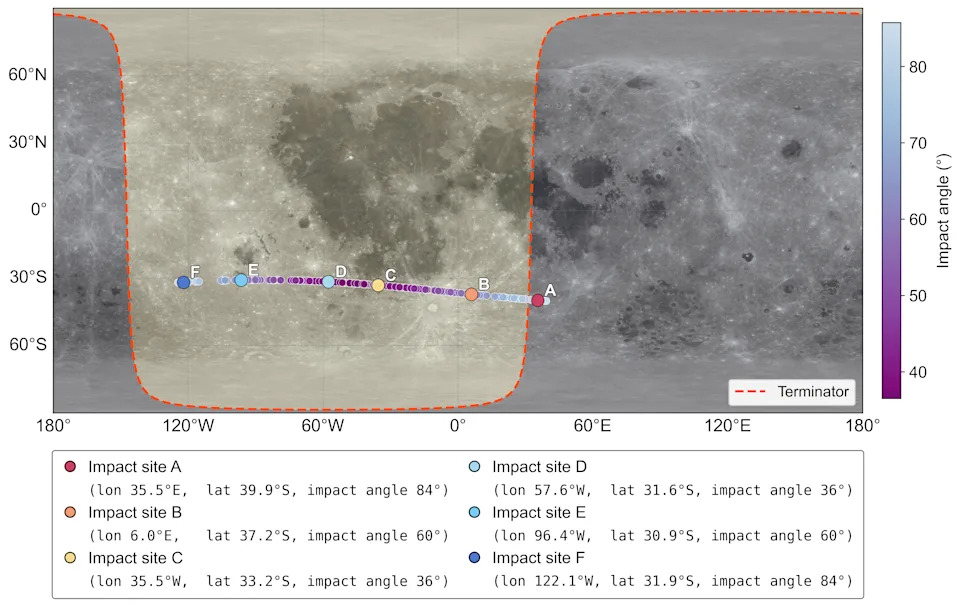
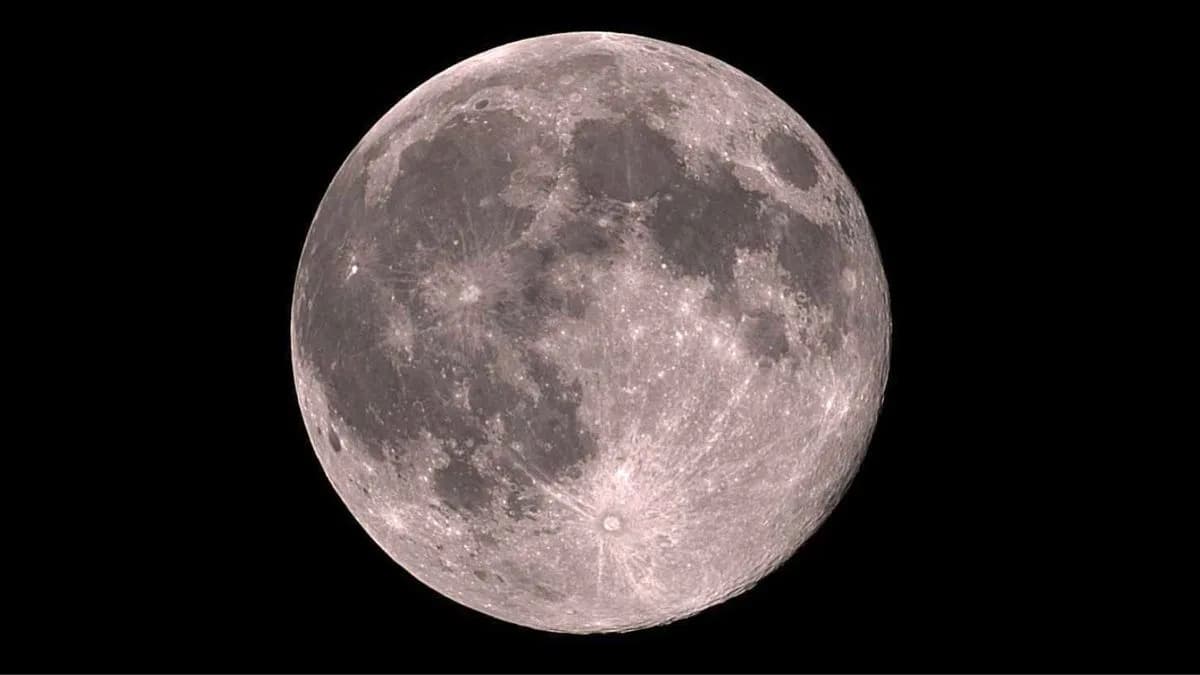
The potential path along which asteroid 2024 YR4 may impact the moon is highlighted in multiple colors. However, only a small section of this lies in the region that will be unlit on the predicted day of the crash (Dec. 22, 2032). | Credit: Yifan He
The modeled impact time is 10:19 a.m. EST (15:19 UTC) on Dec. 22, 2032. That timing would make the flash visible from regions where the Moon is above the horizon, with East Asia, Oceania, Hawaii and western North America singled out as favorable viewing locations.
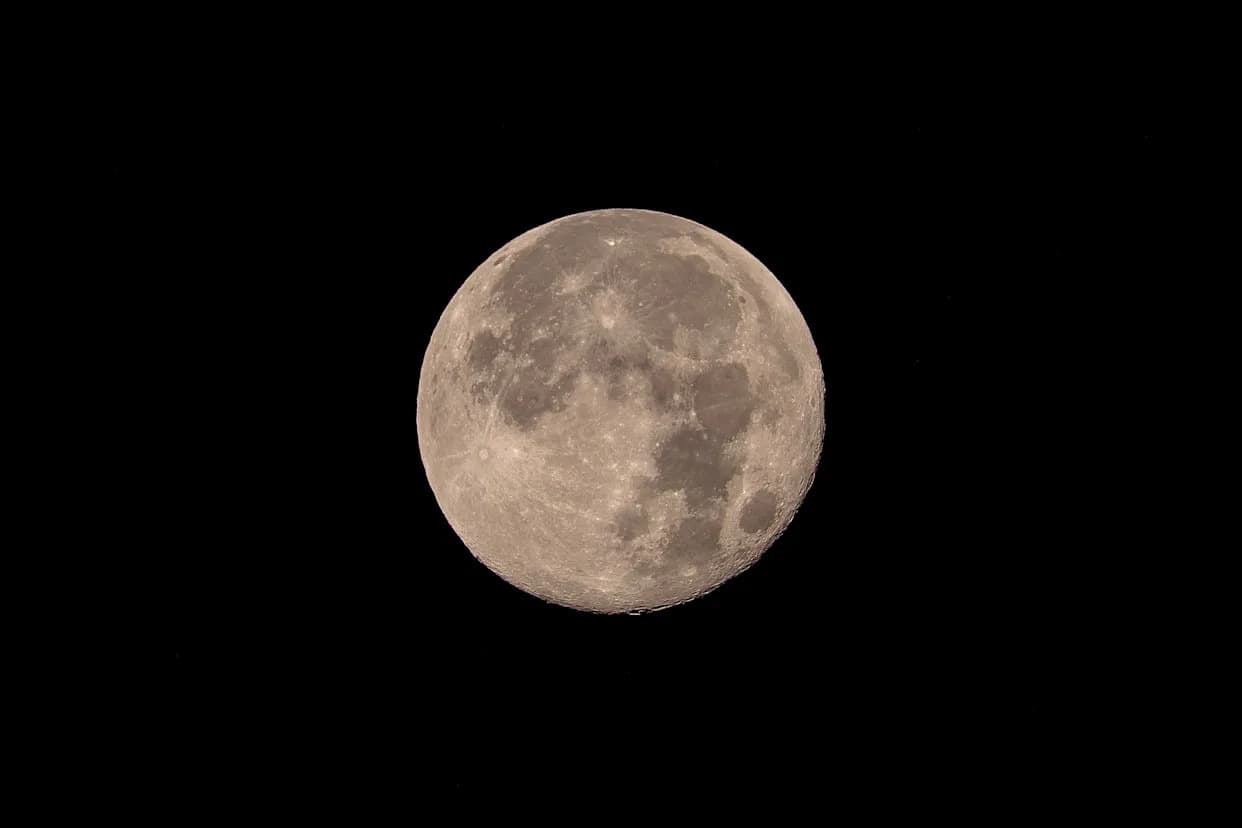
However, about 70% of the Moon’s face will be illuminated on the predicted day. The main flash would be naked‑eye visible only if the asteroid strikes the Moon’s unlit (darker) portion; the authors estimate that conditional probability at roughly 2.85% if an impact occurs. Even if the strike falls on the illuminated side, amateur telescopes should detect the flash.
Secondary Effects: Debris and Meteor Storms
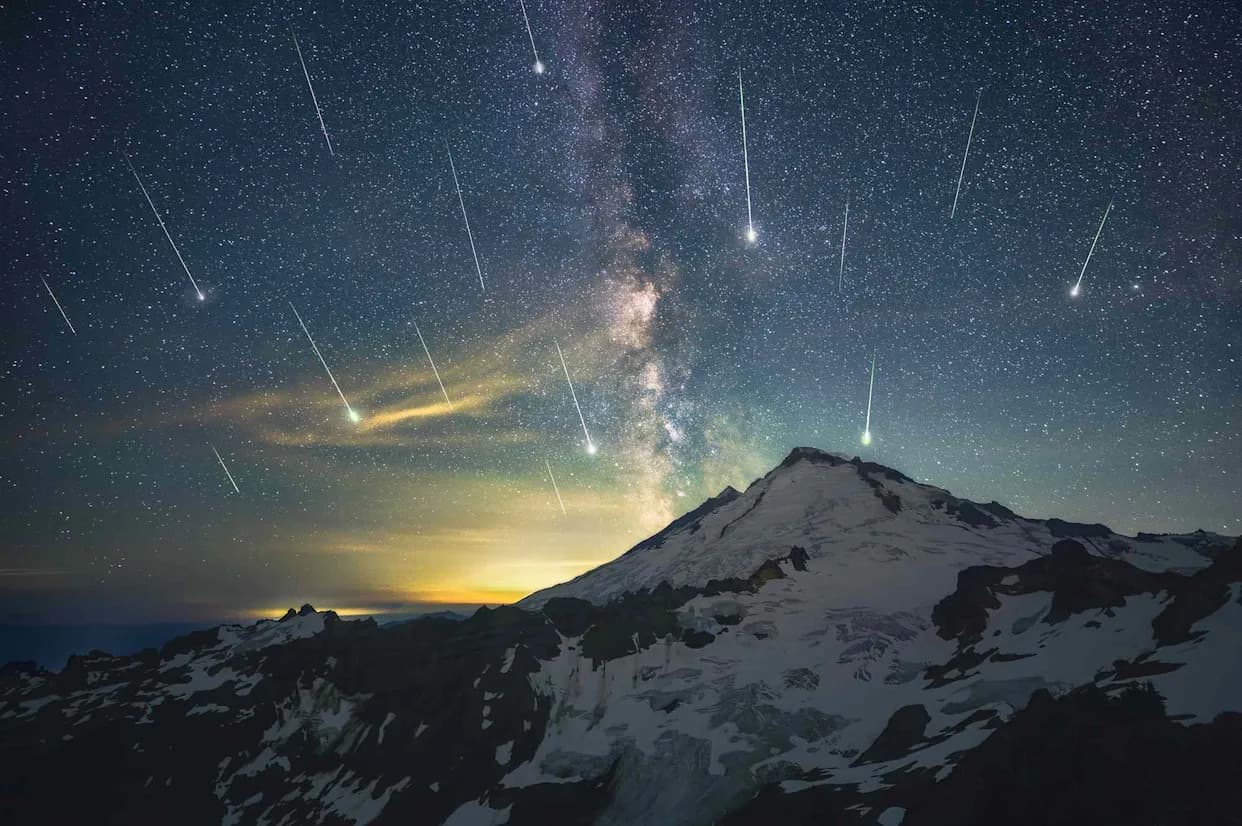
The impact would be energetic: a 2025 study estimated an energy release near the equivalent of 6.5 million tons of TNT, likely making it the largest modern lunar impact if it occurs. The new simulations indicate the collision could loft large amounts of lunar material; up to about 100 million kilograms (≈220 million pounds) of debris might be ejected toward Earth. That material could cause extreme or “super” meteor storms, with elevated meteor activity expected to peak between roughly two and 100 days after impact depending on particle trajectories.
The initial strike would also produce many secondary impacts on the lunar surface as debris rains back down, potentially generating several thousand smaller flashes. Those secondary flashes would be considerably fainter than the primary flash and harder to see without instrumentation.
Scientific Value and Cautions
Researchers describe the scenario as an unprecedented opportunity to observe a forecastable small‑body impact in the Earth–Moon system and to validate impact models in real time. The results are currently available as a preprint on the arXiv server and have not yet been peer‑reviewed, so the conclusions should be treated as provisional and subject to revision.
Bottom line: There is a measurable (≈4.3%) chance 2024 YR4 could hit the Moon on Dec. 22, 2032. If it does, the main impact could produce a brief, Venus‑bright flash and trigger thousands of secondary flashes and intense meteor storms in the days to weeks afterward — a dramatic event for both professional and amateur observers.
Help us improve.