
After the fatal shooting of Renee Good by an ICE agent, thousands of Minnesotans have volunteered to monitor federal immigration operations despite safety risks. Community groups are running trainings that fill quickly, teaching observers how to document encounters and stay safe. Volunteers report arrests, teargas and harassment, while local officials say the presence of observers has complicated enforcement efforts. Bystander video analysis has raised questions about the agent’s use of force.
‘It’s Time To Act’: Minnesotans Mobilize to Monitor ICE After Fatal Shooting
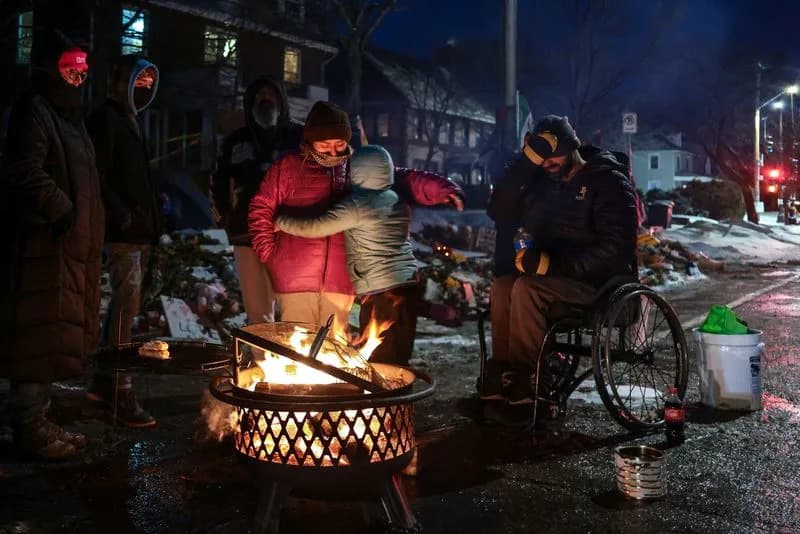
Fabiola, who has lived in Minneapolis for more than 20 years and owns a construction company, hugs her son Asher, 7, during her daily visit to the memorial for Renee Nicole Good, who was fatally shot by a U.S. Immigration and Customs Enforcement (ICE) agent on January 7 during an immigration raid, in Minneapolis, Minnesota, U.S., January 21, 2026. REUTERS/Evelyn Hockstein
When Fabiola, a single mother and naturalized U.S. citizen originally from Latin America, learned that an Immigration and Customs Enforcement (ICE) agent had fatally shot Renee Good, she said she felt both grief and fear. Yet within days she joined thousands of Minnesotans volunteering to monitor federal immigration operations—despite the risks to herself and her seven-year-old son, Asher.
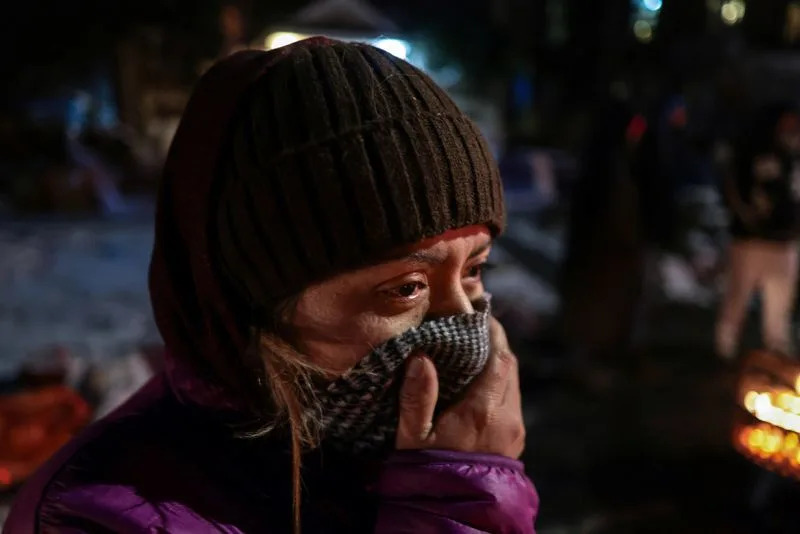
Fabiola, who has lived in Minneapolis for more than 20 years and owns a construction company, makes her daily visit to the memorial for Renee Nicole Good, who was fatally shot by a U.S. Immigration and Customs Enforcement (ICE) agent on January 7 during an immigration raid, in Minneapolis, Minnesota, U.S., January 21, 2026. REUTERS/Evelyn Hockstein
Volunteers Step Forward
“I do feel scared, but at the same time, I know I have to take care of my people too,” Fabiola said. She has lived in the United States for two decades, runs a construction business and now blows a whistle with her son when they see federal agents near his school. She taught Asher how to recognize federal uniforms and made him memorize relatives’ phone numbers in case she is detained.
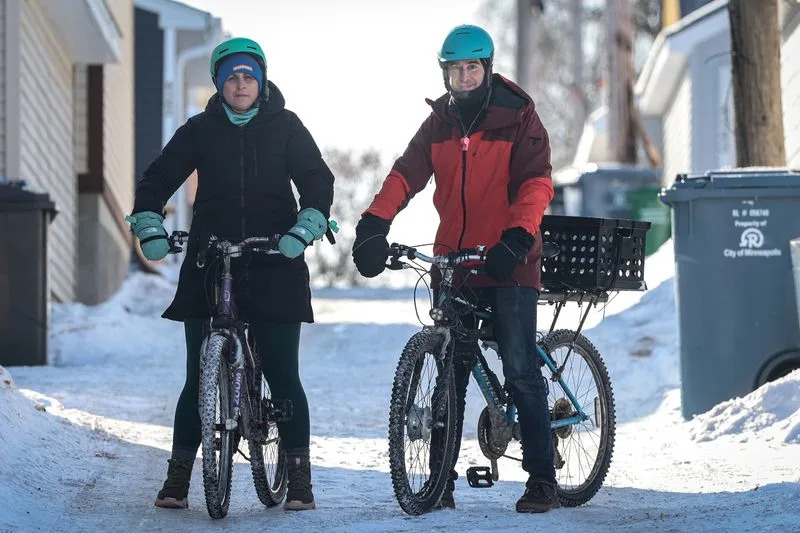
Aaron and Morgan, who recently started patrolling their neighborhood for federal agents, pose for a portrait in Minneapolis, Minnesota, U.S., January 23, 2026. REUTERS/Evelyn Hockstein
Organizers say the number of new volunteers surged after Good’s death. The fatal shooting — the second such deadly encounter since a recent deployment of federal immigration enforcement personnel to the city — has galvanized residents to document operations, warn neighbors and provide support to people who are afraid to leave their homes.
Aaron, a Minneapolis resident who recently started delivering food and supplies to neighbors too scared to leave their homes, takes supplies to a family in Minneapolis, Minnesota, U.S., January 23, 2026. REUTERS/Evelyn Hockstein
Trainings, Tactics and Safety
At least five community groups now offer trainings on monitoring ICE activity, warning immigrant communities about pending operations and documenting any use of force. Kate Wegener, an immigration attorney leading one program, said online sessions frequently hit capacity within hours.
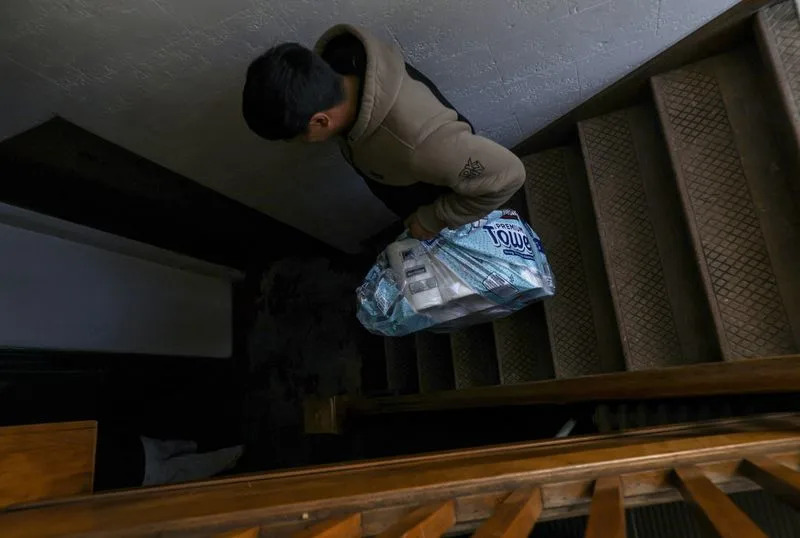
A man carries supplies to his apartment after Aaron, a Minneapolis resident who recently started delivering food and supplies to neighbors too scared to leave their homes, made a delivery in Minneapolis, Minnesota, U.S., January 23, 2026. REUTERS/Evelyn Hockstein
Trainings stress simple safety rules: keep a safe distance (trainers commonly recommend at least eight feet), comply with lawful orders, avoid tailing enforcement convoys in vehicles and prioritize documentation from a safe position.
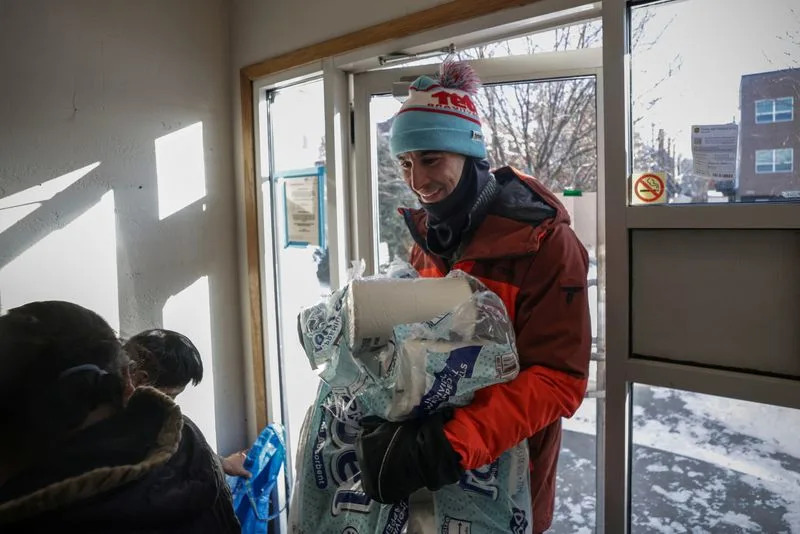
Aaron, a Minneapolis resident who recently started delivering food and supplies to neighbors too scared to leave their homes, delivers supplies to a family, in Minneapolis, Minnesota, U.S., January 23, 2026. REUTERS/Evelyn Hockstein
Risks and Confrontations
Volunteers say they face real danger. Observers report being teargassed, harassed and arrested. Patty O’Keefe, a nonprofit worker, says federal agents smashed her car window, handcuffed and detained her for hours before she was released without charges; Reuters said it could not independently verify her account. Some volunteers have taken extreme precautions: one resident said she had written letters for loved ones to open if she were killed.
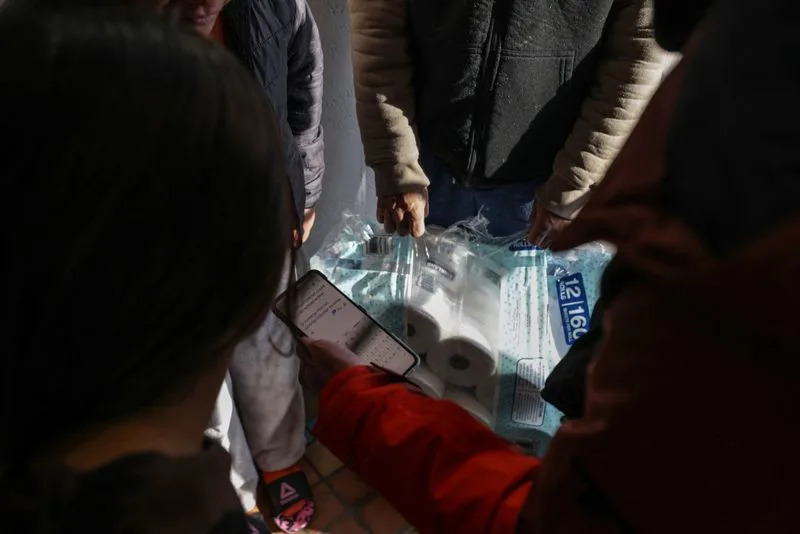
Aaron, a Minneapolis resident who recently started delivering food and supplies to neighbors too scared to leave their homes, uses a translation app to communicate with the family he delivered supplies to, in Minneapolis, Minnesota, U.S., January 23, 2026. REUTERS/Evelyn Hockstein
“They wouldn’t be working so hard to intimidate us if we weren’t actually being successful in gumming up the works of their operation,” O’Keefe said.
Official Responses And Debate
The Department of Homeland Security did not respond to requests for comment about risks to observers. Some administration and law enforcement officials have defended agents’ use of force and labeled protest groups and observers as agitators. Independent analyses of bystander video by Reuters and other outlets indicate that Good’s wheels were turned away from the agent and that the agent’s legs were clear of her vehicle when shots were fired; some officials disputed that account.
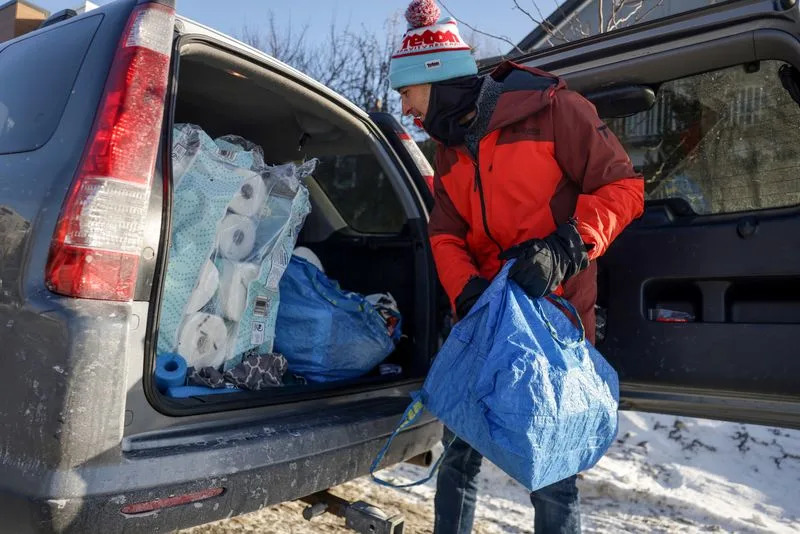
Aaron, a Minneapolis resident who recently started delivering food and supplies to neighbors too scared to leave their homes, loads up a bag of groceries and toilet paper for a family in Minneapolis, Minnesota, U.S., January 23, 2026. REUTERS/Evelyn Hockstein
Local leaders have encouraged documentation. Minnesota Governor Tim Walz urged residents to use their phones to record federal actions, and Border Patrol officials have described the city as a difficult operating environment for enforcement teams.
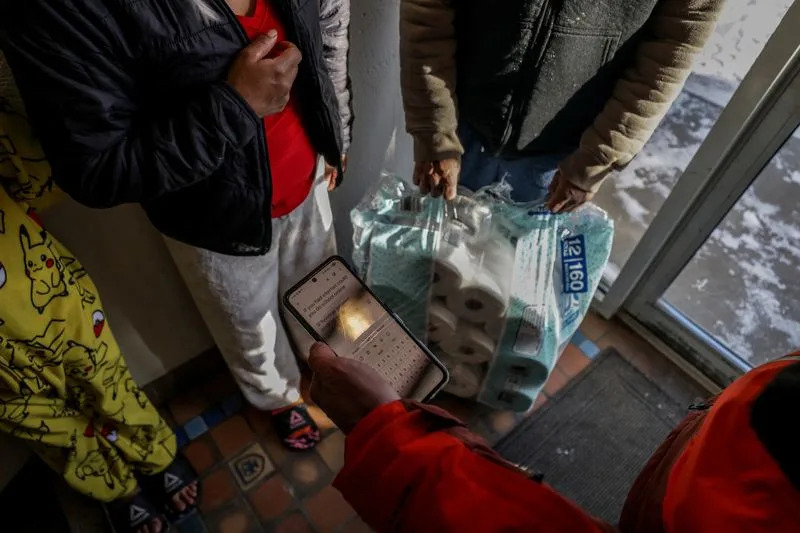
Aaron, a Minneapolis resident who recently started delivering food and supplies to neighbors too scared to leave their homes, uses a translation app to communicate with the family he delivered supplies to, in Minneapolis, Minnesota, U.S., January 23, 2026. REUTERS/Evelyn Hockstein
From Grief To Action
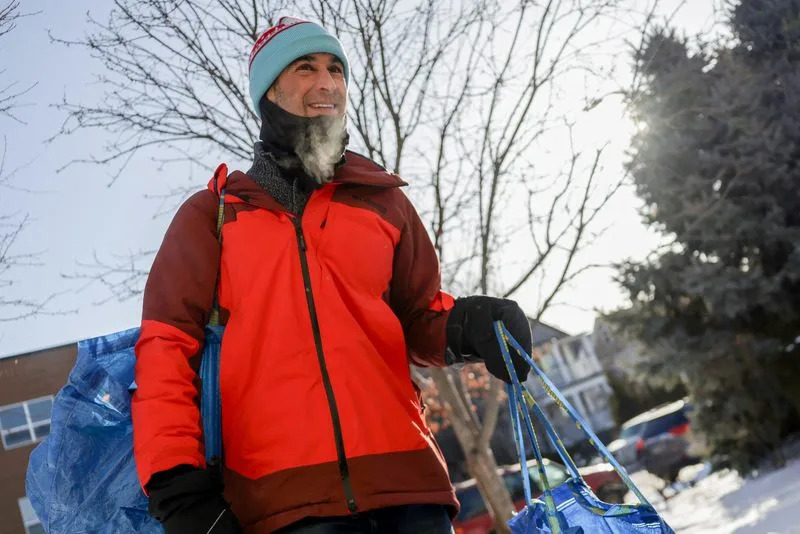
Many volunteers describe their involvement as a moral response. Aaron, a 41-year-old marketing worker, said Good’s death was a wake-up call: “It was like, it’s time to start doing something.” Volunteers wearing fluorescent green vests and carrying whistles are now common sights near schools, busy roads and residential neighborhoods where heavily armed, masked federal agents in tactical gear operate.
On the block where Good died, neighbors have gathered in bitter cold to leave flowers, toys and candles at a growing memorial. “She gave her life for us,” Fabiola said. “Her soul is in heaven, and she protects us.”
Reporting by Heather Schlitz in Minneapolis. Additional reporting by Emily Schmall in Chicago. Editing by Emily Schmall and Suzanne Goldenberg.
Help us improve.





















