Analysis of nearly 2,605 feet of sediment cores from the Amundsen Sea reveals that the West Antarctic Ice Sheet collapsed and regrew at least five times between 4.7 and 3.3 million years ago, with each cycle lasting up to tens of thousands of years. The deposits show evidence of earthquakes, volcanic activity, landslides and tsunamis, and debris carried by icebergs from as far as 870 miles away. Researchers warn these geologically rapid shifts could recur, underscoring the need for improved modelling, emissions reductions and preparedness.
Ancient Antarctic Sediments Reveal Repeated, Violent West Ice-Sheet Collapses — Past Warns of Rapid Future Shifts
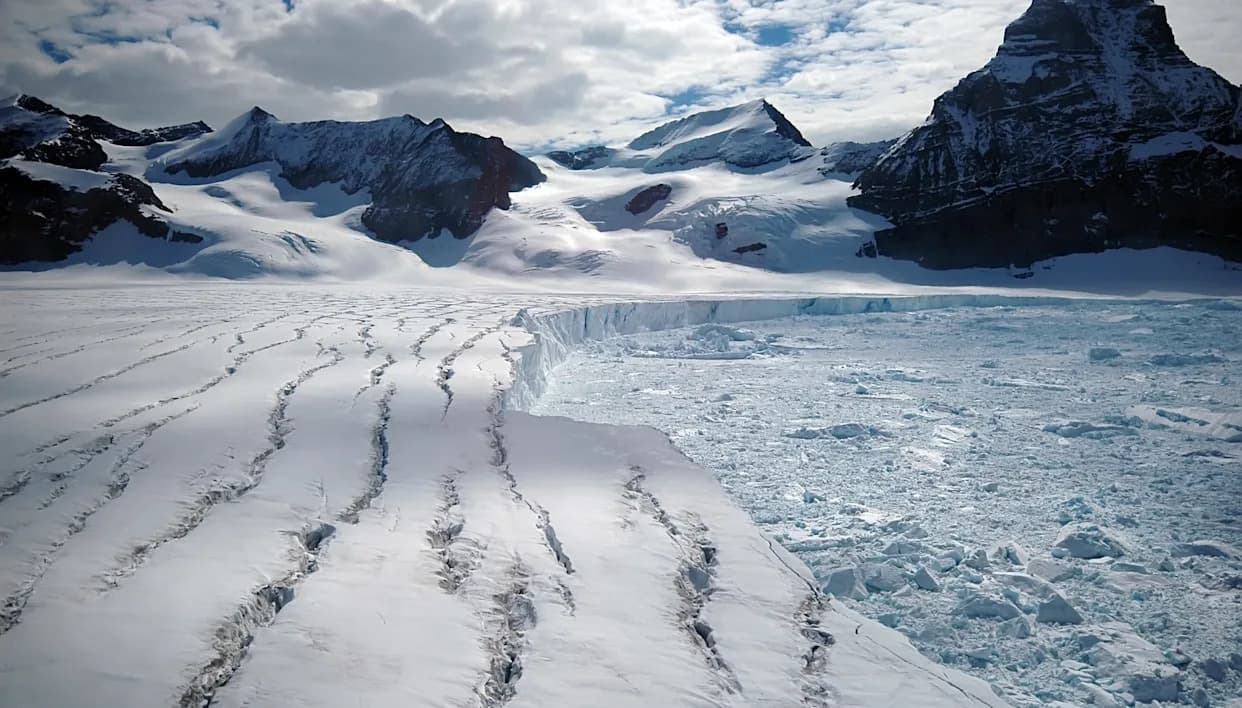
Photo Credit: iStock
Researchers analyzing seabed sediments off West Antarctica have found clear evidence that the region's ice sheet collapsed and regrew multiple times in the distant past, producing violent local and global effects. The findings raise fresh concerns that similarly rapid changes could occur again as the planet warms.
What the expedition found
During a 2019 scientific drilling expedition in the Amundsen Sea, researchers recovered sediment cores nearly 2,605 feet (about 795 meters) long that record roughly six million years of environmental history. Chemical and geological analyses show that between about 4.7 million and 3.3 million years ago the West Antarctic Ice Sheet experienced at least five major collapse-and-regrowth cycles, each lasting up to tens of thousands of years.
Signs of dramatic, geologically rapid events
The sediment layers preserve multiple signatures of catastrophic activity coinciding with those ice-sheet oscillations. Distinct mud layers contain chemical fingerprints matching rock sources some 870 miles (approximately 1,400 kilometers) away, demonstrating that icebergs transported mountain debris across open ocean when thick sea ice no longer existed.
Researchers note: Data from the Amundsen Sea suggest onshore changes will not be slow or imperceptible on human timescales. Past behavior points to geologically rapid shifts experienced locally as earthquakes, volcanic eruptions, landslides and tsunamis — events with consequences that can reach around the globe.
How ice loss can trigger other hazards
When large ice loads retreat, several linked processes can increase hazard risk:
- Isostatic rebound: The crust beneath the ice lifts as pressure is released, which can increase regional seismicity (earthquakes).
- Volcanic response: Reduced pressure on the crust can change magma behavior and has been associated with heightened volcanic activity in some regions, including Iceland.
- Landslides and tsunamis: Rapid destabilization of slopes—on land or underwater—can trigger massive landslides and generate destructive tsunamis.
- Sea-level rise and storm impacts: Added water from Antarctic melt raises global sea levels, exacerbating coastal flooding and making low-lying cities more vulnerable to storm surges.
Preparing for future risk
Modern computer models can simulate how ice-sheet collapse reshapes Antarctica and estimate likely timing and downstream impacts. Those projections help communities and governments improve evacuation planning and harden critical infrastructure.
Reducing greenhouse gas emissions by transitioning away from coal, oil and gas, deploying renewable energy like solar, and electrifying transport will slow warming and reduce the rate of Antarctic ice loss. While mitigation lowers long-term risk, the study highlights that some changes can occur quickly enough to require near-term adaptation and preparedness.
Bottom line: The geological record shows West Antarctica has undergone rapid, repeated collapses in the past, producing cascading hazards. That history strengthens the case for urgent climate mitigation, improved monitoring, and practical local planning to reduce future impacts.
Help us improve.