Seismic data from 373 stations indicate much of Greenland’s ice sheet sits on soft, water‑saturated sediments rather than hard bedrock. These weak basal layers reduce friction and could allow faster ice flow, making some regions more sensitive to warming than models currently assume. The study, published in Geology, calls for expanded monitoring and incorporation of basal maps into ice‑sheet models to reduce large uncertainties in sea‑level projections.
Study Finds Widespread Soft, Water‑Rich Sediments Under Greenland Ice — Could Speed Sea‑Level Rise

Photo Credit: iStock
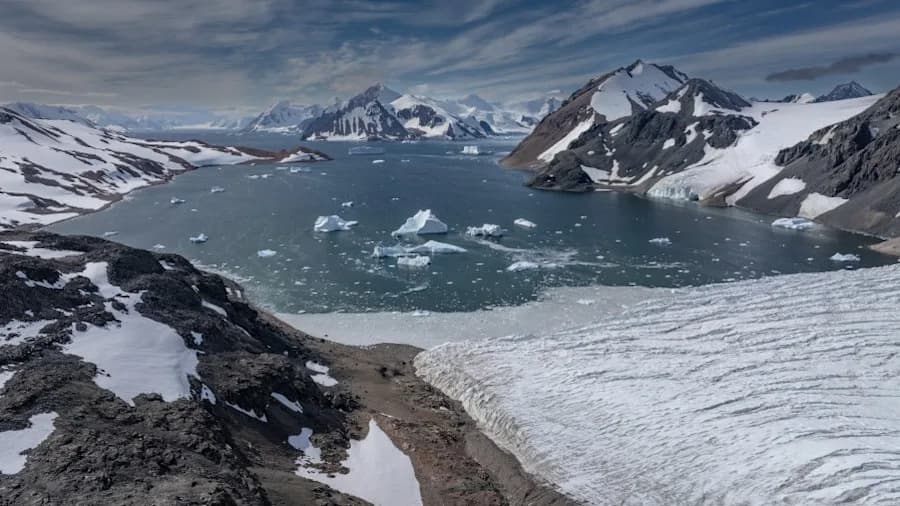
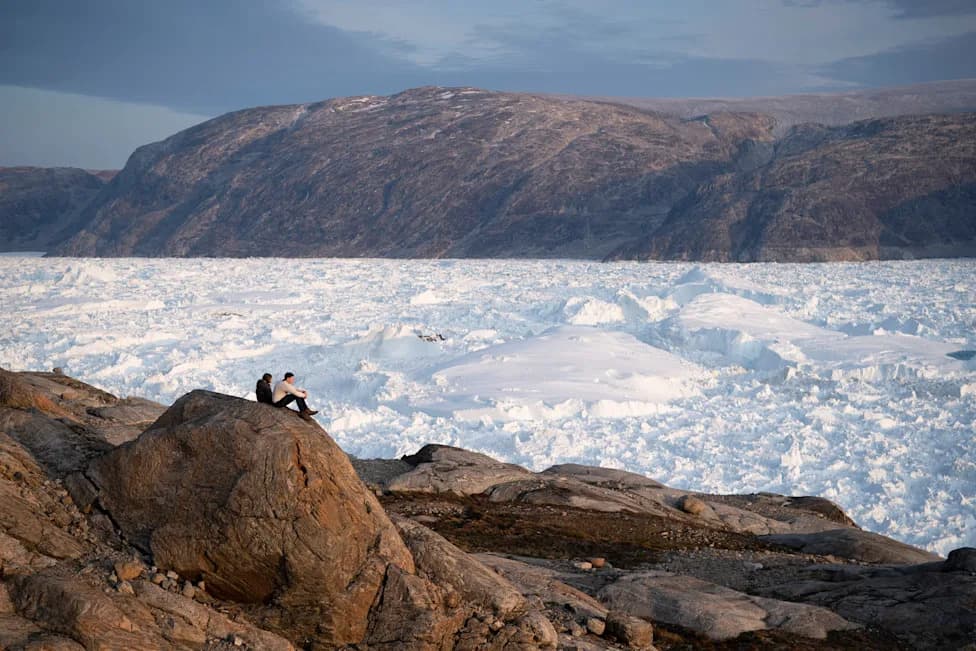
New seismic mapping shows that much of the Greenland ice sheet rests on soft, water‑saturated sediment rather than solid bedrock — a finding that could make parts of the ice sheet respond faster to warming and increase uncertainty in sea‑level projections.
Researchers published the results in Geology (GeoScienceWorld) after analyzing seismic signals recorded at 373 stations across Greenland. By using waves from distant earthquakes, the team distinguished between hard bedrock and loose, water‑rich basal material beneath the ice.
“Greenland is a major contributor to global sea‑level rise, but the ice loss projection suffers large uncertainties due to limited understanding in the basal environment,” said Yan Yang, a geophysicist at Scripps Institution of Oceanography, UC San Diego.
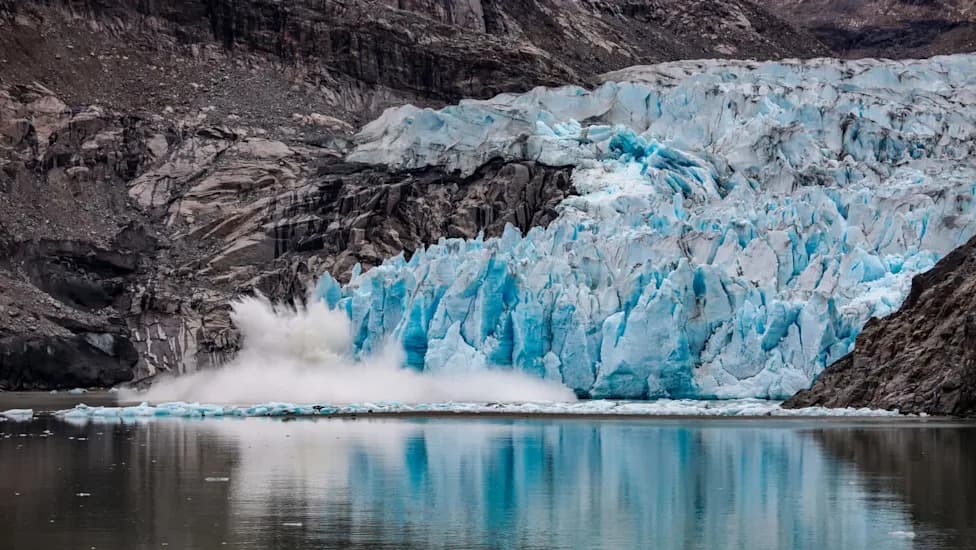
The type of material at the ice‑bed interface strongly influences glacier motion. Hard bedrock produces friction that slows ice flow; by contrast, wet, unconsolidated sediments can act like a lubricant, reducing resistance and allowing ice to slide more readily toward the ocean.
Notably, the maps reveal sediment beneath interior regions that earlier work had assumed were underlain by bedrock. That broader distribution of weak basal material suggests some parts of Greenland may be more vulnerable to warming than current ice‑sheet models assume.
Implications for Sea Level and Communities
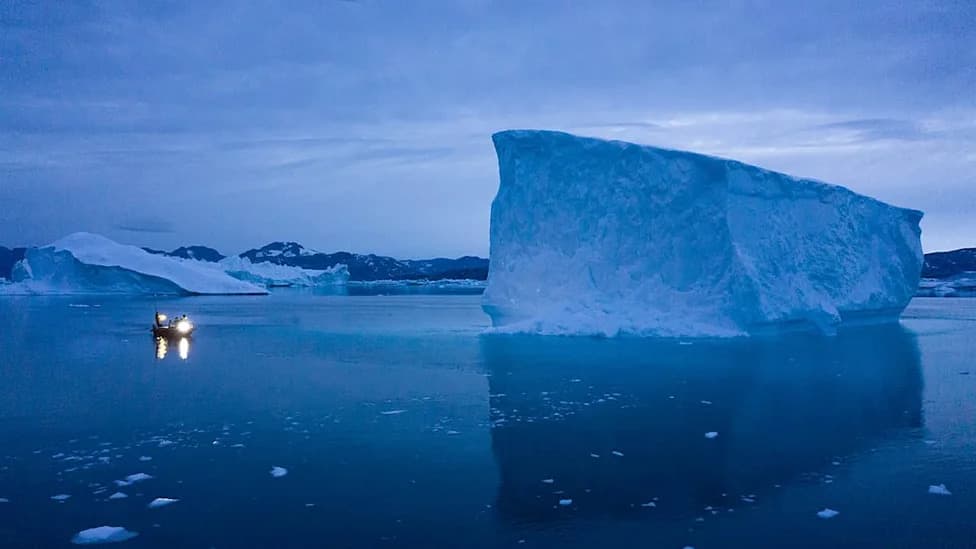
Faster ice discharge from Greenland would raise global sea levels and increase the reach and damage potential of storm surges in coastal cities worldwide. Higher baseline sea levels also exacerbate flooding of agricultural land, damage fishing and port infrastructure, and can increase the public‑health risks associated with expanding ranges of disease vectors.
What Scientists Recommend
The authors call for expanded seismic and glaciological monitoring, incorporation of these new basal maps into ice‑flow models, and targeted field studies to better constrain how basal sediments, meltwater routing, and seasonal processes interact. Reducing greenhouse gas emissions remains essential to slow long‑term ice loss; in the near term, improved forecasts will help coastal communities plan adaptation measures.
“Our results suggest that thick, weak sediments could make parts of Greenland more responsive to future warming. If more meltwater reaches the bed, these sediments may further reduce strength, speed up ice flow, and increase ice loss to the ocean,” Yang said.
Other research highlights related polar and alpine concerns: the Alps face accelerating glacier loss, and Antarctica’s Thwaites Glacier continues to show unstable behavior. Together, these findings emphasize the need to reduce uncertainties in ice‑sheet behavior to improve sea‑level rise projections and emergency planning.
Help us improve.