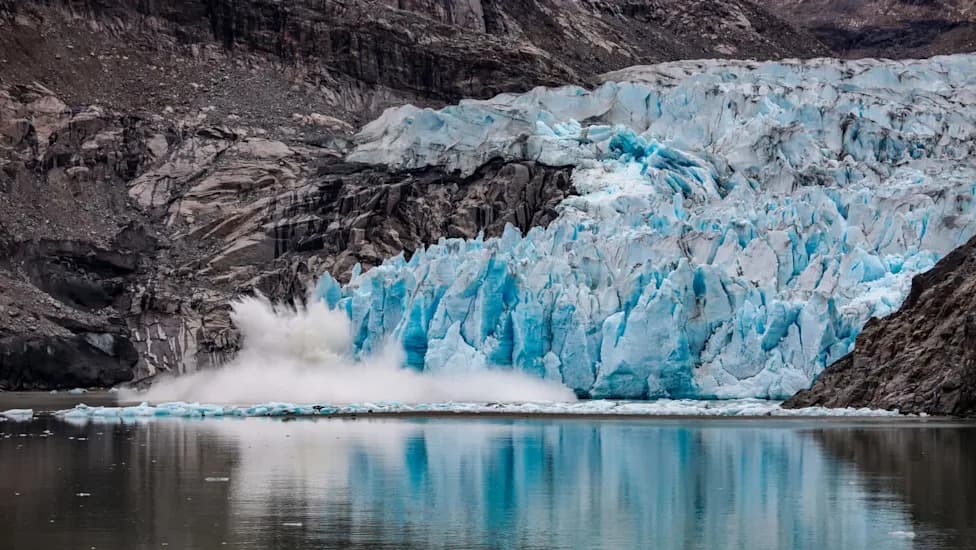
Iceberg A-23A, which calved from the Filchner Ice Shelf in 1986, has shifted from white to vivid cyan as meltwater pools across its surface, revealing clearer blue ice beneath. Satellite monitoring shows the berg shrank from about 3,640 km² in Jan 2025 to 1,182 km² by 9 Jan 2026. Scientists say trapped meltwater, the rampart–moat effect and recent grounding events have accelerated its breakup as it drifts toward an iceberg graveyard near South Georgia Island.
40-Year-Old Antarctic Iceberg A-23A Turns Vivid Blue as Meltwater Drives Rapid Breakup
40-Year-Old Iceberg Turns Vivid Blue as It Approaches Total Disintegration
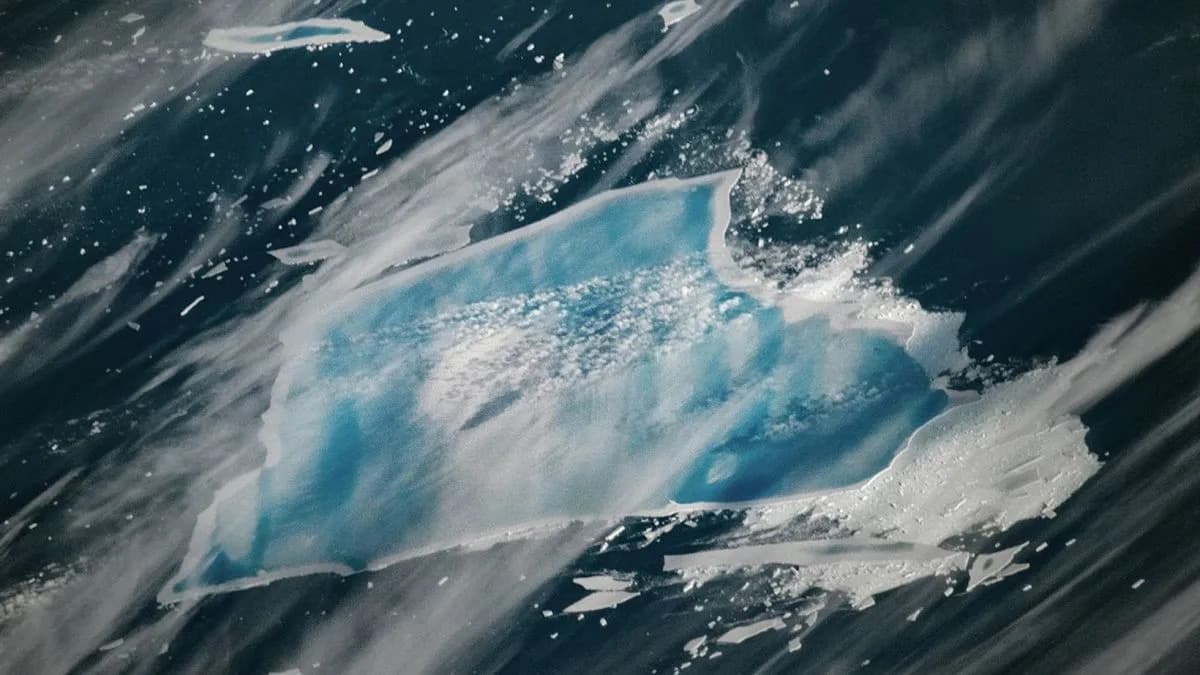
An Antarctic iceberg that calved from the Filchner Ice Shelf in 1986 is taking on a vivid cyan hue as it approaches near-total disintegration. Satellite observations show meltwater pooling across the surface of iceberg A-23A, a process that both changes its appearance and accelerates structural collapse.
What’s happening to A-23A?
Over decades of remote monitoring, A-23A went from a large, relatively stable berg to a rapidly deteriorating mass of ice. In a short span the surface shifted from snowy white to intense blue as meltwater collected in cavities and depressions. Scientists say pooled freshwater increases pressure on existing fractures and pries them open faster, hastening breakup.
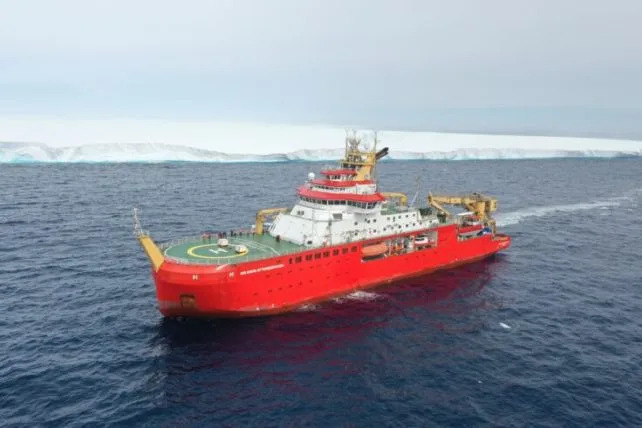
Iceberg A-23A and the British Antarctic Survey research vessel RSSDavid Attenboroughin December 2023. (British Antarctic Survey)
Key recent events
A-23A calved from the Filchner Ice Shelf in 1986 and became grounded on the Weddell Sea bed, where it remained comparatively unchanged for about 30 years. In 2023 it finally broke free and was briefly held in a vortical feature known as a Taylor column before resuming its drift. The berg became wedged against the seafloor in March 2025, freed itself in June 2025, and has declined rapidly since.
Area estimates illustrate its shrinkage: about 3,640 km² (1,410 sq mi) in January 2025, roughly 1,700 km² by September 2025 after large fragments calved off, and down to 1,182 km² by 9 January 2026.
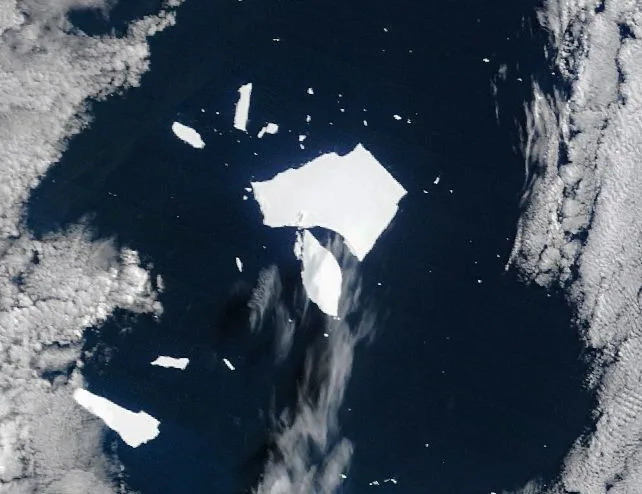
Image of A-23A disintegrating in September 2025, photographed by NASA's Terra satellite. (NASA)
Why the color change?
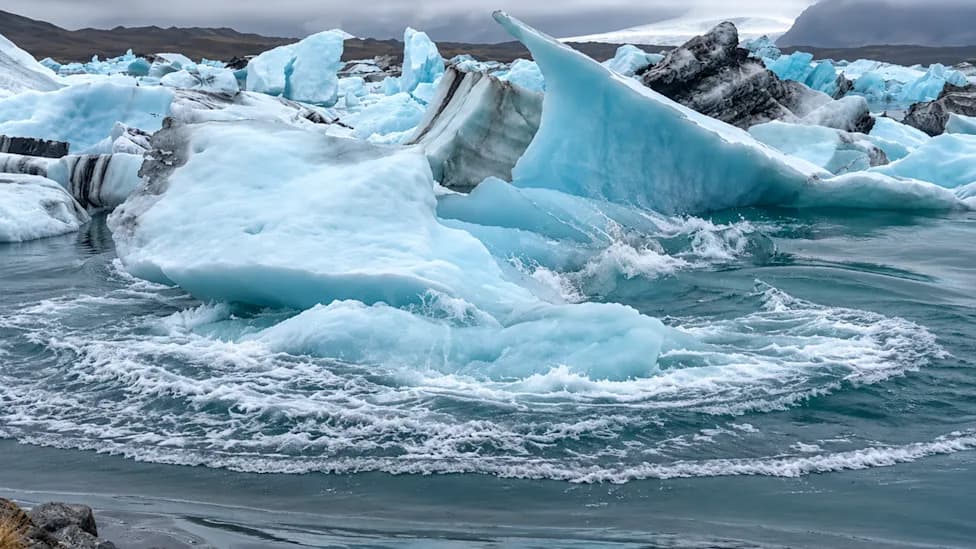
Ice can appear white, blue or green for several reasons. Fresh snow and ice scatter light because of trapped air bubbles and impurities, producing a white appearance. When ice becomes denser and air is squeezed out, it absorbs more red light and looks bluer. In A-23A’s case, the striking cyan is largely the result of surface meltwater pooling in cavities, which alters how light interacts with the remaining ice and reveals clearer, bluer ice beneath the weathered surface.
Rampart–moat effect and hydraulic failure
Satellite imagery shows a white rim around much of A-23A’s edge — a so-called rampart–moat effect. As the waterline melts and the ice bends, a raised edge can trap meltwater. The pooled water exerts pressure in weakened cracks and can punch through the ice, spilling fresh water into the salty sea and creating a slushy mix of floating ice fragments often labeled an "ice mélange." This process accelerates fragmentation and melting.

Subscribe to ScienceAlert's free fact-checked newsletter
“I certainly don't expect A-23A to survive the austral summer,”
— retired Earth scientist Chris Shuman, formerly of the University of Maryland Baltimore County.
Where it's headed
A-23A is drifting toward a well-known iceberg graveyard near South Georgia Island, where it will continue to break apart and ultimately melt back into the Southern Ocean. Agencies such as NASA describe the berg as being "on the verge of complete disintegration."
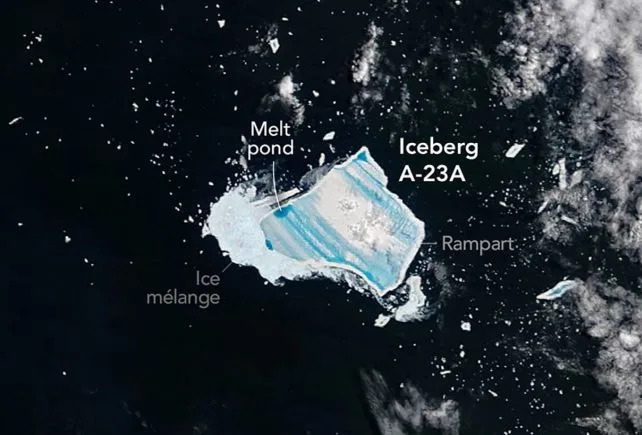
Image of the iceberg from NASA's Terra satellite on 26 December 2025. (NASA)
Why it matters
Beyond the immediate spectacle, A-23A illustrates how satellite monitoring can document the lifecycle of large Antarctic icebergs and the physical processes — grounding, trapping in ocean eddies, meltwater pooling and hydraulic failure — that govern their demise. Tracking these events improves understanding of iceberg drift patterns, regional oceanography and potential hazards to shipping in high-latitude seas.
Note: All dates and area estimates are based on satellite observations reported through early January 2026.
Help us improve.