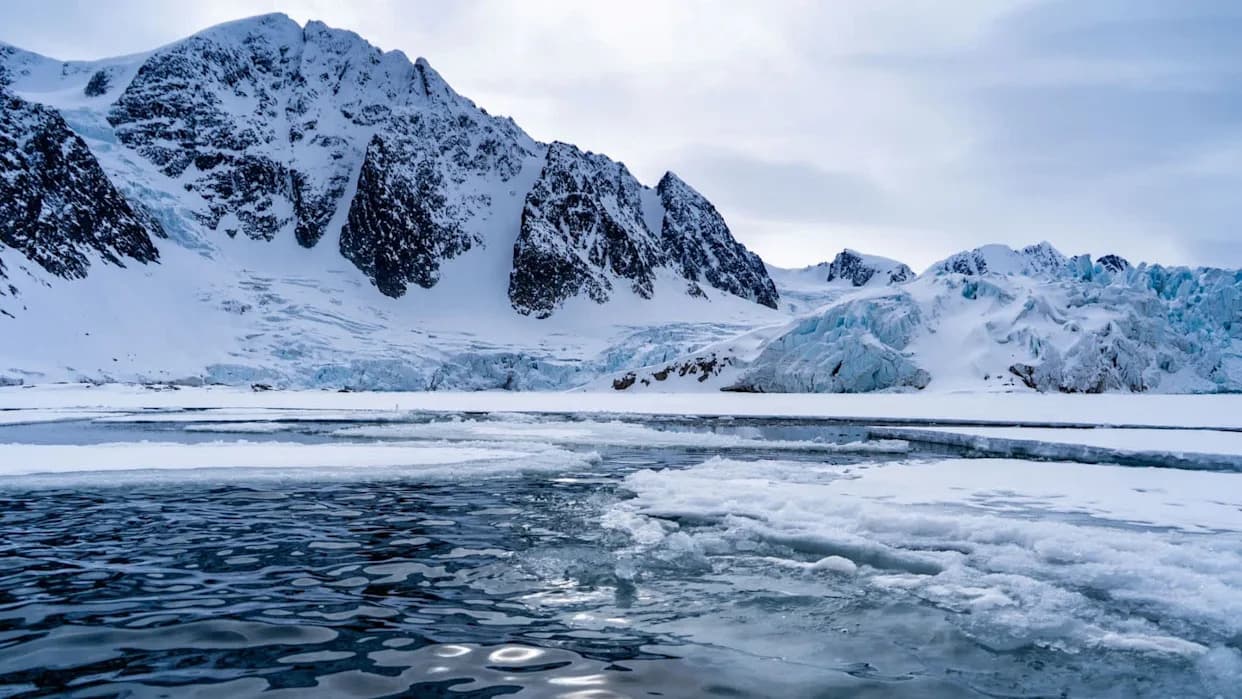
The Prudhoe Dome in northwestern Greenland completely melted about 7,100 years ago, according to infrared luminescence dating of sub-ice sediment recovered by researchers. Early–Middle Holocene summers were roughly 3–6 °C warmer than today, similar to projected summer warming in some CMIP6 scenarios for 2100. The study shows modest, sustained warmth can produce prolonged ice loss and underscores the need for more sub-ice records to improve forecasts of Greenland’s contribution to future sea-level rise.
Ancient Greenland Ice Cap Melted 7,100 Years Ago — A Warning as 21st-Century Summers Warm

The scientists drilled down to the bedrock beneath the Prudhoe Dome on the Greenland Ice Sheet to find out when the region was last ice-free. | Credit: Jason Briner/University at Buffalo
A section of the Greenland Ice Sheet known as the Prudhoe Dome fully melted about 7,100 years ago during the Early–Middle Holocene, when summer temperatures were similar to values climate models project for some 2100 scenarios, a new study reports. The result — revealed by sediment recovered from beneath the dome — offers a direct, physical example of how modest sustained warming can trigger prolonged ice loss.
Researchers drilled through the Prudhoe Dome, a roughly 500-meter (1,640-foot) thick cap covering about 2,500 km² (965 sq mi) in northwestern Greenland, and retrieved sediments from beneath the ice. Using infrared luminescence dating on those buried sediments, the team determined the material was last exposed to sunlight about 7,100 years ago, meaning the dome must have completely melted at that time to reveal the sedimentary surface.
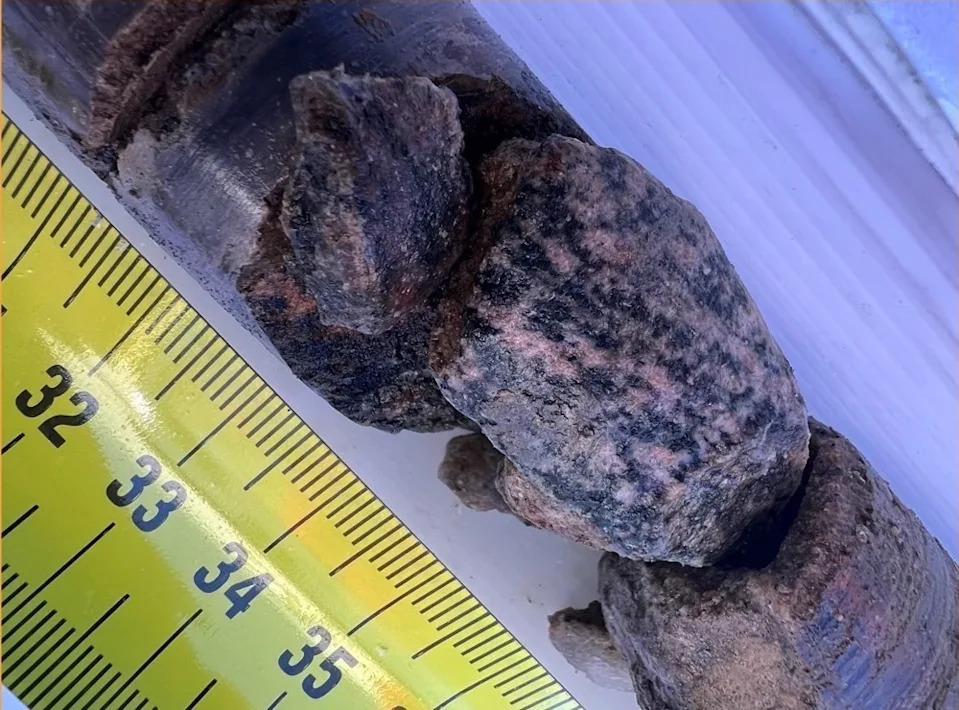
The bedrock core revealed the Prudhoe Dome completely melted around 7,000 years ago. | Credit: Jason Briner/University at Buffalo
Chemical analyses of the ice column also indicate that the current dome does not contain ice leftover from the last glacial maximum — evidence that the Prudhoe Dome melted away after the last ice age and has since re-formed. The study was published in Nature on Jan. 5.
How Warm Was It — And How Does That Compare To Today?
The authors report Early and Middle Holocene summer temperatures in Greenland were about 3–6 °C (5.4–10.8 °F) warmer than present. Major climate model ensembles such as CMIP6 project summer warming of a similar magnitude in Greenland by 2100 under high-emissions scenarios, although projections vary regionally and by season.
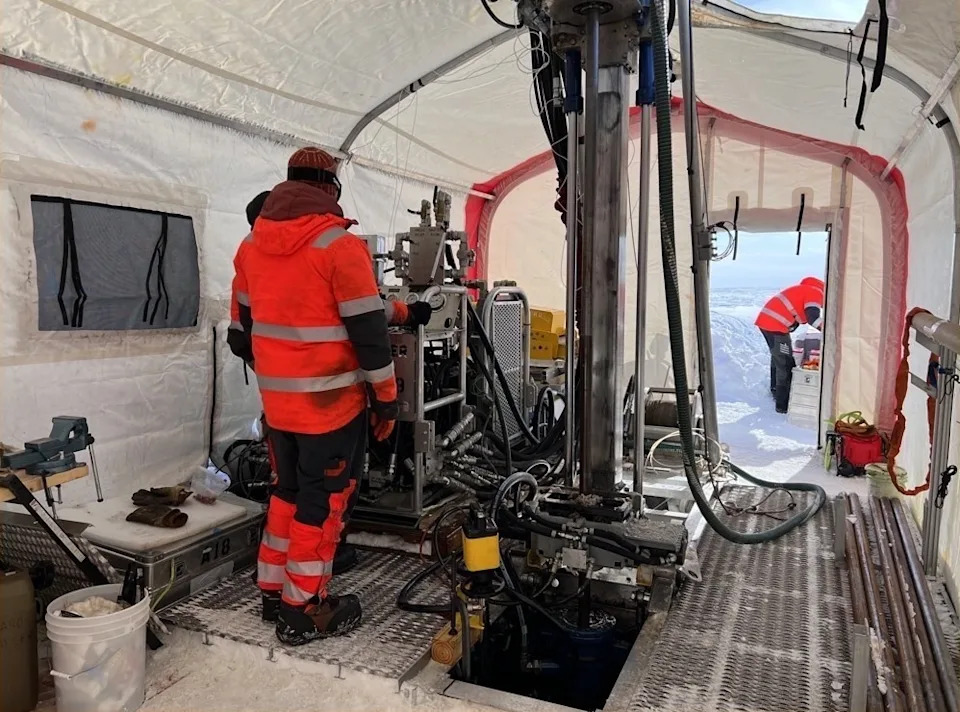
The drill extended over 1,600 feet into the ice to reach the bedrock below. | Credit: Jason Briner/University at Buffalo
Why This Matters
Because the Greenland Ice Sheet is the single largest modern contributor to global sea-level rise, understanding which parts of it are vulnerable to sustained warming is critical. If Greenland’s entire ice cover melted, global mean sea level would rise by roughly 7.3 meters (about 24 feet). The Prudhoe Dome example demonstrates that parts of Greenland that disappeared during a naturally warmer Holocene could be at risk again if similar summer temperatures return.
“When all you see is ice in all directions, to think of that ice being gone in the recent geological past and again in the future is just really humbling,” said lead author Caleb Walcott-George, a geologist at the University of Kentucky.
Limits And Next Steps
The study does not yet resolve how long Holocene warmth had to persist to melt the Prudhoe Dome entirely. That duration — the number of years of sustained warming required to cause complete melt at a site — is a key unknown for projecting future ice loss. The authors emphasize the need for additional ice-core and sub-ice sediment records across Greenland to map Holocene retreat, validate numerical models, and better constrain regional vulnerabilities and potential contributions to sea-level rise.
Co-author Jason Briner (University at Buffalo) noted that the Early Holocene was a relatively stable interval when human societies began farming, yet even that modest, long-lasting natural warming was sufficient to remove the Prudhoe Dome for potentially millennia. Co-author Joerg Schaefer (Lamont-Doherty Earth Observatory, Columbia University) added that direct observations from sub-ice sediments are a game-changer for identifying which sectors of Greenland are most likely to respond to future warming.
In sum, the Prudhoe Dome findings provide a clear paleo-observational benchmark linking past regional warmth to durable ice retreat — a cautionary datapoint as some scenarios project comparable summer temperatures by the end of this century.
Help us improve.