Scientists propose transporting harvested or drift boreal timber down major Arctic rivers and depositing it in oxygen-poor parts of the Arctic Ocean to achieve multi-millennial CO2 storage. The approach could avoid some harms of on-land "wood vaulting"—such as soil damage and albedo changes—but raises major uncertainties about Indigenous rights, ecosystem impacts, sea-ice and ocean dynamics, and whether wood would reliably reach anoxic sediments. The study highlights rivers like the Ob, Yenisey, Lena, Yukon and Mackenzie and estimates that logging and replanting 30,000 km² per year could store roughly 1 billion tonnes of CO2, but stresses careful multidisciplinary evaluation first.
Could Sinking Boreal Logs in Anoxic Arctic Waters Lock Carbon for Millennia?
Sinking Trees in the Ocean May Slow Climate ChangePhilip Thurston - Getty Images
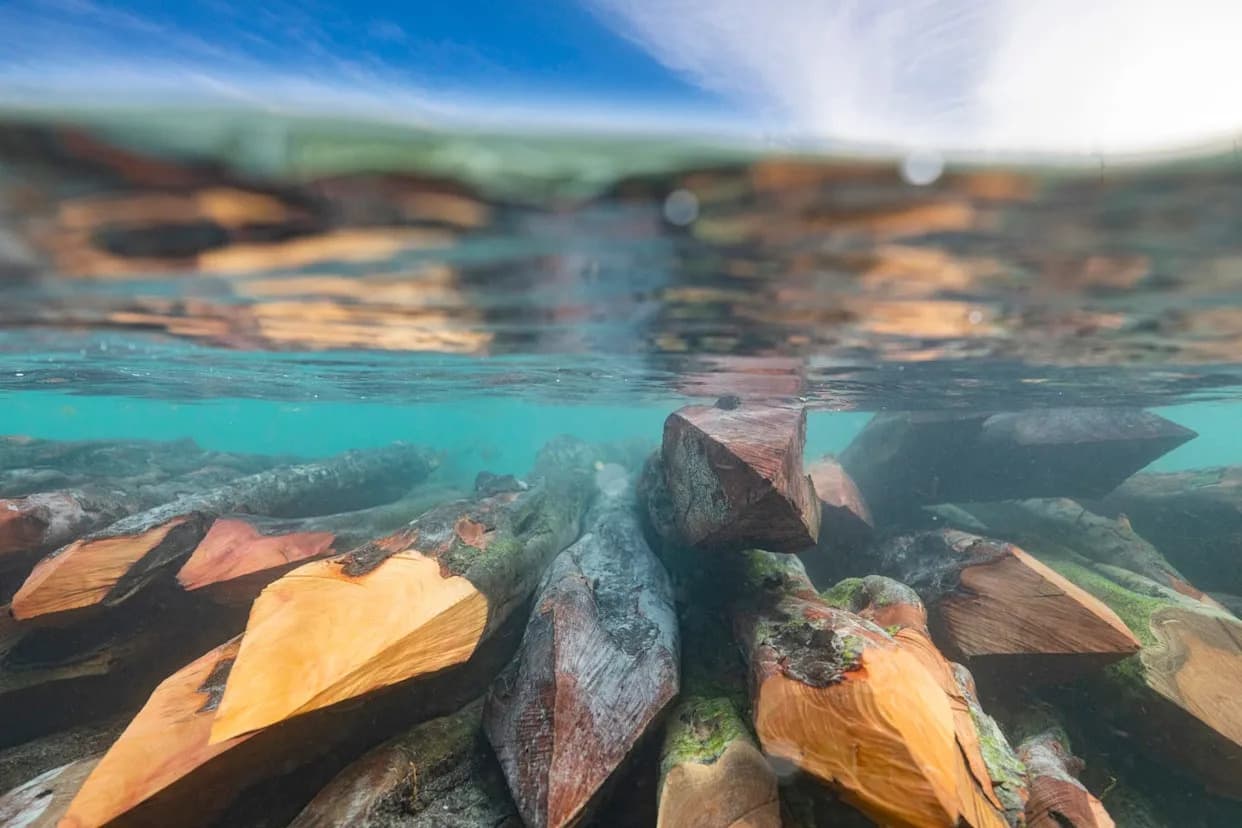
Researchers are exploring a provocative carbon-removal idea: rather than only burying harvested wood on land, large volumes of boreal timber could be floated down Arctic rivers and deposited in oxygen-poor parts of the Arctic Ocean where decomposition is extremely slow. A new study in NPJ Climate Action argues this approach could store CO2 for millennia while avoiding some drawbacks of terrestrial “wood vaulting.”
How the Concept Works
Trees extract CO2 from the atmosphere and lock it in woody biomass. But that storage is temporary: trees die, are harvested, or burn in wildfires, releasing their carbon back to the atmosphere. “Wood vaulting” aims to extend that storage by burying wood in anaerobic, clay-rich pits that slow decomposition. The new proposal adapts that idea to natural anoxic environments—specifically parts of the Arctic Ocean seafloor—by rafting timber down major rivers and sinking it in oxygen-poor sediments.
Potential Advantages
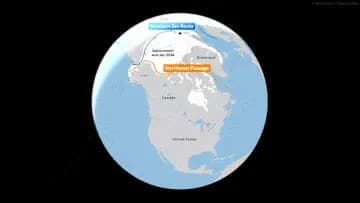
The authors note several potential benefits over terrestrial vaulting: less risk of degrading soils and mycorrhizal networks, fewer emissions from large-scale excavation, and avoidance of the albedo penalty that can arise when tundra is converted to forest. The team points to rivers such as the Ob, Yenisey, Lena, Yukon and Mackenzie as plausible transport corridors. Based on their estimates, logging and replanting roughly 30,000 km² of riparian boreal forest annually could store about 1 billion tonnes of CO2 if the timber reaches sufficiently anoxic seabed deposits.
Evidence and Precedent
Previous work involving lead author Ulf Büntgen found wooden remains persisting for around 8,000 years in low-oxygen Alpine lakes, demonstrating that wood can survive long-term under anoxic conditions. That finding supports the plausibility—but not the certainty—of long-term marine wood storage in suitably anoxic Arctic sediments.
Major Risks and Uncertainties
The proposal raises substantial ecological, social, and technical questions. The study authors emphasize the need for careful assessment of:
- Indigenous land rights, local consent and benefit-sharing;
- Impacts on river ecosystems, fish migration, and downstream communities;
- Changes in sea-ice, currents and where timber would ultimately settle on the seafloor;
- Species-specific buoyancy and sinking behavior under variable conditions;
- Consequences of increased logging—even with replanting—on biodiversity and forest productivity;
- Greenhouse-gas emissions associated with harvesting, transport and processing.
“There is now a forest that is sequestering lots of carbon, but now the next thing is how to store it in a way that won’t get burned,” said Ulf Büntgen (University of Cambridge), as quoted in New Scientist.
Next Steps
The authors call for rigorous, multidisciplinary research before any pilot projects: hydrological and oceanographic modeling, ecological impact assessments, Indigenous and community engagement, lifecycle emissions accounting, and small-scale experiments to test sinking behavior and long-term preservation on the Arctic seafloor.
In short, rafting and sinking boreal wood in anoxic Arctic sediments is an intriguing possibility for durable carbon storage, but it comes with large social and environmental trade-offs that require careful evaluation.
Help us improve.