Archaeologists at Marathousa in southern Greece have discovered two handheld wooden tools dated to about 430,000 years ago, making them the oldest known wooden implements. One (31.9 in / 81 cm) likely served as a digging stick; the other (2.2 in / 5.7 cm) is debarked and of uncertain purpose. Preserved by anaerobic, waterlogged sediments alongside abundant plant and animal remains, the tools predate Homo sapiens by roughly 130,000 years and may have been made by Homo heidelbergensis or early Neanderthals.
430,000-Year-Old Wooden Tools Found in Greece Are World’s Oldest — Made Long Before Modern Humans

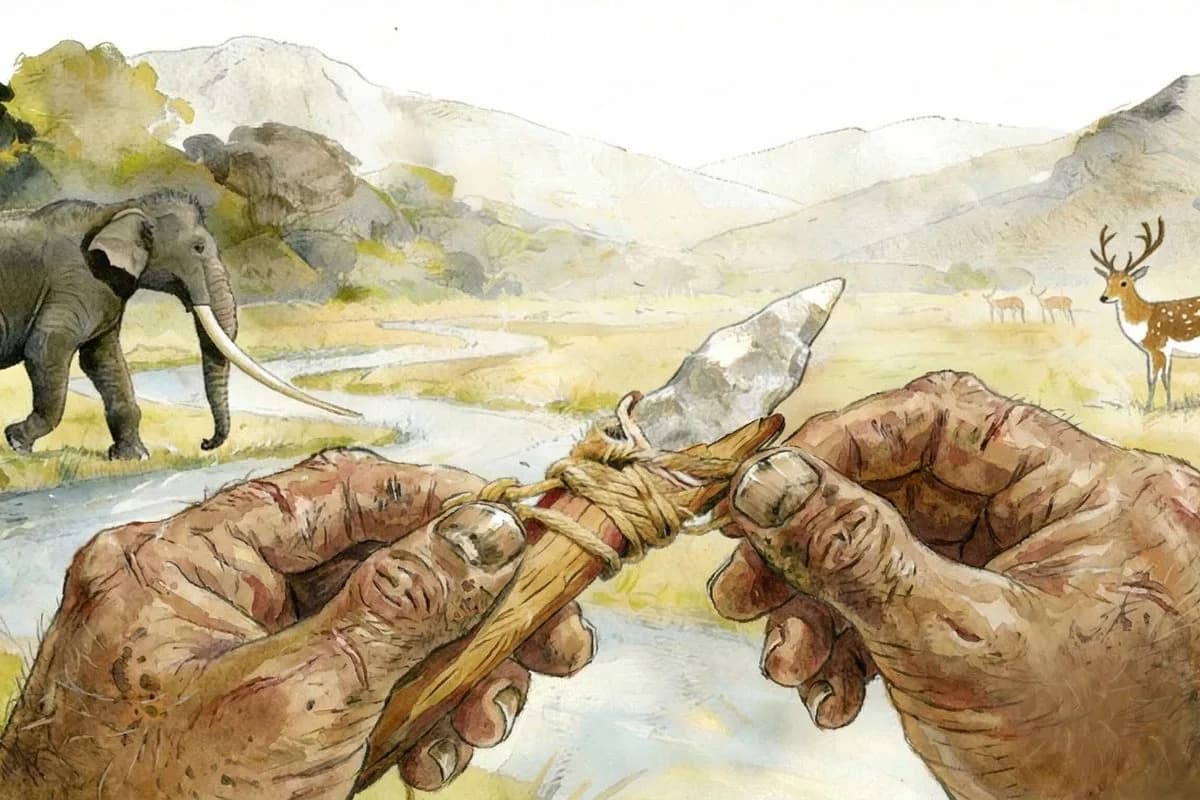
An illustration of a Stone Age hunter-gatherer who is making the oldest known wooden handheld tool. . | Credit: Original art by G. Prieto, copyright K. Harvati.
Archaeologists working at the Marathousa site on Greece’s Peloponnese peninsula have uncovered two handheld wooden implements dated to about 430,000 years ago — the oldest surviving wooden tools ever documented, according to a new study published in PNAS.
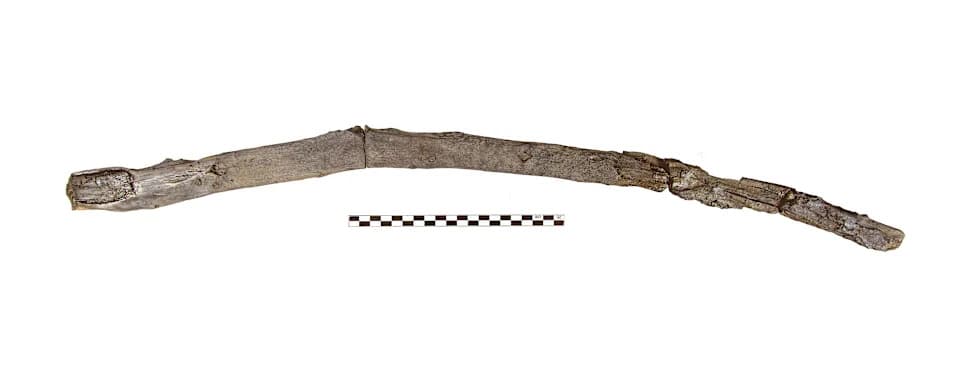
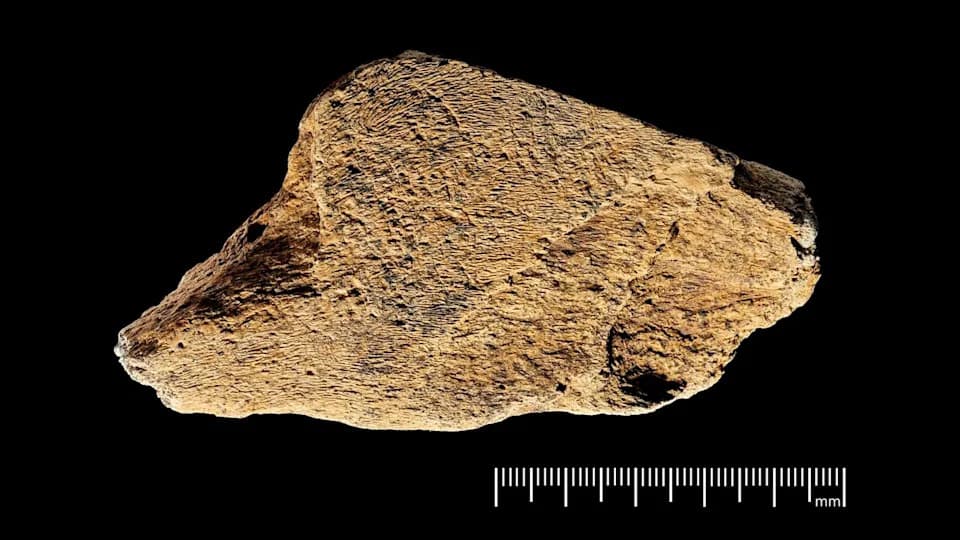
The larger artifact measures 31.9 inches (81 cm) and is splintered and frayed at one end, a morphology consistent with a digging stick. The smaller object is 2.2 inches (5.7 cm), completely debarked, and shows rounding and pitting at one tip; its precise function is uncertain but may have been related to fine tasks such as preparing or shaping other tools.
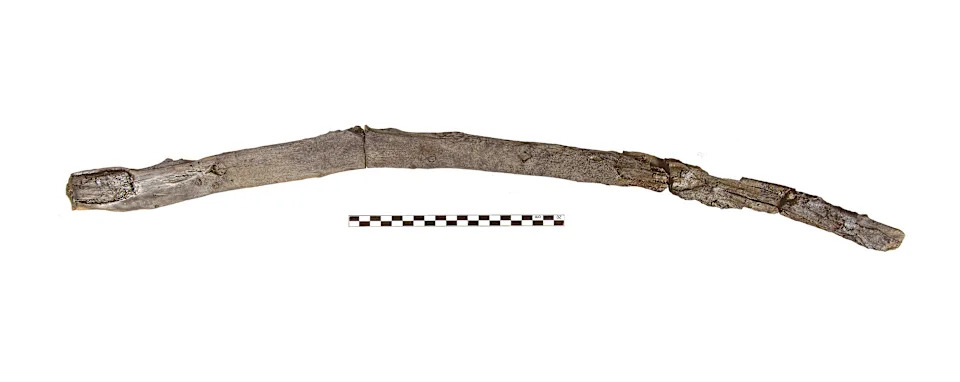
The 31.9-inches-long (81 centimeters) wooden tool that was made by hominins who lived in what is now Greece. | Credit: Photograph by D. Michailidis, copyright K. Harvati.
Exceptional Preservation and Environmental Context
Both artifacts appear to have been rapidly buried in wet, low-oxygen (anaerobic) sediments, which limited decay and allowed organic materials to survive. Excavations at Marathousa recovered a diverse assemblage of plants and animals — freshwater mollusks, turtles, birds, semiaquatic mammals and large terrestrial mammals including elephants, hippopotamuses, deer and wild boar — consistent with a rich lakeshore landscape that provided abundant resources even during an "extremely cold glacial period" in Europe.
Who Made the Tools?
The tools date to roughly 430,000 years ago, about 130,000 years before Homo sapiens emerged. No hominin bones have been found at Marathousa to definitively link the implements to a species; the study’s authors suggest the makers could have been Homo heidelbergensis or possibly very early Neanderthals. Stone and bone tools were already known from the site, and the wooden finds demonstrate that these hominins used a wider range of materials, including perishable plant-derived technologies.
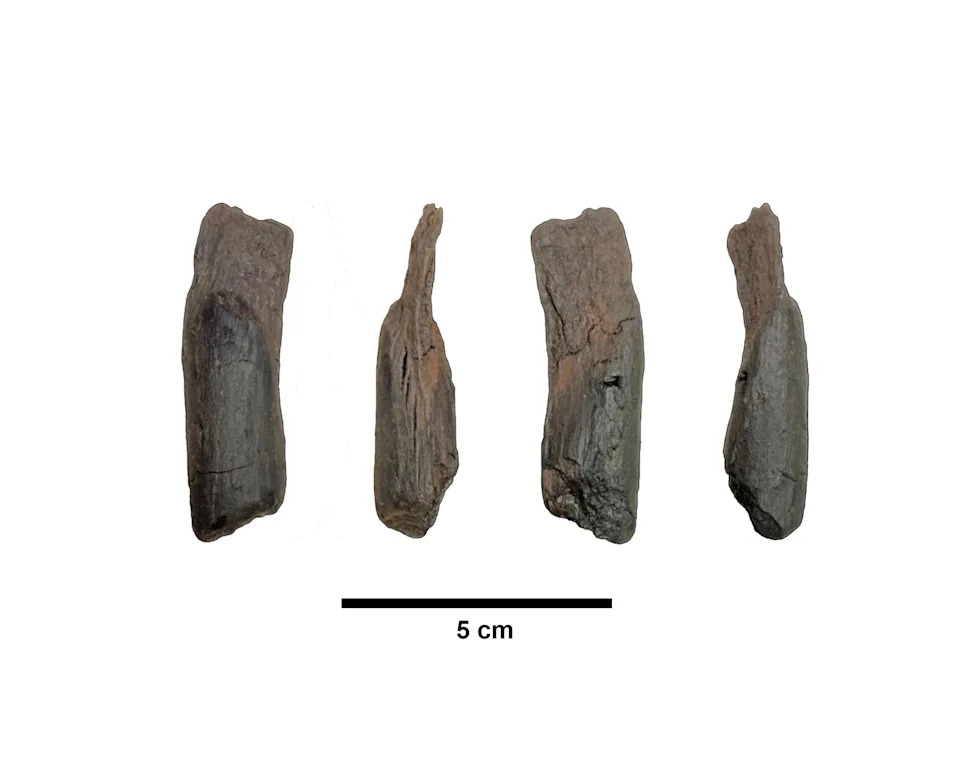
The 2.2-inches-long (5.7 cm) handheld wooden tool from around 430,000 years ago. | Credit: Photograph by N. Thompson, copyright K. Harvati.
Annemieke Milks, lead author and archaeologist at the University of Reading: "We understand that these hominins had an understanding of different materials and their properties and used different tools for different tasks."
Coauthor Katerina Harvati, a paleoanthropology professor at the University of Tübingen, added that the wooden implements "provide a rare glimpse into a component of their technology that we know very little about — that which was based on perishable, plant-derived materials rather than stones," highlighting the behavioral adaptability of the Marathousa hominins.
Broader Significance
The discovery pushes back the earliest known use of hand-held wooden tools by at least 40,000 years. It also complements evidence from elsewhere — for example, an even older wooden structure in Zambia dated to about 476,000 years ago — showing that wood played an important role in hominin behavior across Africa and Eurasia.
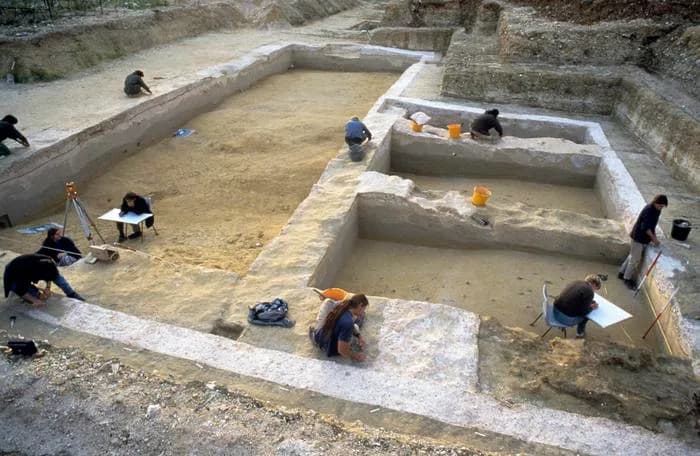
Fieldwork at Marathousa took place from 2013 to 2019. The larger digging-stick candidate was recovered in 2015, and the smaller debarked tool was found in 2018. The study describing the finds was published Jan. 26 in the journal PNAS.
Help us improve.