Researchers working at Xigou in the Danjiangkou Reservoir Region of central China report advanced stone tools dated to 160,000–72,000 years ago, including the earliest clear hafted (composite) implement in East Asia. The assemblage—showing prepared-core techniques, retouched tools and large cutting implements—suggests considerable behavioural flexibility and technological sophistication. These finds imply that several large-brained hominin groups in the region, such as Homo longi and Homo juluensis (and possibly early Homo sapiens), had cognitive and technical capacities comparable to contemporaries in Africa and Europe.
Xigou Discovery: Hafted Tools Reveal Advanced Prehistoric Technology in Central China
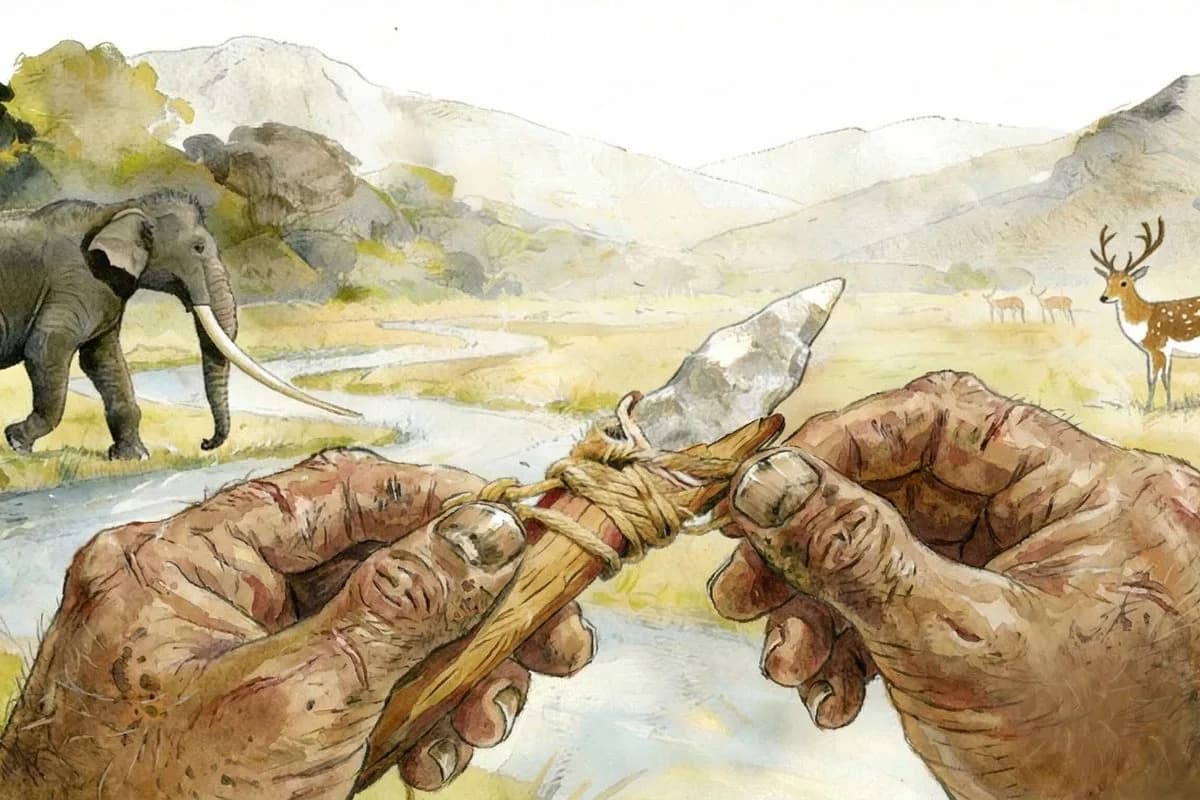
Discovery of complex pre-historic tools in China suggests our ancestors were far more advanced than thought
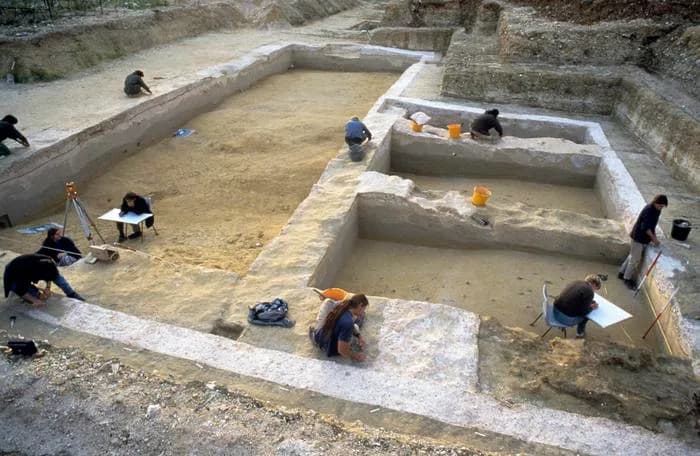
A new study published in Nature Communications reports that excavations at the Xigou site in the Danjiangkou Reservoir Region of central China have uncovered a sophisticated stone-tool assemblage dated to approximately 160,000–72,000 years ago. The finds—including the earliest clear evidence of a hafted (composite) stone implement in East Asia—challenge long-standing views that early tool traditions in this region were uniformly simple or conservative.
Key Discoveries
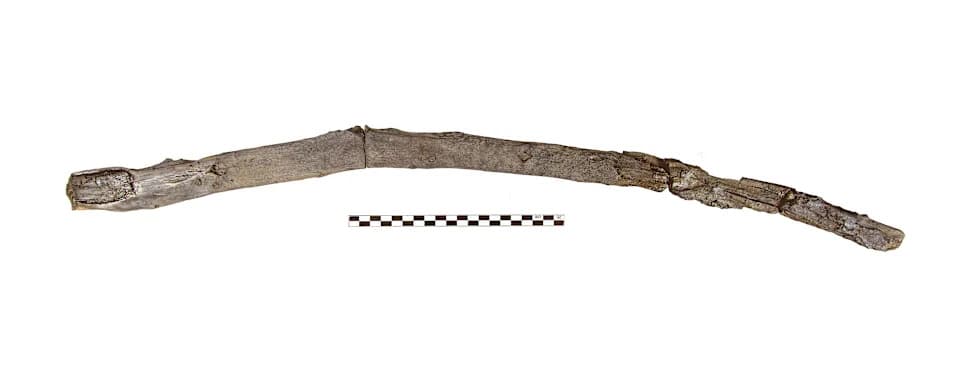
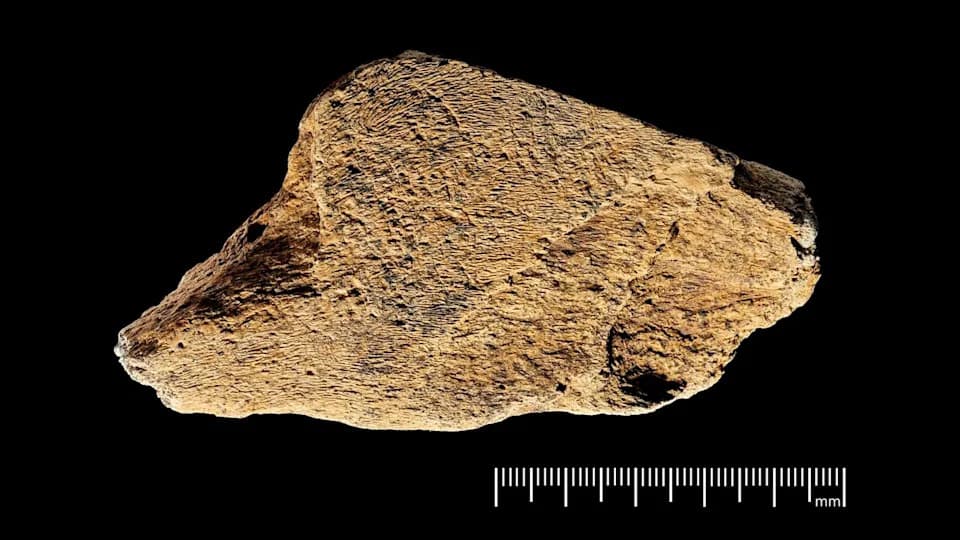
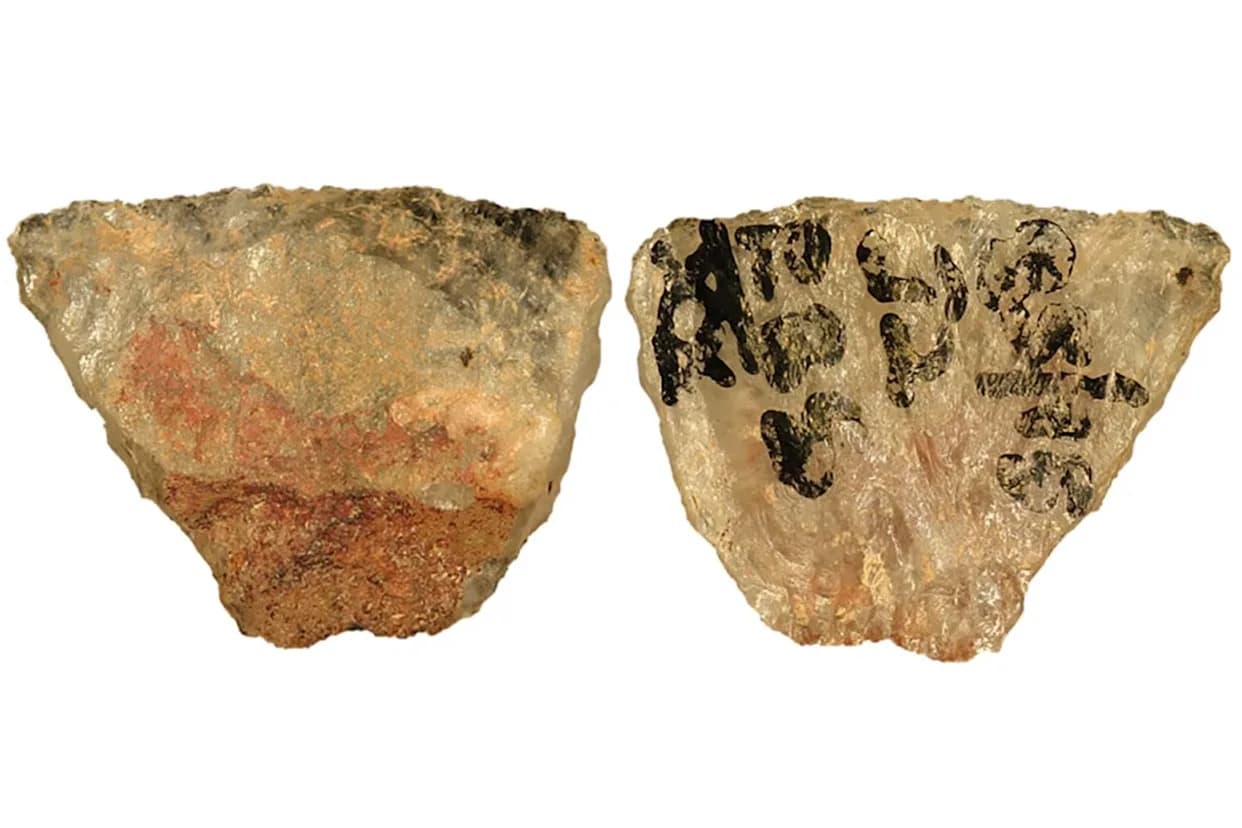
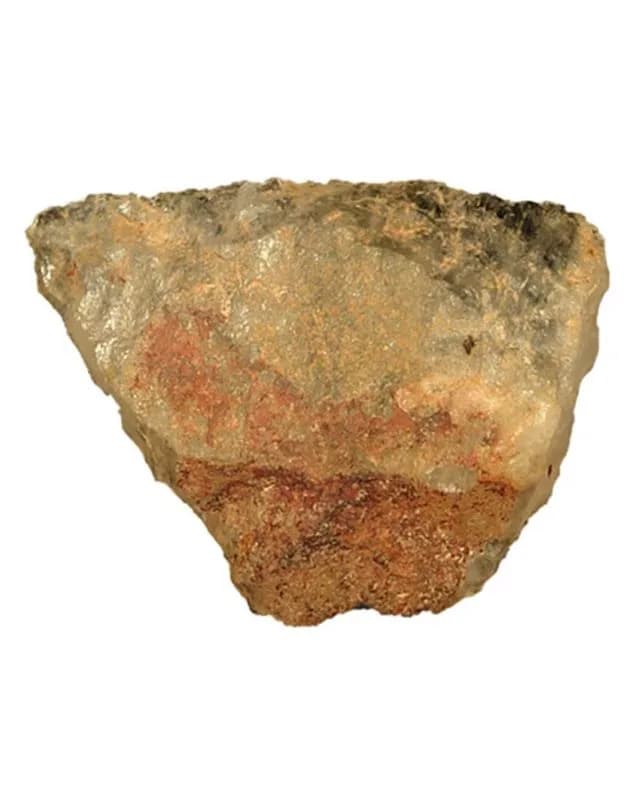
Archaeologists recovered a range of implements and debitage that point to advanced planning, fine craftsmanship and diverse technological strategies. Most notable is a hafted tool combining a stone component with a handle or shaft, indicating composite-tool technology previously undocumented so early in East Asia. Additional evidence from the site includes prepared-core reduction methods, retouched small implements, and large cutting tools.
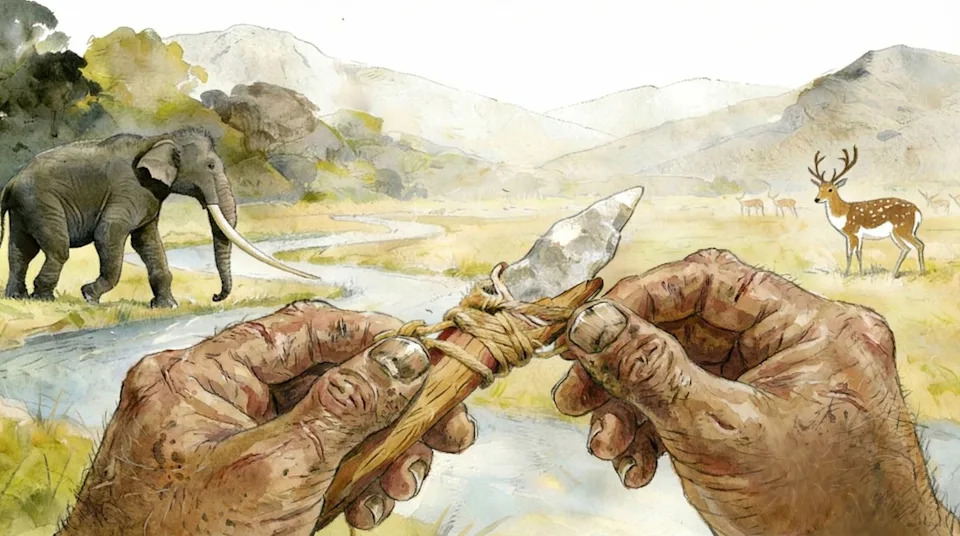
Reconstruction of Xigou tool-making (Hulk Yuan)
Context and Implications
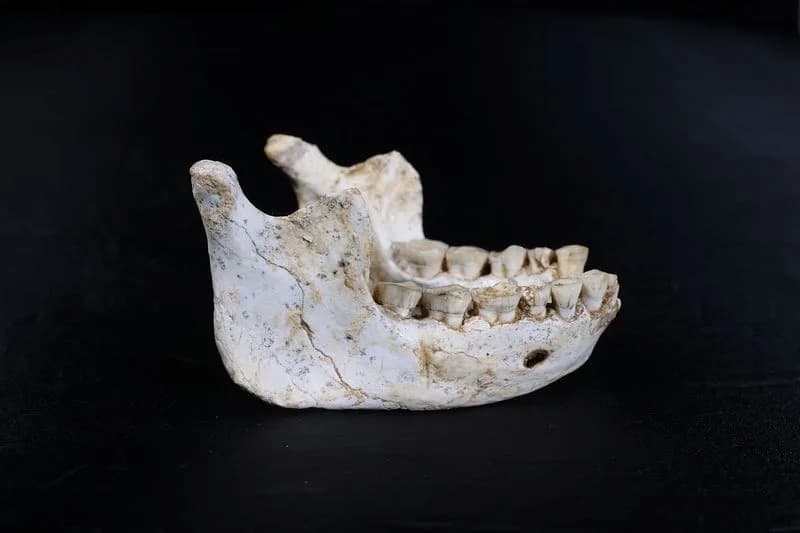
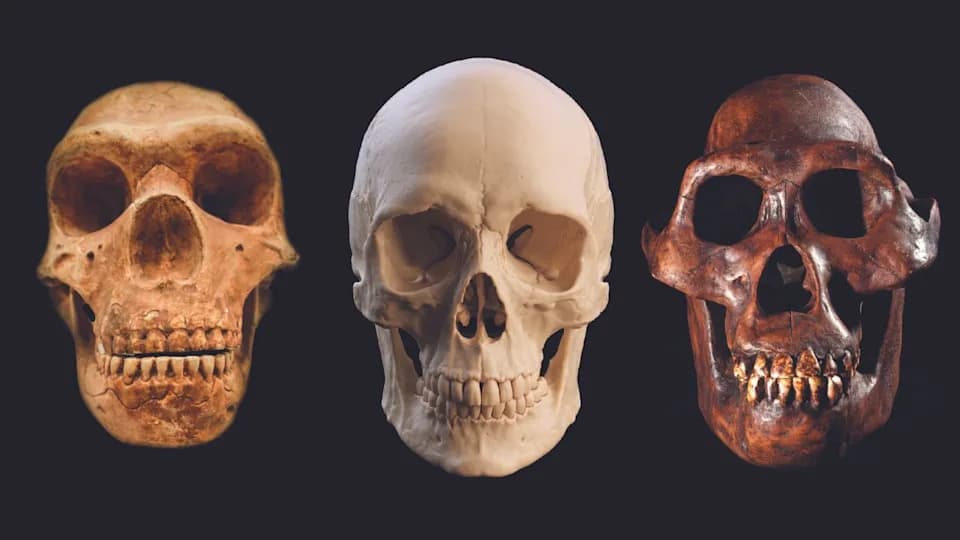
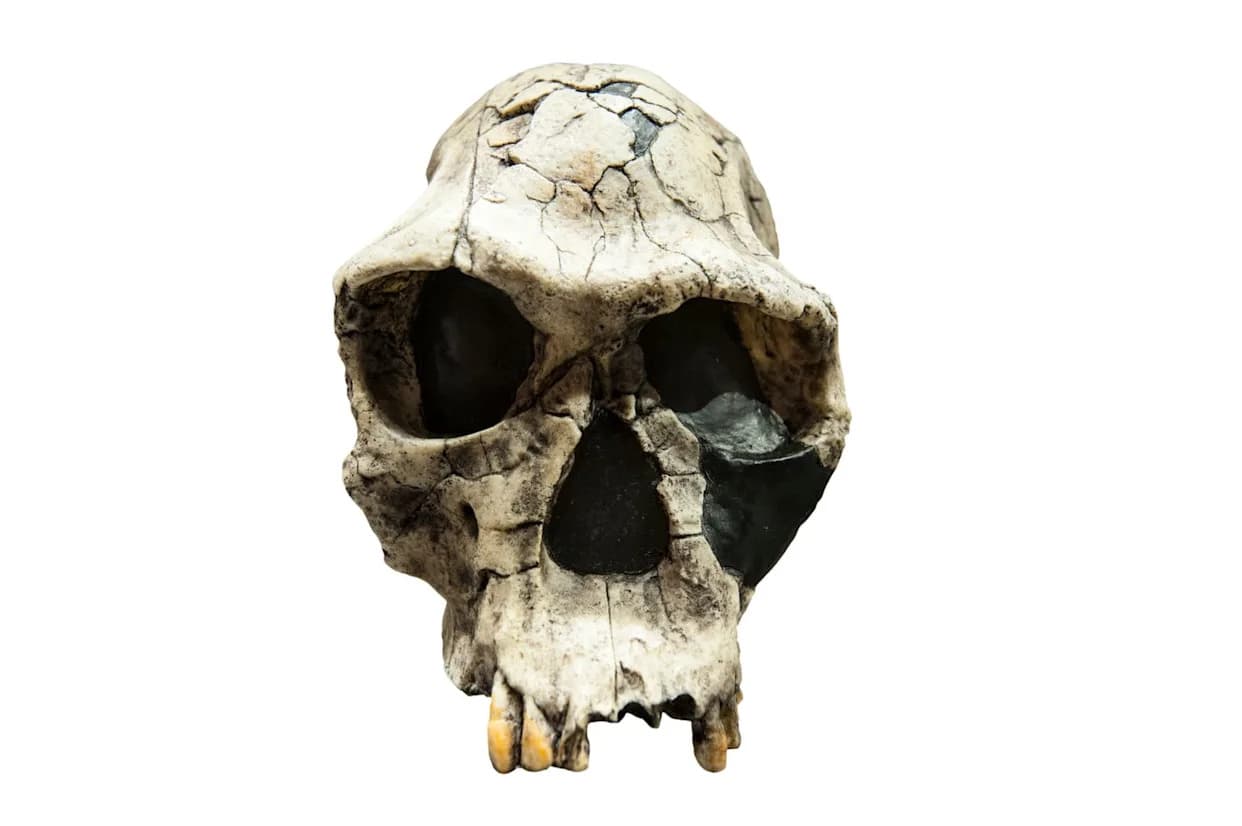
The Xigou dates overlap with a period when several large-brained hominin groups were present in China—including Homo longi and Homo juluensis, and possibly early Homo sapiens. Together with material from nearby sites such as Xujiayao and Lingjing, the Xigou assemblage suggests a long span of technological innovation and hominin diversity across roughly 90,000 years in eastern Asia.
“For decades some scholars argued that while hominins in Africa and western Europe developed marked technological advances, East Asian groups relied on simpler, more conservative stone-tool traditions,” said expedition leader Shixia Yang, a co-author of the paper. “The Xigou evidence shows much greater behavioural flexibility and technical skill than previously recognised.”
“The presence of hafted implements indicates the Xigou hominins displayed a high degree of behavioural flexibility and ingenuity,” said Jian-Ping Yue of the Institute of Vertebrate Paleontology and Paleoanthropology (IVPP).
“Detailed analyses show inhabitants used sophisticated stone-tool production to make small flakes and implements used in a wide range of tasks,” added Michael Petraglia, director of Griffith University’s Australian Research Centre for Human Evolution. “These strategies likely helped hominin groups adapt to fluctuating environments across the 90,000-year period.”
Overall, the Xigou discoveries strengthen the view that cognitive and technical capacities among some Asian hominin populations were comparable to contemporaneous groups in Africa and Europe. The finds invite renewed attention to regional variability in technological evolution and the behavioural complexity of ancient Eurasian hominins.
Study: Published in Nature Communications. Site: Xigou, Danjiangkou Reservoir Region, central China. Dates: 160,000–72,000 years ago.
Help us improve.