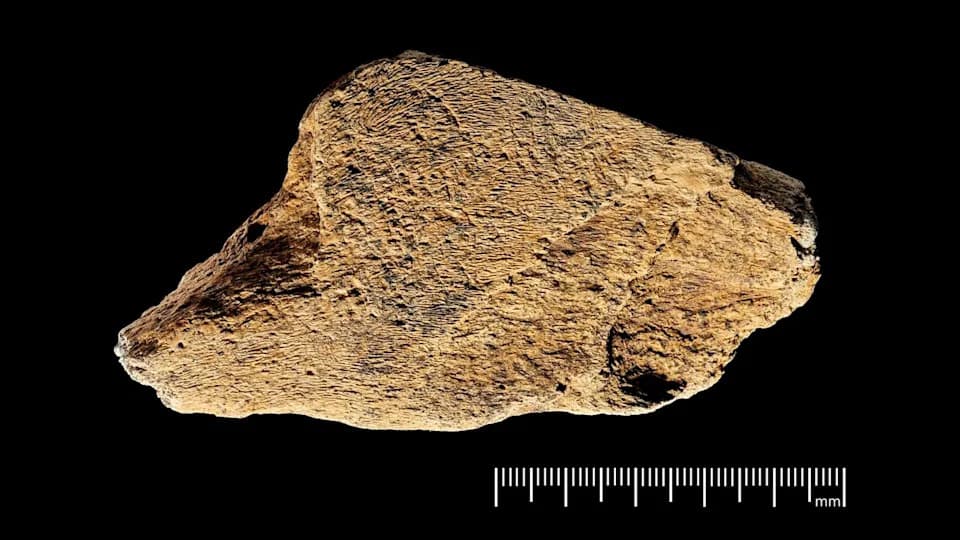
The Liang Metaduno cave on Muna island contains hand stencils dated by uranium–thorium analysis of calcite crusts to at least 67,800 years, making them among the oldest known rock art. The prints — notable for tapered fingertips — likely reflect deliberate artistic choices and suggest symbolic behavior. Researchers propose the images were made by early modern humans and support the view that maritime crossings across Wallacea led to the peopling of Sahul around 65,000 years ago.
67,800-Year-Old Hand Stencils Found on Indonesian Island — Possibly the World’s Oldest Rock Art
Archaeologists Found the World’s Oldest Rock ArtBob Thomason - Getty Images
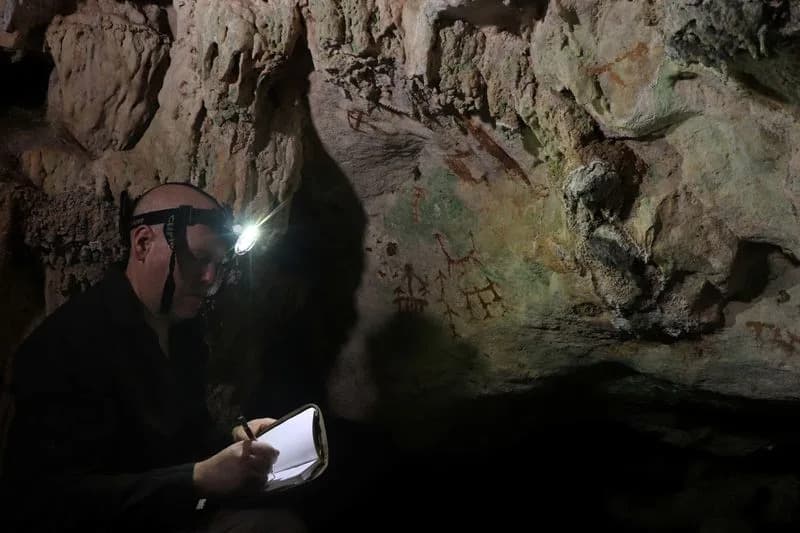
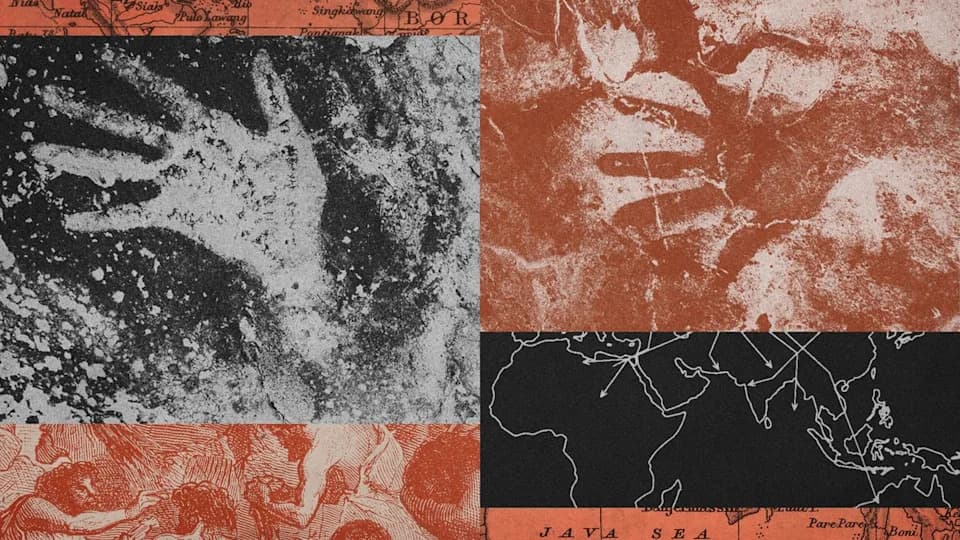
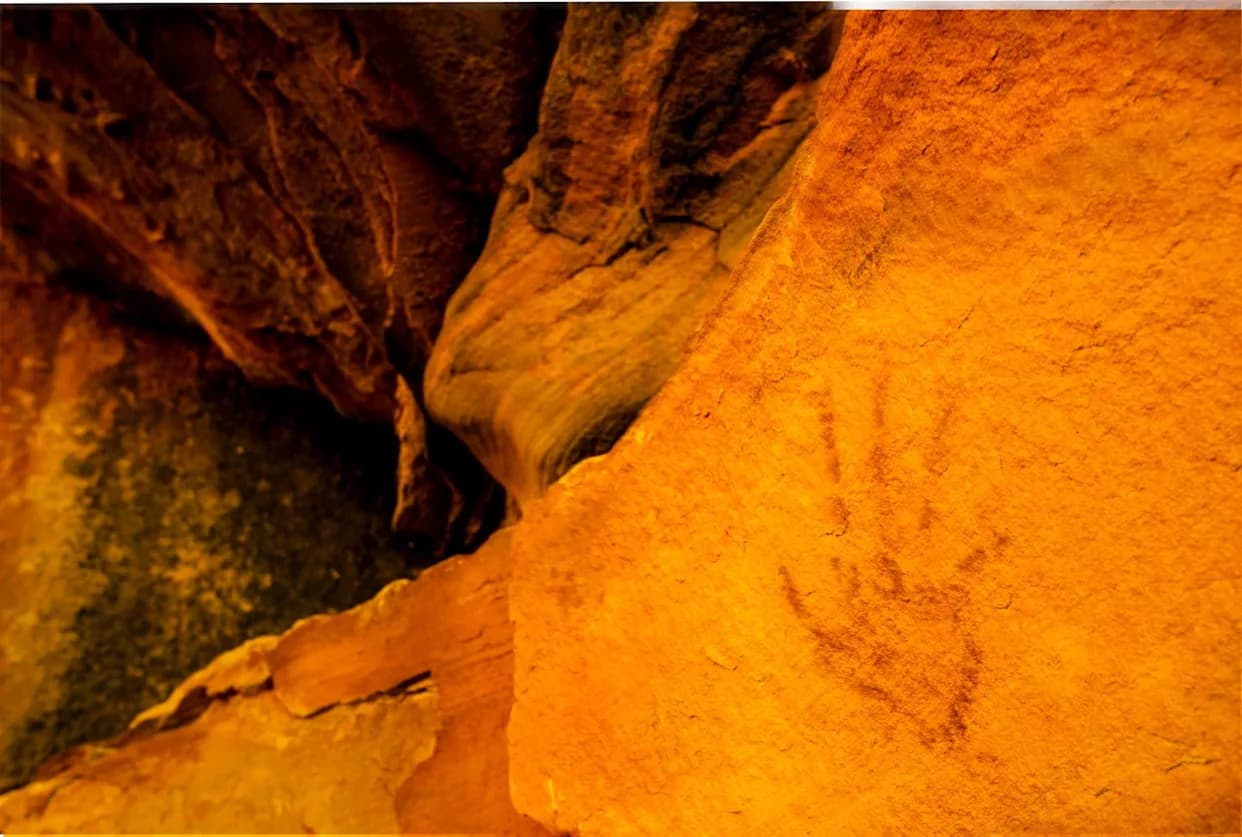
Eerie hand stencils with sharply tapered fingertips were revealed when archaeologists illuminated the walls of a limestone cave at the Liang Metaduno site on Muna island, Indonesia. New uranium–thorium dates for thin calcite crusts that formed on top of the pigment return a minimum age of 67,800 years, making these images among the oldest — and possibly the oldest — known rock art in the world.
What Researchers Found
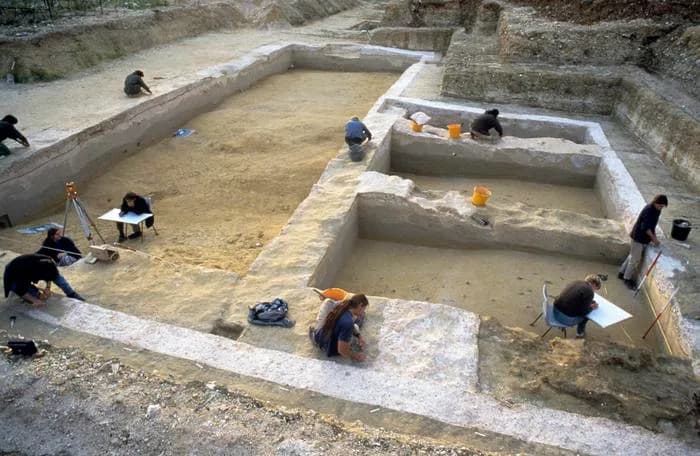
A team co-led by Maxime Aubert of Griffith University documented multiple hand stencils, animal figures, and geometric motifs in the cave. Most of the animal and geometric images are much younger (Holocene), but all but one of the stenciled hands date to the Pleistocene. Several handprints were nearly obscured beneath later paintings, indicating a long sequence of artistic activity at the site.
How The Age Was Determined
Because the pigments themselves (likely red ochre) cannot always be dated directly, the researchers used uranium–thorium dating on microscopic calcite crusts that built up on top of the paint over millennia. As dissolved uranium in dripping water decays into thorium, the thorium becomes locked in place in the crust. Measuring that decay establishes when the crust formed, and therefore provides a minimum age for the underlying stencil — in this case, at least 67,800 years.
Appearance And Possible Meaning
The stencils are notable for their tapered fingertips, which may reflect a painting technique (for example, moving or angling the hand while applying pigment) or deliberate modification to portray pointed digits. The motive and meaning remain uncertain, but such consistent modification suggests a cultural or symbolic intent rather than accidental smudging.
Who Made Them?
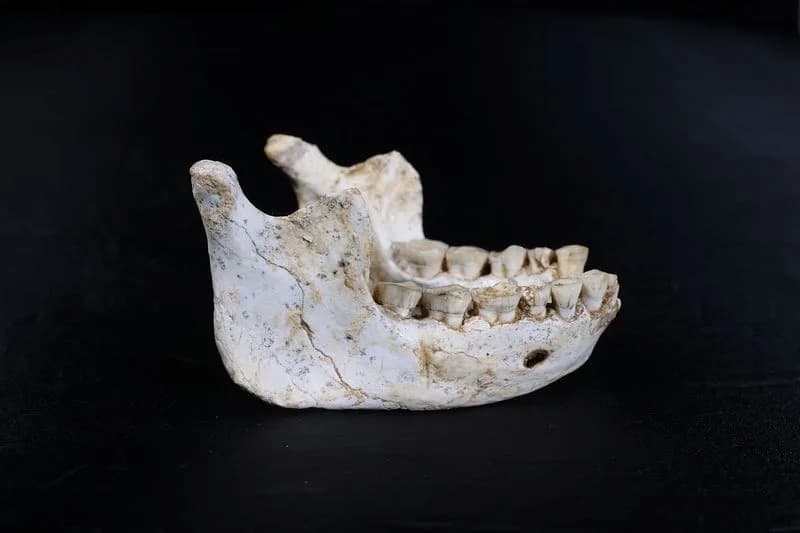
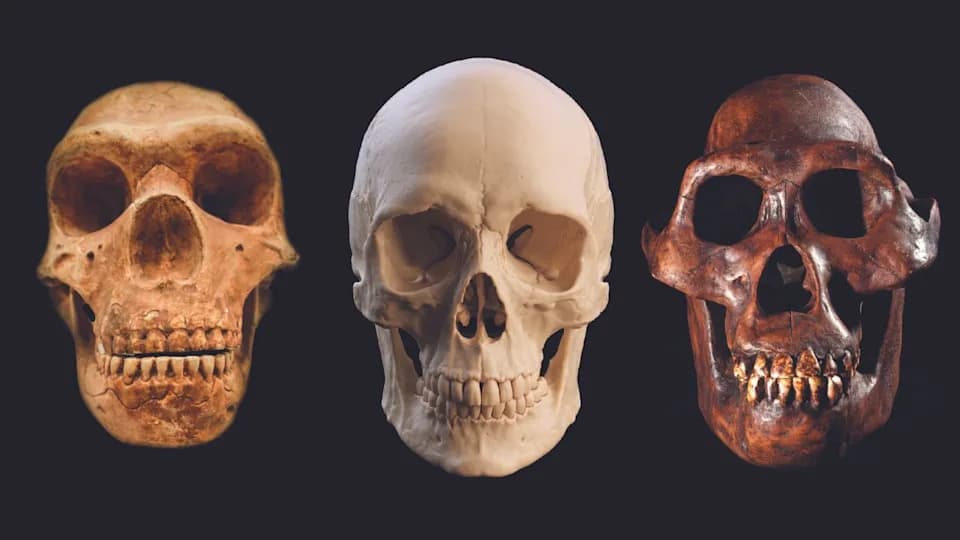
It is not yet certain whether the prints were made by Homo sapiens or another hominin, but Aubert and colleagues argue that the hand morphology and the apparent deliberate modification of the fingers are consistent with modern humans. If the makers were Homo sapiens, the images support a scenario in which early modern humans crossed Wallacea — the island zone between Sunda and Sahul — during maritime journeys that led to the first peopling of Sahul (the ancient landmass that included Australia and New Guinea) around 65,000 years ago.
“The presence of this extremely old art in Sulawesi suggests that the initial peopling of Sahul about 65,000 years ago involved maritime journeys between Borneo and Papua, a region that remains poorly explored from an archaeological perspective,” Aubert and colleagues wrote in a Nature paper reporting the results.
Why This Matters
The Liang Metaduno stencils predate comparable regional cave art by about 16,000 years and are roughly 1,000 years older than the oldest cave art attributed to Neanderthals in Spain. The discovery strengthens evidence that early maritime migrants carried symbolic behavior and artistic traditions with them as they moved across island chains into Sahul. The team’s work, ongoing since 2019, suggests similarly ancient rock art may yet be found along proposed migration routes.
Study: Maxime Aubert et al., published in Nature. Field recording and dating have been conducted in the region since 2019.
Help us improve.