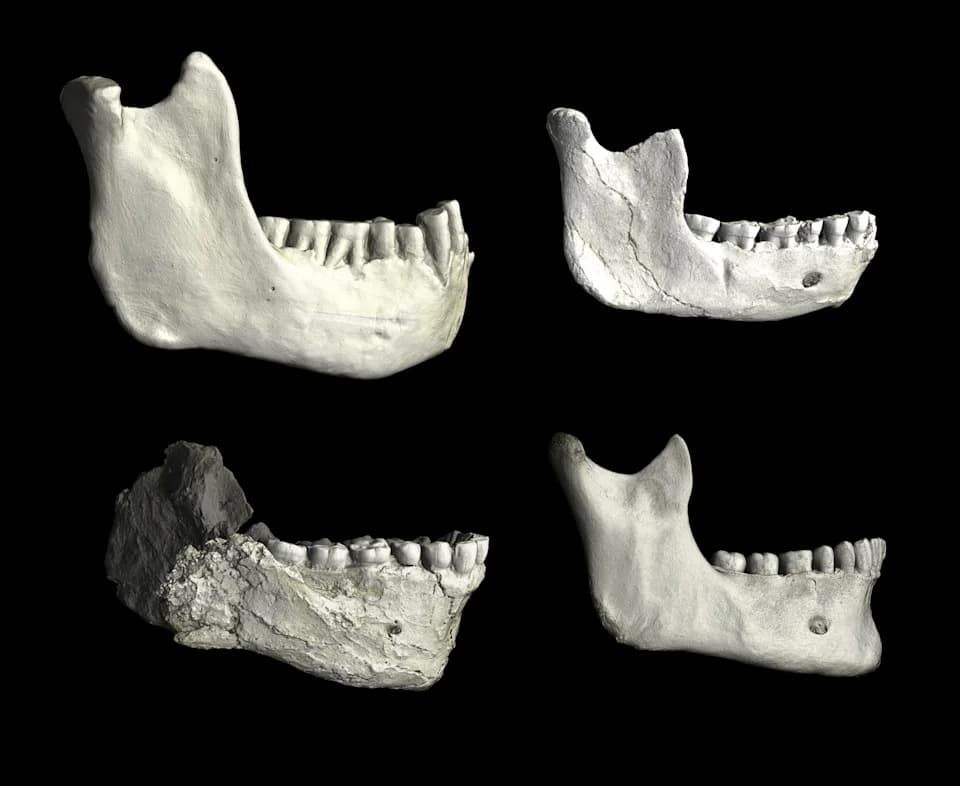
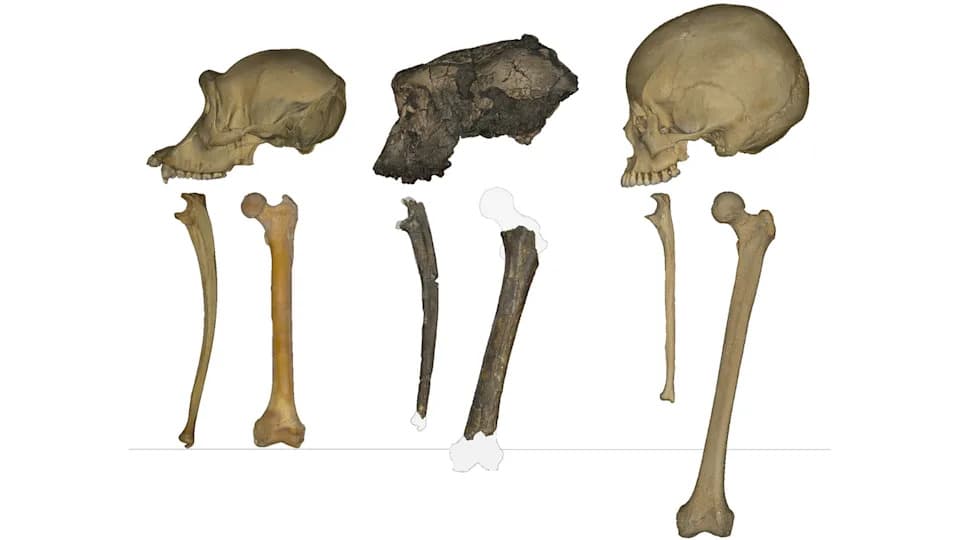
The Grotte à Hominidés fossils from near Casablanca, dated to about 773,000 years ago, include two adult mandibles, a toddler mandible, teeth, vertebrae and a femur. Researchers interpret them as an evolved form of Homo erectus that shows a mix of primitive and modern traits and helps fill a gap in Africa's hominin record between one million and 600,000 years ago. Magnetic dating, exceptional preservation under sealed sediments, and comparisons with Spanish finds at Atapuerca underpin the study's conclusions.
773,000-Year-Old Moroccan Fossils May Be Close Ancestors of Modern Humans, Study Finds
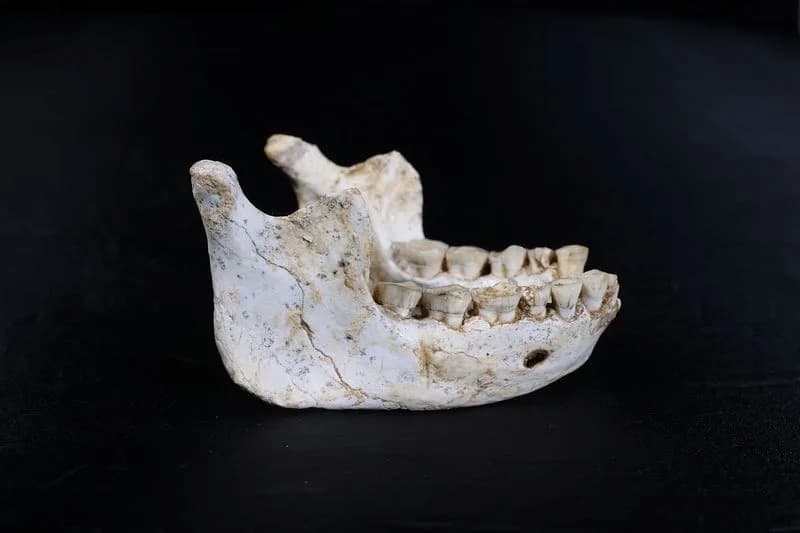
The mandible of an archaic human who lived about 773 000 years ago is pictured after being excavated at a cave called Grotte a Hominides at a site known as Thomas Quarry I in the southwest part of the Moroccan city of Casablanca in this undated photograph released on January 7, 2026. J.P. Raynal, Programme Prehistoire de Casablanca /Handout via REUTERS
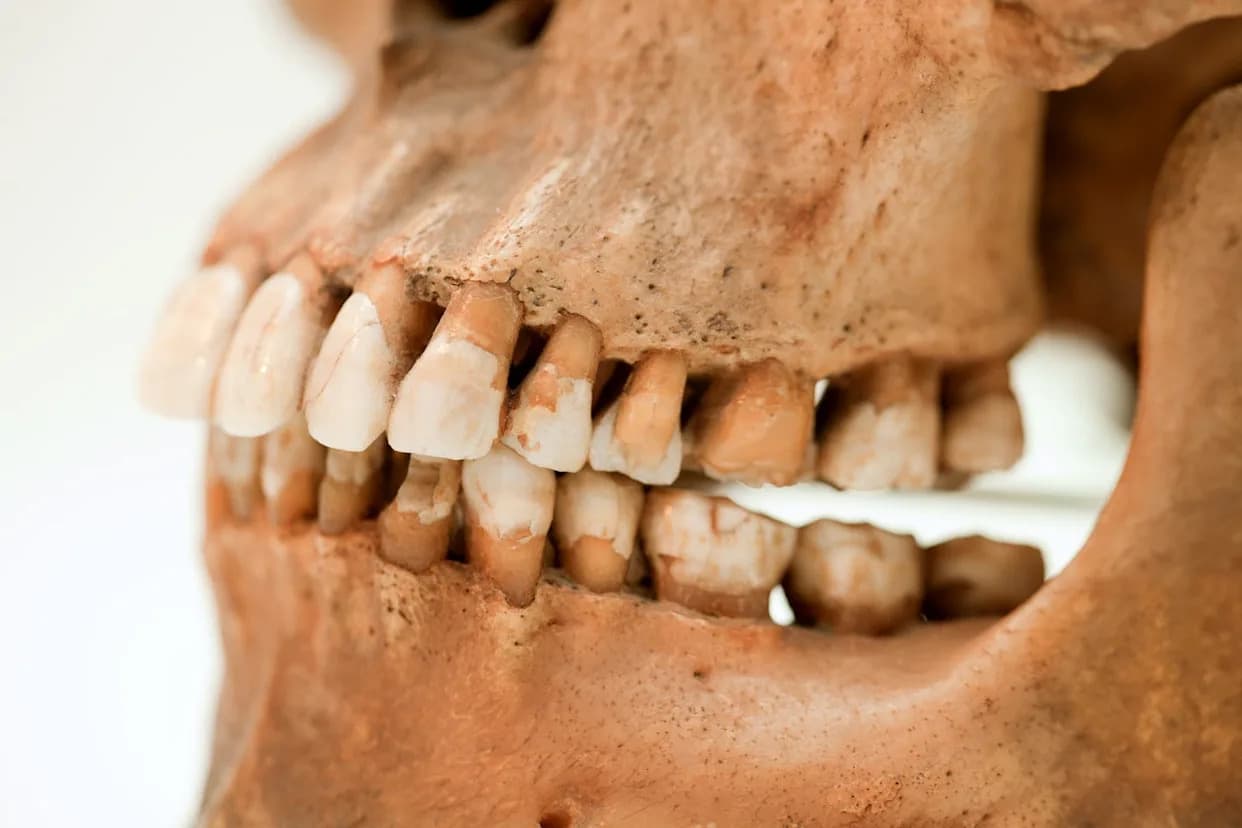
Fossilized bones and teeth recovered from Grotte à Hominidés, a cave near Casablanca, Morocco, and dated to about 773,000 years ago are shedding new light on the emergence of Homo sapiens in Africa. The material — including two adult lower jawbones, the complete lower jaw of a toddler, isolated teeth, a femur and several vertebrae — combines primitive and more modern features and may represent an evolved population close to the ancestors of modern humans.
What Was Found
Excavations recovered multiple hominin elements: two adult mandibles, a nearly complete toddler mandible (about 1½ years old), assorted teeth, vertebrae and the largest specimen, an adult femur. Hundreds of stone tools and thousands of animal bones were also uncovered in the same deposits.
Dating And Scientific Significance
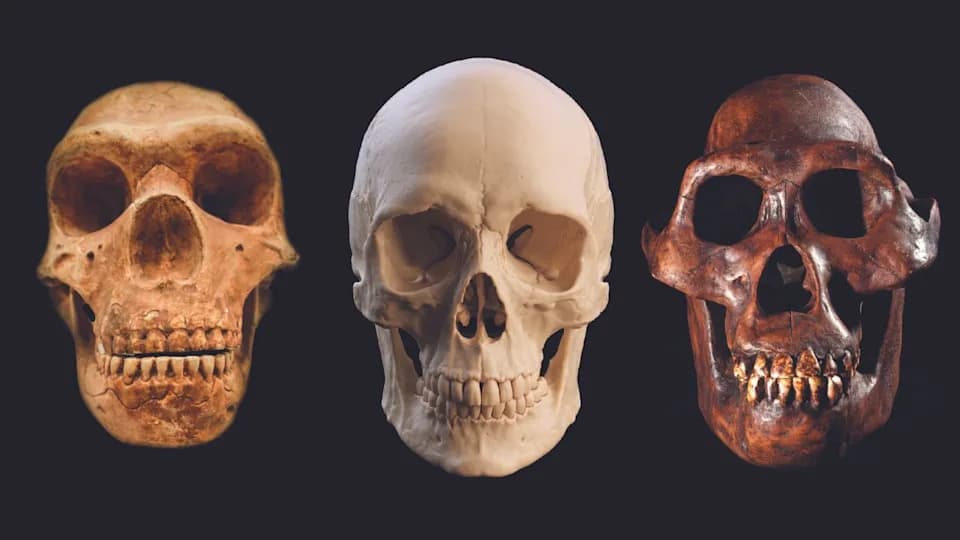
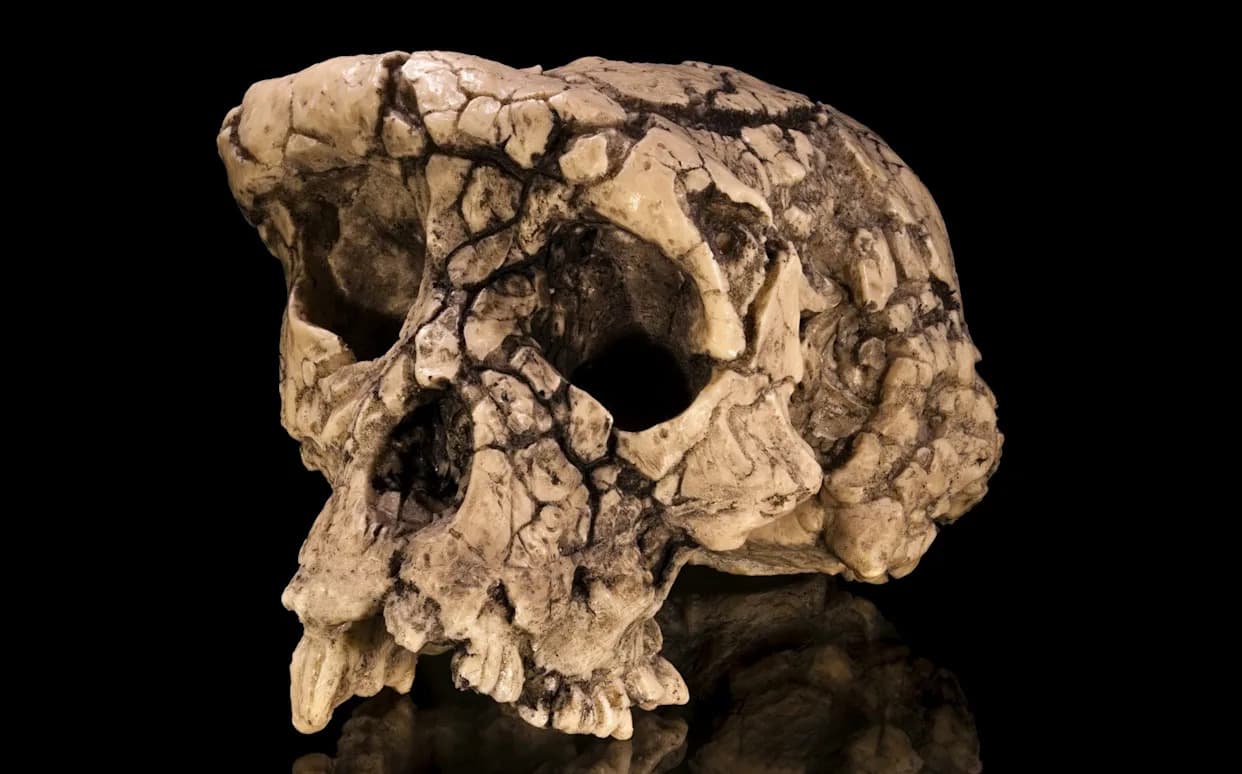
Researchers dated the remains to approximately 773,000 years ago using the magnetic signature of cave sediments encasing the fossils — a crucial step that anchors the specimens in time. The bones display a mosaic of ancestral and derived traits consistent with an evolved form of Homo erectus. They fill an important gap in the African hominin record between roughly one million and 600,000 years ago and may represent a population that existed shortly before the evolutionary divergence that led to Homo sapiens in Africa and the related Eurasian groups (Neanderthals and Denisovans).
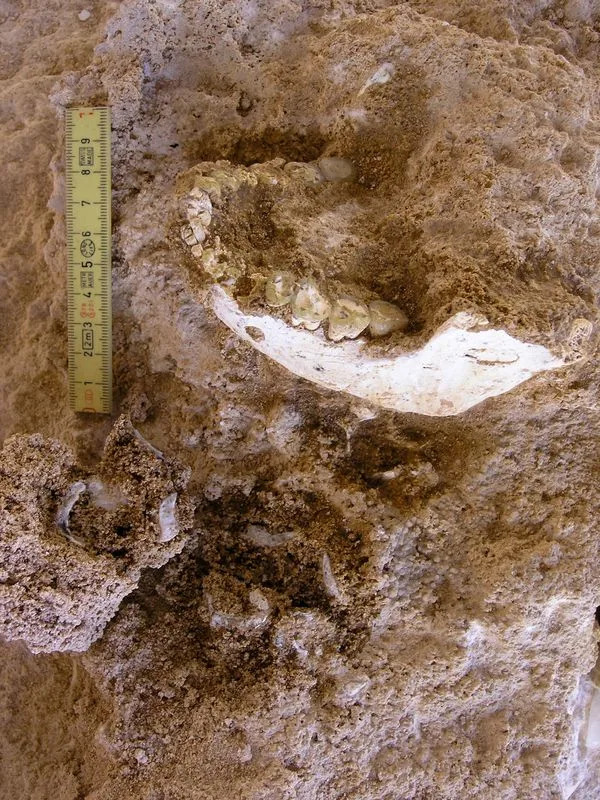
The mandible of an archaic human who lived about 773 000 years ago is seen during excavations at a cave called Grotte a Hominides at a site known as Thomas Quarry I in the southwest part of the Moroccan city of Casablanca, in this undated photograph released on January 7, 2026. J.P. Raynal, Programme Prehistoire de Casablanca /Handout via REUTERS THIS IMAGE HAS BEEN SUPPLIED BY A THIRD PARTY MANDATORY CREDIT NO RESALES. NO ARCHIVES
"I would be cautious about labeling them as 'the last common ancestor,' but they are plausibly close to the populations from which later African — Homo sapiens — and Eurasian — Neanderthal and Denisovan — lineages ultimately emerged," said paleoanthropologist Jean‑Jacques Hublin, lead author of the study published in Nature.
Context And Preservation
Fine sediments buried the remains over time and a dune eventually sealed the cave entrance, promoting exceptional preservation. The cave appears to have functioned primarily as a carnivore den; the adult femur bears clear gnaw marks consistent with consumption by a large carnivore such as a hyena, suggesting at least one individual was scavenged or hunted. The absence of tooth marks on the recovered mandibles does not rule out scavenging or consumption of other parts of the bodies.
Connections Beyond Morocco
The Moroccan fossils are approximately the same age as material from Gran Dolina at Atapuerca in Spain, attributed to an archaic hominin sometimes called Homo antecessor. Similarities between the two sites raise the possibility of intermittent connections across the Strait of Gibraltar, a hypothesis the authors say merits further study.
Although body proportions of these hominins were broadly similar to ours, their brains were smaller. Taken together, the new finds provide an important snapshot of hominin diversity and evolutionary change in Africa at a key moment leading toward the emergence of modern humans.
Publication: Study published in Nature. Lead Author: Jean‑Jacques Hublin (Collège de France; Max Planck Institute for Evolutionary Anthropology).
Help us improve.