Key finding: A cache of quartz projectile points from the Umhlatuzana Rock Shelter (KwaZulu‑Natal) dated to ~60,000 years ago shows residues of poison derived from Boophone disticha. The toxin appears to have debilitated prey over hours rather than killing instantly. Researchers say the evidence indicates advanced planning, cause-and-effect reasoning, and complex hunting technology far earlier than previously documented.
60,000-Year-Old Poisoned Arrowheads Found in South Africa — Evidence of Early Advanced Weaponry
Marlize Lombard/University of Johannesburg
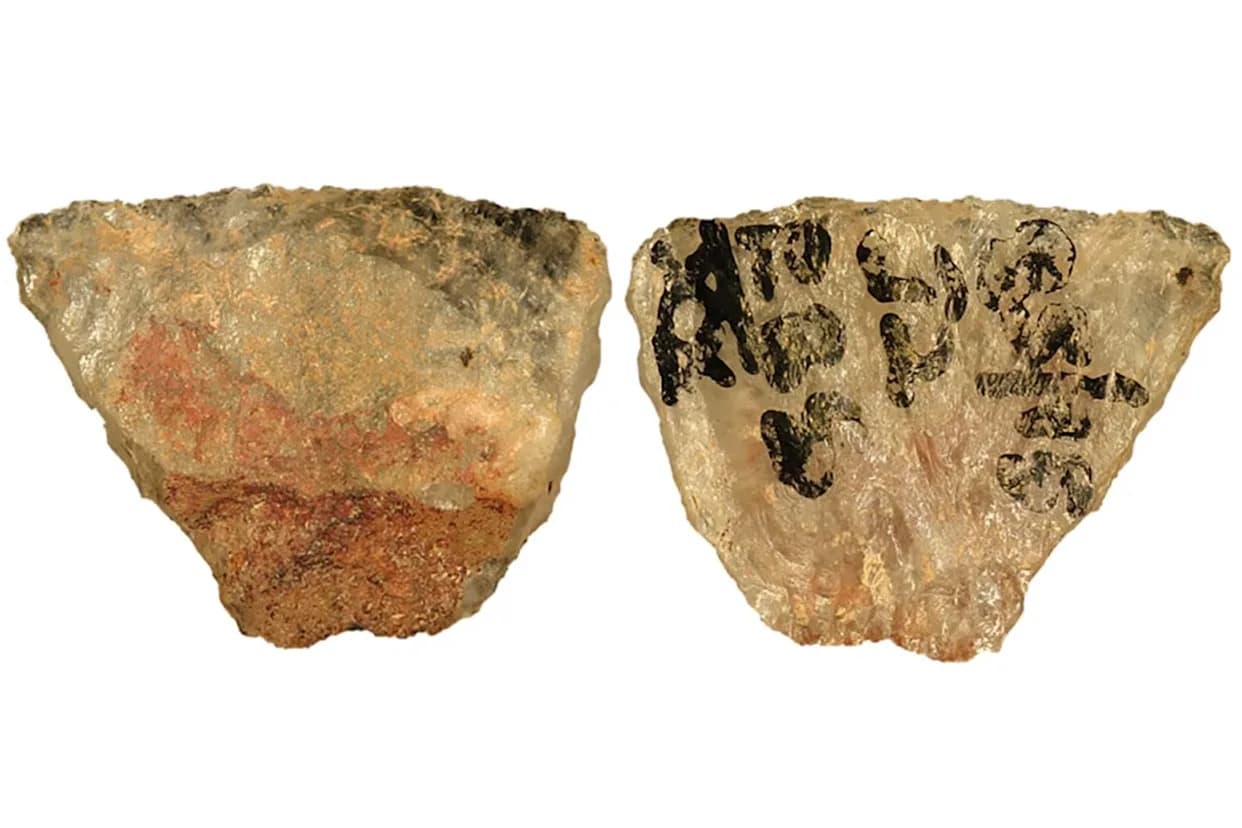
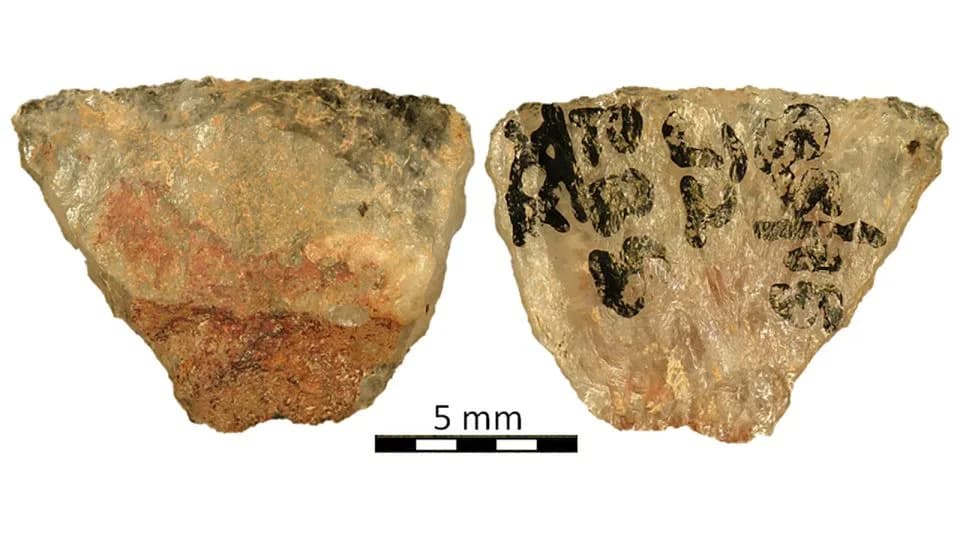
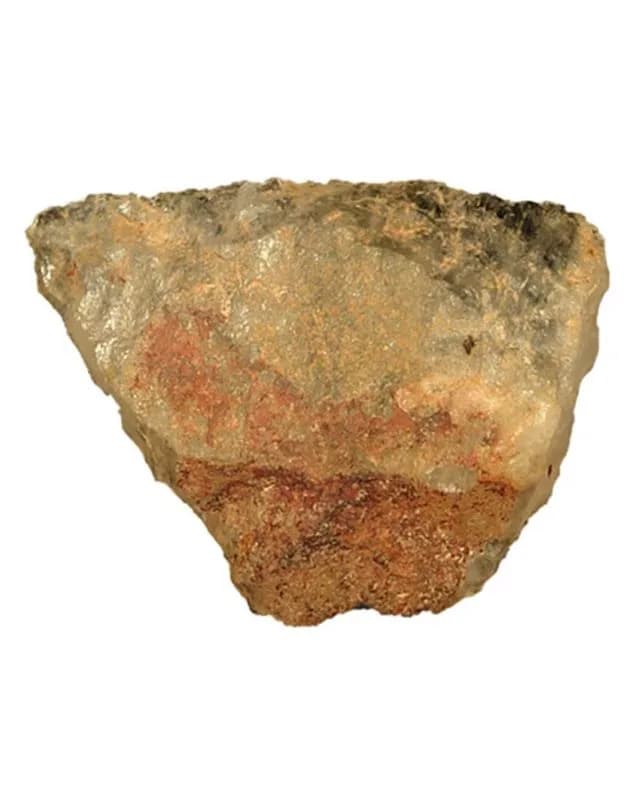
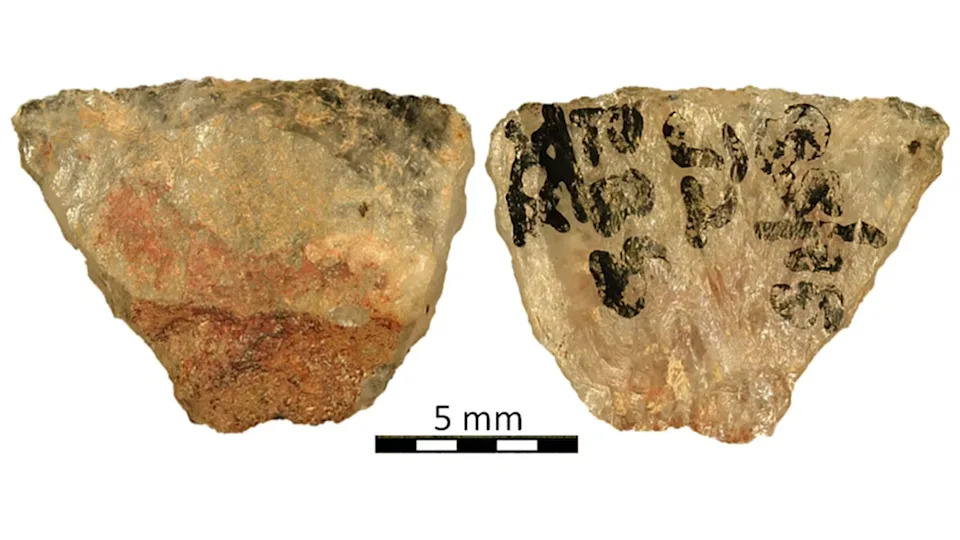
Archaeologists working at the Umhlatuzana Rock Shelter in KwaZulu‑Natal, South Africa, have uncovered a cache of quartz projectile points dated to about 60,000 years ago that carry chemical residues of plant-based poison applied directly to the tips. Published in Science Advances, the study argues that these finds push back the appearance of complex hunting technology and planning in the Pleistocene.
Where and What Was Found
The material was excavated from the Umhlatuzana Rock Shelter and consists of finely made quartz points that appear to have been hafted to shafts. Chemical analyses detected residues consistent with toxins derived from the bulbous flowering plant Boophone disticha, a highly poisonous species native to southern Africa.
What The Poison Did
Researchers report that the residues are unlikely to have caused immediate death. Instead, the toxin apparently debilitated struck animals over the course of hours, slowing them and making tracking and recovery easier for hunters. This strategy would have extended the effectiveness of projectiles and increased hunting success without requiring immediate lethal impact.
Why This Matters
The manufacture and use of poisoned, hafted points implies sophisticated behavior: the selection and preparation of toxic plants, deliberate application to weapons, and an understanding of delayed cause-and-effect. Lead author Sven Isaksson, professor of archaeological science at Stockholm University’s Archaeological Research Laboratory, told CNN:
Marlize Lombard/University of Johannesburg
"Understanding that a substance applied to an arrow will weaken an animal hours later requires cause-and-effect thinking and the ability to anticipate delayed results."
Isaksson and colleagues say the evidence demonstrates advanced cognitive abilities, complex cultural knowledge, and well-developed hunting practices among Pleistocene humans in the region.
Broader Context
Before this discovery, the oldest securely dated poisoned or hafted points were from the mid‑Holocene (roughly 4,000–8,000 years ago). If corroborated by further research, the Umhlatuzana finds push the timeline for poisoned projectiles tens of thousands of years earlier and support arguments that bow-and-arrow technology and complex weapon systems emerged much earlier in Africa and Asia.
As Ludovic Slimak (CNRS/Paul Sabatier University), who was not involved in the study, observed: "This strengthens the view that the bow is not a late invention, but a fundamental and complex technology whose origins go back at least 80,000 years in Africa and Asia."
Implications and Next Steps
The chemical work—linking residues on prehistoric points with known toxic compounds—was crucial to the interpretation. Researchers note the need for additional dating, residue studies, and contextual finds to further confirm how these points were used and how widespread such practices were. Nevertheless, the discovery offers a striking glimpse of early human ingenuity in weapon design and hunting strategy.
Reporting based on the study published in Science Advances and coverage by CNN and Men’s Journal.
Help us improve.