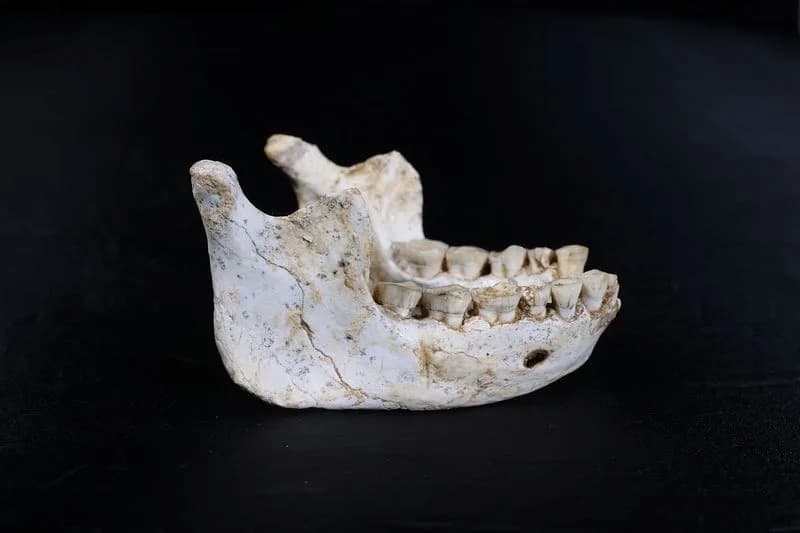
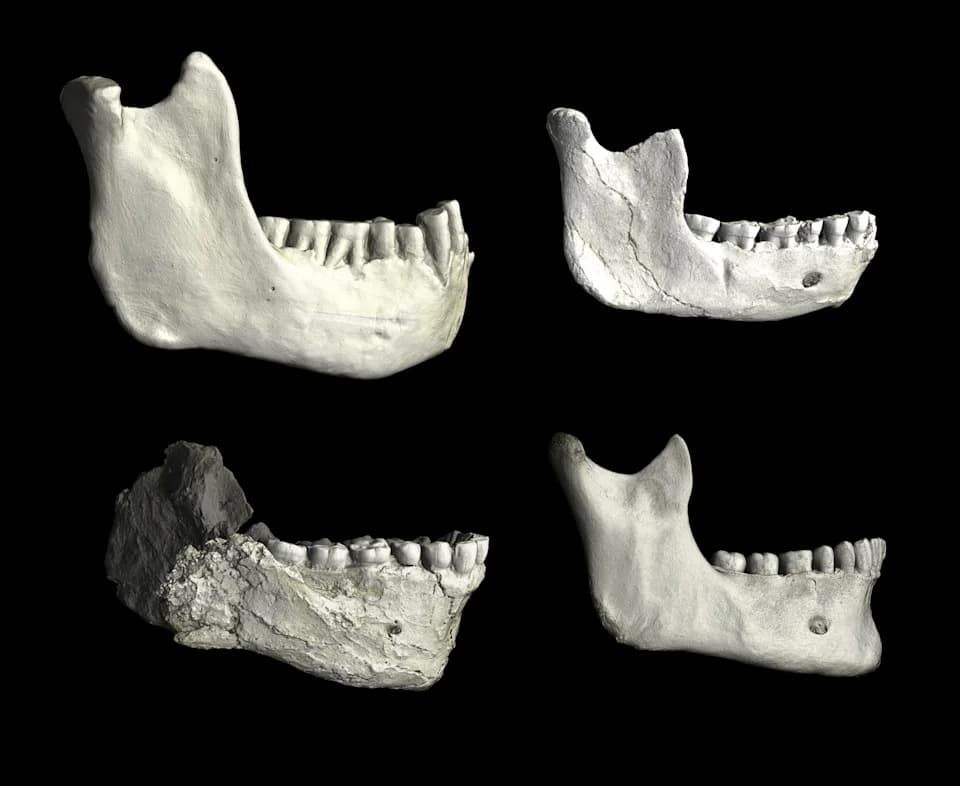
The Dmanisi site in Georgia (≈1.8 million years old) yielded 583 teeth from 1 maxillary and 71 mandibular specimens. Using Linear Discriminant Analysis, researchers found that sexual dimorphism cannot fully explain the dental variation. The results support at least two coexisting Homo taxa (proposed as H. georgicus and H. caucasi) and suggest some traits resemble australopiths, raising the possibility of earlier or more complex dispersals out of Africa.
Analysis of 583 Ancient Teeth at Dmanisi Rewrites Early Human Migration Story
These 583 Teeth Change the Story of Human HistoryDrbouz - Getty Images
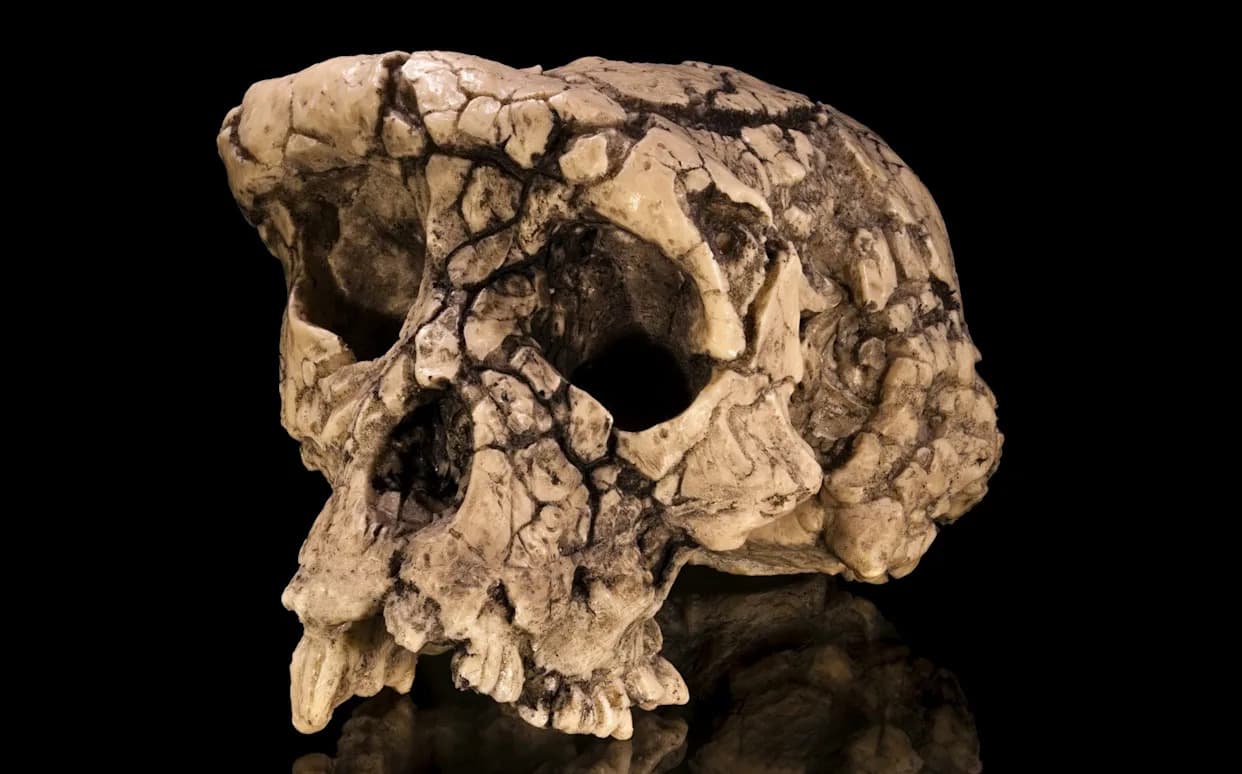
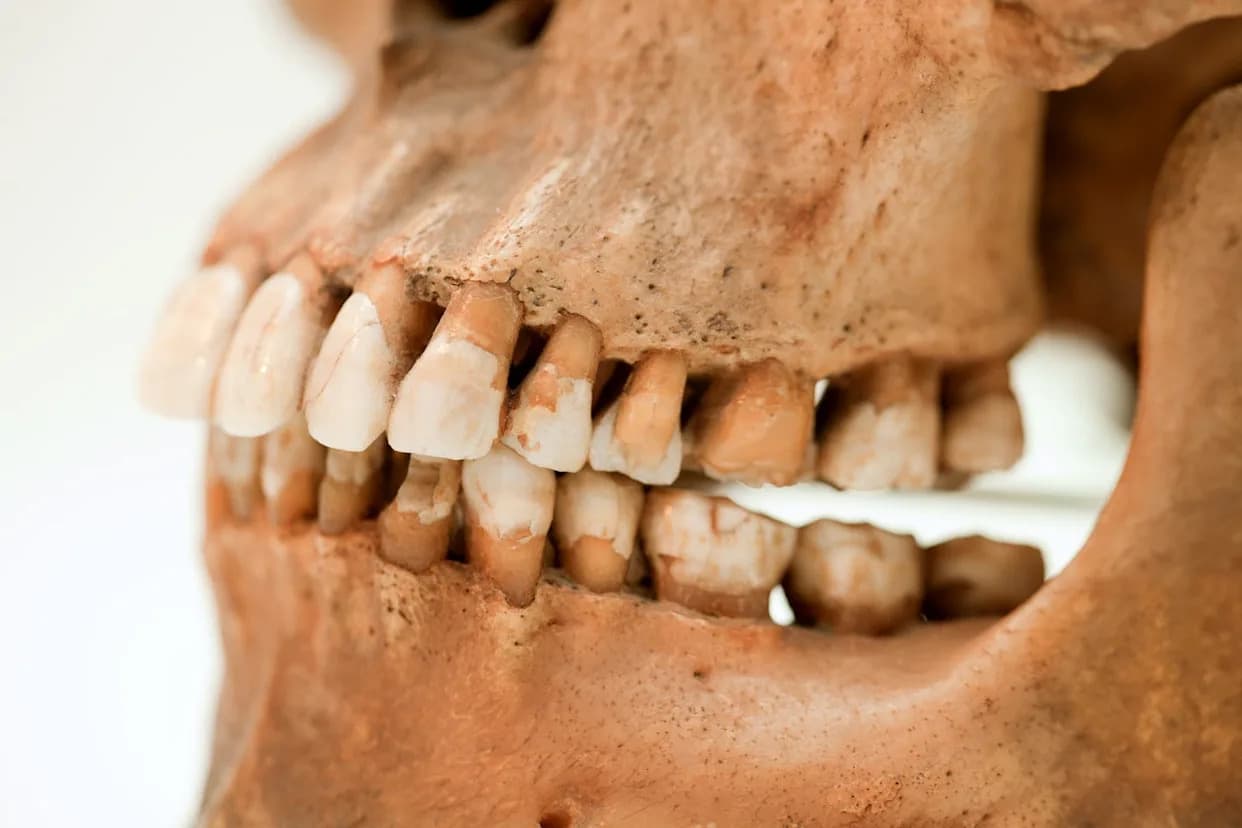
The Dmanisi Hominid Archaeological Site, southwest of Tbilisi in Georgia, preserves some of the oldest hominid fossils known in Europe. New research analyzing 583 teeth from the Dmanisi collection strengthens the case that more than one Homo taxon lived at the site and raises the possibility of earlier or more complex migrations out of Africa than previously thought.
Background
Dated to roughly 1.8 million years ago, Dmanisi has been central to debates about early human dispersal. Excavations have yielded animal bones, stone tools, and multiple hominid remains whose anatomical diversity has prompted two competing explanations: (1) two distinct Homo taxa occupied the site, or (2) a single species exhibiting pronounced sexual dimorphism produced the observed variation.
What the Researchers Did
Researchers from the University of São Paulo and Ohio State University measured crown dimensions from one maxillary and 71 mandibular Dmanisi specimens, totaling 583 teeth. They applied Linear Discriminant Analysis (LDA), a statistical classification method, to assess whether differences in dental size and shape could be explained by sex alone or required taxonomic separation.
Key Findings
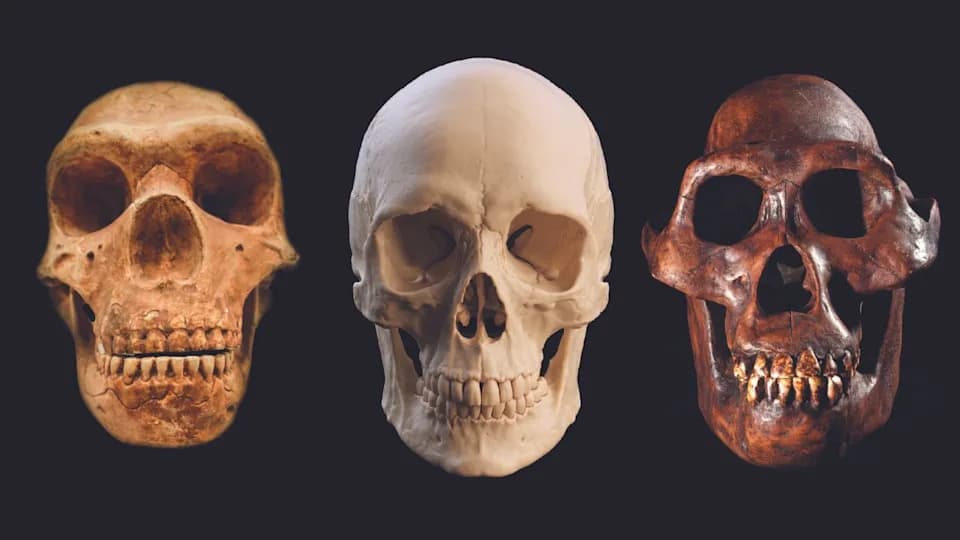
The LDA results indicate that sexual dimorphism alone is insufficient to explain the full range of variation in crown dimensions. Instead, the analyses support the presence of at least two coexisting Homo taxa at Dmanisi — previously proposed as Homo georgicus and Homo caucasi — a conclusion reported in the journal PLOS One.
“We conclude that differences in crown dimensions support the hypothesis of two distinct taxa coexistent at the Dmanisi site, previously proposed to be Homo georgicus and Homo caucasi. This proposal has important implications for the dispersal of Homo out of Africa at the beginning of the Pleistocene.”
Implications and Next Questions
Surprisingly, some Dmanisi specimens display dental features resembling australopiths, a group that predates the Homo lineage. If those similarities indicate ancestry rather than convergence, they raise the possibility that at least some early hominid populations dispersed from Africa before the classic H. erectus wave. The authors note that current evidence cannot conclusively determine whether H. georgicus and H. caucasi evolved from H. erectus ancestors or from australopith-like ancestors; additional early Homo fossils from Asia and further analyses will be needed.
Rather than a single, simple migration event, the new findings are consistent with a more complex scenario in which episodes of cladogenesis and local population differentiation produced overlapping hominid lineages. In short, models of early Homo dispersal out of Africa may need revision as new fossil evidence emerges.
Conclusion
The dental study at Dmanisi strengthens the case for taxonomic diversity at one of the earliest European hominid sites and introduces new questions about the timing and pattern of early human migrations. Continued discoveries and integrative analyses will be essential to refine the story of how and when hominids moved into Eurasia.
Help us improve.