Ants coordinate complex foraging and traffic systems without any central leader by using pheromone trails as an external information network. Trail intensity, freshness, and chemistry encode distance, food quality, and danger. Simple local rules—deposit or ignore pheromone, follow or avoid a trail—produce emergent behaviors like shortest-path selection, lane formation, and dynamic regulation of forager numbers. These decentralized principles have inspired algorithms and design approaches in computing, logistics, and urban planning.
How Ants Build Complex Traffic Networks Without Any Leaders
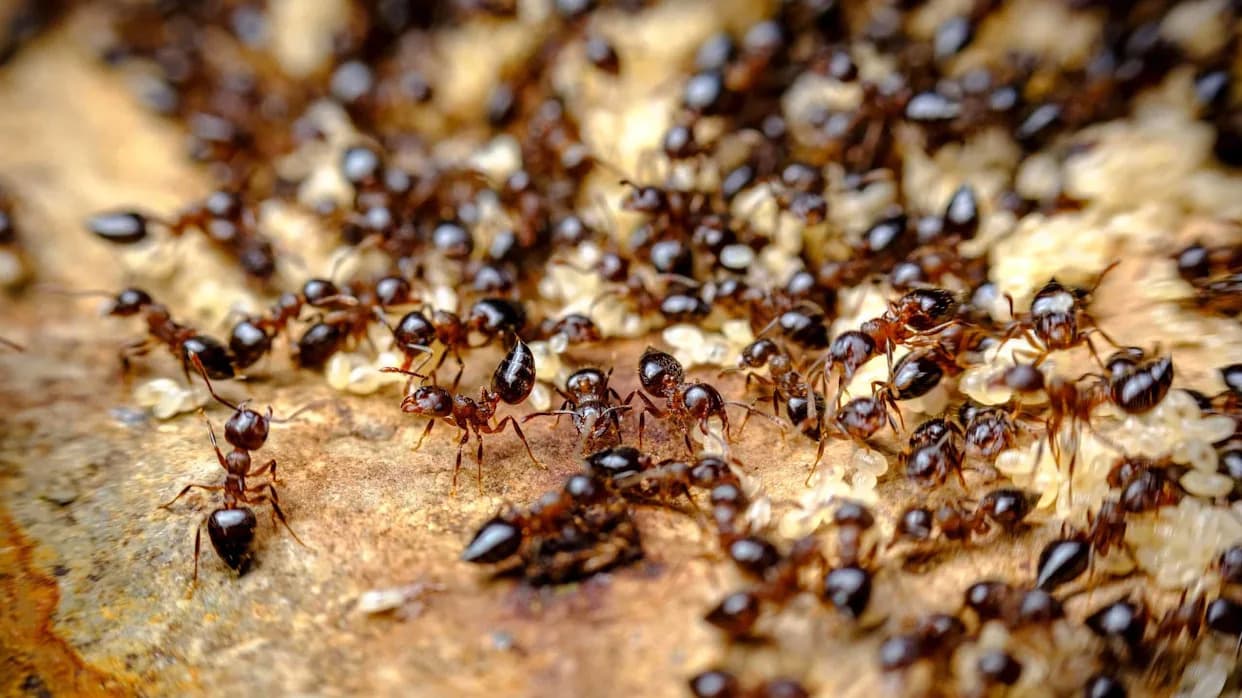
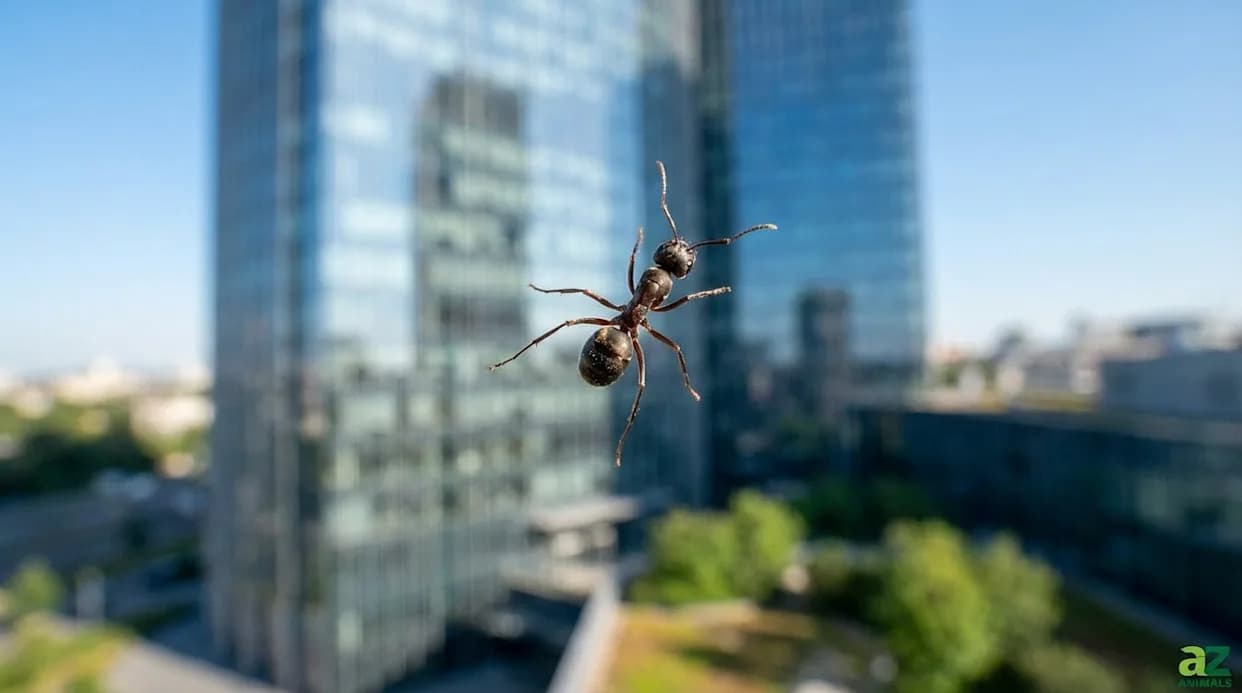
Pavement Ant© Ezume Images/Shutterstock.com
A few months ago I woke to find what looked like a thick black crayon mark running the length of my kitchen wall. On closer inspection it wasn’t a mark at all but a trail of tens—perhaps thousands—of tiny ants. The column began at an electrical socket, ran a dozen feet along the wall, and crossed the floor to a small scrap of food that had fallen the night before. I didn’t want ants in my home, and the sight was unpleasant, but it was also mesmerizing; I watched for several minutes before removing the food, after which the column receded back toward the socket in seconds.
Communication Without a Boss
That scene is not unusual. Hundreds or thousands of ants can pour from a nest, fan out, find food, avoid hazards, navigate obstacles, and haul resources home with staggering efficiency—without a visible commander issuing orders. The apparent paradox of coordinated group behavior emerging from leaderless individuals has intrigued engineers, computer scientists, and urban planners for decades.
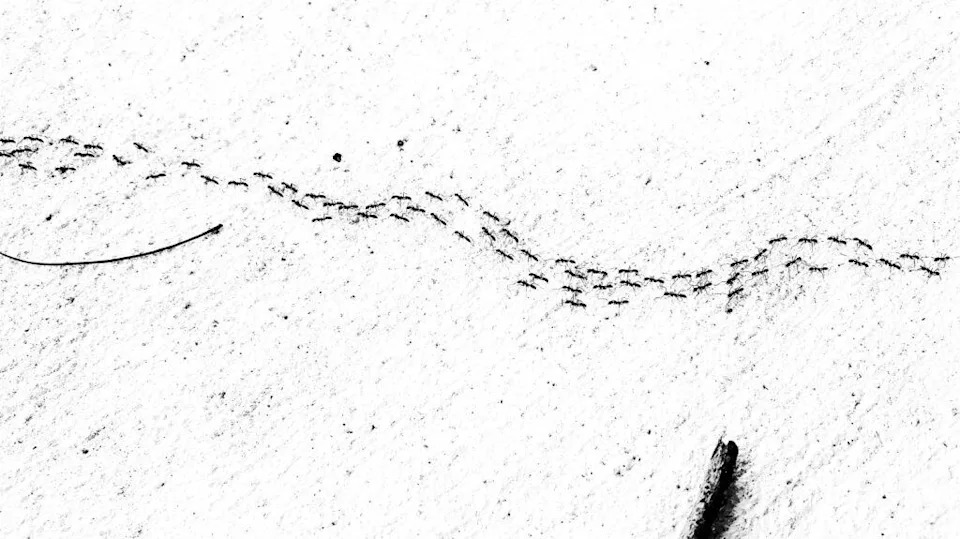
Ant colonies function efficiently without any single ant directing others, relying entirely on local interactions.©dhtgip/Shutterstock.com(dhtgip/Shutterstock.com)
Pheromones: The Colony's External Information Network
Ants coordinate using chemical signals called pheromones. These chemicals act like an external information network, conveying details about where food is, how good it is, how far away it lies, and whether a route is risky. Each ant follows simple local rules—deposit pheromone, follow a trail, or avoid a spot—and together those local interactions produce complex collective behaviors.
How Trails Encode Useful Information
When a forager finds food it often lays a pheromone trail on the way back to the nest. That trail is more than a binary flag; its intensity, freshness, and chemical composition provide layered signals. Ants continuously sample the chemical landscape with sensitive antennae—touching the ground as they walk—literally reading pheromone strength like Braille.
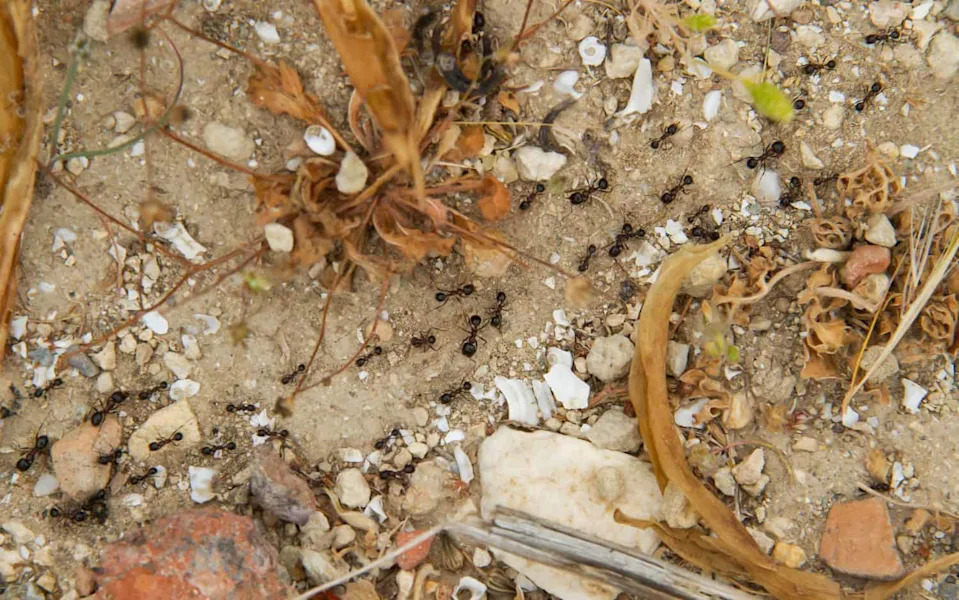
Ants “read” pheromone trails with sensitive antennae, detecting trail strength, freshness, and chemical cues.©Matauw/Shutterstock.com(Matauw/Shutterstock.com)
Scientists sometimes describe trails as “digital” in the sense that individual ants either deposit pheromone or do not. Those discrete deposits accumulate or fade, producing stepwise updates to the colony’s shared information: worthwhile routes are reinforced, poor ones are ignored and vanish.
Distance, Quality and Danger
Distance: Because pheromones evaporate and degrade, trails that take longer to traverse weaken before they can be reinforced. Shorter routes are thus naturally favored—ants returning sooner reinforce those trails more often. Some species even vary the amount of pheromone they lay depending on trip length or fatigue, biasing the system toward nearby resources.
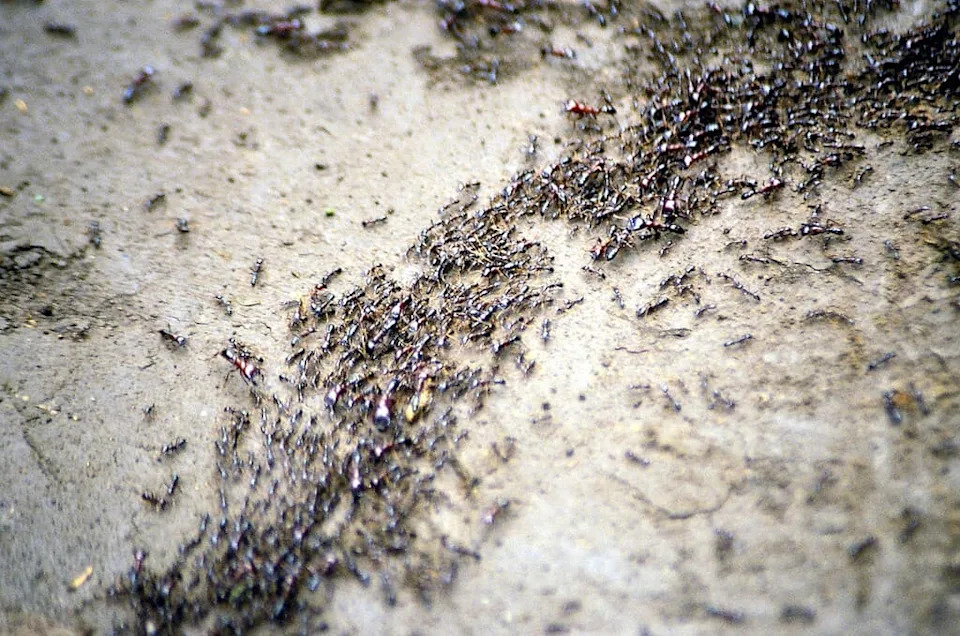
Pheromone strength naturally encodes distance, favoring nearby food sources without ants needing maps.©Mehmet Karatay / CC BY-SA 3.0 –Original/License(Mehmet Karatay / CC BY-SA 3.0)
Food Quality: Higher-value foods prompt stronger pheromone deposits. Returning ants may also share food via trophallaxis (mouth-to-mouth transfer), letting nestmates sample the reward. If the sample is valuable, more workers are stimulated to leave the nest and reinforce the trail.
Danger: Pheromones can repel as well as attract. Alarm pheromones mark hazardous or predator-exposed routes, causing others to hesitate, retreat, or reroute. Over time, dangerous paths become chemically unattractive while safer paths gain reinforcement.
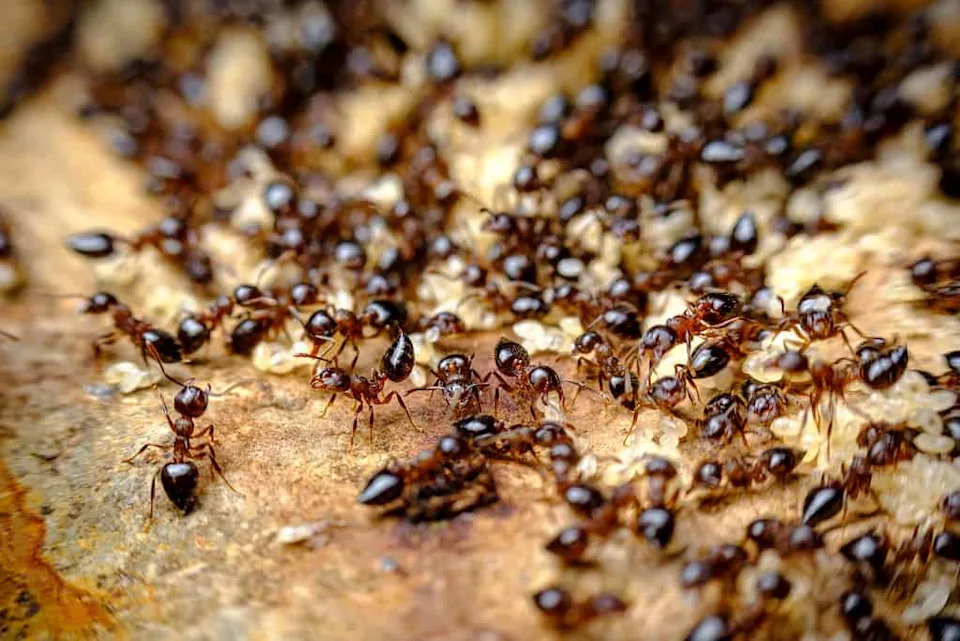
Alarm pheromones signal threats along a trail, causing ants to retreat or take safer routes.©Ezume Images/Shutterstock.com(Ezume Images/Shutterstock.com)
Finding the Shortest Path
When ants face two routes—one short and one long—small random differences are amplified by positive feedback. Ants returning via the shorter route arrive more quickly and reinforce it more often, so the colony converges on the most efficient path. This simple dynamic inspired ant colony optimization algorithms used today in routing, scheduling, and network optimization.
Traffic Flow and Congestion Management
On busy trails ants often self-organize into lanes with outbound and inbound traffic keeping to different sides. These lanes emerge from simple avoidance and speed-adjustment behaviors during encounters. Pheromone trails reinforce efficient flow and discourage wandering, while some species even regulate how many foragers leave the nest in response to congestion: strong, food-bearing return trails attract more workers; faint trails and many empty returns reduce outbound flow.
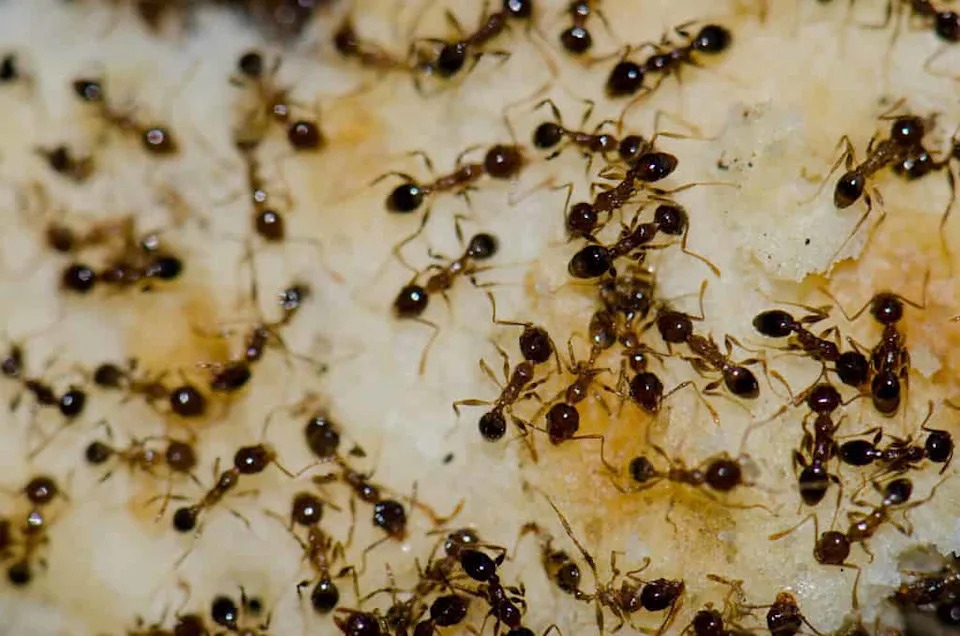
Colonies self-organize lanes and adjust outbound traffic based on congestion, avoiding jams without a leader.©Victor Suarez Naranjo/Shutterstock.com(Victor Suarez Naranjo/Shutterstock.com)
Why This System Works
The power of pheromone-based coordination is its simplicity, redundancy, and scalability. No single ant holds critical information—the system stores and updates collective knowledge externally through chemical marks. If individuals die, trails remain; if conditions change, pheromones fade and new paths emerge. The mechanism is robust across colony sizes and adapts quickly—often faster than centralized human systems.
Human Applications
Engineers and planners borrow these principles to design decentralized, resilient systems: from traffic-routing heuristics and logistics to distributed computing. The core idea—local signals producing global order—translates into algorithms and designs that are flexible and fault-tolerant.
Conclusion
Ants don’t think like humans, yet their collective achievements are not mere reflex. Through pheromones they create a shared chemical language that turns simple individual actions into emergent intelligence. Every trail is a message; each step updates the system; and each successful trip nudges the colony toward greater efficiency. Still, for all their brilliance, I’d prefer they stayed out of my kitchen.
Help us improve.