A PNAS study using scanning electron microscopy shows that queen bumblebees (Bombus terrestris) have more widely spaced hairs on their proboscis, making their tongues more porous and less able to retain nectar. This microstructural difference makes queens poorer nectar collectors than workers and offers a mechanical reason they stop foraging once workers arrive. The findings also suggest tongue porosity, along with length and nectar viscosity, influences bee–flower matching.
Hairy, Porous Tongues Make Queen Bumblebees Poorer Foragers, Study Finds
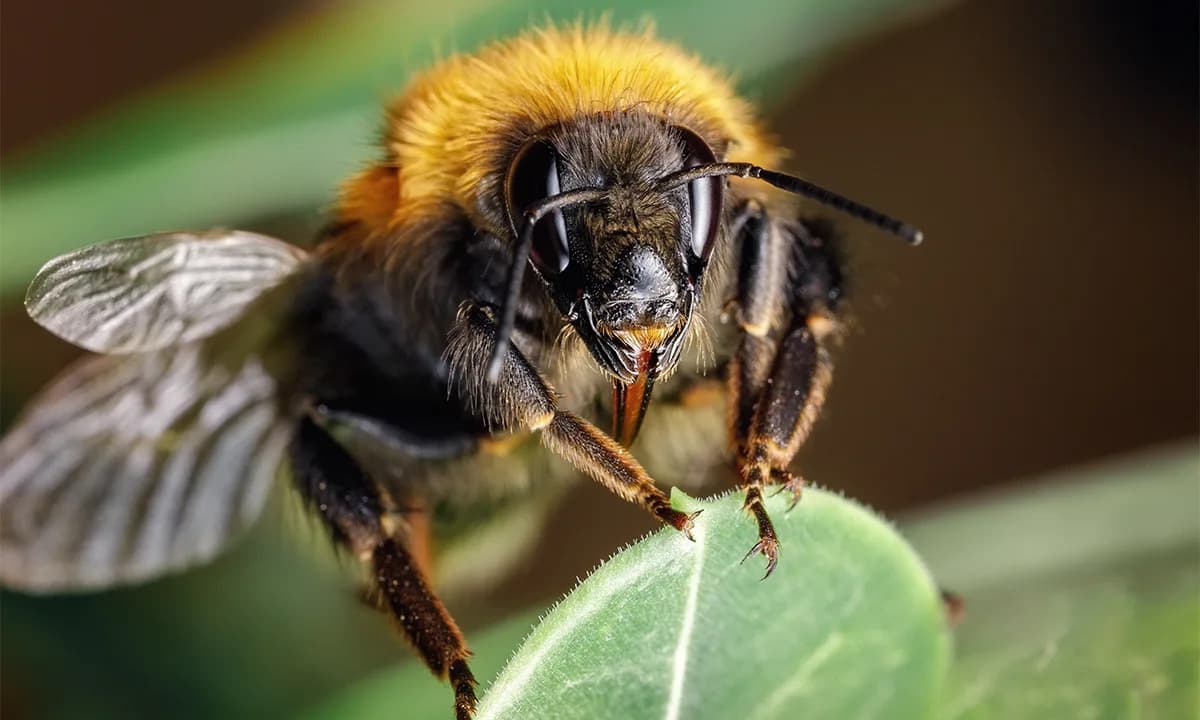
Close-up of a Bombus terrestris (the buff-tailed bumblebee or large earth bumblebee). Credit: Linas T / Shutterstock.
When a bumblebee queen (Bombus terrestris) is founding a nest she forages intensively, but she typically stops collecting nectar once her workers arrive. A new study in PNAS reveals a surprising, physical explanation: microscopic differences in tongue structure make queens less efficient at retaining nectar.
Researchers from Sun Yat-sen University, Georgia Tech, Beijing Institute of Technology and the Chinese Academy of Sciences examined queen and worker mouthparts with scanning electron microscopy (SEM). They focused on the proboscis—a tube sheathed by a hairy tongue that bees use to lap nectar. Each tongue segment bears a ring of fine hairs separated by curved menisci that trap liquid.
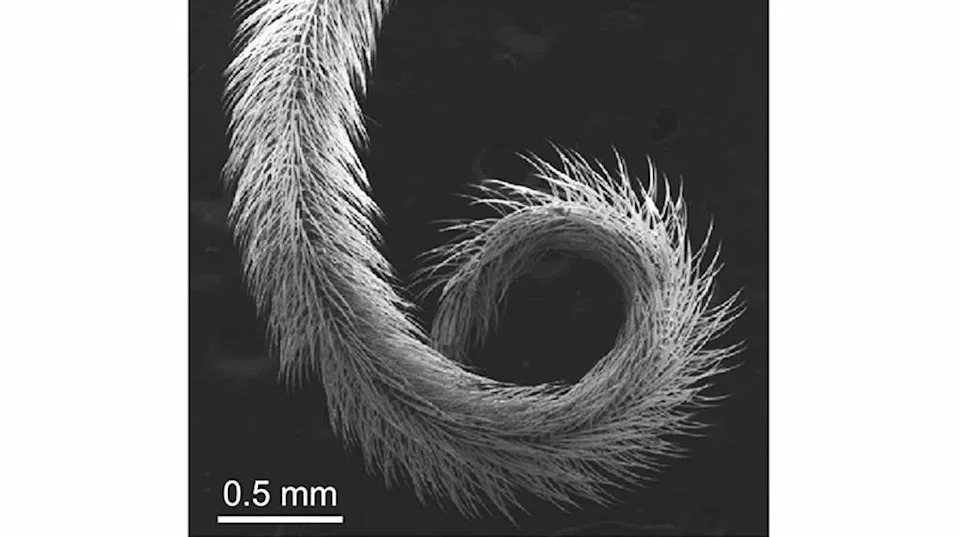
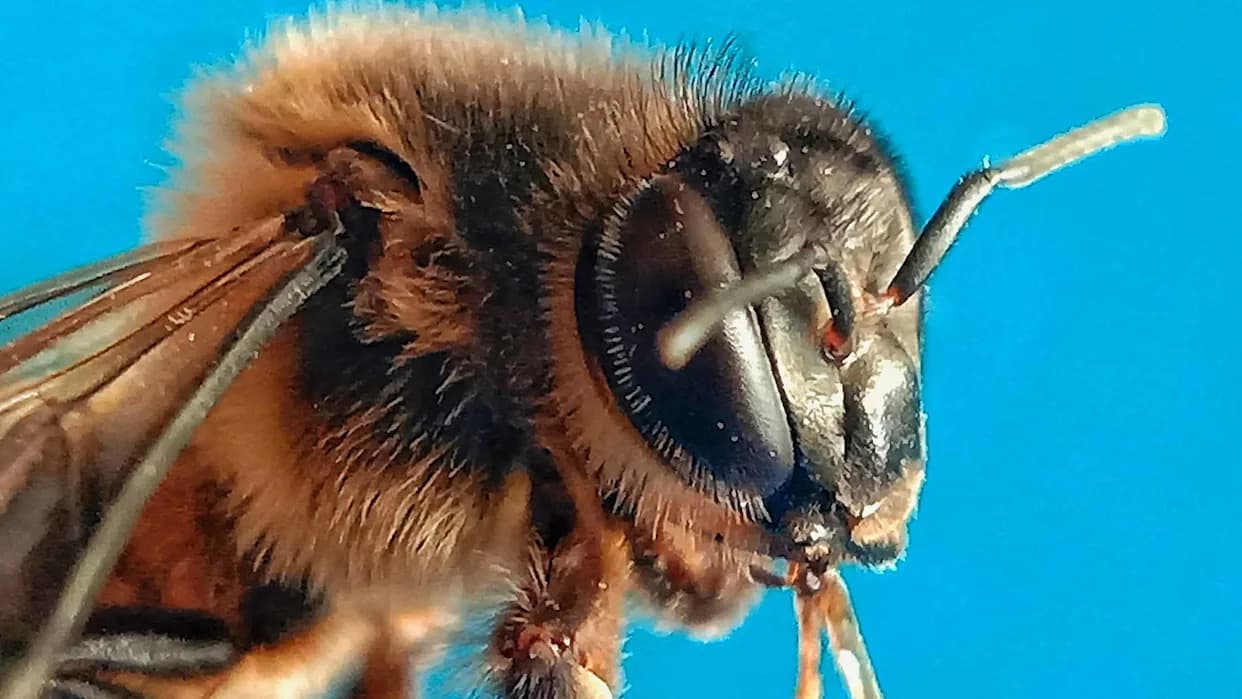
QUEEN BEE:This close-up is a SEM image of a queen bumblebee's tongue. While it looks impressive here, the queen's tongues have more widely spaced hairs than workers, making them less efficient for gathering nectar.Image from Huang, Z.,et al. PNAS(2026).
SEM images showed that queen bumblebees have hairs spaced more widely than workers, creating larger gaps and a more porous tongue surface. Because the menisci formed between hairs hold less nectar on queens’ tongues, much of the liquid laps off before it can be ingested. In short, queens can lap nectar, but they retain and ingest it far less efficiently than workers.
“This physical constraint offers a mechanistic explanation for why queens relinquish foraging once workers emerge, underscoring how subtle deviations in microstructure can influence the division of labor in social insects.”
Why It Matters
The finding reframes how we think about division of labor in social insects: it isn’t solely behavioural or hormonal—microstructure matters too. The result also has implications for pollination biology. Traditionally researchers compare bee tongue length with flower nectary depth when studying bee–flower matching. This study suggests tongue porosity and nectar viscosity may also determine which bees are best suited to which flowers.
Study Details
- Species: Bombus terrestris
- Method: Scanning Electron Microscopy (SEM)
- Institutions: Sun Yat-sen University, Georgia Tech, Beijing Institute of Technology, Chinese Academy of Sciences
- Published In: PNAS
Next time you watch a bumblebee visiting flowers, remember that tiny differences in hairy mouthparts help decide who in the colony gathers food and who stays behind to reproduce.
Help us improve.