The common swift (Apus apus) is exceptionally adapted to life on the wing: data loggers on 19 Swedish breeders show some individuals fly for up to 10 consecutive months, spending roughly 99% of their non-breeding time aloft. At dawn and dusk they perform "twilight ascents," climbing to nearly two miles and gliding with reduced wingbeats—likely brief in-flight rests. Despite their aerial mastery, swifts rely on terrestrial nesting sites and abundant insect prey, making them vulnerable to habitat loss, pesticides and climate-driven shifts in insect availability.
The Ten-Month Marathon: Meet the Bird That Lives Almost Its Entire Life in the Sky

Swift bird in flight with a colorful sky in background. Black swallow. Image with copy space.© Marco Lissoni/Shutterstock.com
Few animals match the aerial mastery of the common swift (Apus apus). Scientific advances using lightweight data loggers have confirmed that these small, streamlined birds spend nearly all of their non-breeding season aloft — in some cases for as long as ten consecutive months. This article explains how swifts manage life on the wing, what the trackers revealed, and why conservation on the ground still matters for a species that seems to live in the clouds.
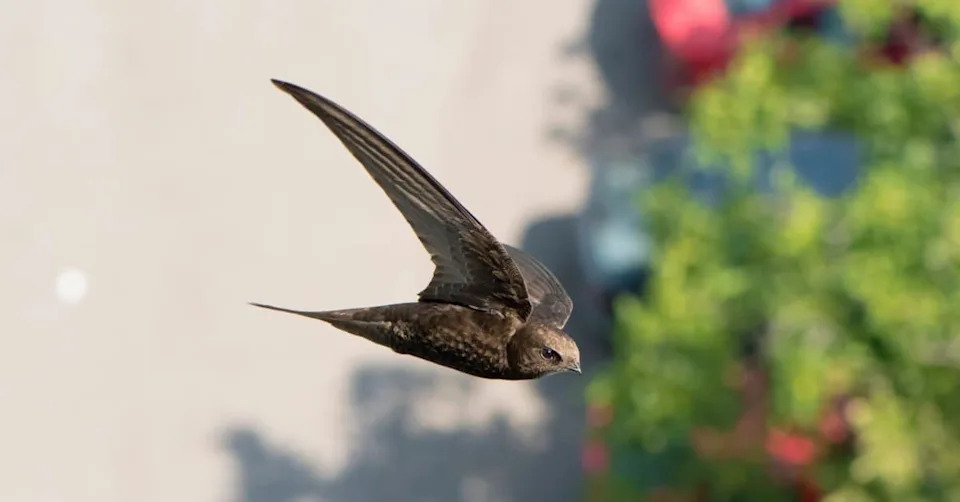
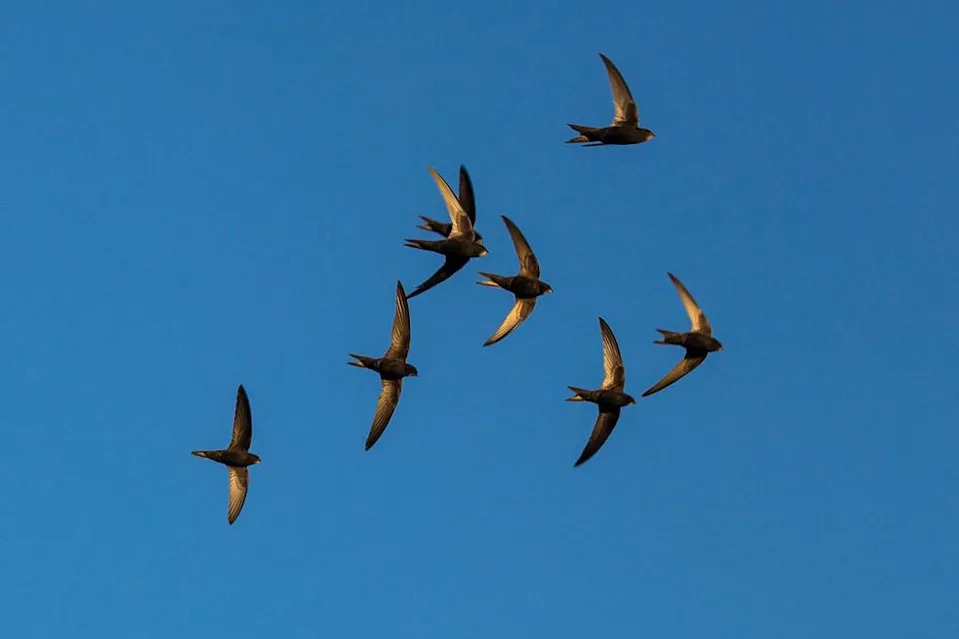
Unlike most birds, common swifts spend the vast majority of their lives in flight.©Dilomski/Shutterstock.com(Dilomski/Shutterstock.com)
How Researchers Tracked Continuous Flight
Researchers from Lund University attached miniature data loggers to 19 breeding swifts in Sweden to record acceleration, wingbeat patterns, flight activity and, on some devices, light levels for geolocation. These continuous records allowed scientists to reconstruct movement and behavior over months — and in a few cases, across multiple years — revealing an unprecedented degree of aerial endurance.
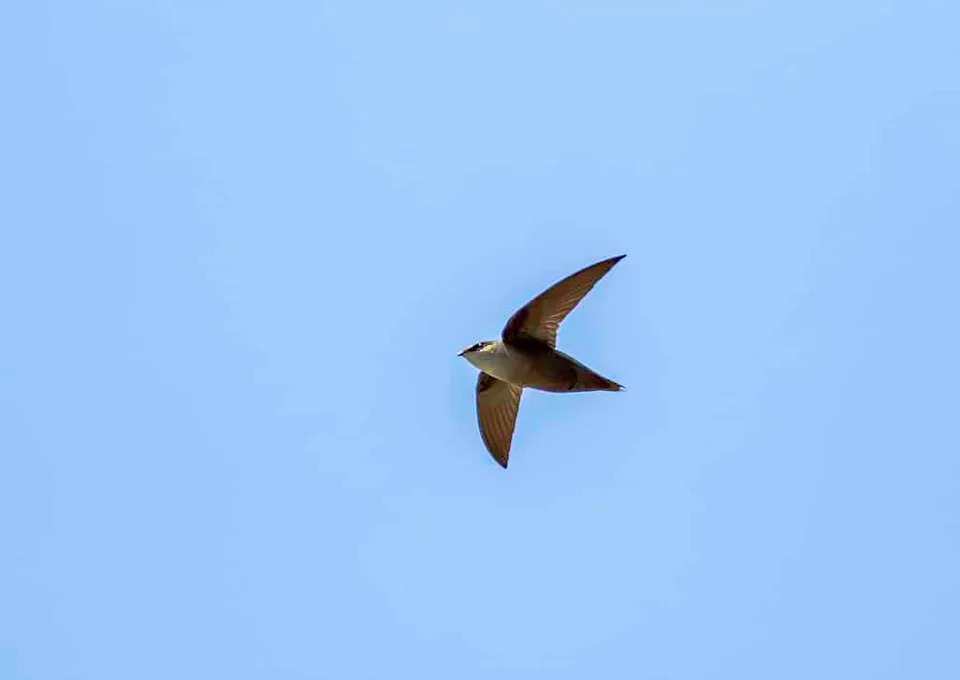
Common swifts are so perfectly adapted to life in the air that they seem untethered from the ground.©iStock.com/Matthew Jolley(iStock.com/Matthew Jolley)
Record-Breaking Endurance
The results are striking: individual common swifts were documented flying for up to 10 consecutive months, and tracked birds spent roughly 99% of their non-breeding time in the air. One bird landed for only four nights during a full year and rested for just two hours the following year. Researchers were unable to identify regular roosting sites for these swifts in sub-Saharan Africa, suggesting many may rarely, if ever, touch down outside the breeding season.
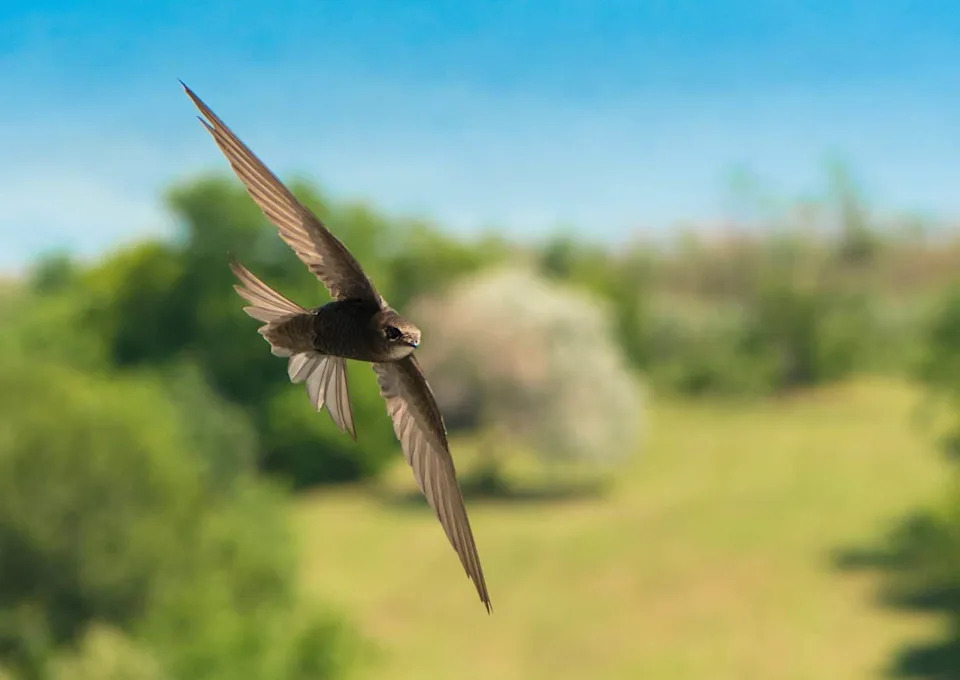
Swifts have ruled the skies for millennia by living, feeding, mating, and resting while never standing still.©Dilomski/Shutterstock.com(Dilomski/Shutterstock.com)
Behavioral and Physiological Adaptations
Swifts are built for continuous flight. Their long, narrow, pointed wings and streamlined bodies maximize aerodynamic efficiency, while short legs make them awkward on the ground. They capture flying insects on the wing with wide, gaping mouths, feed in flight, mate briefly in midair, and even collect nesting material while airborne. These adaptations favor endurance and foraging efficiency over terrestrial competence.
Swifts rely on specific nesting sites, such as cliffs and tree cavities, but also buildings and rooftops.©Sokolov Alexey/Shutterstock.com(Sokolov Alexey/Shutterstock.com)
Twilight Ascents and In-Flight Rest
One of the most intriguing discoveries from the loggers is the twilight ascent. At dawn and dusk, swifts climb to great heights — sometimes approaching two miles (nearly 3.2 km) — then enter long, shallow glides during which wingbeat frequency drops sharply. Scientists interpret these high, calm glides as opportunities for brief in-flight rest or "power naps." Although the detailed neurobiology of sleep on the wing remains under study, the behavior provides a plausible mechanism that helps swifts remain airborne for extended stretches.
Juveniles and Life Cycle
After fledging, juvenile swifts disperse widely and may remain aloft for many months before returning to breed at two to three years old. While earlier speculation suggested some juveniles might stay airborne for years without landing, researchers caution that continuous multi-year flight has not been directly documented. What is clearly documented, however, is astonishing endurance: some individuals have been tracked for up to ten straight months.
Conservation: Grounded Threats to a Sky-Dwelling Bird
Despite their extraordinary aerial lifestyle, swifts depend on terrestrial resources: reliable nesting sites (cliffs, tree cavities and buildings), abundant flying insects, and predictable seasonal timing of prey emergence. Habitat loss, pesticide-driven insect declines and climate change that shifts insect phenology all threaten swifts’ ability to feed and breed. Practical conservation measures — protecting nesting opportunities in old and modern buildings, preserving insect-rich habitats, and reducing pesticide impacts — are essential to sustain their airborne way of life.
Why it matters: The common swift’s life in the air highlights both the extremes of evolutionary adaptation and the connections between sky and ground: even a species that rarely lands depends on the health of ecosystems beneath it.
Watching a swift is to watch endurance and elegance in motion: a creature whose life is mapped by wind currents, insect swarms and broad horizons. Their remarkable strategy stretches our understanding of animal performance — and reminds us that human choices on the surface directly affect even the loftiest lives above.
Help us improve.