The kākāpō is a nocturnal, flightless parrot endemic to New Zealand, notable for its owl-like face, heavy body and unusual breeding linked to rimu tree mast events. Introduced predators decimated populations, prompting an intensive recovery programme that relocated every bird to predator-free islands, fitted each with transmitters, and used targeted feeding and drone-assisted artificial insemination. Numbers rose from about 51 in the 1990s to over 230 today, but inbreeding, disease and dependence on irregular rimu fruiting keep the species vulnerable.
Why Every Living Kākāpō Has a Name — What That Reveals About Its Future
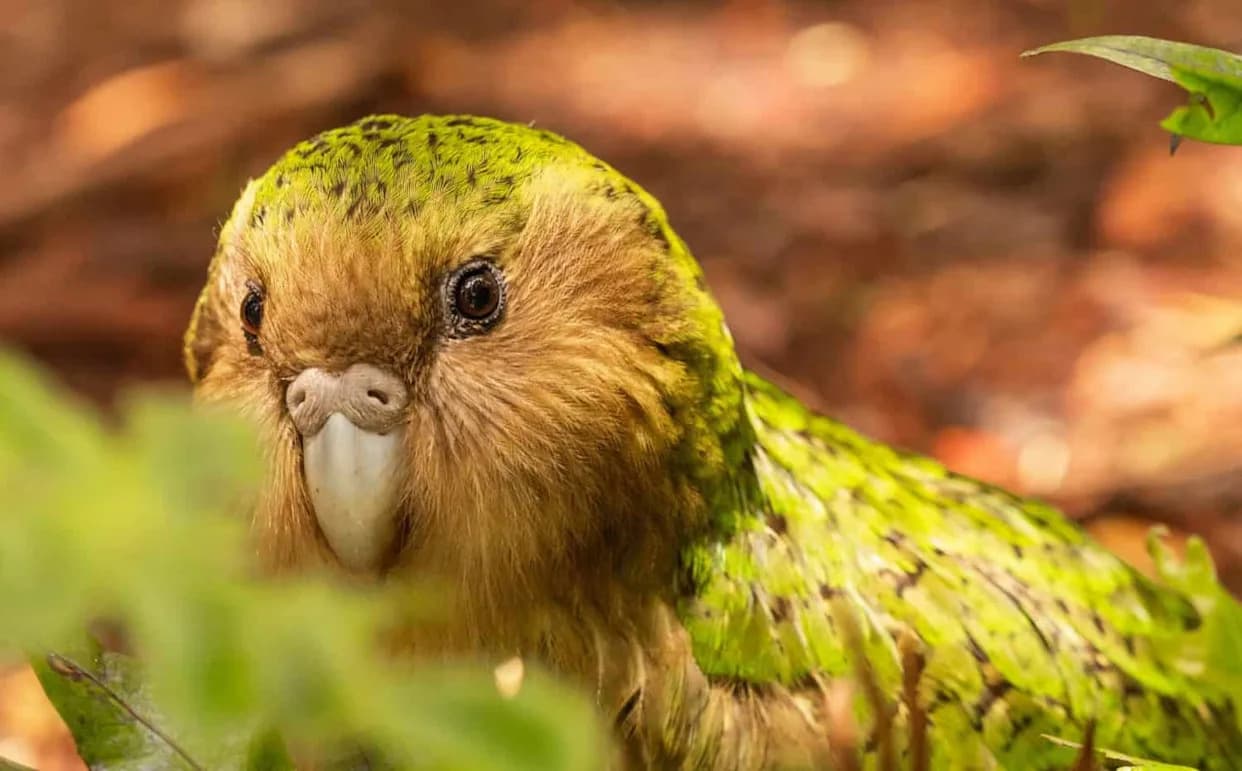
Wild endemic flightless Kakapo parrot in New Zealand© FeatherStalker Don/Shutterstock.com
The kākāpō is one of the world’s most unusual birds: the heaviest parrot, nocturnal, flightless, and endowed with forward-facing, owl-like eyes. Once widespread across New Zealand, it was driven to the brink by predators introduced by humans. Today, every surviving kākāpō is individually named and closely monitored as part of an intensive conservation effort that offers both hope and caution for the species’ long-term survival.
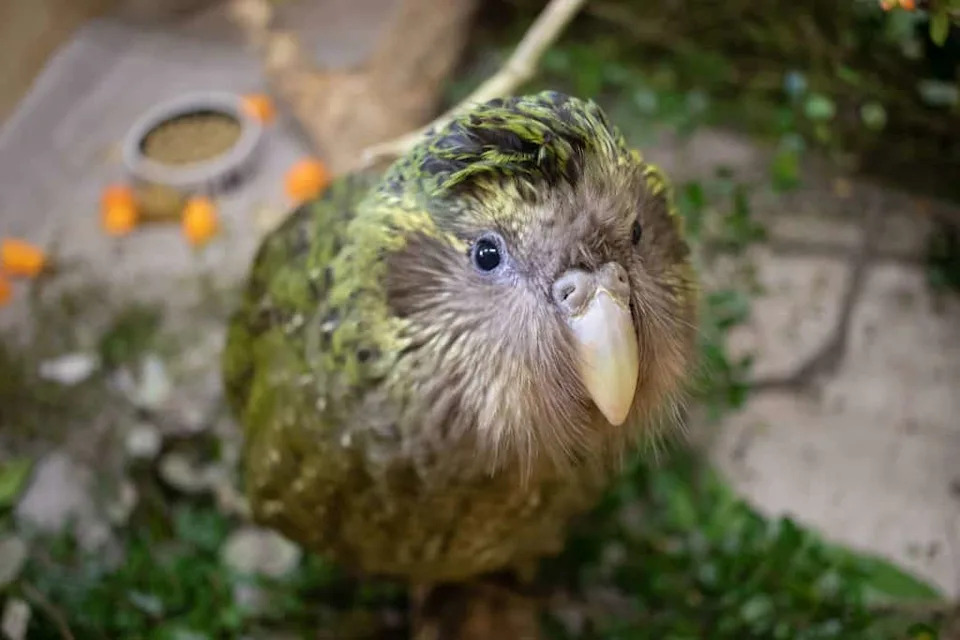
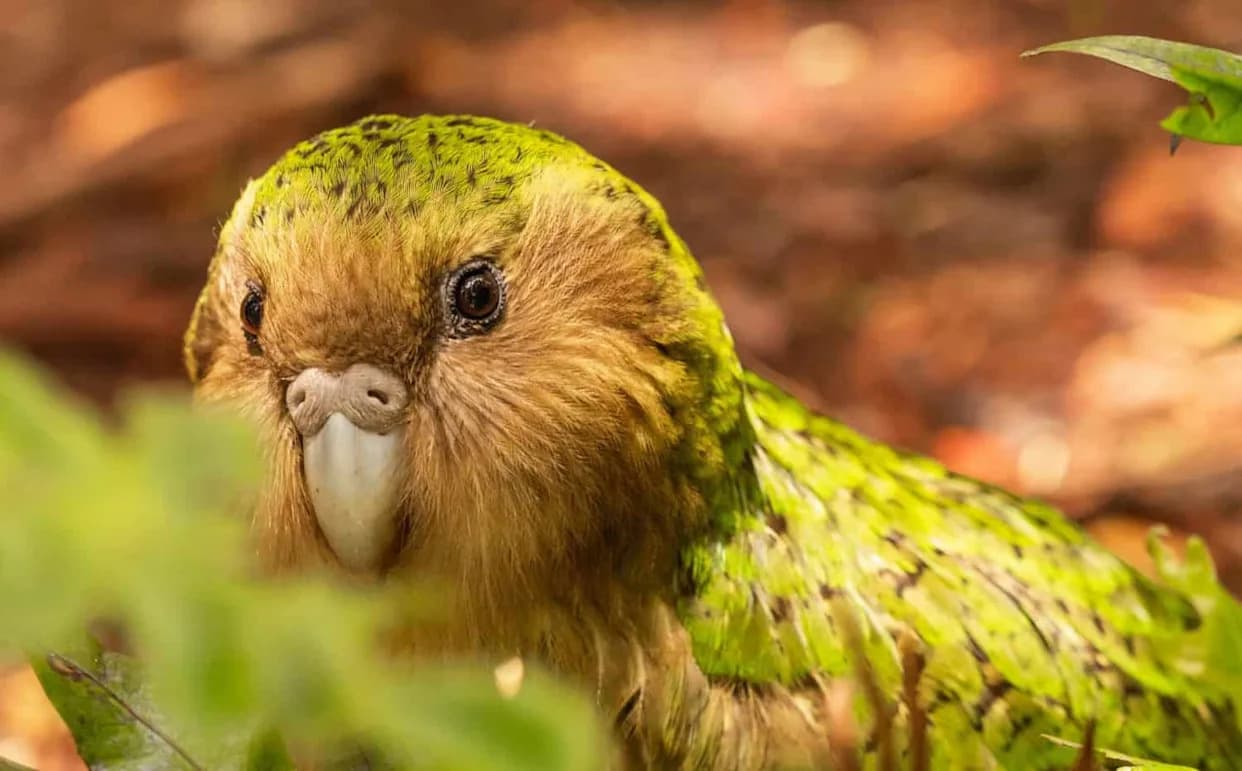
Unlike other parrots, kākāpōs have forward-facing eyes like owls.©Kimberley Collins / CC BY 2.0 –Original/License
About the kākāpō
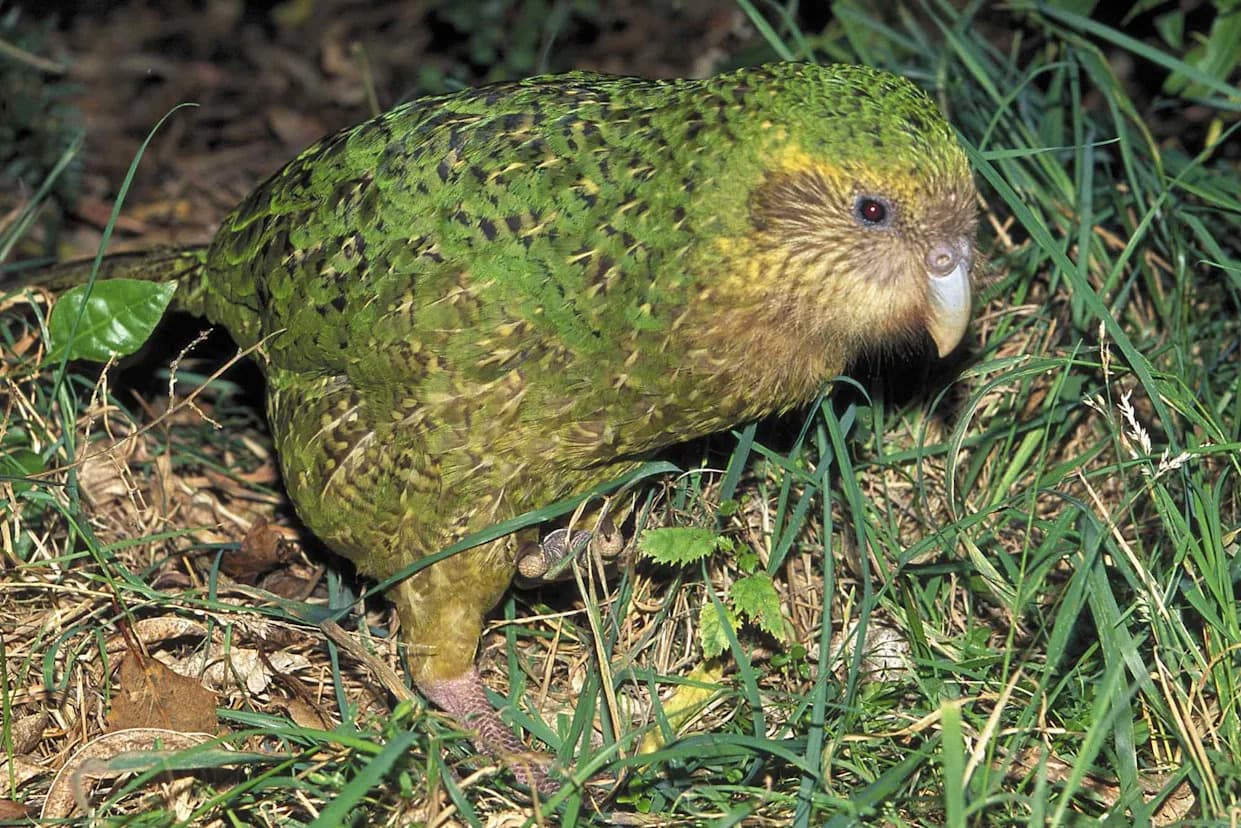
Kākāpō (Strigopoidea) are ground-dwelling parrots endemic to New Zealand. They tolerate a range of habitats — from the warmer north to the cooler southern regions — though they favor areas with mild winters and ample rainfall. Adults typically reach about 25 inches in length. Males usually weigh between three and six pounds, while females average two to three pounds. Their plumage is mottled yellow-green, they have stout blue feet, short wings and tails, and a distinctive facial disc framing forward-facing eyes.

A classic example of island syndrome, kākāpōs lacked many ground predators, so they didn’t have much need to fly in the air like other birds.©Ruben Rauch/Shutterstock.com
Unique adaptations and behavior
Evolution on predator-poor islands produced a bird unlike most parrots. Kākāpō are flightless and terrestrial, with strong legs for walking and climbing. Their green-and-brown feathers make near-motionless camouflage on the forest floor. Fine facial feathers act like tactile whiskers, helping them navigate at night, and they possess a highly developed sense of smell — unusual among parrots — that helps with foraging and social interaction.
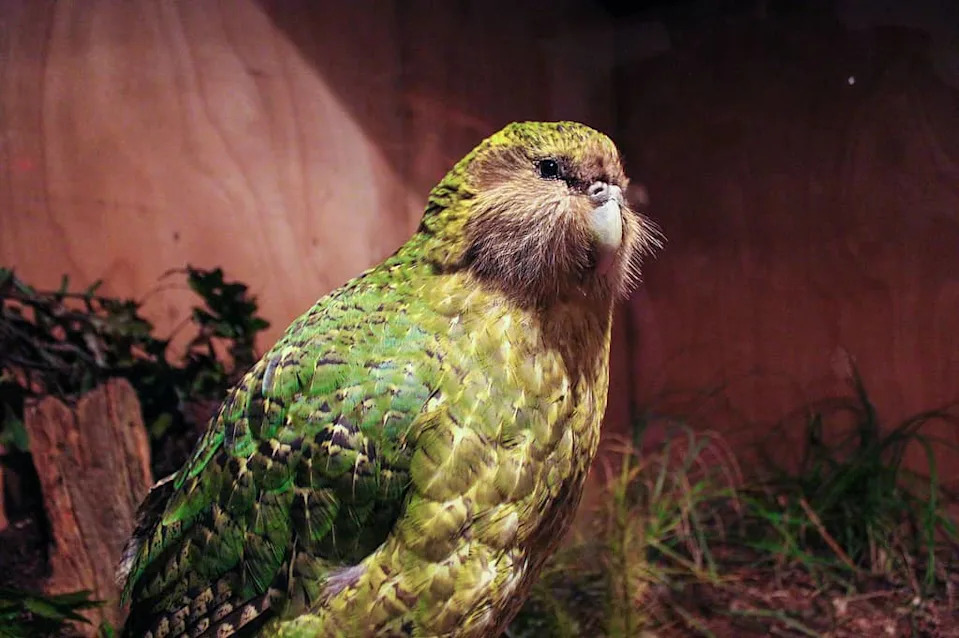
These parrots feature fine feathers on their face that function like cat whiskers, helping them to navigate forest floors at night.©Imogen Warren/Shutterstock.com
Vision, smell and nocturnality
Because kākāpō are primarily nocturnal, their visual system is adapted for low light: they have high light sensitivity but lower visual acuity than diurnal parrots. Their large olfactory bulbs support scent-based foraging and social cues. Observers often report a distinct musty-sweet odor from kākāpō, described variously as honey, flowers, and old violin cases; this scent has likely been useful for social communication but became a liability after mammalian predators arrived.
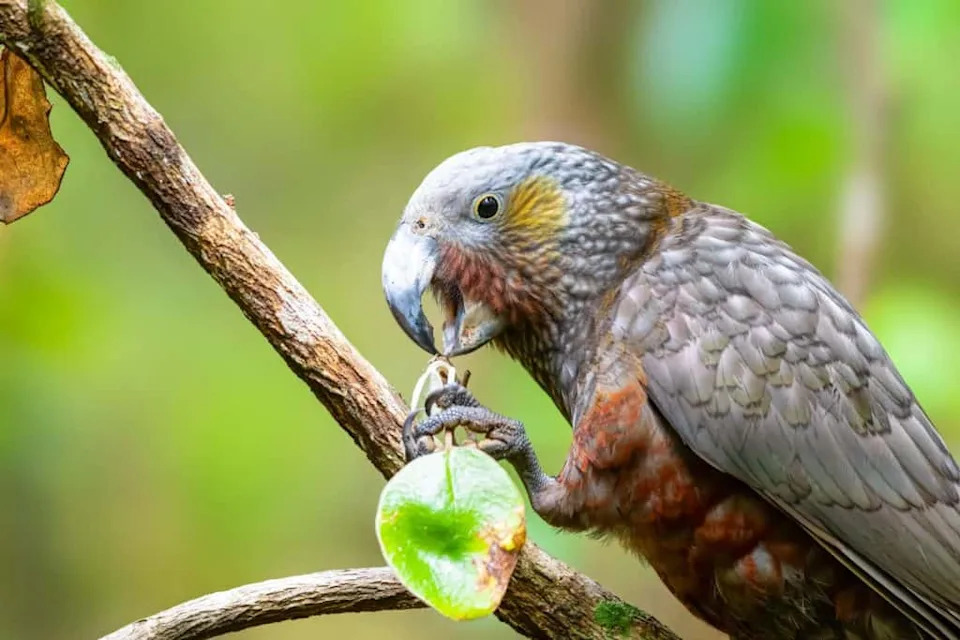
These flightless birds undertake elaborate, exhausting mating rituals.©Rajh.Photography/Shutterstock.com
Reproduction and the rimu connection
Kākāpō breeding is extraordinary and tightly linked to the mast fruiting of native trees such as rimu. Because rimu fruiting occurs irregularly — roughly every two to four years — kākāpō breeding is episodic and depends on these food booms. Males engage in a lek-style mating system: during breeding years they travel to exposed ridgelines, excavate shallow bowls, and perform long calling displays. They inflate thoracic air sacs to produce deep, low-frequency "booms" that can travel for miles, then follow with metallic notes so females can localize them. Males may call for hours each night over many weeks and can lose significant body weight during this effort.
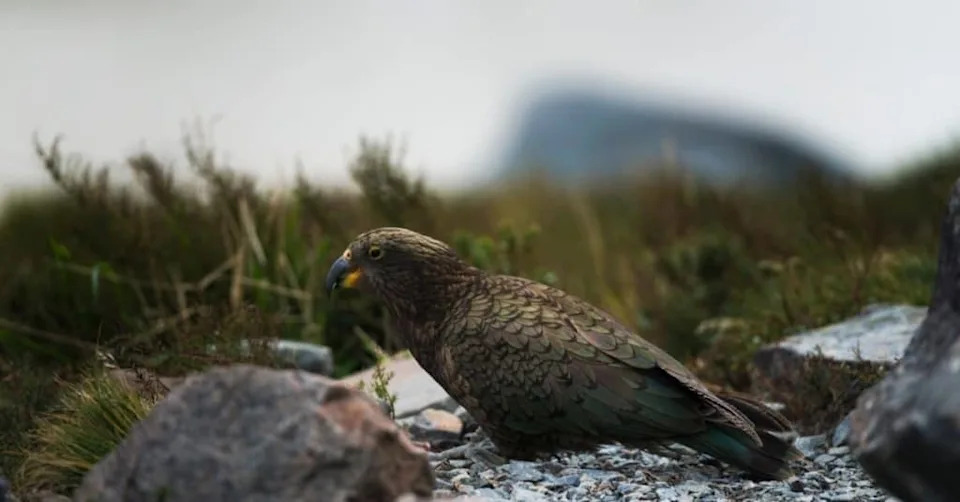
The Kākāpō Recovery Programme is one of the most ambitious conservation programs ever created.©nemethv/Shutterstock.com
Decline and threats
Prehistoric New Zealand lacked mammalian ground predators, which allowed the kākāpō to evolve as a ground-dweller. Human settlement changed that: Polynesian settlers brought rats and hunted ground birds, and later European arrivals introduced stoats, cats and Norway rats. Kākāpō often freeze when threatened — a strategy that worked against aerial predators like the extinct Haast’s eagle but makes them easy targets for mammalian hunters. By the 1970s they were feared extinct until small populations were rediscovered, prompting urgent conservation action.
Conservation: naming, monitoring and active management
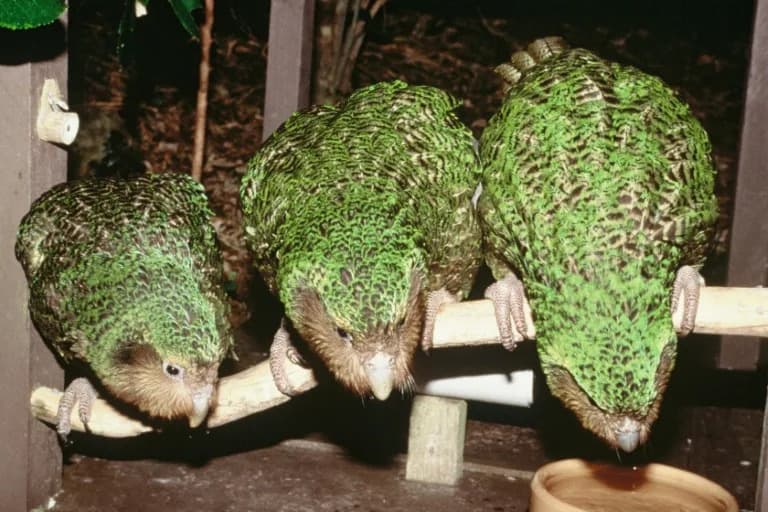
The New Zealand Department of Conservation established the Kākāpō Recovery Programme, one of the most sophisticated wildlife rescue efforts ever undertaken. Managers relocated all known birds to predator-free islands (including Whenua Hou, Pukenui and Te Kākahu) with strict biosecurity controls. Each bird is given an individual name and fitted with a backpack transmitter so researchers can monitor location, health and breeding activity. Automated feeding stations are programmed to open only for targeted individuals to help them reach optimal breeding weight. New techniques, including drone-assisted transfer of sperm for artificial insemination, have been used to boost genetic diversity and breeding success.
Current status and outlook
Conservation efforts raised the population from as low as 51 individuals in the 1990s to over 230 in recent years. Despite this progress, the species remains vulnerable: limited genetic diversity, disease, and continuing ecological dependencies (notably on rimu mast fruiting) are pressing concerns. A major rimu fruiting event can trigger an important breeding season and substantially increase chick production, but long-term recovery will require sustained management and careful genetic and health monitoring.
Why every kākāpō has a name: Naming each bird reflects the extraordinary level of monitoring and individual care required to keep the species from disappearing. It is both a practical tool for conservation and a symbol of the human commitment to preventing the extinction of this remarkable parrot.
Further reading: For updates on population numbers and conservation actions, consult the New Zealand Department of Conservation and the official Kākāpō Recovery Programme resources.
Help us improve.