Researchers using time-lapse cameras from 2012–2022 report that Gentoo, Chinstrap and Adelie penguins across Antarctica are breeding significantly earlier, a shift strongly correlated with rising temperatures and reduced sea ice. Gentoos showed the largest advance—about 13 days on average and up to 24 days in some colonies—while Adelie and Chinstrap shifted by roughly 10 days. The change may advantage Gentoos but increase competition and stress for the other species; scientists are now studying chick survival to determine long-term impacts.
Antarctic Penguins Shift Breeding Earlier at Record Pace as Continent Warms
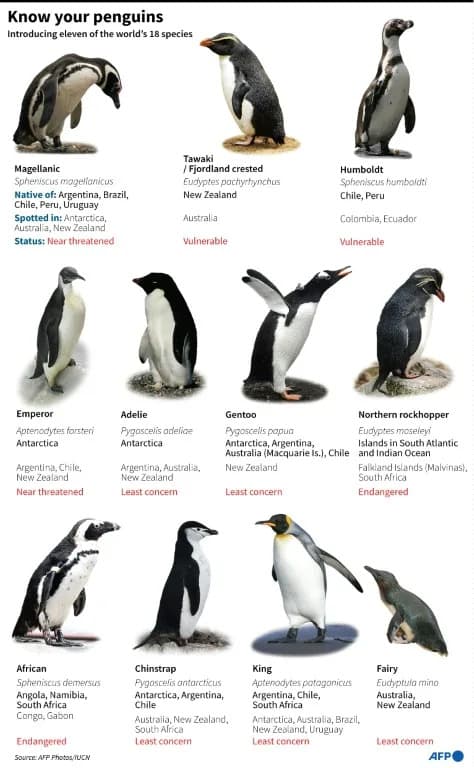
Graphic showing eleven of the world's penguin species. (Laurence CHU)(Laurence CHU/AFP/AFP)
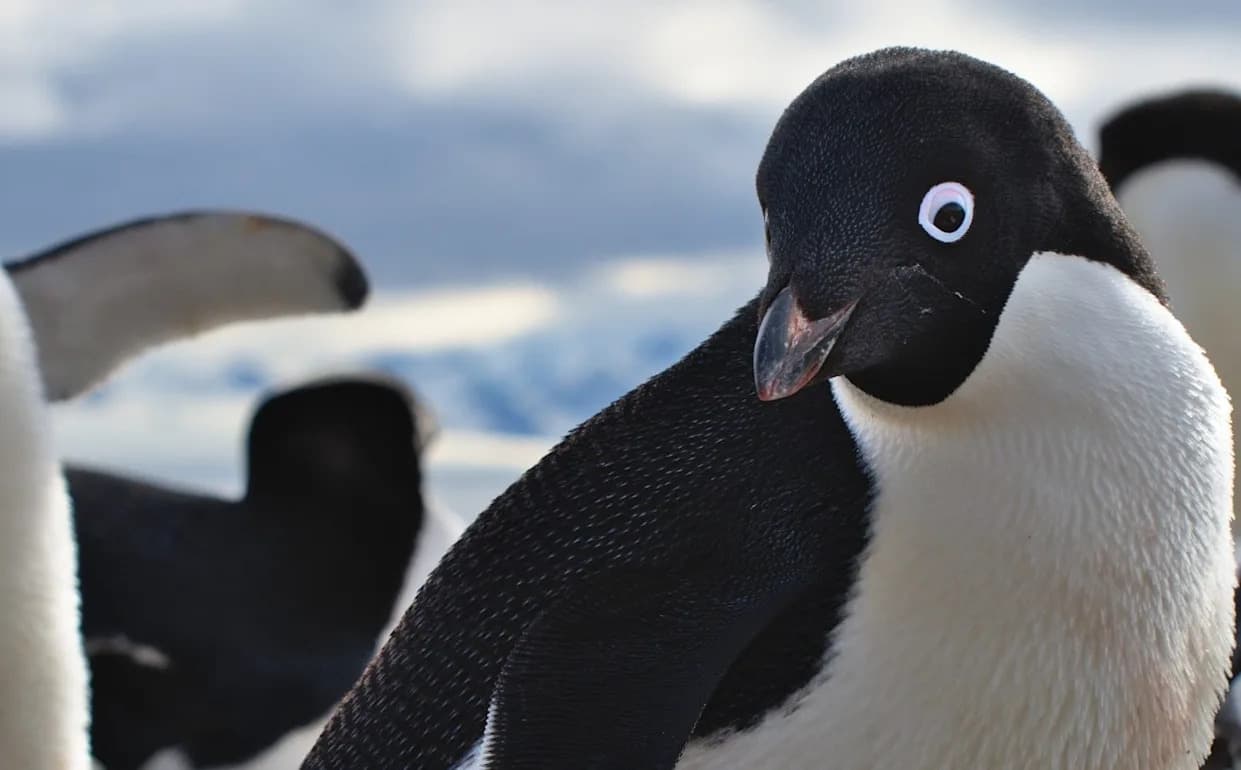
Penguin species across Antarctica are beginning their breeding season significantly earlier, according to a new international study linking the change to rapidly rising temperatures on the continent. Researchers observed Gentoo, Chinstrap and Adelie colonies and found an unprecedented, decade-long advance in breeding timing that appears highly correlated with reduced sea ice and greater food and nesting availability.
Study and Methods
The study deployed dozens of time-lapse cameras at colonies across Antarctica and recorded nesting activity from 2012 to 2022. Scientists focused on three species—Gentoo (Pygoscelis papua), Chinstrap (Pygoscelis antarcticus) and Adelie (Pygoscelis adeliae)—to track the timing of key breeding events over the ten-year period.
Key Findings
- Gentoo penguins showed the largest shift: their breeding season moved forward by an average of 13 days over the decade, and by as much as 24 days at some colonies.
- Adelie and Chinstrap penguins also bred earlier, advancing by roughly 10 days on average.
- Authors say this represents the fastest change in breeding timing observed for any bird—and possibly any vertebrate—to date.
- The timing shifts were highly correlated with rising Antarctic temperatures and reduced sea-ice extent; Copernicus data show the region experienced record-high annual average temperatures last year.
Winners, Losers and Uncertain Outcomes
The three species historically bred at staggered times. Earlier breeding now risks temporal overlap among species, increasing competition for food and snow-free nesting sites. Gentoos—better adapted to milder, less-icy conditions—appear to be benefiting: their populations are expanding and they have been observed taking nesting sites previously used by Adelies and Chinstraps. By contrast, Adelie and Chinstrap populations, which rely more heavily on krill and specific sea-ice conditions, are declining in some areas.
"The scale is so great that penguins in most areas are now breeding earlier than in any historical records," said study lead author Ignacio Juarez Martinez, a researcher affiliated with the University of Oxford and Oxford Brookes University.
What Comes Next
Scientists caution it is still too early to determine whether earlier breeding represents successful adaptation or a stressful, forced response that could reduce chick survival. The research team is now studying chick-rearing success across species to assess long-term consequences.
Publication: The study is published in the Journal of Animal Ecology. Because penguins are considered a bellwether for climate change, the results have broader implications for understanding how warming affects species and ecosystems worldwide.
Help us improve.