Black-capped chickadees replace roughly 30% of hippocampal neurons each year and expand hippocampal volume about 30% to boost spatial memory before winter. Through scatter hoarding they create hundreds to thousands of caches and rely on precise visual-spatial recall—scent is not useful to them. Columbia University research found brief, localized hippocampal activations during retrieval that resemble a barcode-like code; scientists hope this pattern may inform human memory studies.
Survive or Starve: How Chickadees Remodel Their Brains Each Winter

A black-capped chickadee holds a sunflower seed in its beak while perched on a snowy tree branch.© A-Z Animals
Black-capped chickadees undergo a dramatic internal transformation each autumn to prepare for winter. To store and later retrieve hundreds—sometimes thousands—of food caches, these small songbirds renew a large portion of their memory circuitry.
Seasonal Brain Remodeling

While their brains don’t physically grow, black-capped chickadees do expand their memory banks.©Manu M Nair/Shutterstock.com(Manu M Nair/Shutterstock.com)
Starting in late summer, chickadees experience seasonal neurogenesis in the hippocampus, the brain region responsible for spatial memory. Researchers estimate that roughly 30% of hippocampal neurons are replaced and hippocampal volume can increase by about 30% as new neurons are added and older ones are pruned. The skull doesn’t grow, but this turnover effectively expands the bird’s memory capacity.
Scatter Hoarding and Survival
In the weeks before winter the birds practice scatter hoarding: tucking seeds and nuts across a wide territory—near landmarks, under leaf litter, in gardens, and throughout underbrush. Because scent cues are unreliable for chickadees and they are not active hunters, accurate visual-spatial memory of cache locations is essential to surviving lean months.
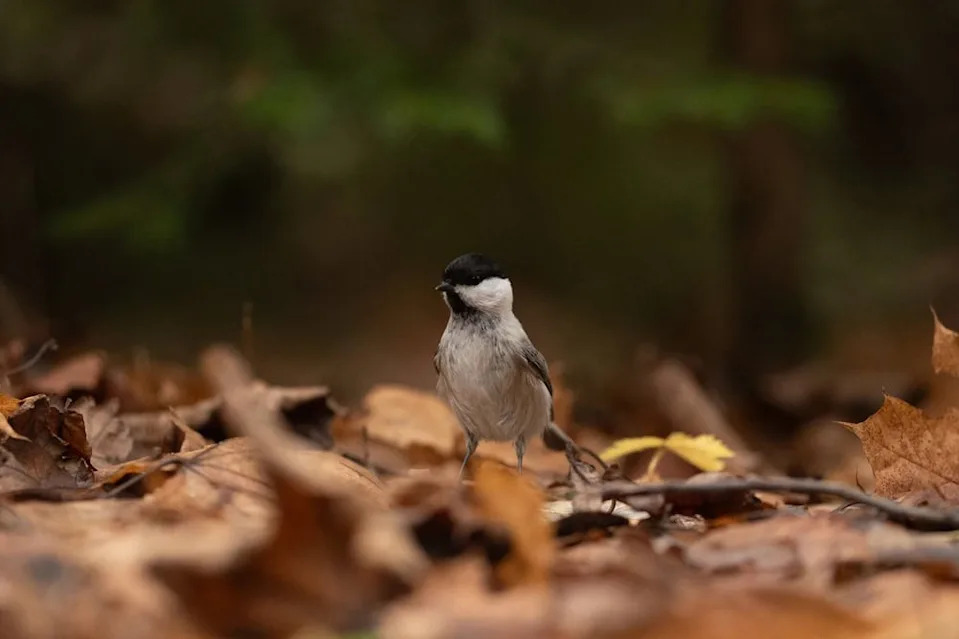
Black-capped chickadees have impressive location recall for their food caches.©Liudmila Bohush/Shutterstock.com(Liudmila Bohush/Shutterstock.com)
How Memories Are Organized
A Columbia University study revealed that when a chickadee searches for a specific cache, activity lights up in a distinct, transient pattern in the hippocampus. Researchers liken this brief activation to a barcode scanner illuminating the correct code—each cache corresponds to a localized neural pattern that helps the bird pinpoint a hiding spot.
Why Neurons Are Replaced
To make room for newly stored information, the chickadee’s brain sheds older neurons as new ones grow. This selective turnover helps prioritize recent, relevant cache memories each winter. Scientists are still investigating how the bird’s brain decides which memories to preserve and which to discard when neurons are replaced.
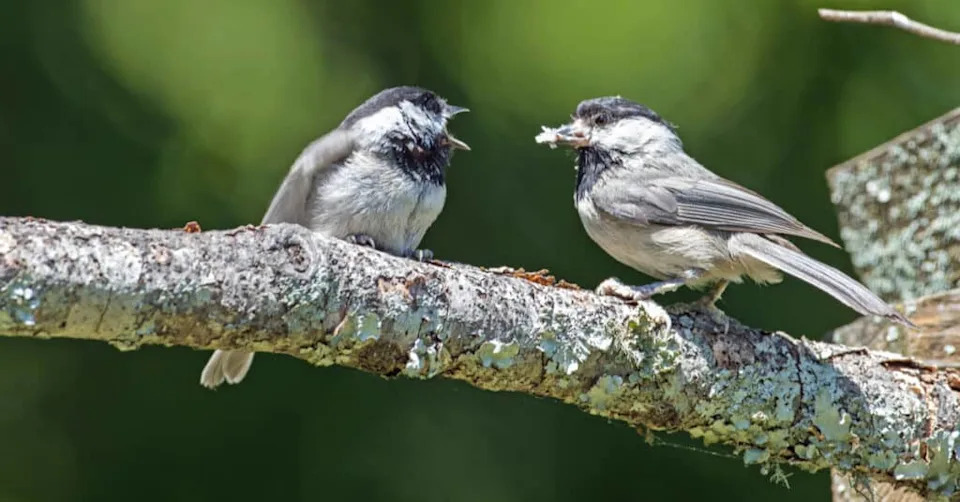
When it comes to survival, a black-capped chickadee’s memory is everything.©Tom Franks/Shutterstock.com(Tom Franks/Shutterstock.com)
Research Challenges and Human Implications
Tracking the hippocampal activations is technically difficult because the neural signals are very brief. Still, understanding the barcode-like spatial coding and cache-selection process could inform human neuroscience—particularly studies of spatial memory, memory consolidation, and recall. Researchers are exploring whether principles from chickadee memory encoding could offer new angles for studying human memory disorders or improving recall.
Conclusion
The chickadee’s seasonal brain remodeling is a striking example of evolution fine-tuning neural architecture for survival: by replacing a significant fraction of hippocampal neurons each year and expanding hippocampal volume, these tiny birds reliably locate caches across long winters.
Help us improve.