The kākāpō is a unique, flightless parrot endemic to New Zealand that evolved nocturnal, ground-dwelling habits and unusual adaptations such as facial "whisker" feathers and a strong sense of smell. Introduced mammalian predators drove the species to near-extinction, but intensive conservation — predator-free islands, trackers, targeted feeding, artificial insemination and careful genetic management — has increased the population from about 51 in the 1990s to over 230 today. Breeding remains tied to episodic rimu fruiting and threats like inbreeding and disease mean the species’ recovery is still fragile.
Survival Without Flight: How the Kākāpō Outsmarted Extinction — And Why Its Future Remains Fragile
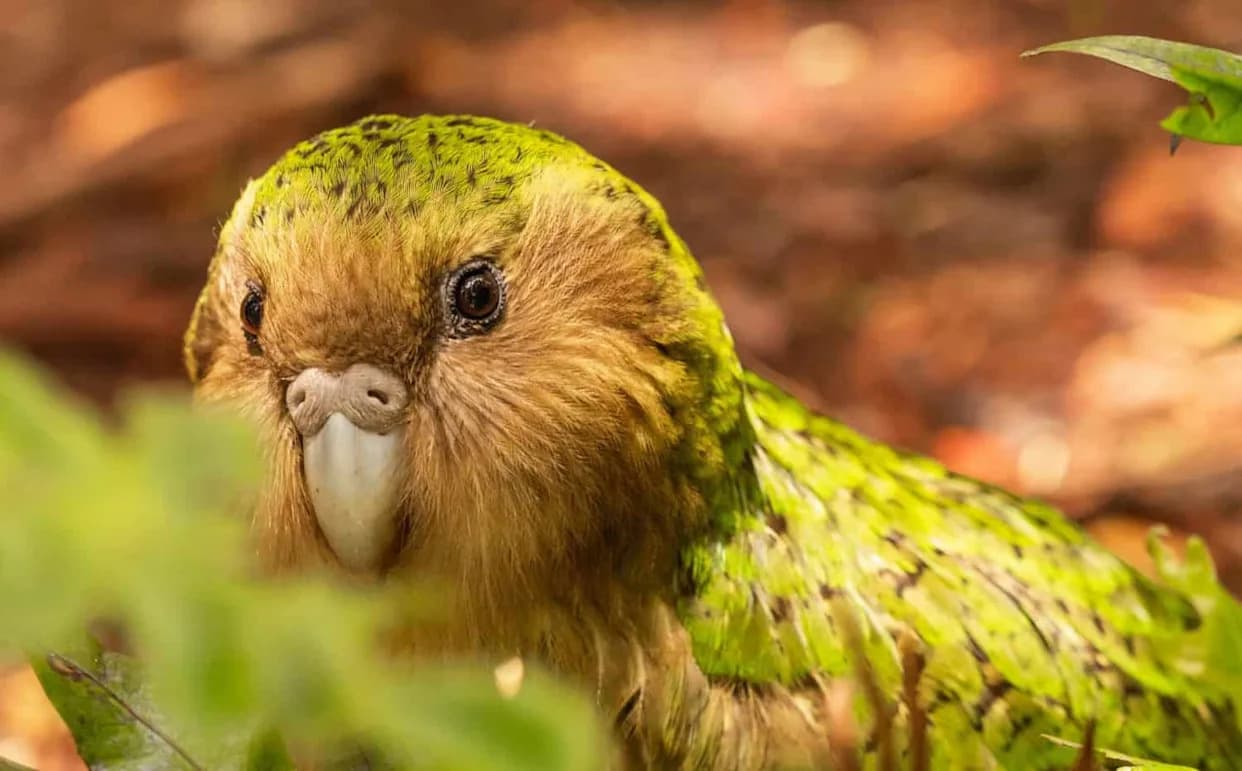
Wild endemic flightless Kakapo parrot in New Zealand© FeatherStalker Don/Shutterstock.com
The kākāpō is one of the natural world's most unusual birds: the heaviest parrot, strictly nocturnal, flightless, and equipped with forward-facing, owl-like eyes. Evolved to live and forage on the forest floor of New Zealand, these ground-dwelling parrots survived for millennia until human arrival introduced new threats that pushed them to the brink.
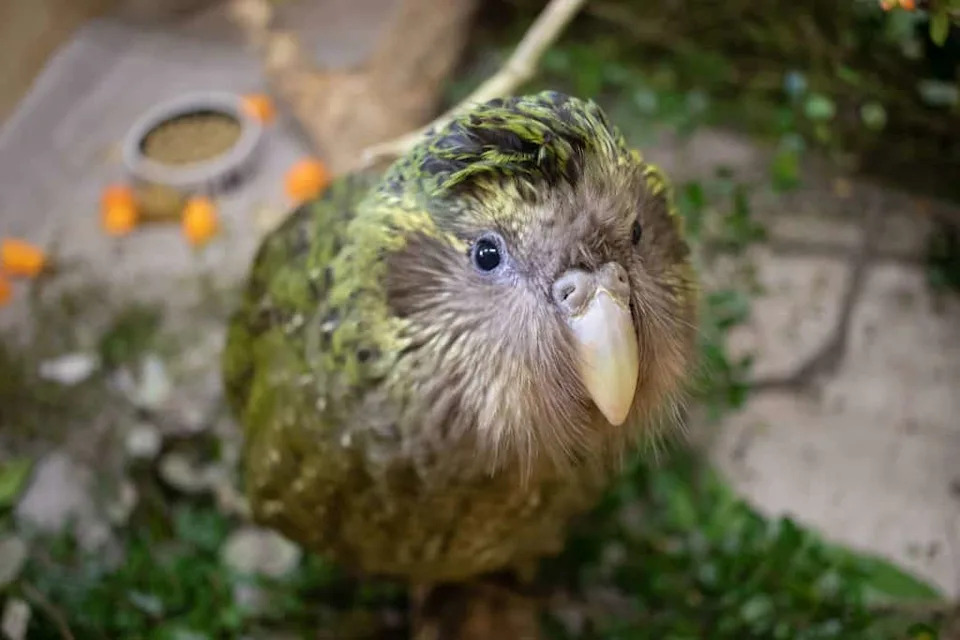
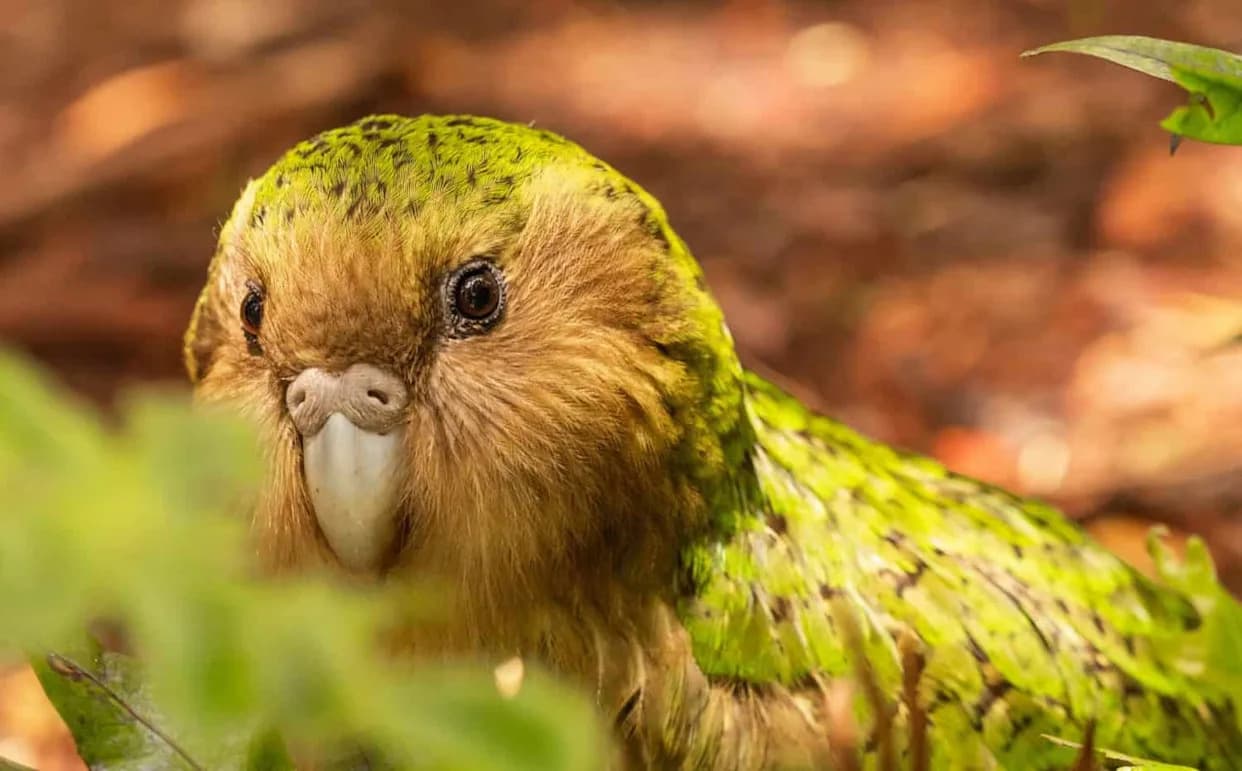
Unlike other parrots, kākāpōs have forward-facing eyes like owls.©Kimberley Collins / CC BY 2.0 –Original/License
A Remarkable, Groundbound Parrot
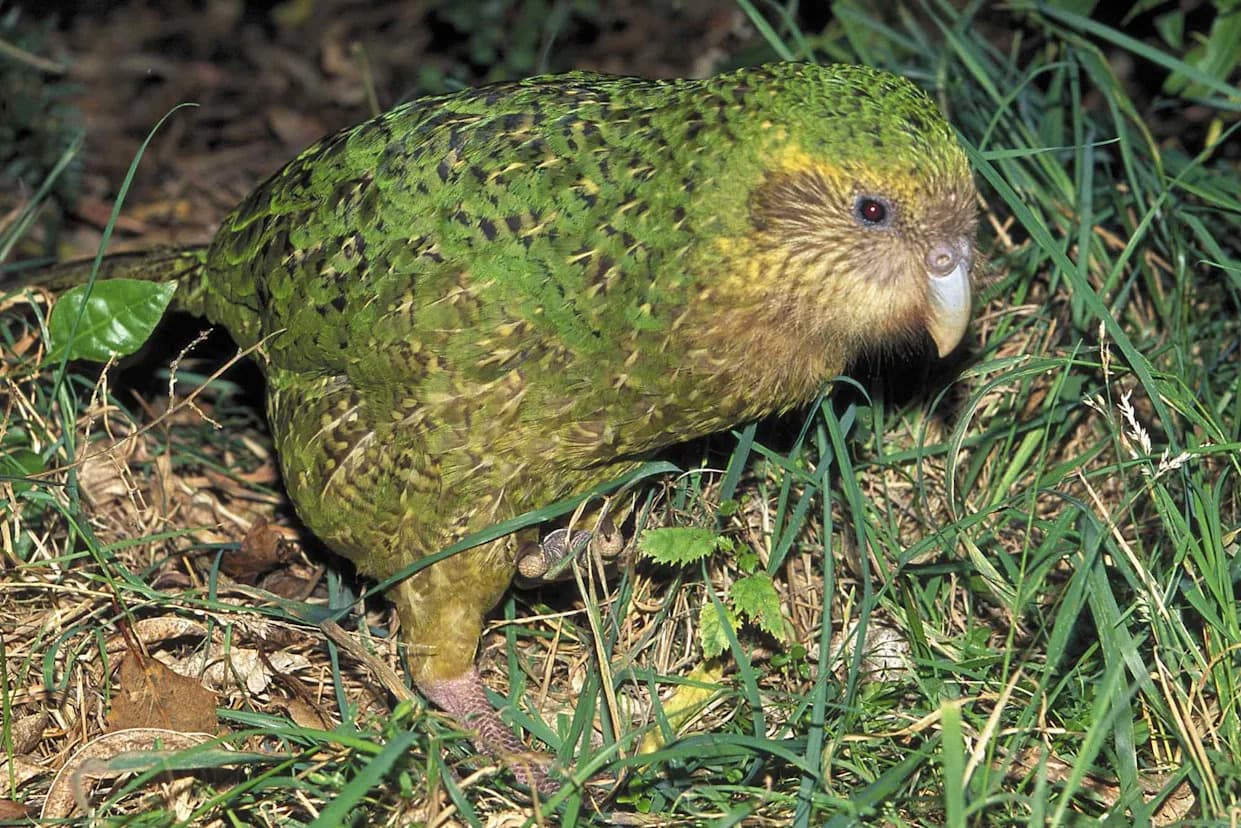
Kākāpōs (Strigops habroptilus) are large, heavy parrots with mottled yellow-green plumage, broad grey beaks, short wings and tails, powerful legs, and a facial disc of fine feathers. Adult males typically weigh 3–6 pounds (1.4–2.7 kg) while females usually weigh 2–3 pounds (0.9–1.4 kg). They can live for decades — sometimes approaching a century — and display a level of behavioral complexity and longevity rare among parrots.

A classic example of island syndrome, kākāpōs lacked many ground predators, so they didn’t have much need to fly in the air like other birds.©Ruben Rauch/Shutterstock.com
Night Adaptations: Smell, Touch and Camouflage
In prehistoric New Zealand, a lack of mammalian ground predators shaped the kākāpō’s evolution. They became nocturnal to avoid daytime aerial predators like the extinct Haast’s eagle, and over time their wings shrank and legs strengthened. Fine facial feathers function as tactile sensors (like whiskers), their retinas and brain structures are adapted for low-light vision, and they have an unusually large olfactory bulb for a parrot — giving them a keen sense of smell. Their green-and-brown plumage provides near-motionless camouflage on the forest floor.
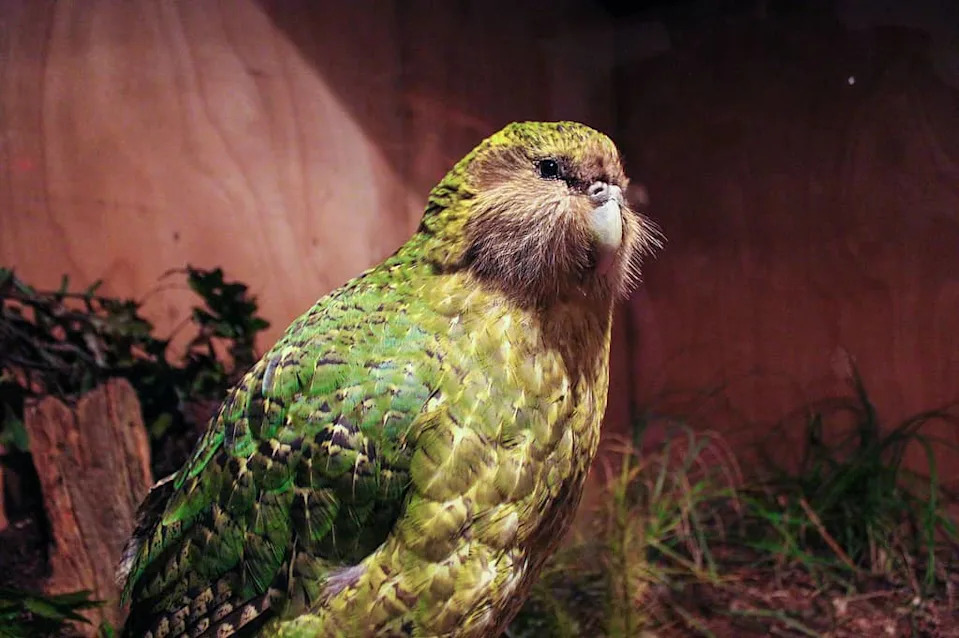
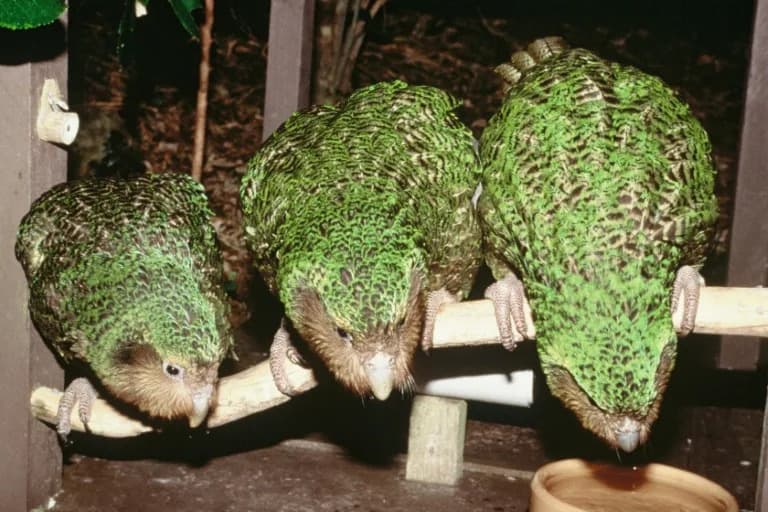
These parrots feature fine feathers on their face that function like cat whiskers, helping them to navigate forest floors at night.©Imogen Warren/Shutterstock.com
Extraordinary Breeding And The Rimu Connection
Kākāpō breeding is intermittent and tied to the fruiting cycles of native trees such as the rimu. Rimu trees produce abundant fruit every two to four years; when fruit is scarce, kākāpōes generally do not breed. Males gather at high ridgelines and create shallow bowls, then perform a demanding lek system of courtship: they inflate thoracic air sacs to emit very low-frequency "booms" that can travel miles at night, followed by metallic notes that help females pinpoint them. A male may boom for hours each night for months and often loses a significant portion of his body weight during the mating season.
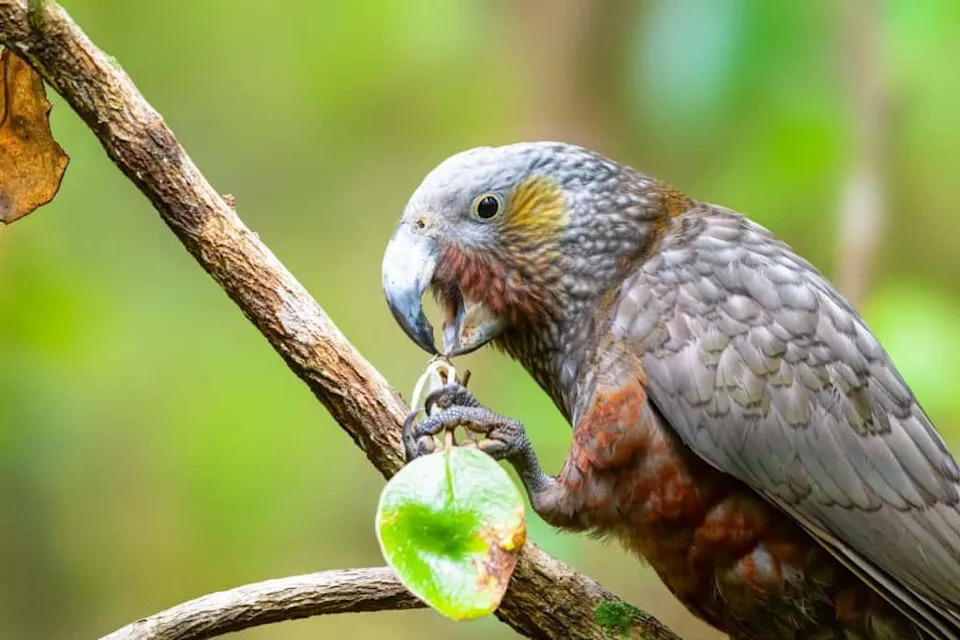
These flightless birds undertake elaborate, exhausting mating rituals.©Rajh.Photography/Shutterstock.com
Human Impacts And Near-Collapse
Polynesian and later European settlers introduced mammalian predators — rats, stoats, cats and more — and hunted kākāpōs for food and feathers. Kākāpōs' tendency to freeze when threatened, an effective defense against visual hunters, made them easy prey for smell-hunting mammals. By the mid-20th century they were thought extinct in many areas; small remnant populations were discovered in the 1970s and 1980s.
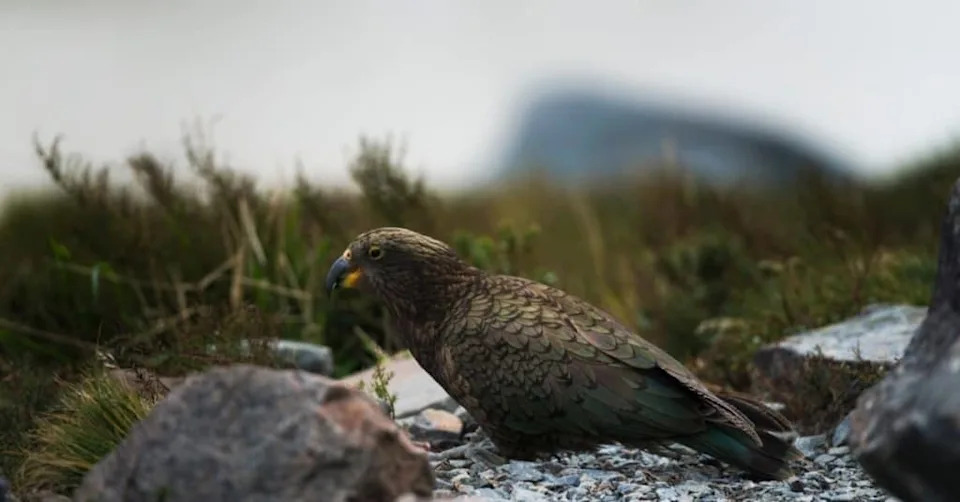
The Kākāpō Recovery Programme is one of the most ambitious conservation programs ever created.©nemethv/Shutterstock.com
Conservation: Intensive, High-Tech, and Personal
The Kākāpō Recovery Programme, led by New Zealand’s Department of Conservation, is among the most intensive species-recovery efforts in the world. Survivors were moved to predator-free offshore sanctuaries such as Whenua Hou (Codfish Island), Pukenui and Te Kākahu, where strict biosecurity prevents accidental introductions. Each bird is individually monitored with a backpack transmitter; automatic feeders target specific birds to ensure breeding condition; and modern techniques including artificial insemination and drone transport of sperm help manage genetics. These measures helped lift numbers from roughly 51 in the 1990s to over 230 today.
Ongoing Challenges And Hope
Despite the conservation gains, the kākāpō’s future is fragile. Small population size risks inbreeding and disease vulnerability, and their dependence on episodic rimu fruiting creates unpredictable breeding opportunities. Nevertheless, large rimu mast years can trigger successful breeding seasons — and current fruiting events have raised hopes of surpassing 300 individuals. Continued biosecurity, genetic management, and habitat support remain critical.
Why It Matters: The kākāpō is an emblem of island evolution, an ecological oddity and a cultural treasure for New Zealand and Māori communities. Its recovery demonstrates how focused science, careful stewardship and community engagement can bring a species back from the brink — but also how fragile that recovery can be.
Help us improve.