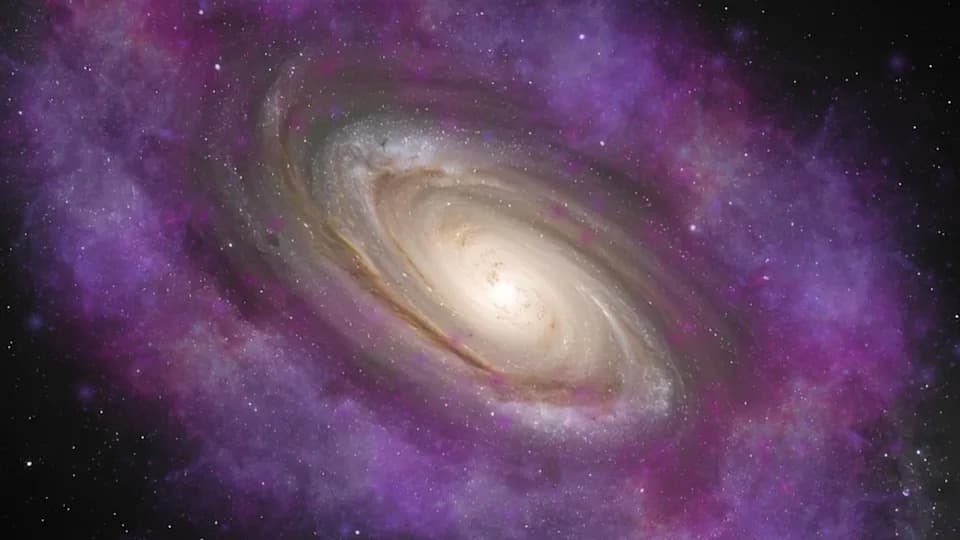
Hubble follow‑up observations show that Cloud‑9 — first detected by FAST in Guizhou — is not a normal gas cloud or luminous galaxy but a starless, hydrogen‑rich object bound by a dark matter halo. Classified as a Reionization‑Limited H I Cloud (RELHIC), it spans about 4,900 light‑years and contains roughly one million solar masses of gas while being dominated by dark matter estimated at billions of solar masses. Astronomers call it a "failed galaxy" and say it provides a rare, clean laboratory to study dark matter’s gravitational effects and refine models of cosmic structure.
NASA/Hubble Reveals Cloud‑9: A Starless, Dark‑Matter‑Dominated 'Failed Galaxy' — A Window Into the Dark Universe
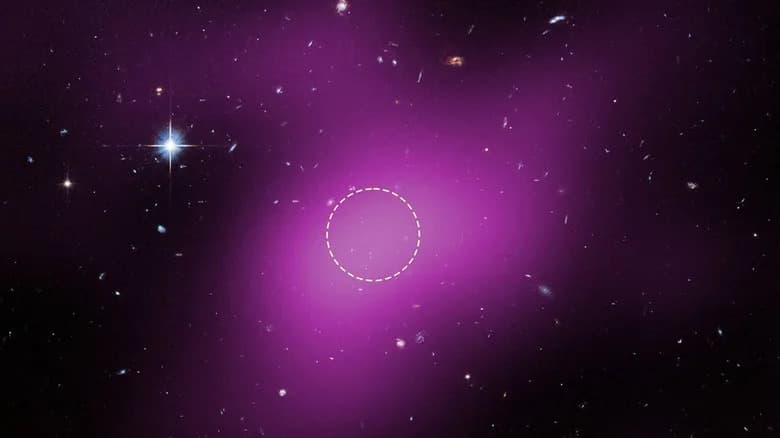
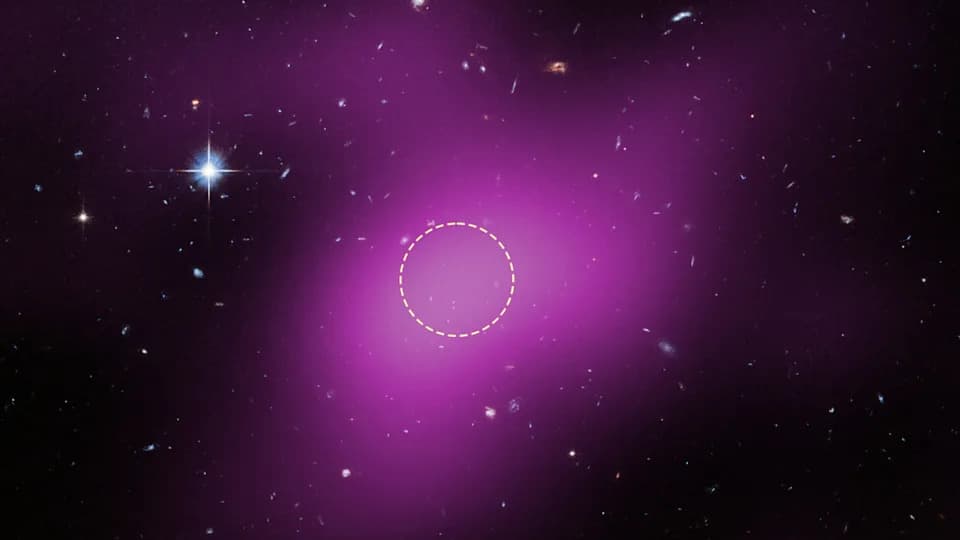
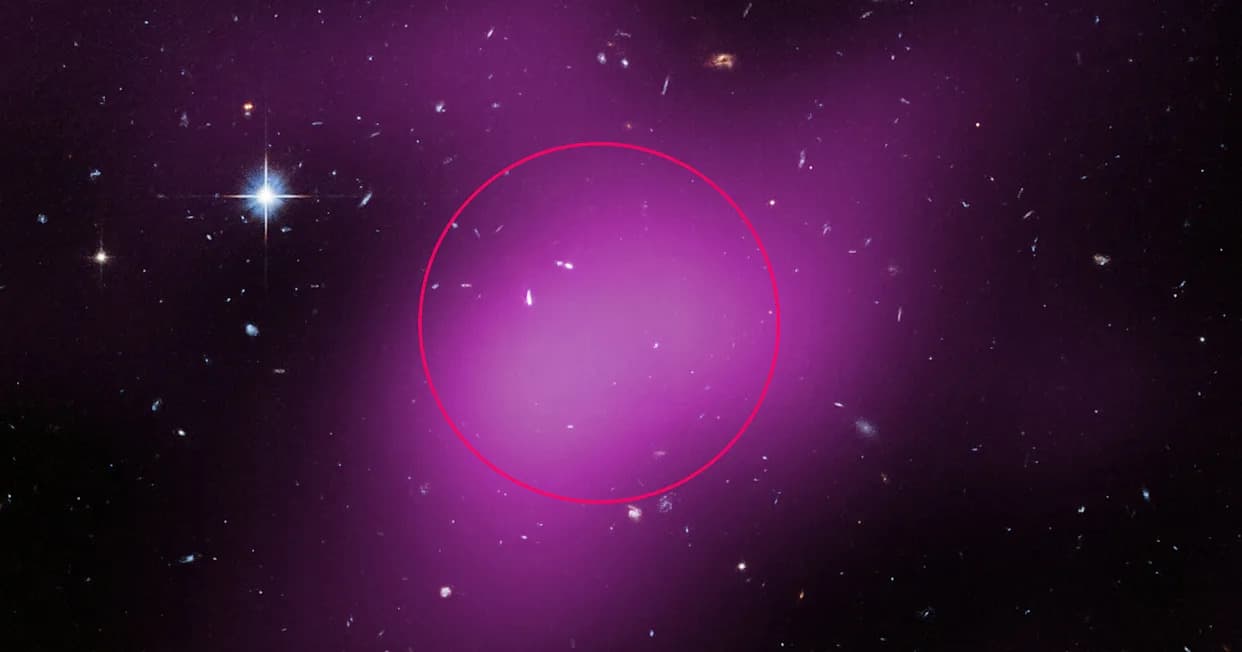
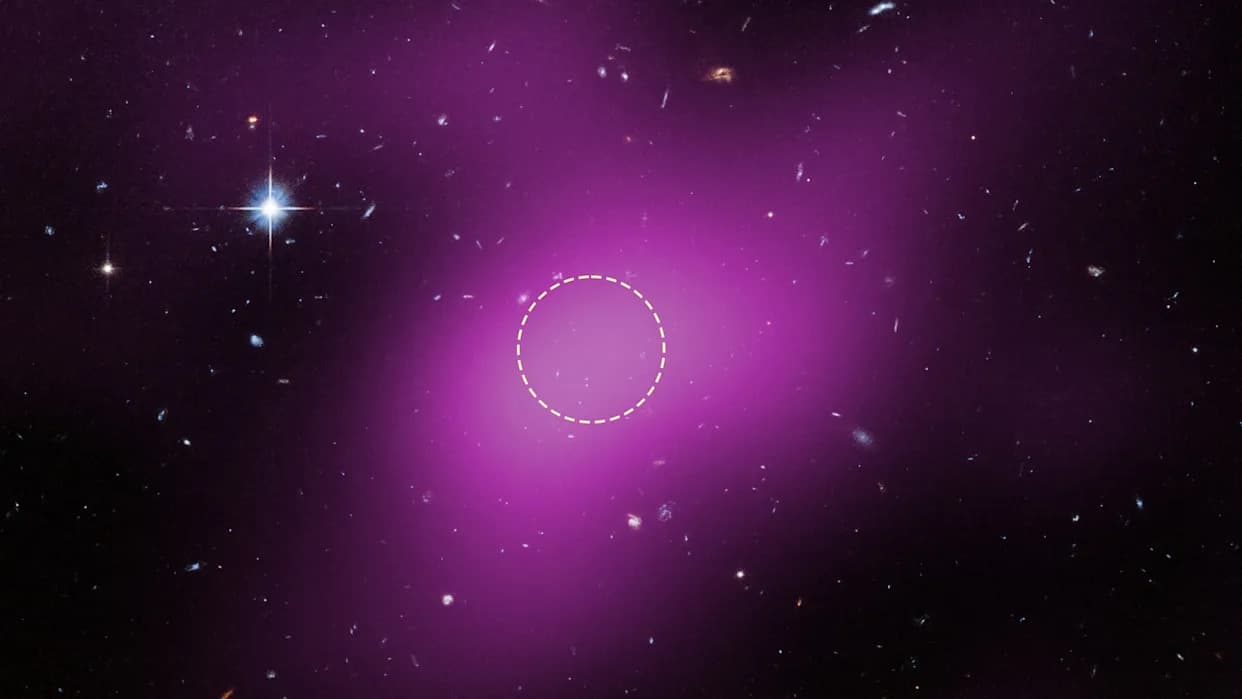
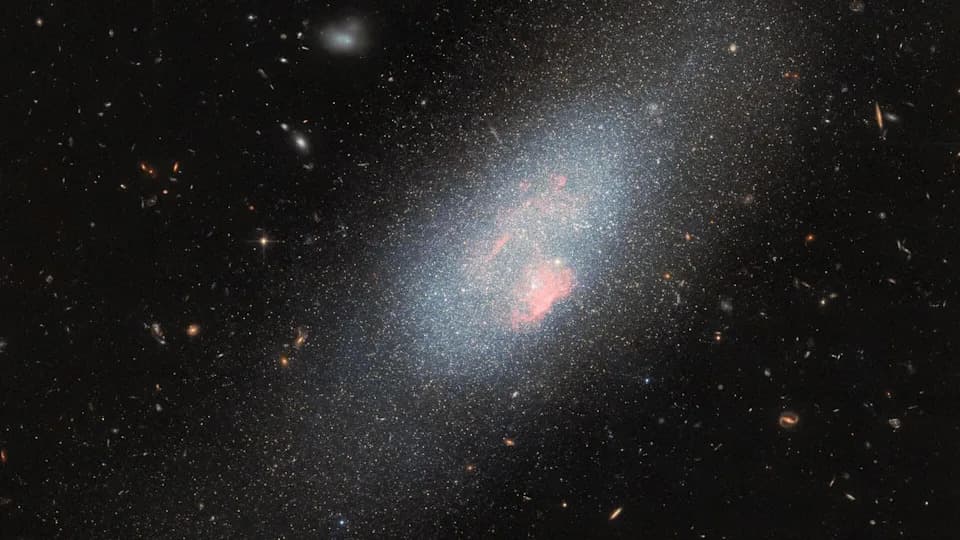
The cloud-9 astronomical object with radio data shown in diffused magenta - NASA, ESA, VLA, Gagandeep Anand (STScI), Alejandro Benitez-Llambay (University of Milano-Bicocca); Image Processing: Joseph DePasquale (STScI
Cloud‑9 was first detected about three years ago by a radio telescope in Guizhou, China. Initial observations with the Five‑hundred‑metre Aperture Spherical Telescope (FAST) identified a neutral hydrogen feature near the spiral galaxy Messier 94, roughly 14 million light‑years from Earth, but its true nature remained unclear.
Follow‑Up With Hubble: A Clearer Picture
Follow‑up observations with NASA’s Hubble Space Telescope provided decisive new data. Rather than a typical luminous galaxy or an ordinary gas cloud, Cloud‑9 appears to be a gas‑rich object dominated by an invisible mass component: dark matter. The findings, described in a paper published in The Astrophysical Journal Letters, classify Cloud‑9 as a Reionization‑Limited H I Cloud (RELHIC) — a starless, neutral hydrogen system bound by a dark matter halo.
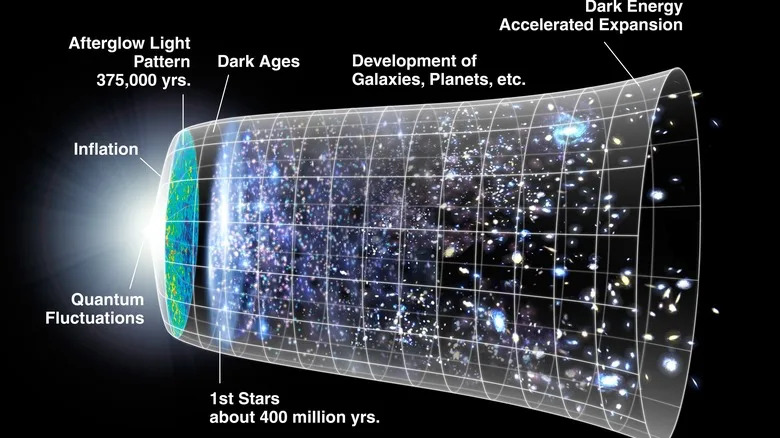
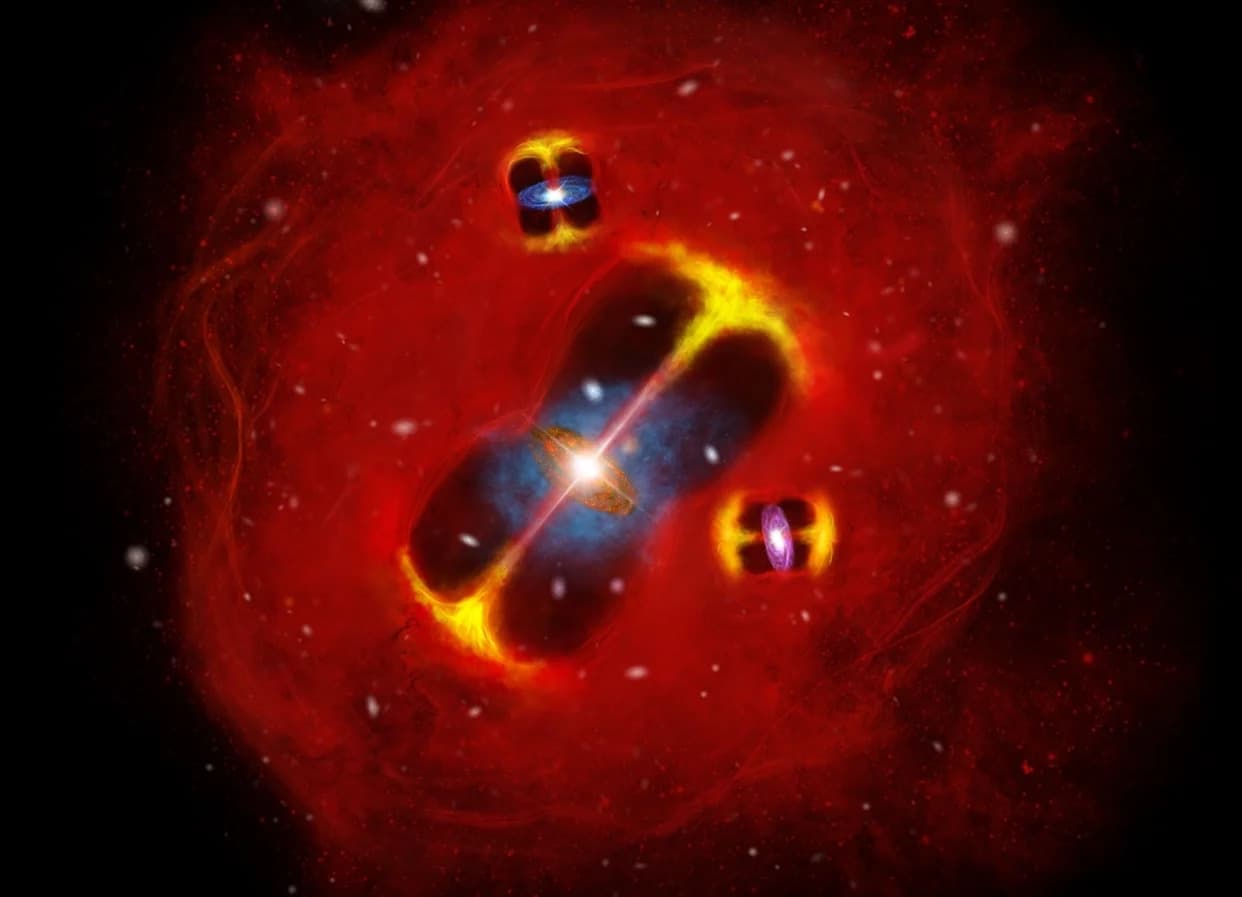
A representation of the formation of the universe since the Big Bang - NASA/WMAP Science Team/Wikimedia Commons
What Is Cloud‑9?
Cloud‑9 contains a neutral hydrogen core roughly 4,900 light‑years across and has a total gas mass on the order of one million solar masses. However, its gravitational mass is far larger: researchers estimate the dark matter content at billions of solar masses, and that dark matter is what holds the cloud together. The object shows no detectable stars — not even a faint stellar population — so astronomers term it a "failed galaxy," an embryonic system that never reached the density needed to ignite star formation.
"Cloud‑9 is a window into the dark universe," said Andrew Fox of the Space Telescope Science Institute (affiliated with ESA). He and other researchers plan to use measurements of hydrogen kinematics within the cloud to probe dark matter’s behaviour on small scales.
Why This Discovery Matters
Most galaxies mix the gravitational signatures of stars, gas, dust, and dark matter, which complicates efforts to study dark matter directly. Cloud‑9 is unusually clean: with no stars or active star formation, its gravitational field is overwhelmingly dominated by dark matter. That makes it an almost ideal laboratory to measure how hydrogen moves in a dark matter potential, test models of small‑scale dark matter clumping, and refine our understanding of how dark halos shape structure formation.
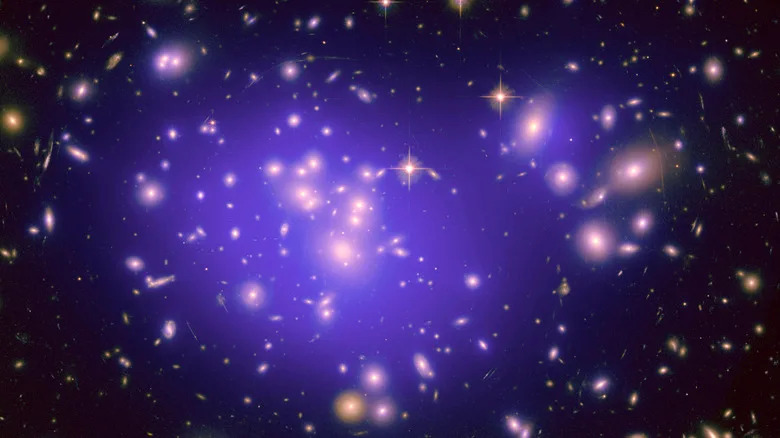
galaxy cluster Abell 1689, with the mass distribution of the dark matter in the gravitational lens shown in purple - NASA, ESA, E. Jullo (JPL/LAM), P. Natarajan (Yale) and J-P. Kneib (LAM)/Wikimedia Commons
Open Questions and Future Work
Scientists do not rule out the possibility that Cloud‑9 could later accumulate mass and spark star formation, but for now it stands as a rare confirmed example of a RELHIC. The discovery motivates deep searches for other starless, dark‑matter‑dominated systems; finding more would clarify how common such halos are and how much of the universe’s structure remains invisible to starlight.
Context: Cloud‑9 lies near Messier 94 (about 14 million light‑years away). Its identification began with FAST in Guizhou and was confirmed with Hubble imaging and analysis reported in The Astrophysical Journal Letters.
Help us improve.