From a 49-million-light-year rotating filament to the brightest recorded flare and an unusually long gamma-ray burst, recent observations have delivered striking insights across cosmic scales. Major facilities — JWST, Vera C. Rubin, LIGO, SPHEREx and radio arrays — revealed anomalies in galaxy timelines, enormous quasar jets, nearby dark-matter clumps, and the earliest known supernova. Together these results refine and sometimes challenge our models of how the universe formed and evolves.
15 Astonishing Space Discoveries That Rewrote Our Cosmic Playbook

Once again, the universe surprised us. Over the past year astronomers using ground- and space-based observatories have revealed a string of discoveries that expand — and sometimes challenge — our understanding of cosmic structure and extreme events. Below are 15 standout findings, summarized with context and why they matter.
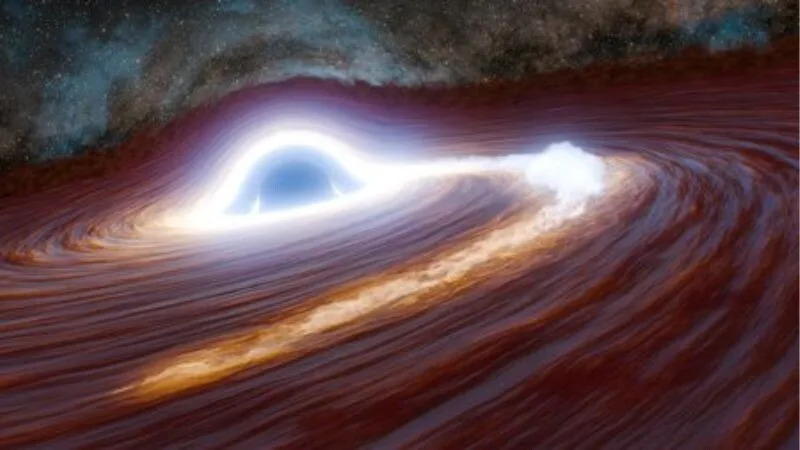
1. The "Galactic Tornado" — A Record-Breaking Rotating Filament
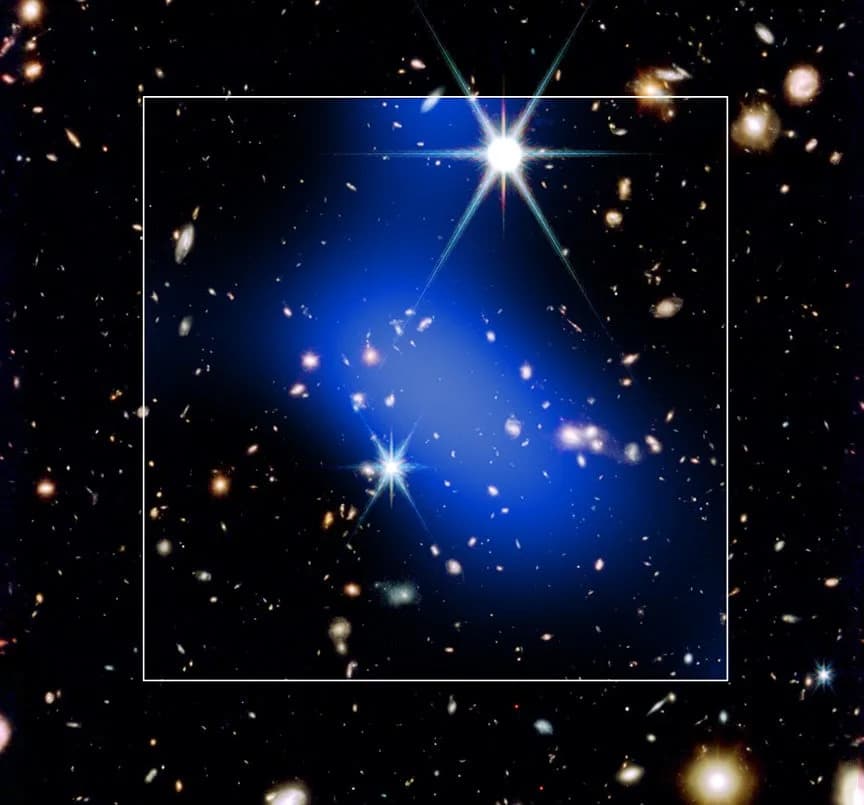
In early December 2025 researchers reported the longest known rotating structure: a filament of galaxies and dark matter stretching about 49 million light-years and located roughly 140 million light-years from Earth. The structure’s coherent rotation on such scales offers new clues about large-scale cosmic dynamics.
2. "Superman" — The Brightest Flare Ever Recorded
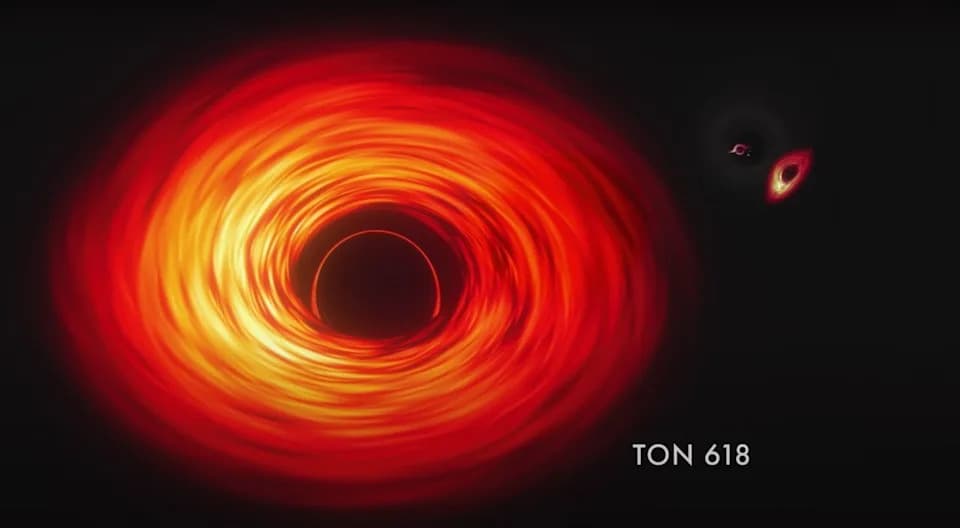
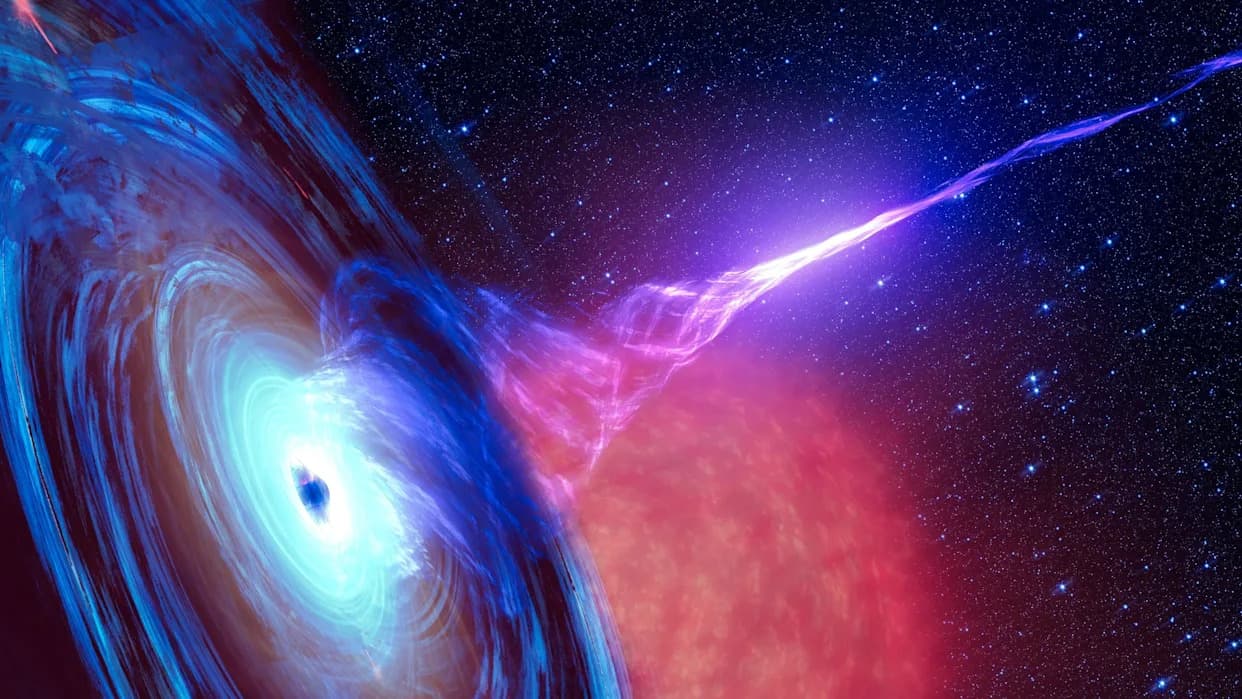
Described in November 2025, a flare nicknamed "Superman" briefly shone with the combined light of roughly 10 trillion suns. Observers think a supermassive black hole shredding a very large star produced the burst, which occurred nearly 10 billion light-years away.
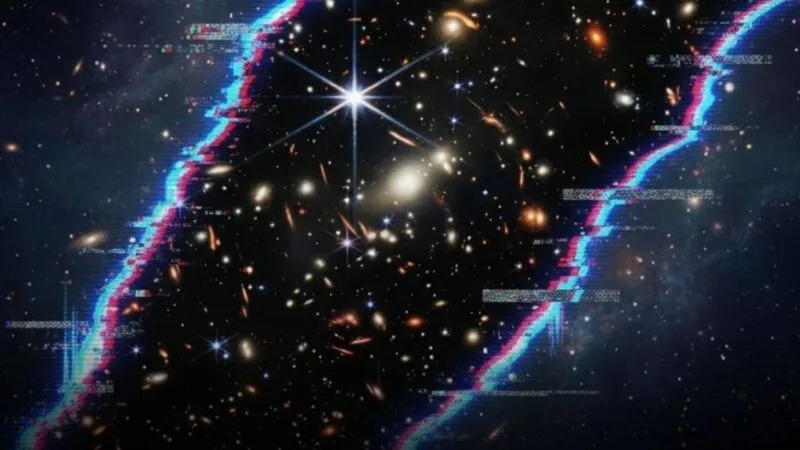
3. A Possible Timeline "Glitch" Seen by JWST
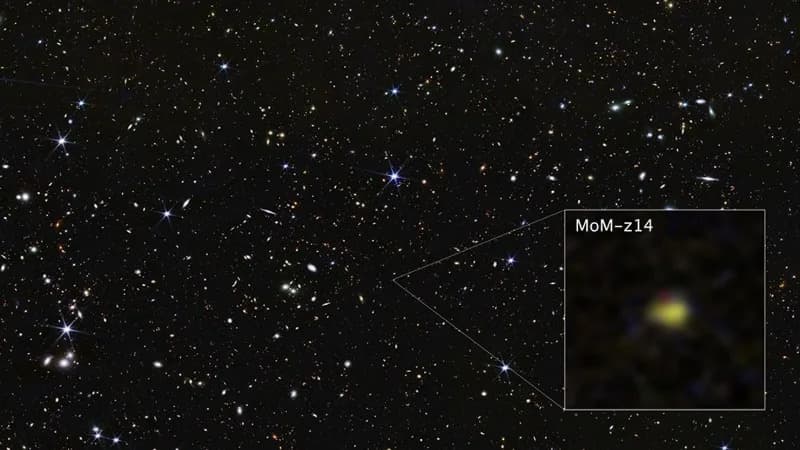
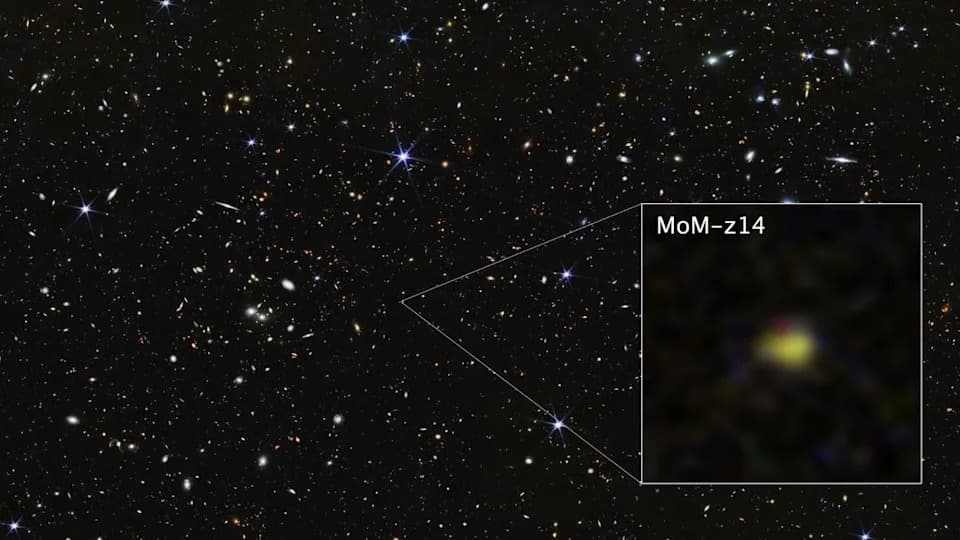
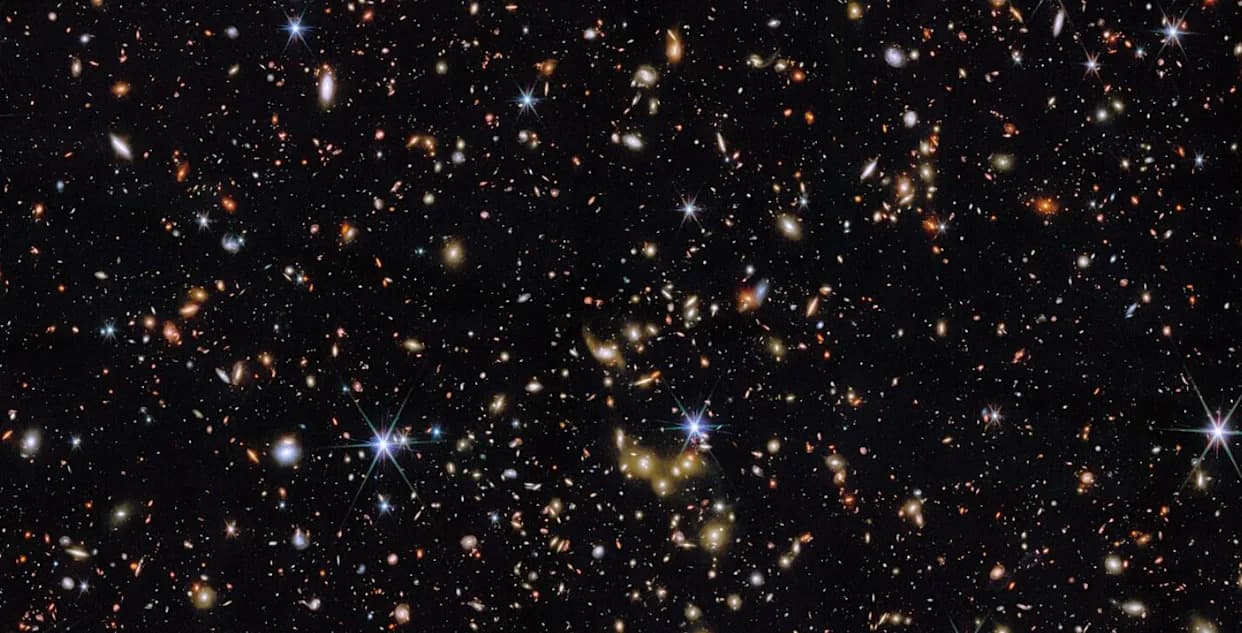
Data from the James Webb Space Telescope revealed distant galaxies whose ages and internal structures don’t align with standard cosmic-evolution models — a discrepancy some researchers have described as a timeline "glitch." Teams are investigating whether these differences require new physics, revised models, or further observational confirmation.
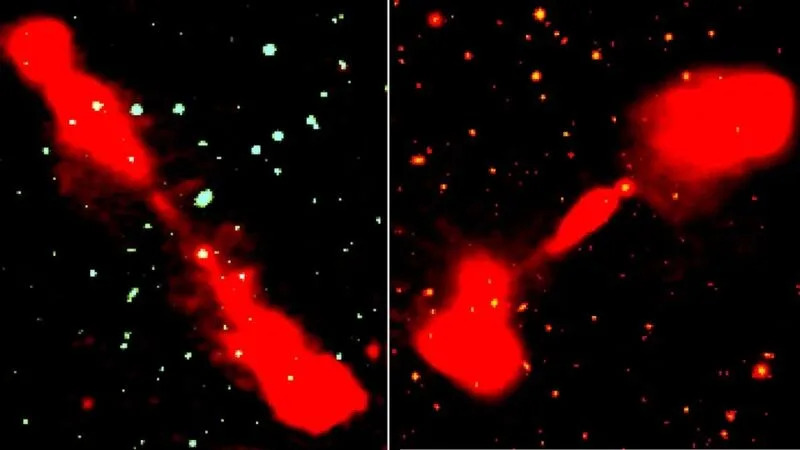
4. Enormous Quasar Jets
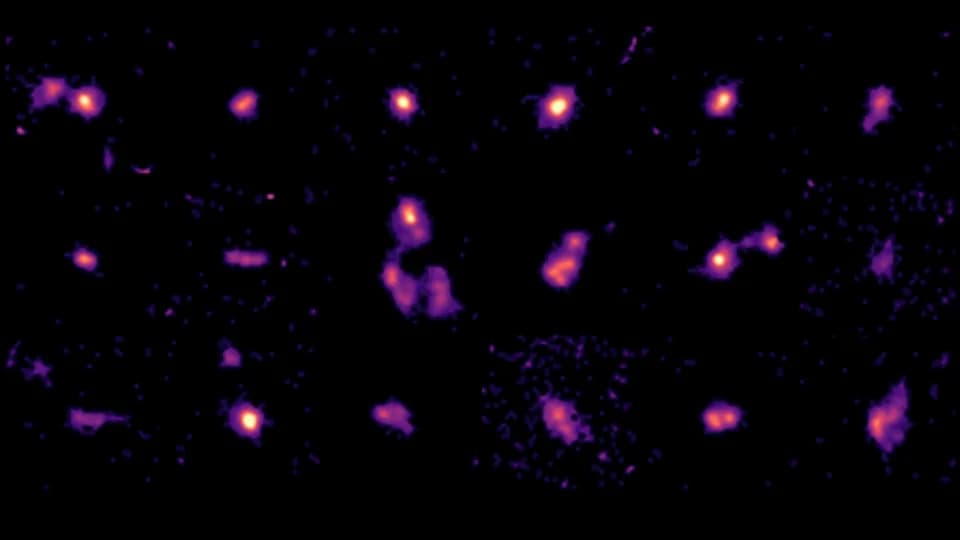
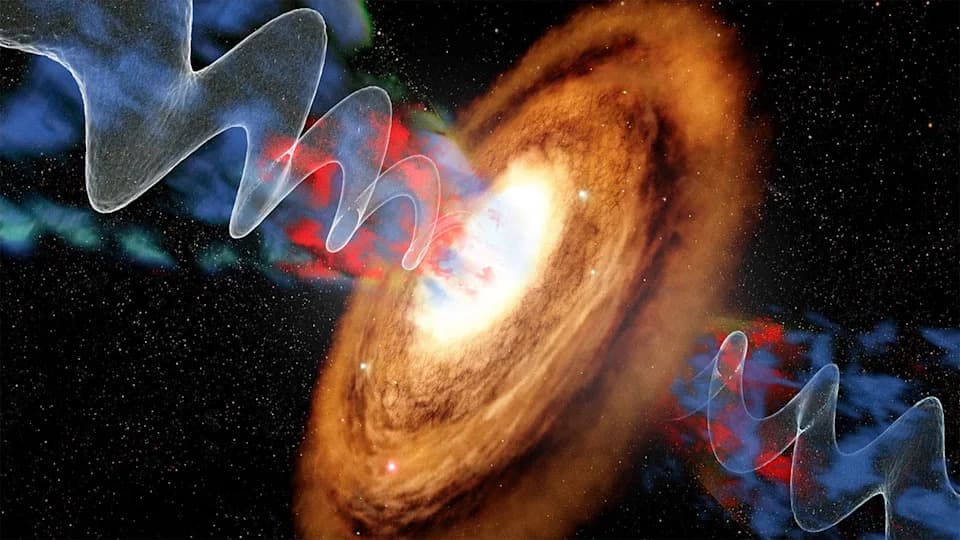
Indian astronomers mining Giant Metrewave Radio Telescope data identified hundreds of radio quasars, some launching jets up to about 7.2 million light-years long — roughly 50 times the diameter of the Milky Way. These giant jets probe how black holes influence their environments on colossal scales.
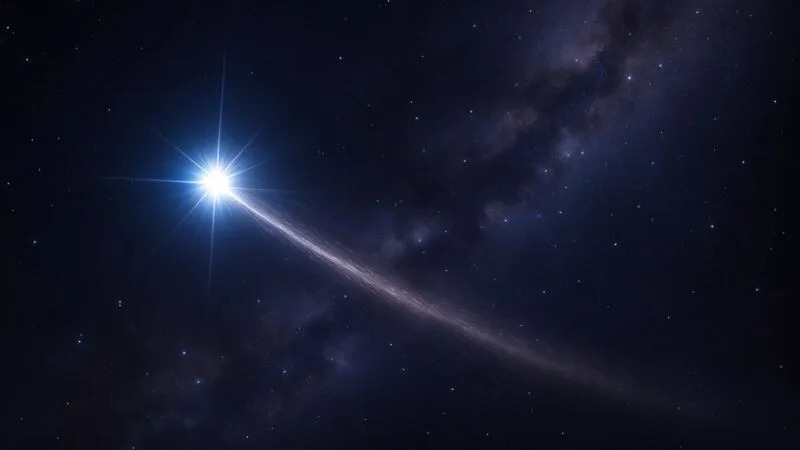
5. Hypervelocity Stars Escaping the Milky Way
Observers found a population of hypervelocity stars traveling near 2,000 kilometers per second — fast enough to escape the Galaxy. Such speeds can result when a binary companion interacts with a massive black hole, flinging the partner outward like a cosmic slingshot.

6. A Local Clump of Dark Matter
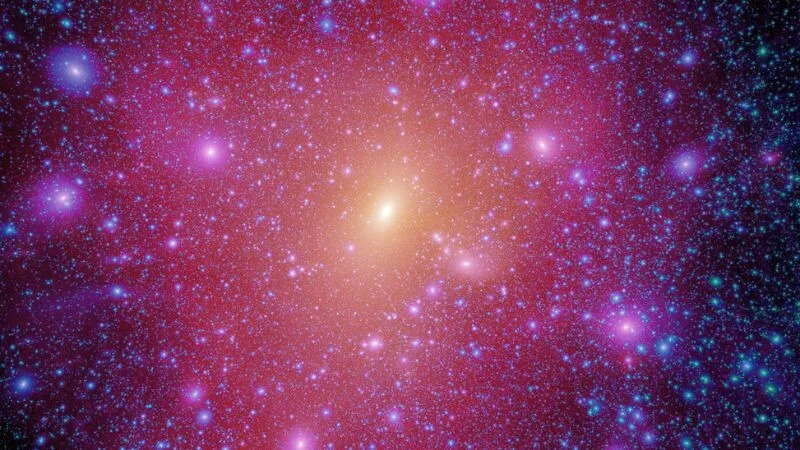
In July 2025 astronomers reported a dense clump of dark matter with a mass millions of times that of the Sun, positioned close enough in our Galaxy that, if it were visible, it would subtend an angle larger than the Sun or Moon. Its detection helps map how dark matter is distributed on small scales.
7. A Heavyweight Black Hole Merger Detected by LIGO
Also in July 2025, LIGO recorded a powerful merger that produced a final black hole of about 225 solar masses. Since 2015, LIGO and partner detectors have observed roughly 300 black hole merger events, helping build a census of compact-object populations.
8. TOI-1452 b — A Potential Water World
Planet TOI-1452 b, located about 100 light-years away, is roughly 70% larger in radius than Earth. Models suggest it may be a massive "water world" with a global ocean hundreds of kilometers deep and little or no exposed land.
9. First Images From the Vera C. Rubin Observatory
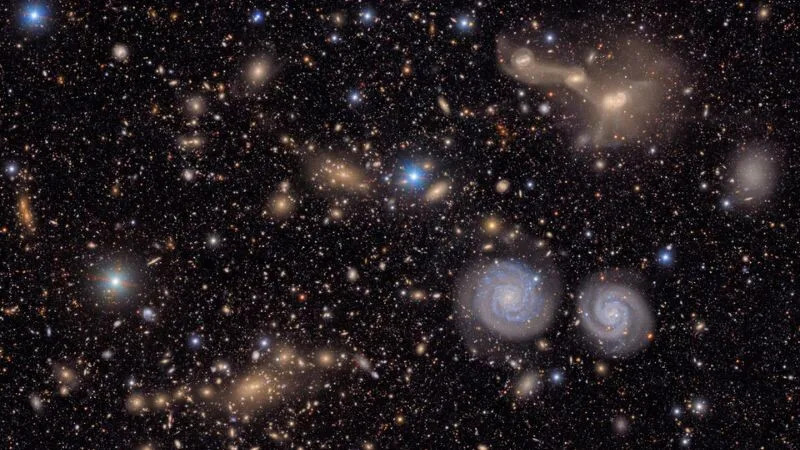
After decades of preparation, the Vera C. Rubin Observatory released first-light images on June 23, 2025. Early frames reveal roughly 10 million galaxies in a single survey field, offering an unprecedented dataset for mapping dark matter, discovering transient events, and studying galaxy evolution.
10. An Unusual Multi–Brown-Dwarf Planetary System
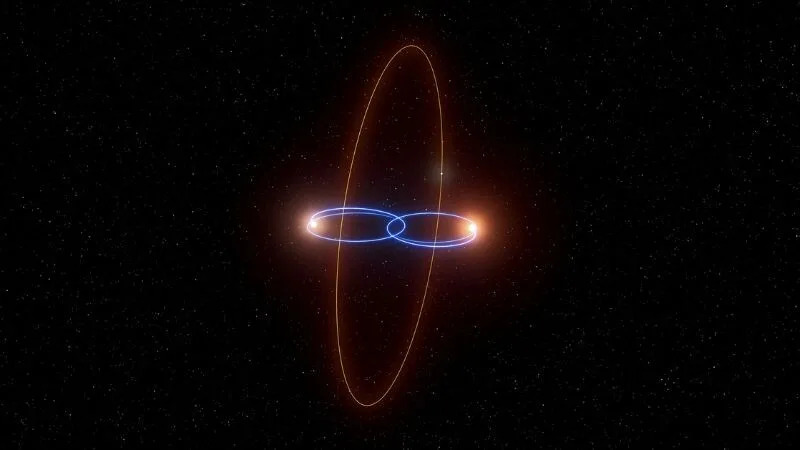
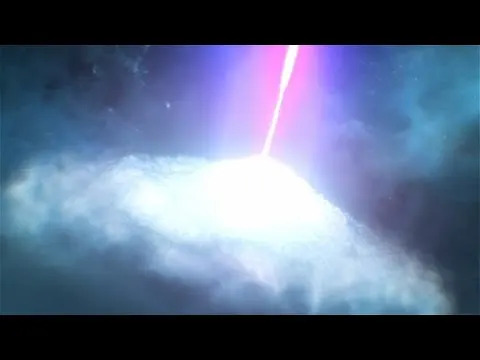
In April 2025 astronomers described the strange system 2M1510 (AB) b: a planet orbiting nearly vertically above a close pair of brown dwarfs, while a third brown dwarf orbits the pair at great distance. This hierarchical arrangement challenges simple formation scenarios.
11. A Powerful Solar Flare
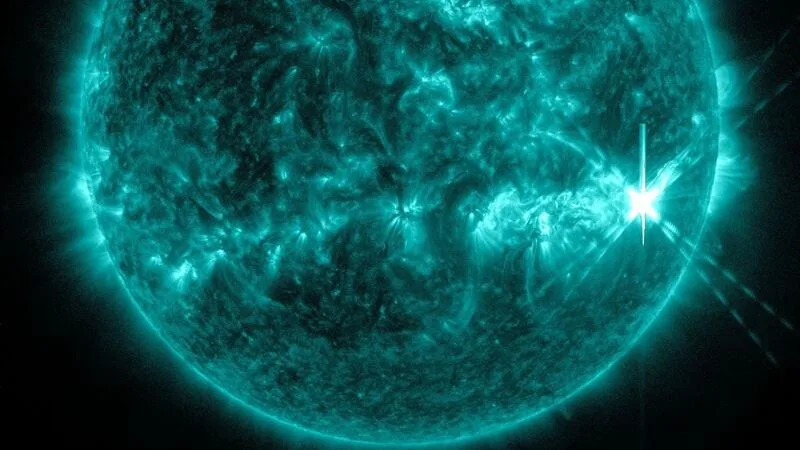
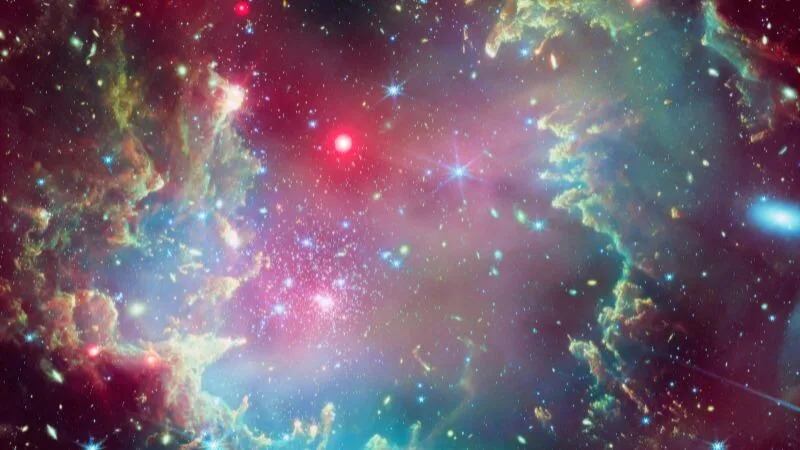
On Dec. 8, 2025, NASA’s Solar Dynamics Observatory captured an X1.1-class solar flare at 12:01 a.m. UTC. X-class flares are the most intense and can drive strong space-weather effects near Earth.
12. An Exceptionally Long Gamma-Ray Burst
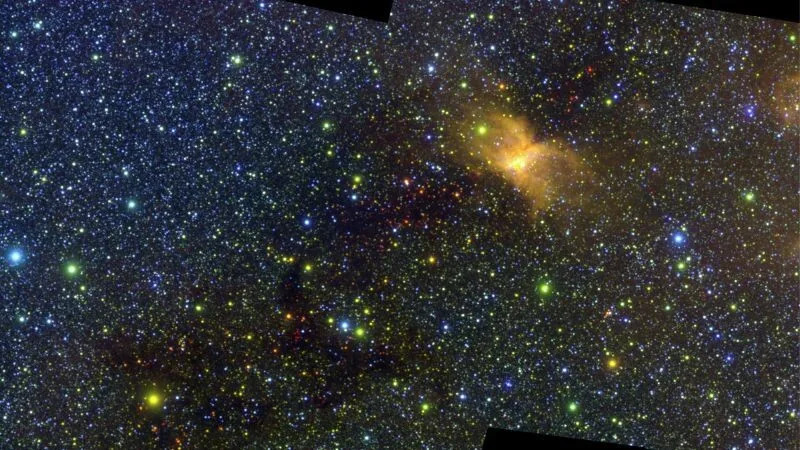
On July 2, 2025, astronomers detected a gamma-ray burst that persisted for days rather than the usual seconds-to-minutes. The leading interpretation is a star being consumed by a black hole, but the prolonged emission has spurred ongoing debate about the exact mechanism.
13. A Clear View of NGC 602
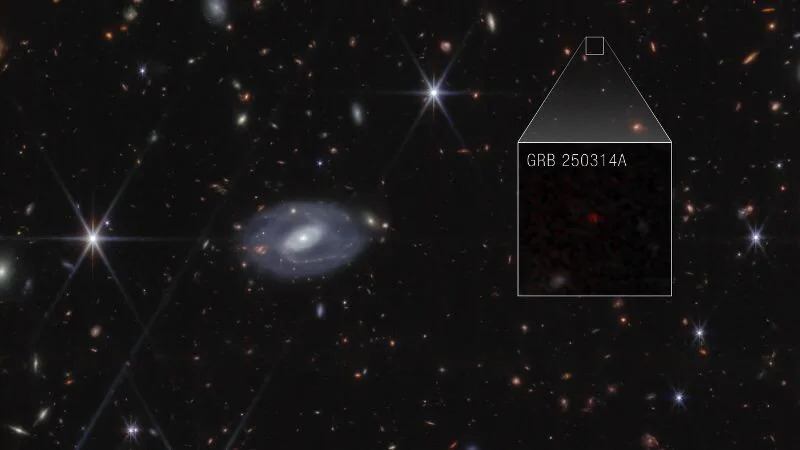
Combining X-ray data from NASA’s Chandra X-ray Observatory with infrared observations from the James Webb Space Telescope produced the sharpest view yet of NGC 602, a star cluster on the outskirts of the Small Magellanic Cloud. The multiwavelength image illuminates star formation and high-energy processes in the region.
14. SPHEREx’s First Public Data: RCW 36
NASA’s SPHEREx mission released its first public dataset on July 2, 2025. Among the images is RCW 36, an emission nebula visible in infrared light where dust and gas glow from radiation of nearby young stars.
15. The Earliest Supernova Yet Seen
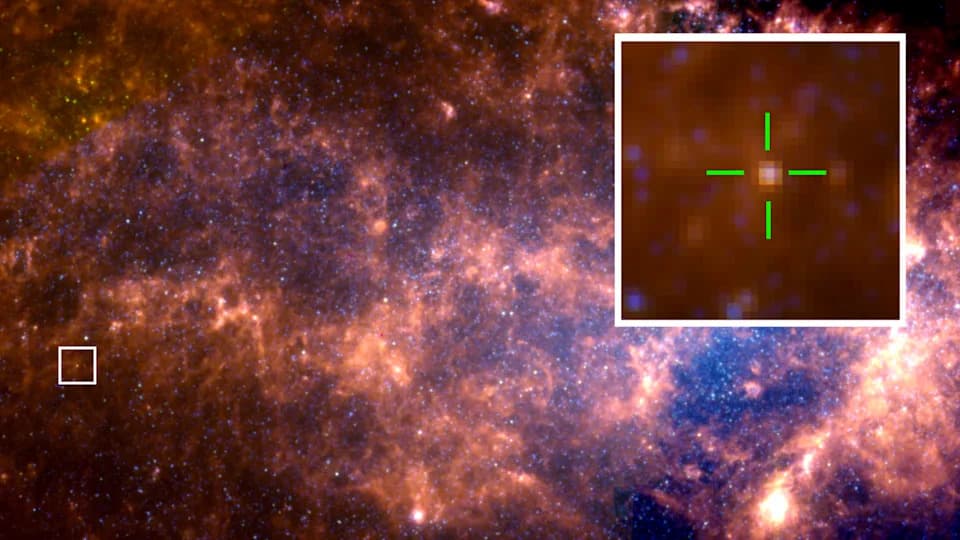
In July 2025 JWST captured a supernova that exploded when the universe was only about 730 million years old — the earliest such event observed to date. Follow-up analysis of December 2025 images allowed teams to locate the supernova’s faint host galaxy, providing valuable information about early stellar deaths and galaxy evolution.
Why this matters: Together these observations push boundaries across scales — from the structure of dark matter and colossal rotating filaments to the dynamics of black holes, the nature of exoplanets, and the first generations of stars. Multiple observatories (JWST, Rubin, LIGO, SPHEREx, GMRT, Chandra and solar missions) contributed key pieces to this expanding picture of our cosmos.
If you want regular updates, consider signing up for astronomy newsletters and mission feeds — these discoveries came from teams who make their data rapidly available to the wider community.
Help us improve.