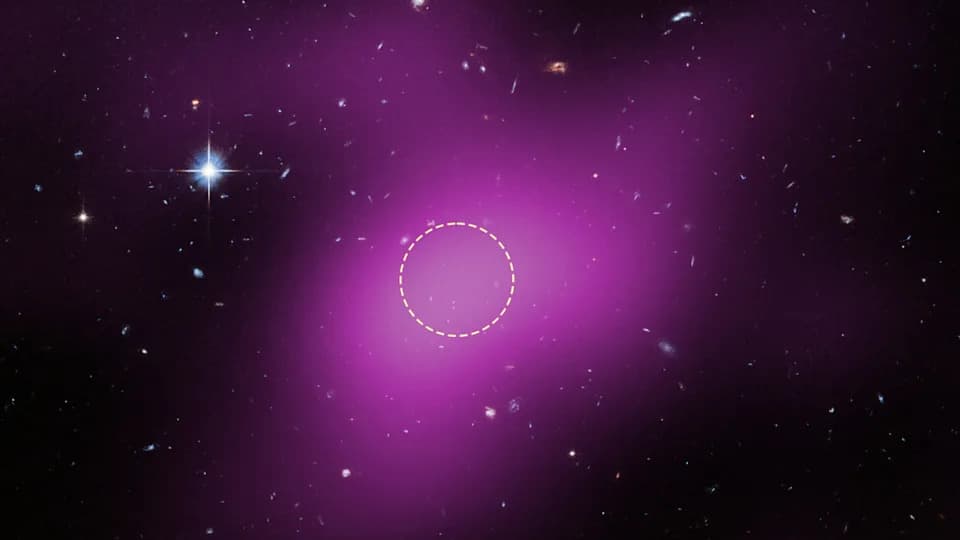
Hubble observations confirm Cloud-9 as a starless, gas-rich object dominated by dark matter about 14 million light-years away. Its core spans roughly 4,900 light-years and holds ~1 million solar masses of hydrogen, while dark matter may account for ~5 billion solar masses. Cloud-9 appears to be a fossil remnant of a failed galaxy, offering a rare laboratory to study dark matter and the conditions that prevent star formation.
Hubble Reveals 'Cloud-9' — A Starless, Dark-Matter-Dominated Remnant of a Failed Galaxy
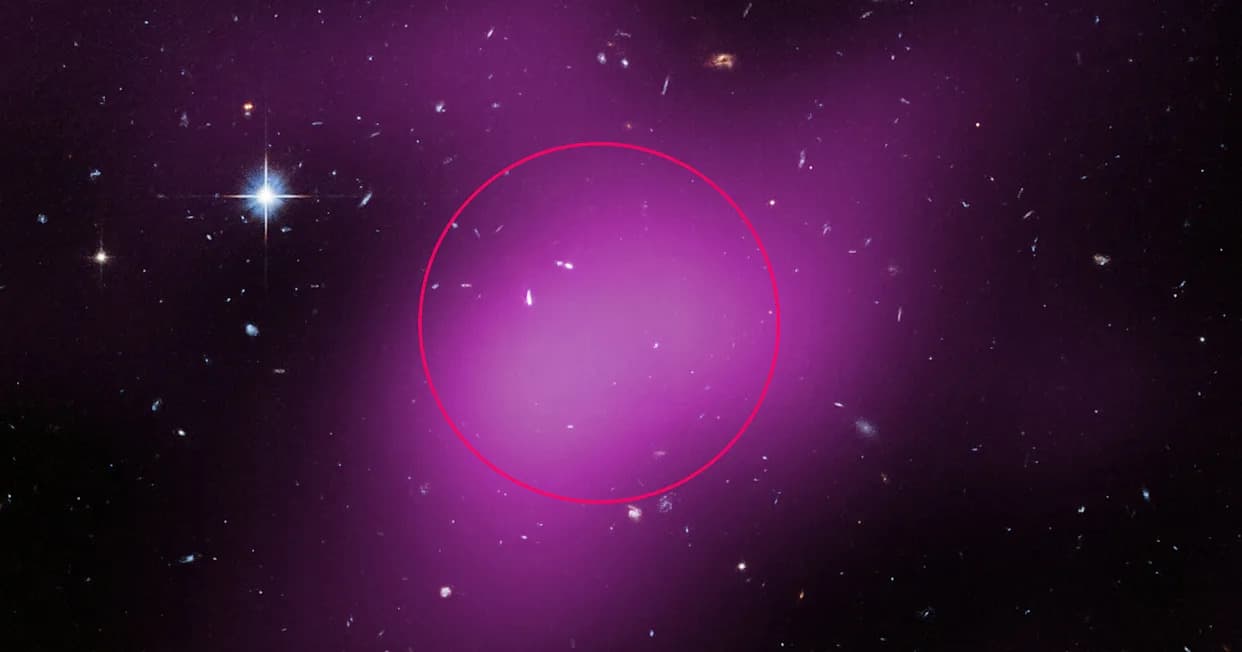
Researchers claim to have used NASA's Hubble Space Telescope to discover an entirely new type of celestial object: dubbed "Cloud-9."
An international team using NASA's Hubble Space Telescope has captured detailed observations of an extraordinary object: Cloud-9, a starless, gas-rich cloud dominated by dark matter. Located about 14 million light-years from Earth near the spiral galaxy Messier 94, Cloud-9 appears to be a primordial, failed galaxy — a rare fossil that never ignited star formation.
What Astronomers Found
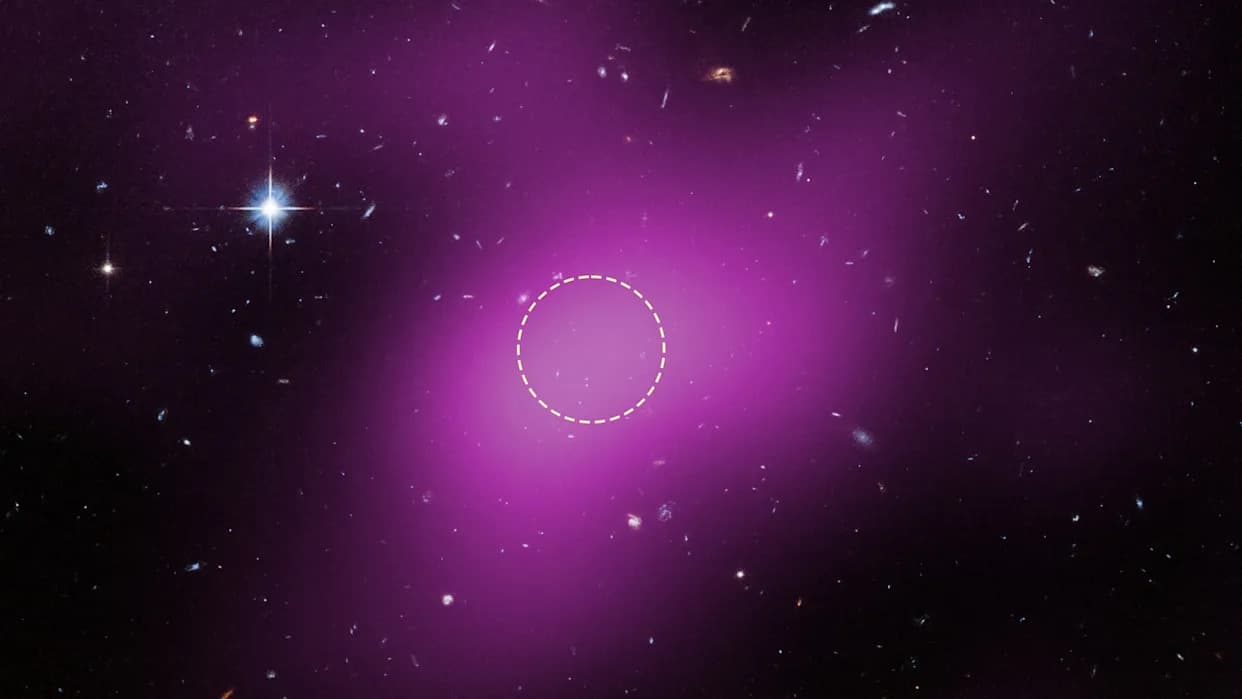
Cloud-9 was first identified three years ago in radio surveys by the Five-hundred-meter Aperture Spherical Telescope (FAST) in Guizhou, China. Follow-up imaging with Hubble's Advanced Camera for Surveys (ACS) has now ruled out the presence of any detectable stars, revealing a compact hydrogen cloud with an unusually high dark-matter fraction.
The cloud's core spans roughly 4,900 light-years across and contains about 1 million solar masses of hydrogen gas. Based on the system's dynamics and mass estimates, researchers infer that dark matter contributes on the order of 5 billion solar masses — the bulk of the object's total mass.
Why It Matters
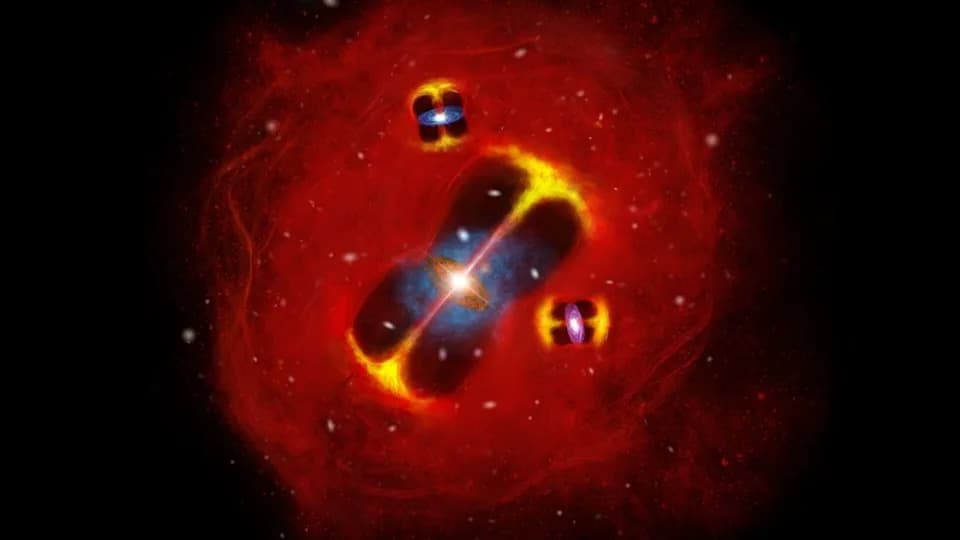
Cloud-9 sits in a narrow size-and-mass range: large enough that its gas does not simply disperse, yet too small for gravity to have triggered large-scale gas collapse and star formation. That put it into an uncommon "sweet spot," producing a dark-matter-dominated object with no stellar population. Because it is effectively starless, Cloud-9 offers a rare observational window into the behavior of dark matter and the conditions that determine whether a galaxy forms or fails.
“This is a tale of a failed galaxy,” said Alejandro Benitez-Llambay, assistant professor of physics at Milano-Bicocca University and coauthor of the study. “Seeing no stars is what proves the theory right. It tells us that we have found in the local Universe a primordial building block of a galaxy that hasn't formed.”
“This cloud is a window into the dark universe,” added ESA astronomer Andrew Fox. “Cloud-9 gives us a rare look at a dark-matter-dominated cloud that does not emit light from stars.”
Broader Implications
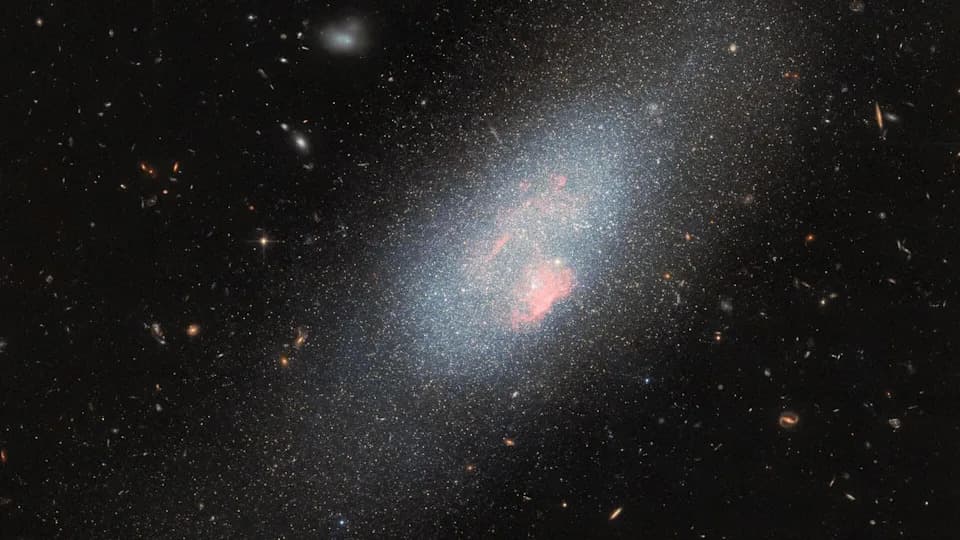
Until now, objects like Cloud-9 were largely theoretical. The discovery suggests that other starless, dark-matter-rich systems — the abandoned remnants of failed galaxies — could be scattered across the local Universe. Studying Cloud-9 and similar objects can help astronomers refine models of galaxy formation, probe dark-matter distribution on small scales, and better understand why some clouds collapse into stars while others remain inert.
Naming note: The label Cloud-9 is sequential — it was the ninth gas cloud cataloged near Messier 94 — and not a reference to the idiom for extreme happiness.
Where to Learn More: The team's results are published in The Astrophysical Journal Letters and have been highlighted by the European Space Agency and other scientific outlets.
Help us improve.