Daniel T. Jaffe of The University of Texas at Austin has been named president of the GMTO Corporation, taking a lead role in completing the Giant Magellan Telescope in Chile’s Atacama Desert. The GMT will use seven 27‑foot (≈8.2 m) primary mirrors to capture unprecedented detail of distant galaxies and faint exoplanets; UT is a founding partner and has invested $110 million. The NSF approved the project’s final design phase last June, the formal review is set for next June, and GMTO is aiming for congressional assembly funding in fiscal year 2028.
UT Austin’s Daniel T. Jaffe Takes Helm of Giant Magellan Telescope Project
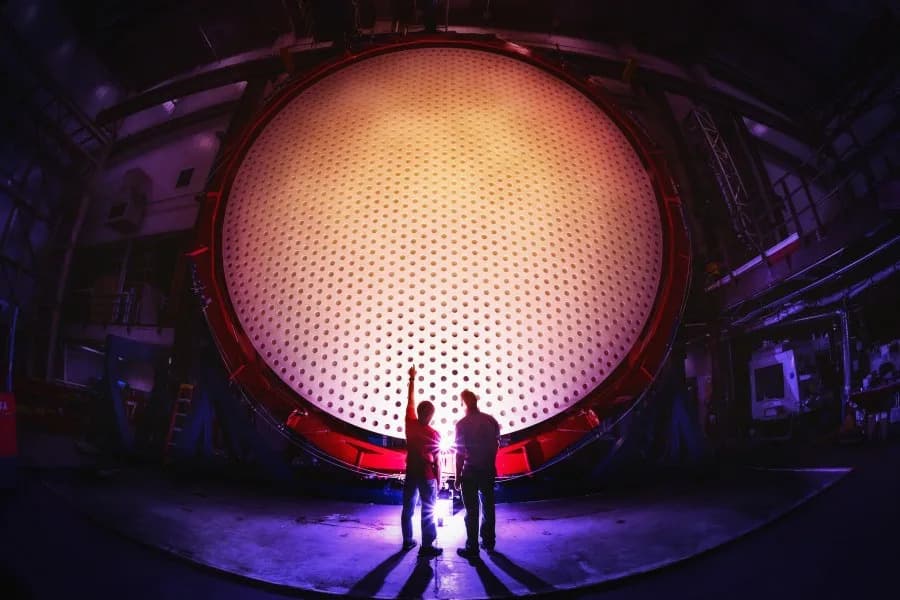
Texas takes charge of world’s most powerful telescope
The GMTO Corporation has appointed Daniel T. Jaffe of The University of Texas at Austin as its new president, placing a longtime project leader at the forefront of the effort to complete the Giant Magellan Telescope (GMT), one of the world’s most powerful planned optical observatories.
Jaffe will work alongside UT professor Taft Armandroff, who was elected in November to chair GMTO’s board of directors. Jaffe succeeds Robert N. Shelton, who retired last year.

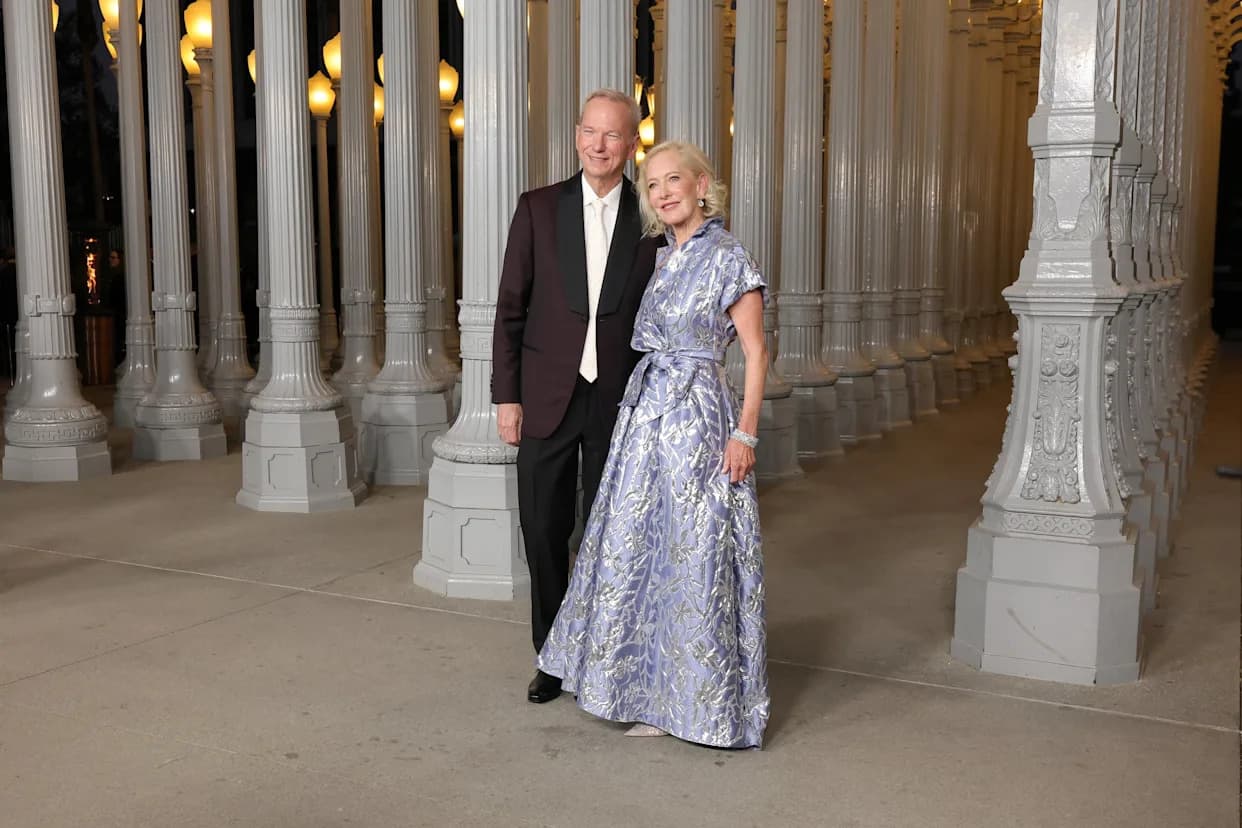
Dan Jaffe takes a new role as President of the Giant Magellan Telescope project. (Credit: University of Texas)
“I’m very excited about the chance to lead this project. I’m very enthusiastic about its prospects. I think it’s going to be a major breakthrough for astronomical science in the coming decades,” Jaffe said.
Project Overview
The Giant Magellan Telescope is being constructed in the mountains of Chile’s Atacama Desert. Its primary collecting surface is made up of seven giant mirrors, each roughly 27 feet (about 8.2 meters) in diameter. This scale, combined with the site’s excellent atmospheric conditions, will allow astronomers to observe much finer detail in distant galaxies, faint exoplanets and other celestial objects than most current ground-based telescopes.
Current Status and Next Steps
Several of the GMT’s mirrors have already been cast and are awaiting shipment to Chile. Last June, the U.S. National Science Foundation authorized the start of the project’s final design phase. During this phase, GMTO must produce final cost estimates and demonstrate there are no remaining technical barriers to completion.
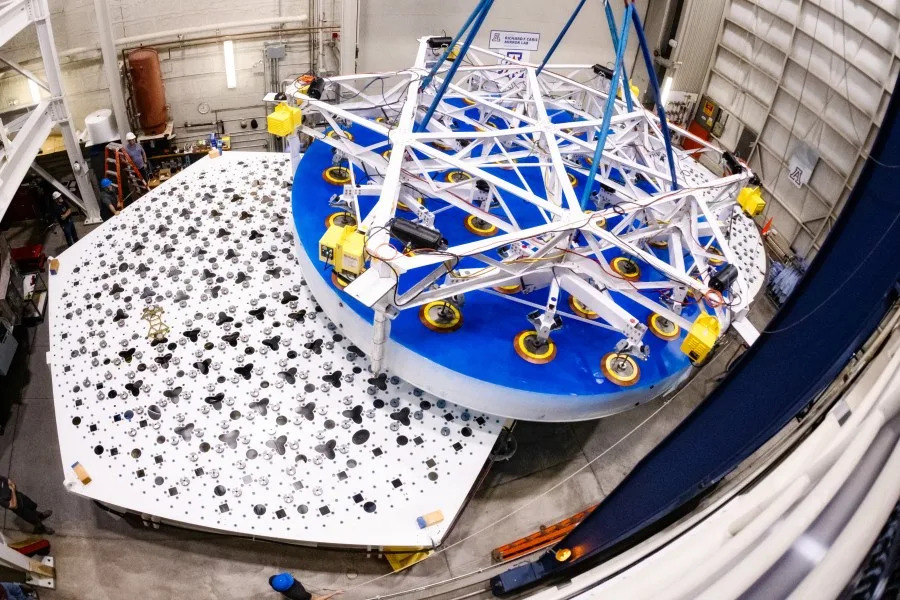
Primary mirror support system prototype integration with completed primary mirror for testing at the University of Arizona Richard F. Caris Mirror Lab. (Credit: Damien Jemison, Giant Magellan Telescope – GMTO Corporation)
Jaffe said the formal final design review is scheduled for next June. If that review is successful, GMTO will seek congressional appropriations to begin full assembly with a target of federal support in fiscal year 2028.
Expected Lifetime and Flexibility
Large optical observatories typically operate for 30 to 50 years. After completing their initial science programs, telescopes like the GMT can be upgraded with new instruments and repurposed for new research goals. As Jaffe noted, many telescopes built in the 1930s and 1940s remain useful today when updated and well-maintained.
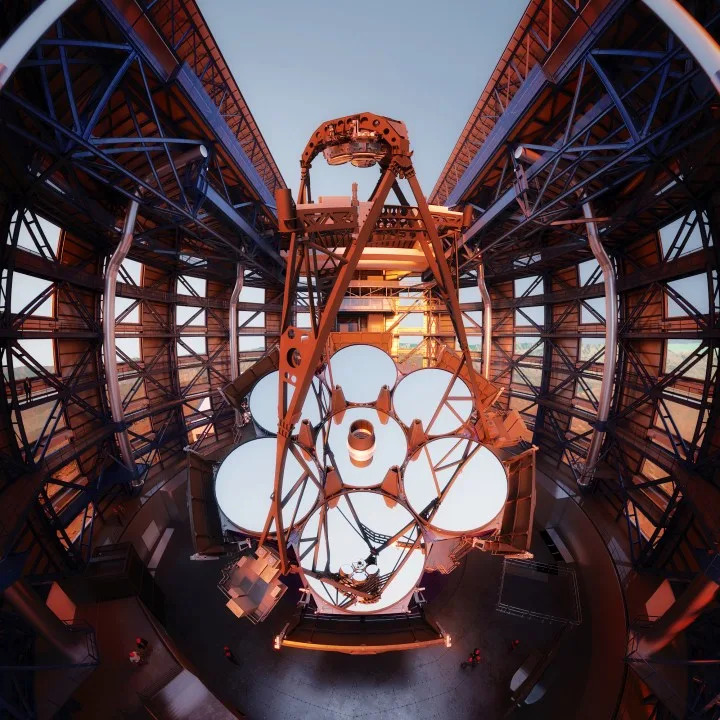
Sunlit daytime interior telescope rendering with people in the foreground. (Credit: Giant Magellan Telescope – GMTO Corporation)
Leadership, Partners and Local Impact
UT Austin is a founding partner in the GMT collaboration and has invested $110 million toward the project. Fifteen universities are participating, including The University of Texas at Austin and Texas A&M. Jaffe has been involved with the GMT for more than 20 years and brings administrative experience from his decade as UT’s vice president for research. He has also helped develop instruments for major observatories, including work related to the James Webb Space Telescope and the McDonald Observatory in West Texas.
Jaffe emphasized the potential educational and economic benefits for Texas: the telescope can expand research opportunities for universities, inspire public interest in science and technology, and contribute to workforce development tied to advanced instrumentation and data analysis.
What to watch next: the final design review next June and any subsequent federal funding decisions that would enable assembly to begin in earnest.
Help us improve.