Bob Benjamin, an Oak Ridge High School graduate, parlayed an undergraduate interest in the "galactic fountain" into a career mapping the Milky Way using space telescopes such as Spitzer. In 2008 he co-created a widely cited annotated Milky Way map and used infrared surveys to revise estimates of the Galaxy’s bar and spiral-arm prominence. He helped identify and later extend a filamentary ionized structure now called the "Ursa Major Arc," and he emphasizes that modern astronomy requires strong computing skills as massive surveys (LSST, Roman) produce unprecedented data volumes.
Oak Ridge Grad Helped Create an Iconic Map of the Milky Way — The Story of Bob Benjamin

Bob Benjamin
Bob Benjamin, an Oak Ridge High School alumnus (class of 1983), turned a single college assignment into a lifelong career mapping the Milky Way. From an early fascination with the "galactic fountain" to co-creating a widely cited annotated map of our Galaxy, Benjamin’s work has helped reshape how astronomers view the structure of the Milky Way.
From a College Assignment to a Career in Galactic Structure
Benjamin first encountered the idea of a galactic corona in an undergraduate astrophysics class at Carleton College, where he presented a Scientific American article on the topic. The model that captivated him — the "galactic fountain," in which supernova-driven gas rises from the Galactic disk, cools, and rains back down — influenced his graduate research at the University of Texas and later work with leading researchers at the University of Wisconsin–Madison.
Major Research Contributions
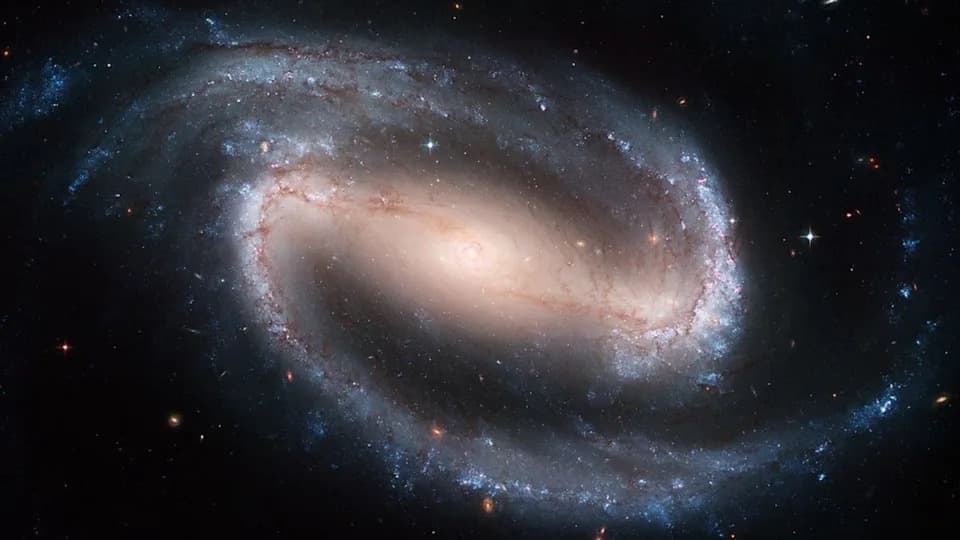
Benjamin’s research focuses on the global structure of the Milky Way: the bulge, bar, disk, spiral arms and warp, along with modeling the interstellar medium (ISM) and high-velocity clouds (HVCs). Using infrared data from NASA’s Spitzer Space Telescope, he helped show that the Galaxy’s central bar is longer than previously thought and that certain spiral arms are more prominent, results that changed the field’s baseline picture of Galactic structure.
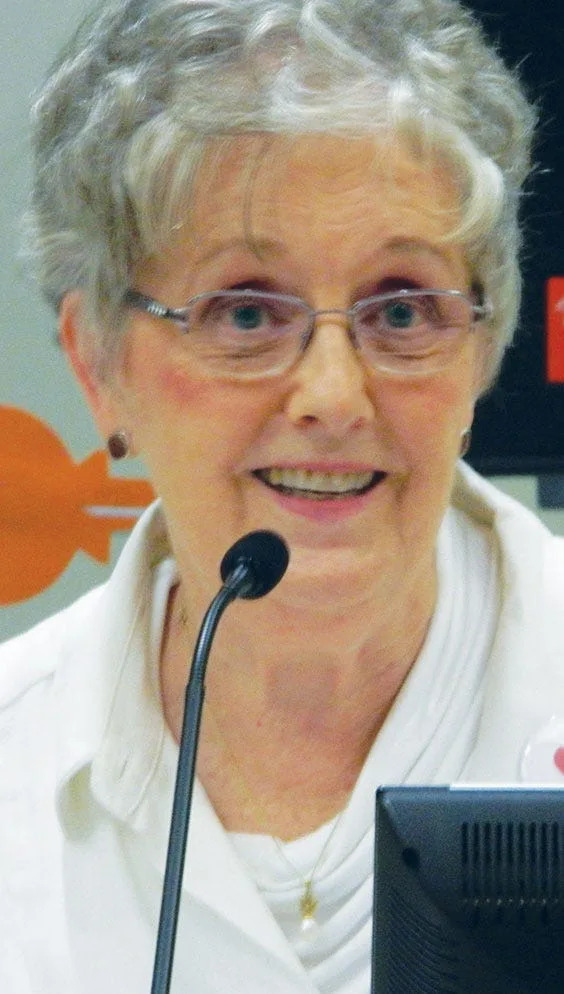
Benita Albert
The 2008 Milky Way Map
In 2008 Benjamin collaborated with a NASA artist to produce an annotated map of the Milky Way that has been widely shared by educators and researchers. That visual roadmap helped translate complex survey data into an accessible view of our Galaxy's layout. (See the Spitzer release: https://www.spitzer.caltech.edu/image/ssc2008-10b-a-roadmap-to-the-milky-way-annotated.)
Unexpected Discoveries: The Ursa Major Arc
One surprising thread in Benjamin’s career began with the discovery, published in 2001, of a two-degree-long straight filament of ionized gas — a feature that resembled an interstellar contrail. Two decades later, European astronomers expanded that detection into a 30-degree circular arc. Benjamin joined their analysis and the team now suspects the arc stems from a nearby stellar explosion in the direction of Ursa Major; if extended into a full circle it would encircle the Big Dipper. The feature is now called the "Ursa Major Arc," and researchers are still probing its origin and implications.
Challenges and the Data Deluge
Benjamin points to two major challenges in modern astronomy: funding and the overwhelming volume of data. He highlights upcoming and ongoing projects that exemplify the data revolution — the Vera C. Rubin Observatory’s 10-year Legacy Survey of Space and Time (LSST), and the Nancy Grace Roman Space Telescope (planned for launch in 2026) — and stresses that contemporary astronomers must also be skilled computer scientists to manage and analyze these massive datasets.
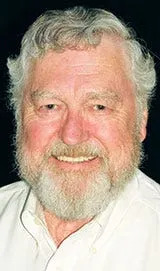
D. Ray Smith, writer for the Historically Speaking column.
Teaching, Mentoring, and Public Outreach
Benjamin built a long teaching career in the University of Wisconsin system, directing UW–Madison’s Astrophysics Research Experiences for Undergraduates (2002–2015), teaching multiple courses per semester at UW–Whitewater, and mentoring dozens of students — some of whom have gone on to notable careers in astronomy and industry. He frequently emphasized the value of early research experience and mathematics preparation for students who want to pursue astronomy.
"Learn to love math, and it’s never too early to get involved in research," Benjamin advised. "One of the hardest things about getting into research is learning what the questions are. But the more you do, the more it draws you in."
Personal Notes and Ongoing Work
After earning his Ph.D. from the University of Texas at Austin and completing two three-year postdoctoral appointments, Benjamin served on the faculty at UW–Madison and UW–Whitewater, chairing the Whitewater physics department from 2013–2018. He retired in 2024 to help care for his ailing mother but continues consulting for NASA and plans to update the 2008 Milky Way map as new data — especially from Gaia, Spitzer, and forthcoming surveys — refine our picture of the Galaxy.
Reflecting on the changing craft of astronomy, Benjamin notes that the romance of traveling to mountain-top observatories and operating telescopes in person has given way to remote observations and data delivered electronically from space — but the scientific excitement remains: "It really never stops being fun."
Benjamin’s outlook is captured by the Eden Phillpotts line he uses to preface his CV: "The universe is full of magical things, patiently waiting for our wits to grow sharper." His career — as researcher, teacher, and communicator — is a living example of that sentiment.
Byline: Benita Albert and D. Ray Smith. This article originally appeared in The Oak Ridger as "Oak Ridge grad, along with NASA artist, created a map of the Milky Way."
Help us improve.