Schmidt Sciences unveiled Lazuli, a privately funded space telescope with a three‑meter mirror—larger than Hubble—designed to study exoplanet atmospheres, transients and cosmological mysteries like dark energy. The mission will carry a coronagraph, a high‑resolution wide‑field camera and a spectrograph, and aims for a launch before 2030 if funding and schedules hold. Lazuli is part of the broader Schmidt Observatory System, which includes modular ground arrays planned to produce public data by 2029. While scientists praise the initiative’s potential, concerns remain about data access and the implications of large private investments for public science funding.
Lazuli: Schmidt Sciences Unveils a Privately Funded 3‑Meter Space Telescope Aimed at Transforming Astronomy

Eric Schmidt and Wendy Schmidt pose during a gala at the Los Angeles County Museum of Art on November 01, 2025. Via their Schmidt Sciences philanthropic organization, the couple is funding multiple astronomical projects, including the Lazuli space telescope.
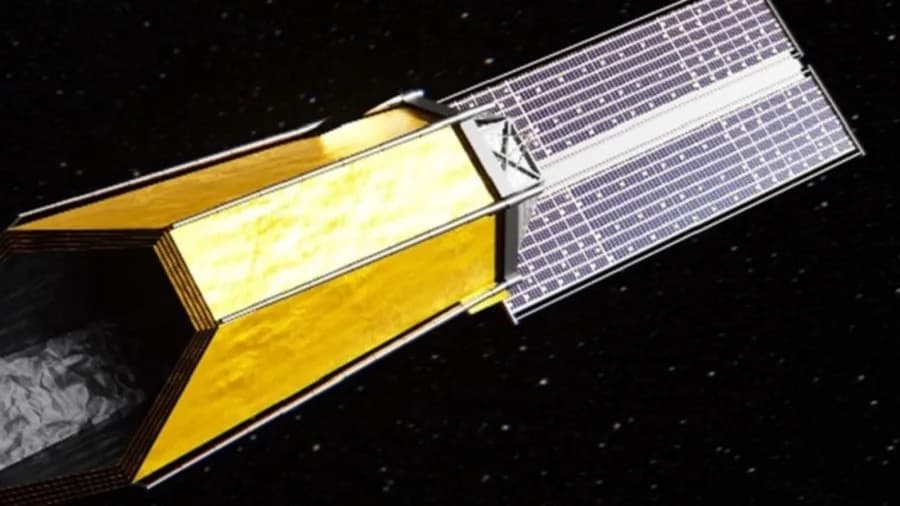
PHOENIX, Ariz.—Schmidt Sciences today revealed plans for Lazuli, a privately funded space observatory built around a three‑meter primary mirror—larger than NASA’s Hubble Space Telescope—and designed to push new frontiers in orbital astronomy.
Overview
The project was announced during a special session at the American Astronomical Society’s winter meeting. Schmidt Sciences, the philanthropic organization founded by Wendy Schmidt and former Google CEO Eric Schmidt, is leading the effort. Stuart Feldman, an astronomer, computer scientist and president of Schmidt Sciences, told Scientific American that Lazuli represents “the first full‑scale observatory that is privately funded in space.”
Instruments And Science Goals
Lazuli’s planned scientific payload includes three primary instruments: a coronagraph optimized for finding and characterizing exoplanets, a high‑resolution wide‑field camera for detailed imaging, and a light‑splitting spectrograph to analyze the chemistry of distant atmospheres and explosive events. The observatory is designed to be agile—capable of rapid repointing to capture transient phenomena that appear without warning.
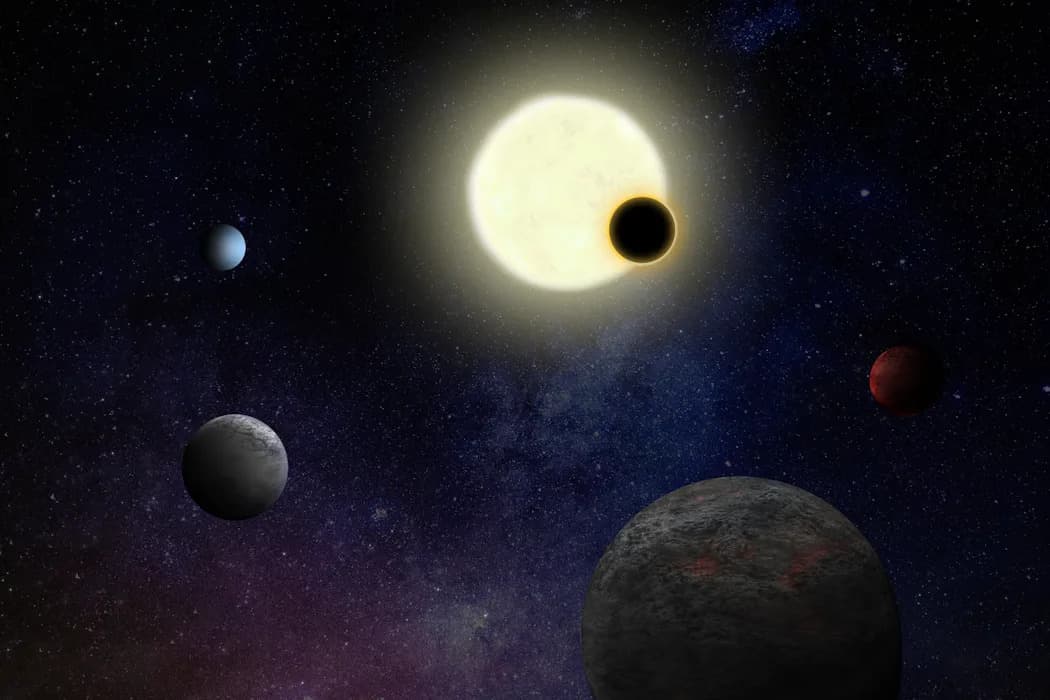
Science objectives include precision studies of exoplanet atmospheres, high‑resolution imaging and spectroscopy of supernovae and other transients, and investigations into cosmological questions such as dark energy, the mysterious force behind the universe’s accelerating expansion.
Schedule, Cost And Broader Program
Budget estimates shared at the meeting place Lazuli’s cost in the hundreds of millions of dollars, and project leaders say a launch could occur before 2030 if timelines hold. Lazuli is one element of a broader initiative called the Schmidt Observatory System, which also includes several modular ground‑based projects:
- Deep Synoptic Array — a radio survey array;
- Argus Array — a wide‑field visible‑light optical array;
- Scalable Spectroscopic Array — initially smaller, designed to grow to obtain spectra of exoplanets, supernovae and other targets.
Feldman says the ground arrays use hundreds of small, relatively low‑cost components to build large, capable instruments quickly, and the goal is for these systems to be producing publicly available data by 2029.
Philanthropy, Access And Concerns
Philanthropic funding has a long history in astronomy—from privately funded observatories that enabled Edwin Hubble’s discoveries to earlier patrons of Galileo—but public agencies such as NASA and the National Science Foundation have dominated space science since World War II. Science historian Jordan Bimm of the University of Chicago notes that the balance may be shifting as foundations take on bigger, agenda‑shaping roles.
“We are absolutely in a moment of flux and inflection. We’re seeing nonstate actors like foundations getting into this realm of not just funding interesting stuff but laying out an agenda,” Bimm said.
Project leaders emphasize they do not intend to replace federal agencies. “We’re not replacing NSF or NASA or the European agencies. We’re trying to fill in areas that they really aren’t designed for and invest in that,” Feldman said. Schmidt Sciences also says it intends for Lazuli’s data to be broadly available as “a gift to the global astrophysics community.”
Nevertheless, some in the astronomy community raised questions at the AAS meeting about who will have access to the facilities and data, and whether a surge of private investment could influence or accelerate cuts to taxpayer‑funded programs. Critics caution that the source of funding can affect what questions are pursued and who benefits from the results.
Outlook
Supporters—including Heidi Hammel, vice president for science at the Association of Universities for Research in Astronomy—say Lazuli could demonstrate a new, complementary model for accomplishing ambitious space science projects. If the telescope and associated ground arrays meet their targets, they could expand the pace and breadth of astrophysical discovery while raising important questions about governance, access and the future mix of public and private investment in science.
Help us improve.