The American Astronomical Society's 247th meeting (AAS 247) runs Jan. 4–8 in Phoenix, Arizona, drawing thousands of researchers and students. Key themes include exoplanet discoveries and mission planning — notably discussions about the Habitable Worlds Observatory and biosignature detection. Joint JWST, Hubble and ALMA results will be highlighted alongside sessions on brown dwarfs and the Milky Way. The Nancy Grace Roman Space Telescope will have a Town Hall as teams prepare for a launch planned no earlier than September 2026. Daily press briefings will be streamed live on Zoom and the AAS Press Office YouTube channel.
AAS 247 Kicks Off in Phoenix: What to Expect at the 2026 'Super Bowl of Astronomy'
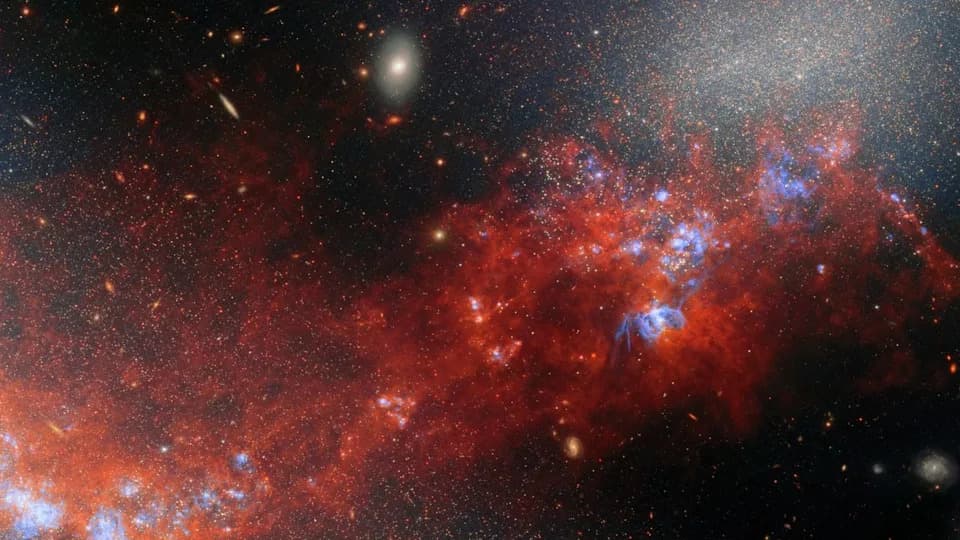
An image from the James Webb Space Telescope captures dwarf galaxies NGC 4490 on the left and NGC 4485 glowing at the upper right, connected by a glowing bridge of gas and dust dotted with bright blue star-forming regions. | Credit: ESA/Webb, NASA & CSA, A. Adamo (Stockholm University), G. Bortolini, and the FEAST JWST team
Thousands of astronomers, students, educators and space scientists are gathering in Phoenix, Arizona, for the 247th meeting of the American Astronomical Society (AAS 247), running Jan. 4–8 at the Phoenix Convention Center. The annual meeting — often called the "Super Bowl of astronomy" — will showcase the latest discoveries, mission planning and debates that could shape the field for years to come.
What To Expect
Exoplanet Science and Future Missions
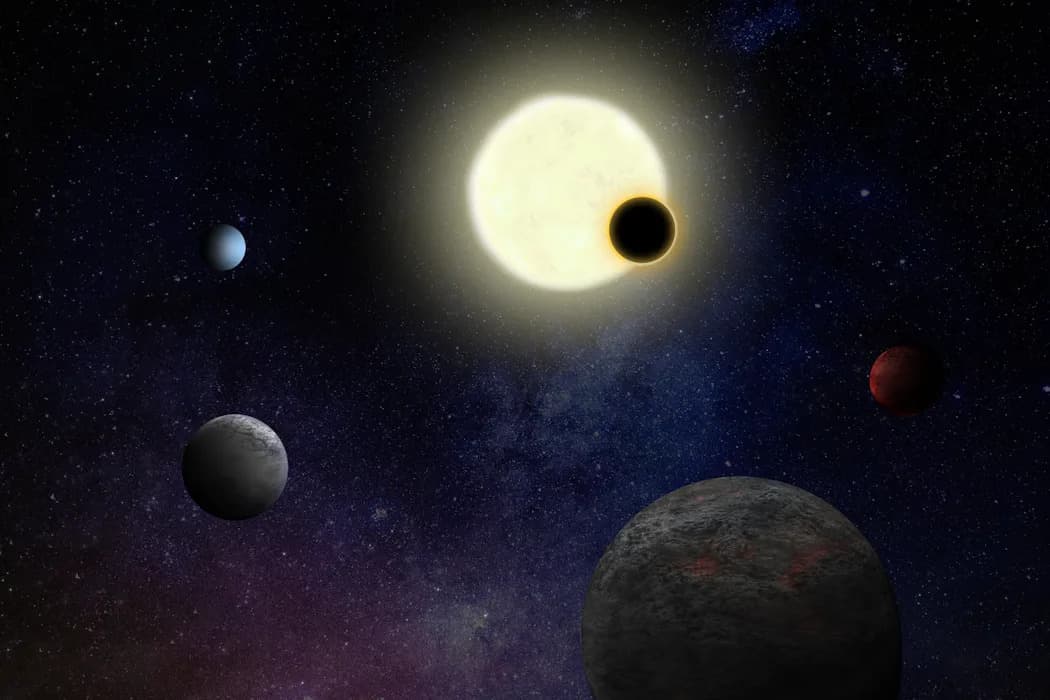
Exoplanet research is a major focus, with sessions organized by NASA's Exoplanet Exploration Program Analysis Group examining recent discoveries and setting priorities for upcoming missions. The proposed Habitable Worlds Observatory will be a hot topic as scientists discuss how next-generation telescopes might detect Earth-like planets and search for atmospheric biosignatures.
Cosmic Origins And Galaxy Evolution
Several sessions will present combined results from the James Webb Space Telescope (JWST), the Hubble Space Telescope and the Atacama Large Millimeter/submillimeter Array (ALMA). These cross-observatory surveys are illuminating how galaxies formed and evolved in the early universe. Other talks will explore brown dwarfs, ultra-faint dwarf galaxies and the Milky Way's outer structure, prompting fresh perspectives on long-standing models.
NASA Program Analysis Groups (PAGs)
NASA's Program Analysis Groups — including cosmic origins, physics of the cosmos and exoplanet exploration — will meet to brainstorm science goals, outline mission concepts and refine priorities for the next decade of space science.
Nancy Grace Roman Space Telescope
The Nancy Grace Roman Space Telescope will be the subject of a dedicated Town Hall on mission status and next steps, plus several breakout sessions. With launch currently planned no earlier than September 2026, teams are sharpening plans for how Roman's wide-field infrared imaging will complement JWST and ground-based observatories for studies of dark energy, exoplanets and infrared astrophysics.
Collaboration, Outreach And Careers
Beyond formal science sessions, AAS 247 highlights the increasingly collaborative nature of modern astronomy. Presentations will show how skilled amateur astronomers contribute to frontline research, while workshops and networking events offer support for early-career researchers navigating an evolving field.
Press And Virtual Access
A full schedule is available in the program online. Daily press briefings will be held on-site and streamed live on Zoom, and on the AAS Press Office YouTube channel, where virtual attendees can watch and ask questions.
Whether you follow exoplanet discoveries, galaxy formation research or the next wave of space telescopes, AAS 247 promises a compact, high-impact week of science and discussion.
Help us improve.