
2025 brought spectacular space imagery and milestones: the Vera C. Rubin Observatory produced its first-light frames and will begin the 10-year LSST survey; JWST revealed the intricate spirals around the Apep system; and Blue Origin’s New Glenn progressed from an inaugural flight to a successful barge landing. Comet 3I/ATLAS arrived as the third known interstellar object, Hubble marked 35 years with striking galaxy images, and powerful Earth- and ground-based observatories captured star-forming clouds and dramatic auroras.
The Best Space Photos of 2025: Breathtaking Views and Major Milestones

NSF-DOE Vera C. Rubin Observatory
As 2025 draws to a close, the year’s most dazzling images and milestones in astronomy and spaceflight give us fresh perspective on the cosmos — from groundbreaking observatory first light to dramatic cometary visits and stunning auroras on Earth.
NASA/ESA/CSA/STScI (image); Yinuo Han/California Institute of Technology/Ryan White/Macquarie University (science); Alyssa Pagan/STScI (image processing)
Vera C. Rubin Observatory: A New Era of Sky Surveys
The NSF-DOE Vera C. Rubin Observatory in Chile produced its first-light images in June, marking the start of an ambitious survey program. Built to scan the sky with exceptional depth and cadence, the observatory will carry out the 10-year Legacy Survey of Space and Time (LSST), effectively creating a movie-like record of the sky to help scientists study the solar system, the Milky Way, dark matter and dark energy. The images from just 10 hours of initial observations revealed countless galaxies and vivid clouds of gas and dust.

Carrying NASA’s twin ESCAPADE (Escape and Plasma Acceleration and Dynamics Explorers) spacecraft, Blue Origin’s New Glenn rocket launched on November 13, 2025, from Launch Complex 36 at Cape Canaveral Space Force Station in Florida.Blue Origin
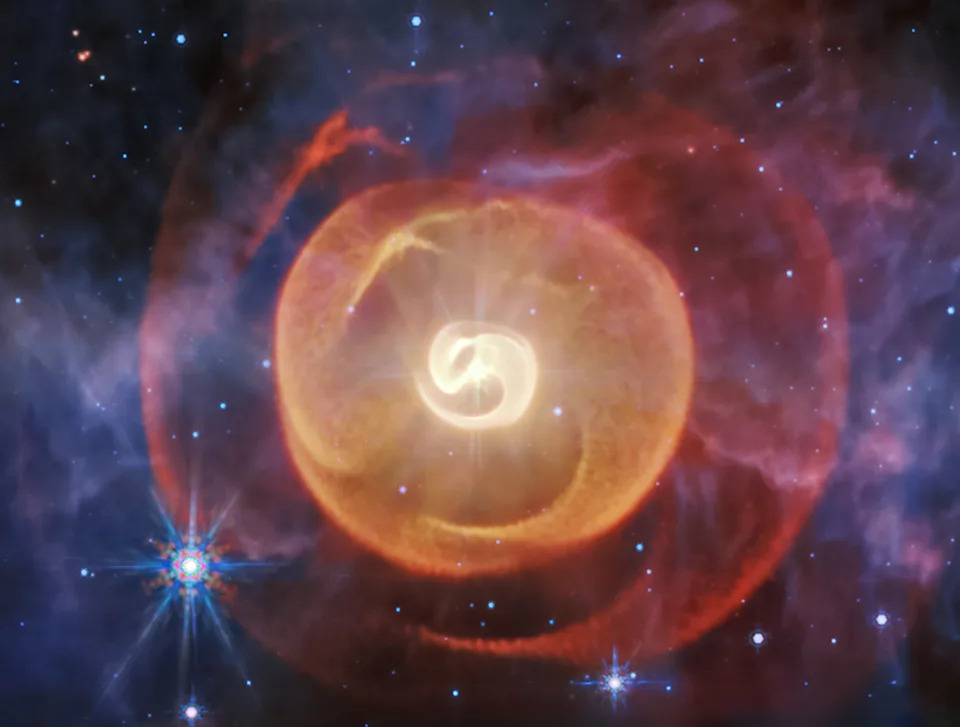
JWST Captures the Spirals of Apep
NASA’s James Webb Space Telescope produced a striking image of Apep, a multi-star system surrounded by delicately nested spirals of material expelled over roughly 700 years. The system includes two Wolf-Rayet stars — massive, luminous stars that shed large amounts of material before ending their lives as neutron stars or black holes — and a third massive supergiant companion.
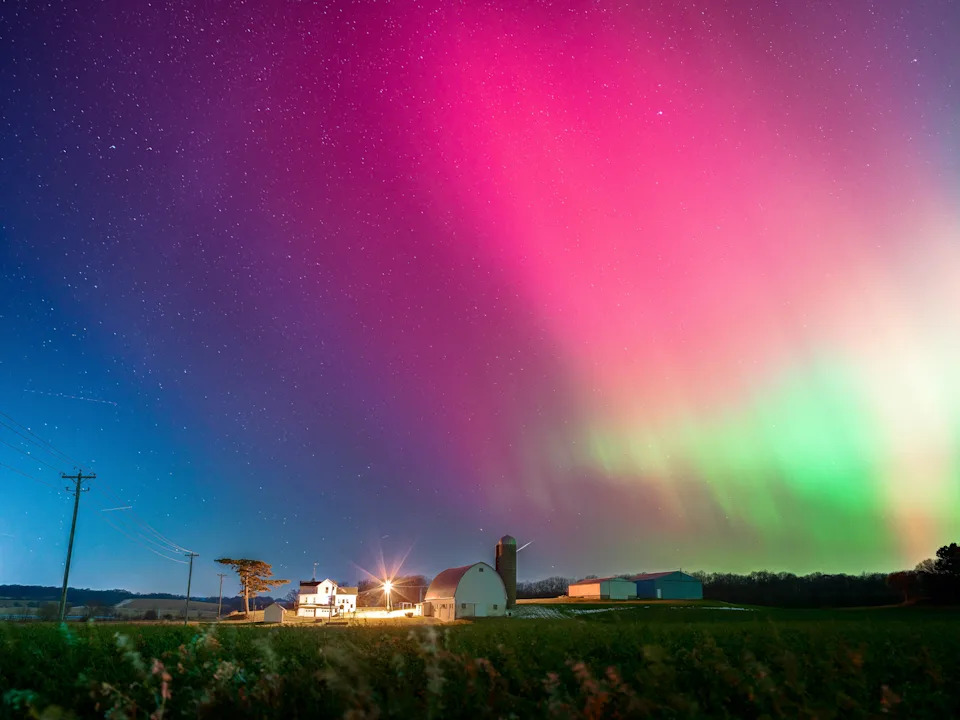
An aurora seen over Monroe, Wis., on November 11, 2025.Ross Harried/NurPhoto via Getty Images
Blue Origin’s New Glenn: From Inaugural Flight to Barge Landing
Blue Origin’s New Glenn heavy-lift rocket flew its inaugural mission in January and later delivered NASA’s twin ESCAPADE spacecraft. The mission’s booster failed to land on a barge early in the year, but in November New Glenn successfully executed a barge recovery, demonstrating progress toward routine reuse.
CTIO/NOIRLab/DOE/NSF/AURA (image); T. A. Rector/University of Alaska Anchorage/NSF NOIRLab/M. Zamani/D. de Martin/NSF NOIRLab (image processing) (CC BY 4.0)
Auroras and Solar Activity
November produced spectacular auroras visible as far south as Mexico and Florida, stunning skywatchers with colorful displays over locations such as Monroe, Wisconsin. Although the sun is moving past a period of peak activity, additional outbursts remain possible as the solar magnetic cycle declines toward the predicted solar minimum around 2030–2031. November’s displays may be among the last major shows until the next rise in activity.
N. Engler et al./SPHERE Consortium/ESO
Star-Forming Clouds and Exoplanetary Systems
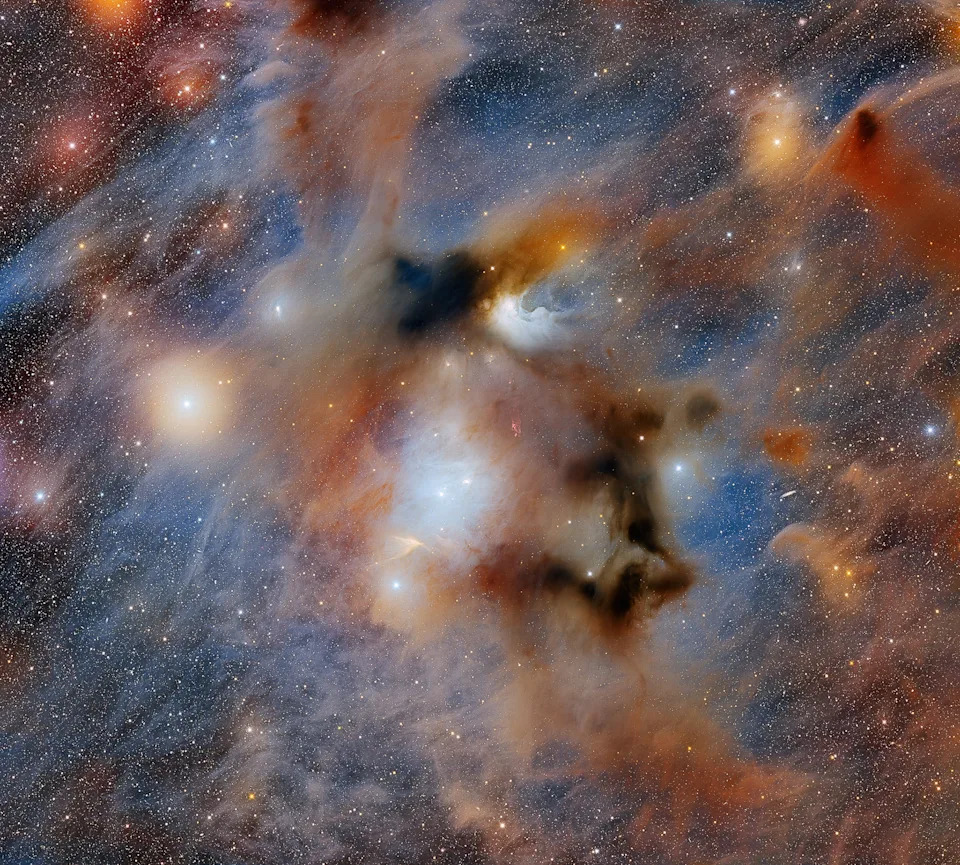
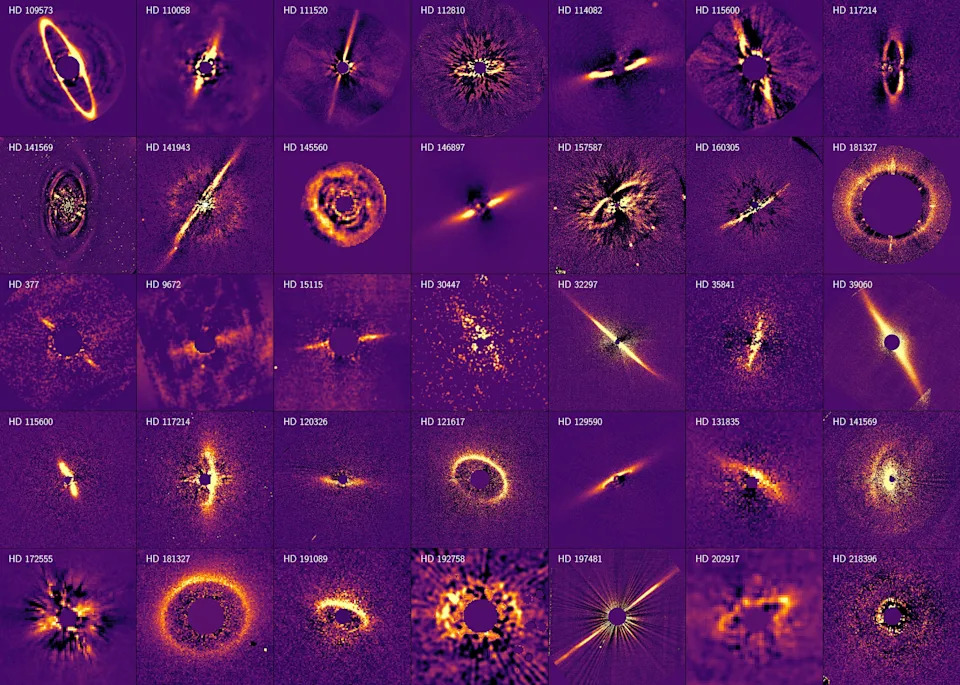
The Dark Energy Camera at Cerro Tololo captured a dramatic image of Chamaeleon I, the nearest dark molecular cloud and an active star-forming region within the larger Chamaeleon Complex. Meanwhile, the European Southern Observatory’s Very Large Telescope produced ‘baby pictures’ of exoplanetary systems: debris disks showing belts and gaps that echo the architecture of our own solar system, with inner asteroid-like material, belts of giant planets, and outer comet-like regions.
NASA/ESA/Imad Pasha/Yale University/Pieter van Dokkum/Yale University
Earth From Afar: OSIRIS-APEX and Apophis Preparations
NASA’s OSIRIS-APEX spacecraft photographed Earth from about 2,136 miles away using its StowCam on September 23. After its primary role collecting samples from asteroid Bennu, OSIRIS-APEX is preparing for a dramatic 2029 flyby of the near-Earth asteroid Apophis, which will pass very close to Earth and be visible to a large portion of the planet.
NASA
Hubble’s 35th Anniversary and the 'Bullseye' Galaxy
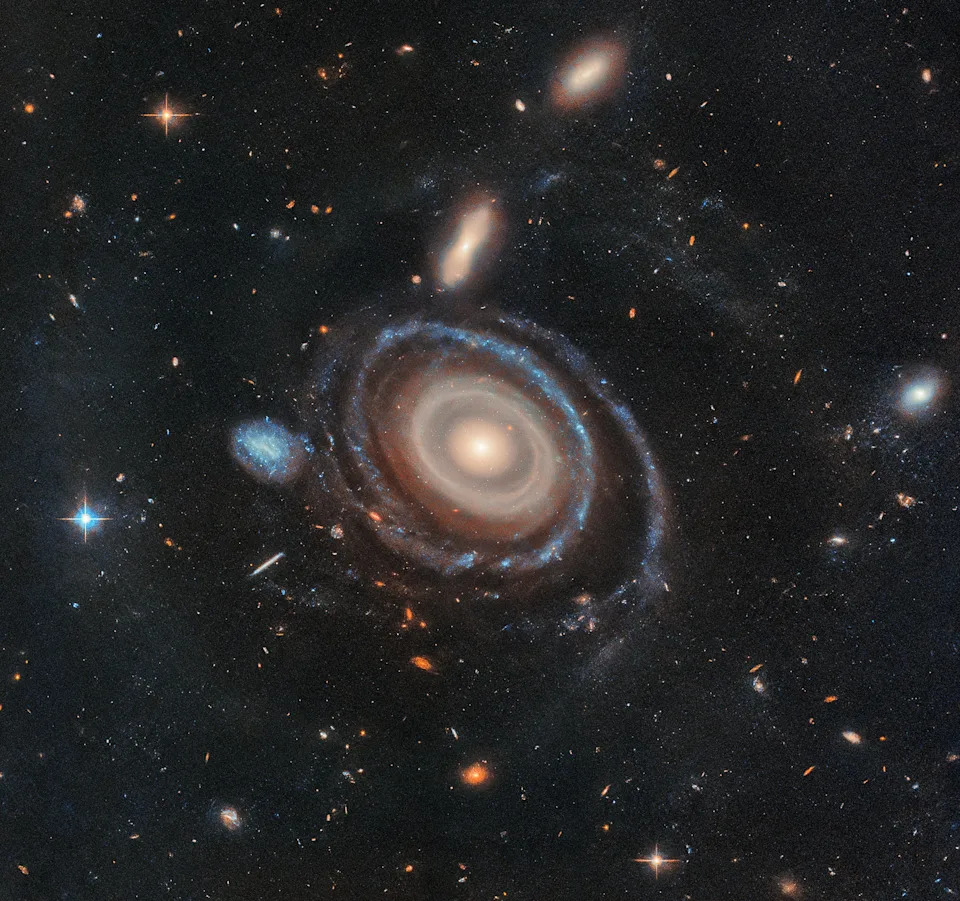
The Hubble Space Telescope celebrated its 35th year in orbit with unforgettable imagery. One highlight was galaxy LEDA 1313424, nicknamed the 'Bullseye,' which displays eight concentric rings formed by a small blue dwarf galaxy plunging through its center about 50 million years ago. Additional observations have even revealed a ninth ring.
Comet 3I/ATLAS: An Interstellar Visitor
In July, astronomers discovered Comet 3I/ATLAS, the third confirmed interstellar object to visit our solar system. The comet’s high velocity indicated an origin beyond our system. Hubble and numerous spacecraft, including missions orbiting Mars, captured observations as the comet passed through the inner solar system in October; scientists expect additional analysis and results to emerge through 2026.
Moon Photography From the International Space Station
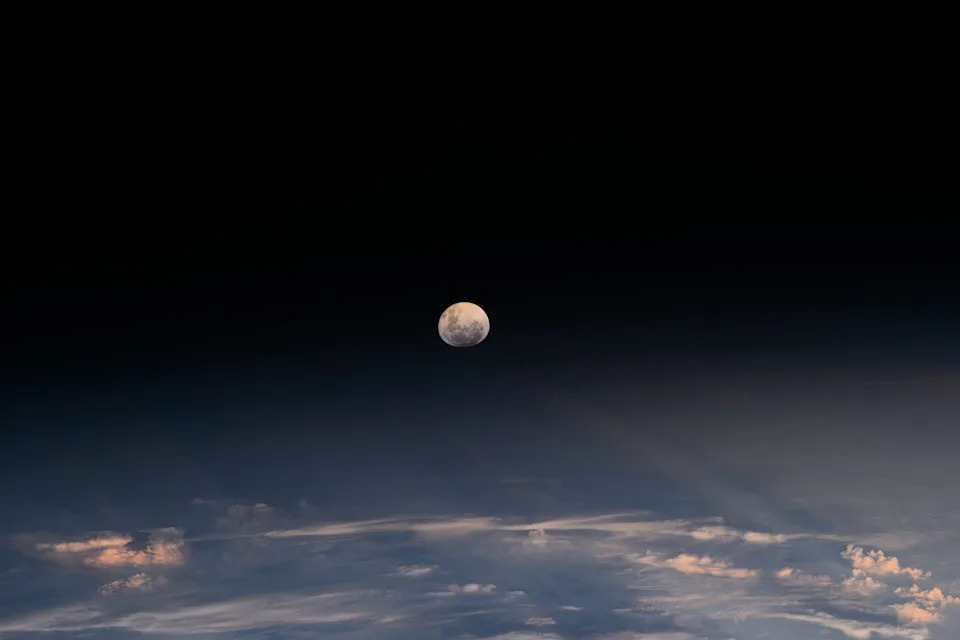
Astronauts aboard the International Space Station photographed the Moon while the station passed over Bolivia and Brazil during one of its frequent sunsets. The Moon’s flattened appearance in the image is an optical illusion produced by Earth’s atmosphere refracting lunar light.
2025 was a banner year for visuals and discoveries — from observatory first light and interstellar visitors to rocket milestones and dazzling displays in Earth’s skies, the images and data gathered this year will fuel scientific study for years to come.


