A new study finds the solar wind has carried particles from Earth’s atmosphere to the Moon for billions of years, embedding volatiles in lunar soil. Computer simulations show a magnetized, modern Earth can transfer more atmospheric material to the Moon—especially when the Moon passes through Earth’s magnetotail. The results were validated using Apollo 14 and 17 samples and suggest the lunar regolith may preserve a chemical record of Earth’s ancient atmosphere while offering potential resources for future exploration.
Moon’s Soil Holds Traces of Earth: Study Finds Magnetosphere Channels Atmospheric Gases to the Lunar Surface
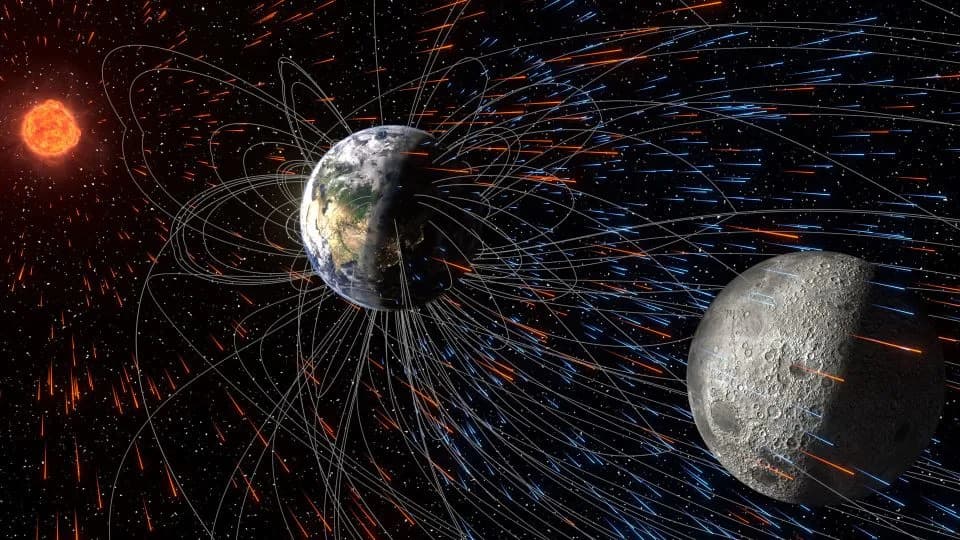
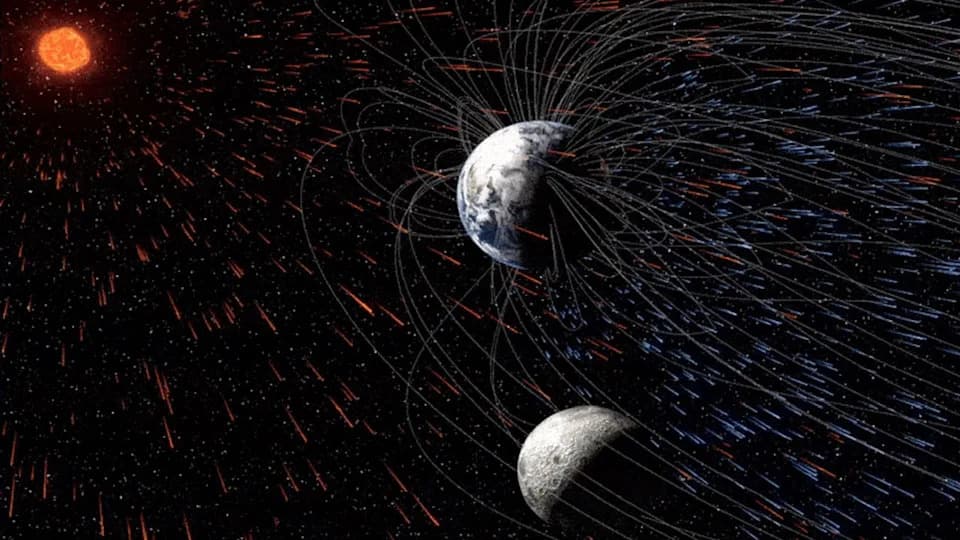
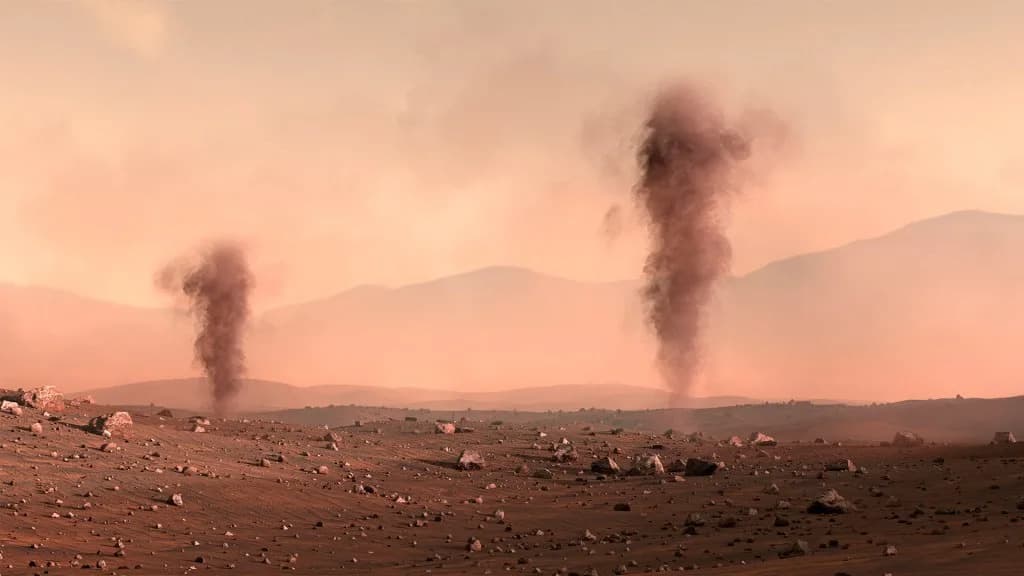
Solar wind, in combination with Earth's magnetic field, has been delivering particles from our planet's atmosphere to the moon's surface for billions of year, as illustrated here. - Shubhonkar Paramanick/University of Rochester
Particles from Earth's atmosphere—swept outward by the solar wind—have been landing on the Moon and mixing into its regolith for billions of years, a new study reports. The research overturns the longstanding idea that Earth's magnetic field simply protected the atmosphere; instead, simulations show the magnetosphere can help channel atmospheric volatiles toward the Moon, a process that continues today.
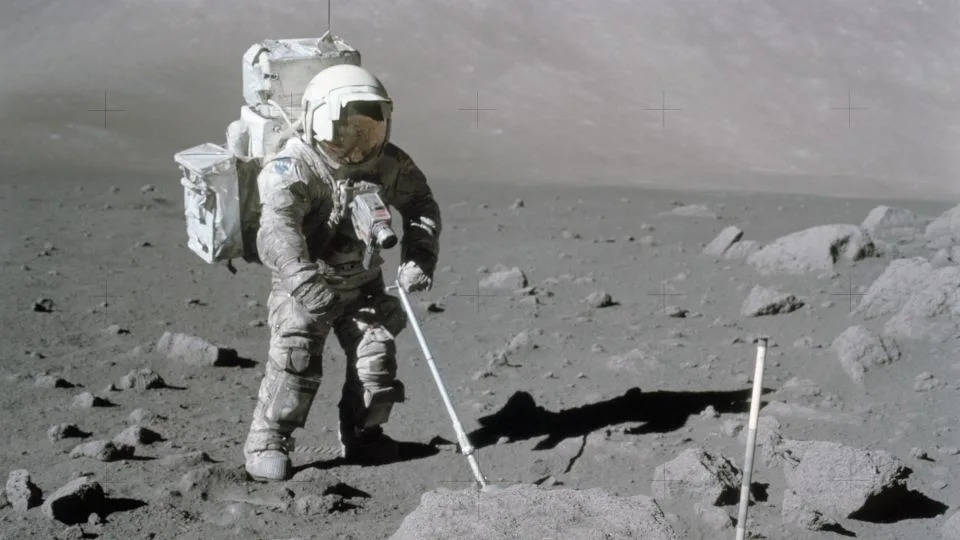
Apollo 17 lunar module pilot Harrison Schmitt collected lunar samples on the moon in 1972. - NASA
The team published their results in Nature Communications Earth & Environment, comparing two modeled scenarios: an ancient Earth with a strong solar wind and no magnetic field, and a modern Earth with a weaker solar wind but a strong magnetosphere. The simulations indicate the modern, magnetized Earth is more effective at transferring fragments of Earth’s atmosphere to the Moon—especially during times when the Moon passes through Earth's magnetotail.
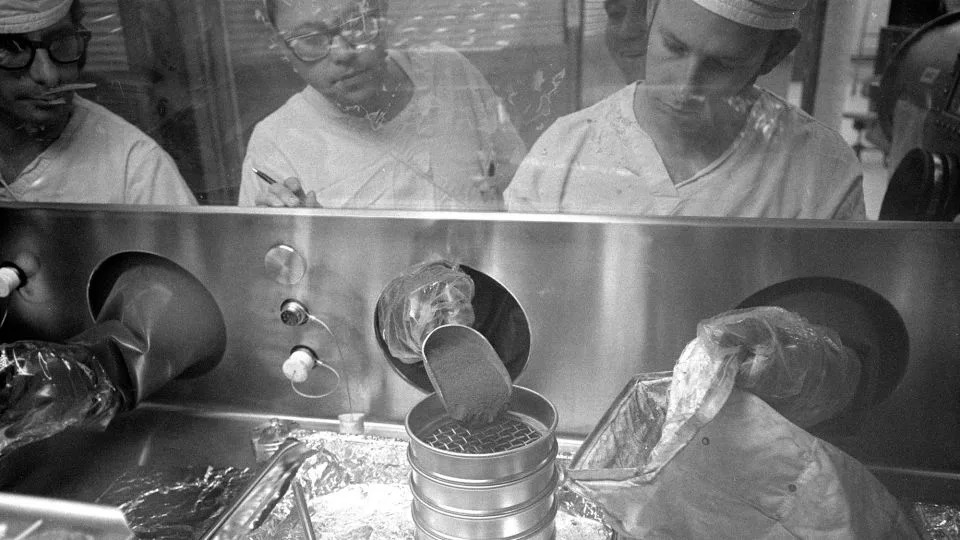
Apollo 14 lunar samples were analyzed at a quarantine facility in 1971. - NASA
How the Transfer Works
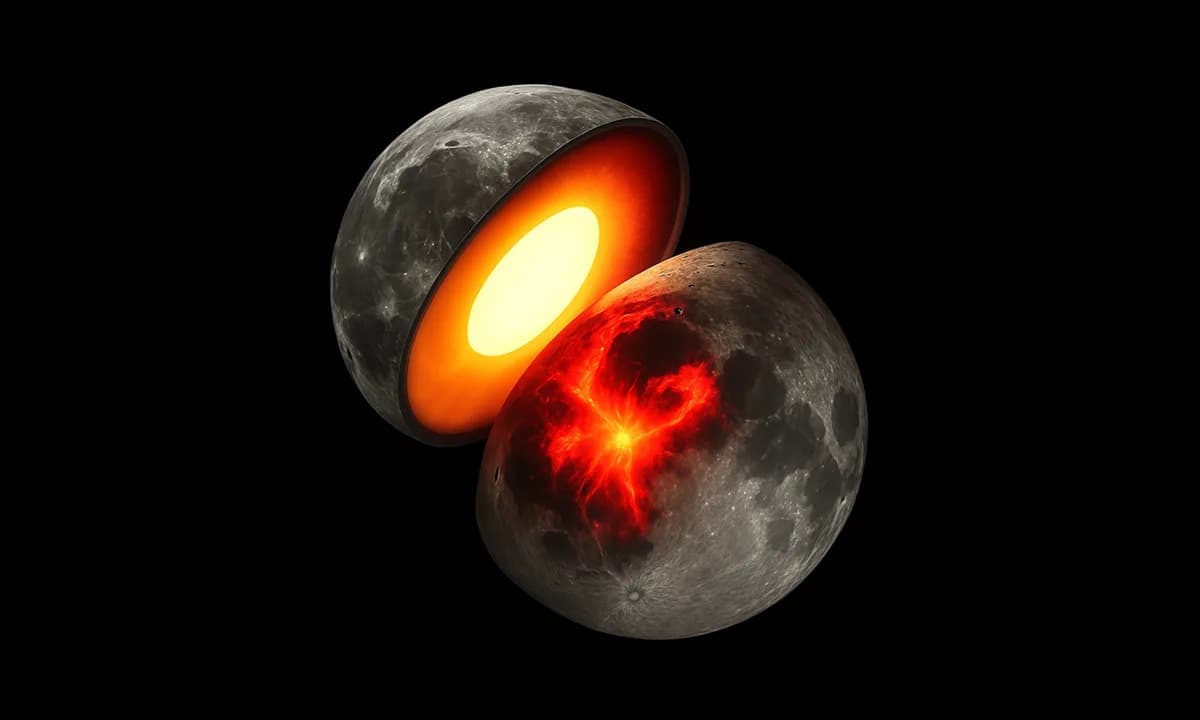
Earth's magnetic field—generated by currents in the molten iron–nickel outer core—forms a magnetosphere that deflects the solar wind. But the magnetosphere also reshapes the atmosphere and opens pathways. According to coauthor Eric Blackman of the University of Rochester, magnetic pressure inflates the upper atmosphere, giving the solar wind greater access to atmospheric particles. When the Moon moves through the magnetotail for several days each month (often near full moon), the field lines create a channel that allows blown atmosphere material to travel more directly to the lunar surface.
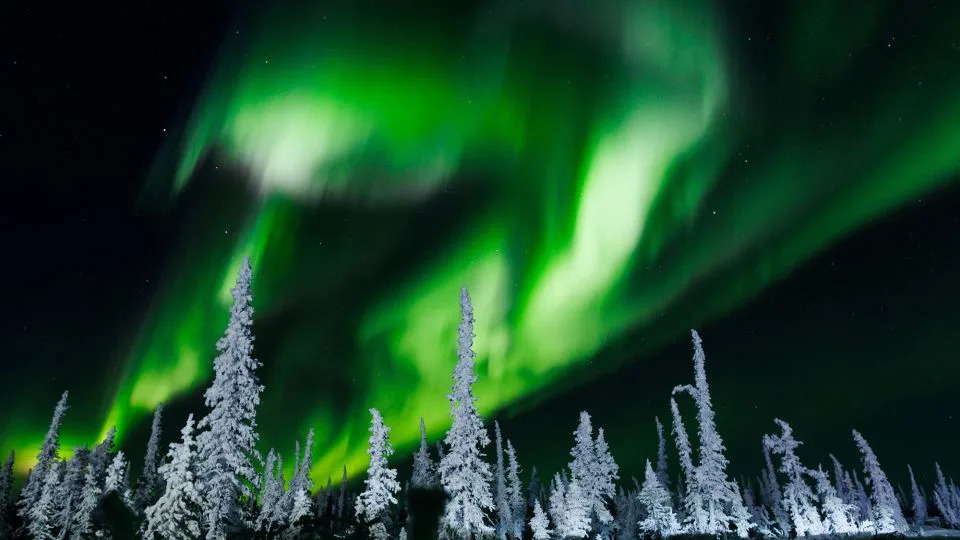
Northern lights — seen here north of Inuvik, in Canada's Northwest Territories — occur when energized particles from coronal mass ejections reach Earth’s magnetic field and interact with atmospheric gases. - Cole Burston/AFP/Getty Images
Evidence and Validation
The researchers validated their simulations against direct laboratory analyses of Apollo-era lunar samples. Shubhonkar Paramanick, lead author and graduate student at the University of Rochester, noted that the team compared modeled mixing ratios to chemical signatures found in soil returned by the Apollo 14 and 17 missions. The match supports the idea that some oxygen, nitrogen, hydrogen, helium and carbon-bearing molecules in lunar soil originated from Earth as well as from the Sun.
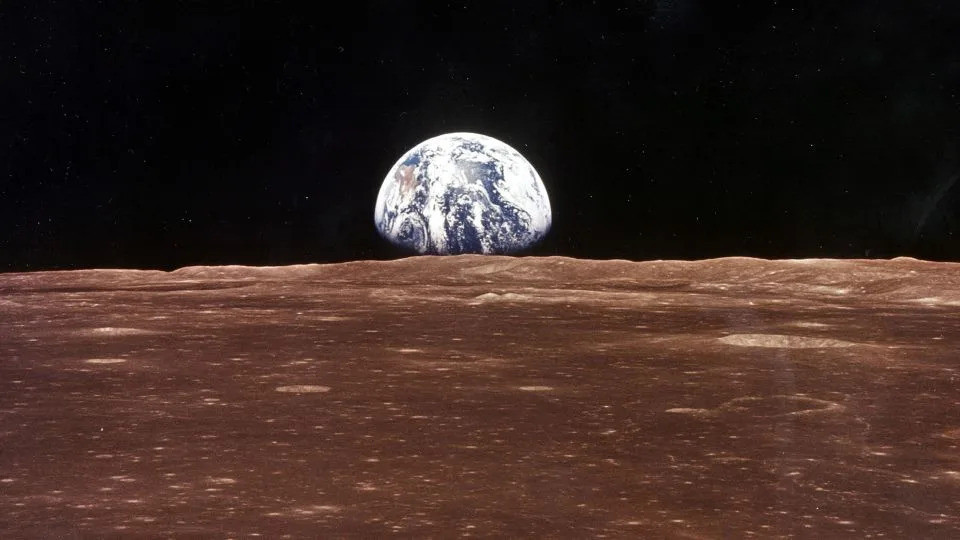
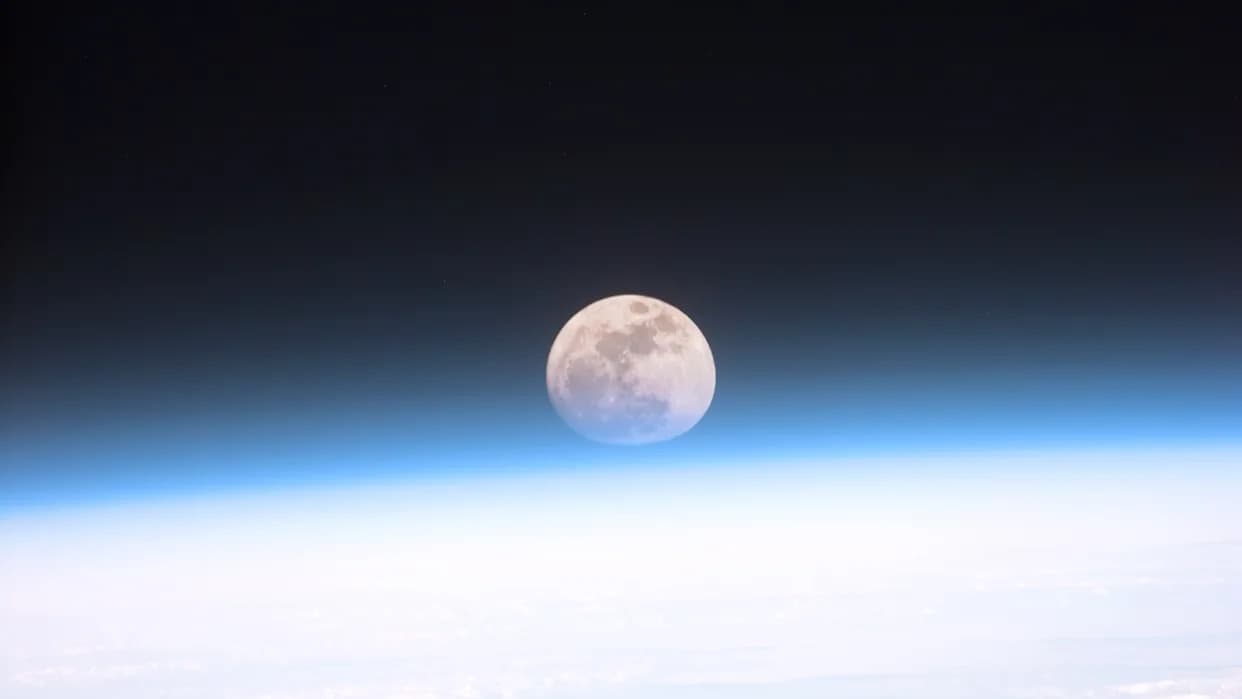
A view of Earth over the Lunar horizon, captured by Apollo 11. - NASA/Hulton Archive/Getty Images
“This means that the Earth has been supplying volatile gases like oxygen and nitrogen to the lunar soil over all this time,” said Blackman.
Why This Matters
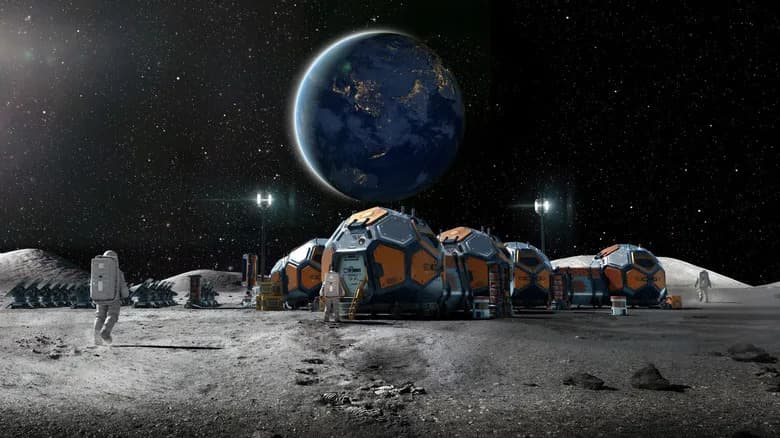
Volatile elements implanted in lunar regolith are scientifically valuable and practically important. They could preserve a chemical record of Earth's ancient atmosphere—information tied to planetary evolution and the history of life. Practically, oxygen, hydrogen and nitrogen in lunar soil may be processed to support future exploration: extracting water and fuel components or using ammonia-based fuels that leverage nitrogen deposited by the solar wind.
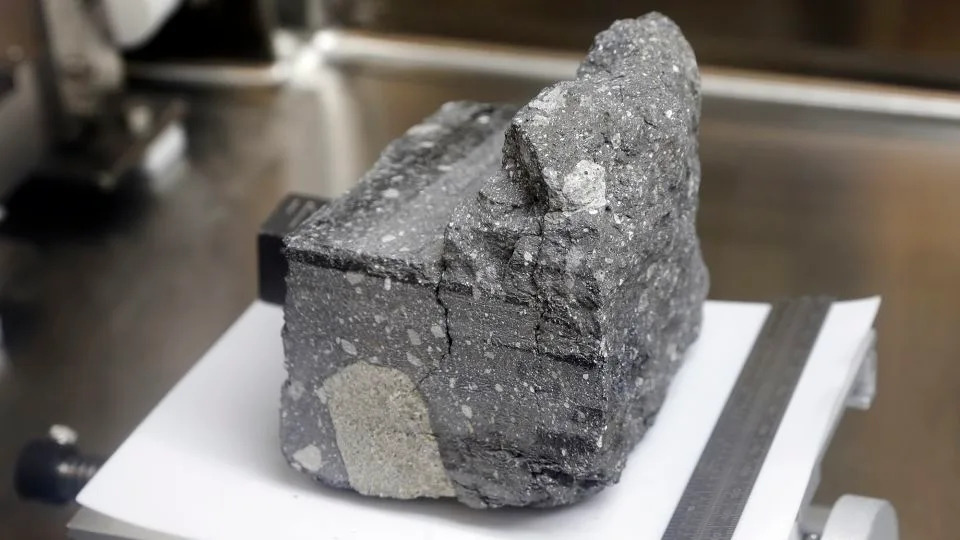
A regolith breccia rock, 3.2 billion years old was collected by Apollo 15. - Michael Wyke/AP
Independent researchers welcomed the findings. Kentaro Terada (Osaka University), whose 2017 work showed oxygen transported to the Moon, said the new paper provides helpful theoretical corroboration. Simeon Barber (Open University) highlighted that recent sample returns—China’s Chang’e-5 (2020) and Chang’e-6 (2024)—offer fresh opportunities to test these predictions and refine our understanding of Earth–Moon chemical exchange.
Overall, the study reframes the magnetosphere: not only a shield, but also a conduit for subtle, long-term material exchange between Earth and its nearest neighbor. That exchange may leave clues to Earth’s atmospheric past while also contributing to resources future lunar missions could exploit.
Help us improve.