Researchers analyzed fluid and gas inclusions in 1.4‑billion‑year‑old halite crystals to reconstruct Mesoproterozoic atmospheric chemistry. The study reports an unusually elevated oxygen signal (~3.7% by volume) alongside CO2 roughly ten times modern levels, implying warm surface temperatures near 88°F despite a fainter Sun. Authors caution the signal may reflect a transient or local oxygenation—possibly linked to expanding red algae—leaving open why animals appeared much later. These direct snapshots refine our understanding of Earth’s deep past and guide astrobiological searches.
A Billion-Year-Old Breath: Ancient Air Trapped Inside 1.4-Billion-Year-Old Salt Reveals Surprising Oxygen Spike
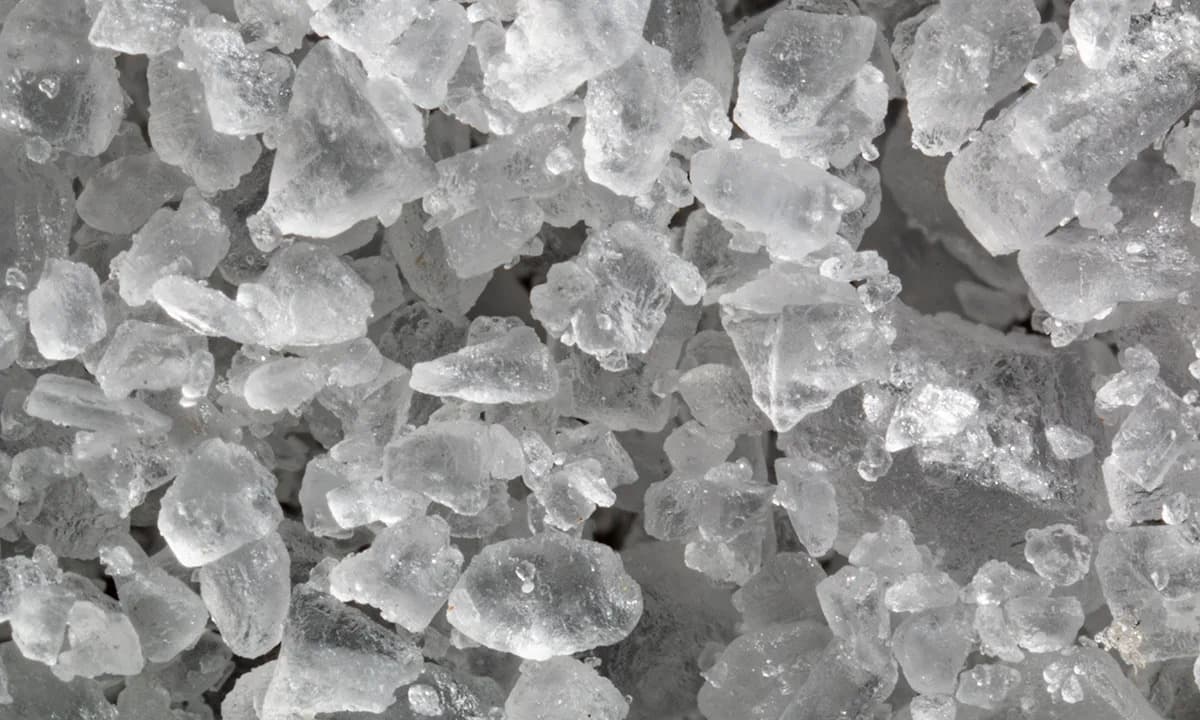
Lead image: Kuttelvaserova Stuchelova / Shutterstock
Researchers have extracted and analyzed microscopic pockets of fluid and gas trapped inside 1.4‑billion‑year‑old halite (rock salt) crystals to reconstruct a snapshot of Earth's atmosphere during the Mesoproterozoic—an interval often called the “Boring Billion.” The work, led by teams at Rensselaer Polytechnic Institute (RPI) and Lakehead University and published in PNAS, provides rare direct evidence of atmospheric chemistry from deep time.
Halite crystals form with tiny inclusions of seawater and air that become sealed as the salt precipitates. By cracking open those microscopic time capsules and measuring their chemical composition, the authors were able to infer atmospheric and surface conditions when the salt formed roughly 1.4 billion years ago.
What they found:
The measurements indicate unusually elevated oxygen for the Mesoproterozoic, with an estimated oxygen concentration near ~3.7% by volume—higher than many previous estimates for this era and described by the authors as unusually elevated. Carbon dioxide concentrations appear to have been roughly ten times modern levels (on the order of a few thousand ppm), which, combined with the fainter young Sun (about 70% of today’s output), would be consistent with a warm surface climate. The researchers estimate mean surface temperatures near ~88°F (about 31°C) for the conditions represented by these samples.
“It’s an incredible feeling, to crack open a sample of air that’s a billion years older than the dinosaurs,” said lead author Justin Park, a graduate student at RPI.
Why this matters—and what it doesn’t yet solve
On the face of it, oxygen levels and warm temperatures might seem compatible with animal life. Yet animals do not appear in the fossil record until roughly 600 million years ago. The study’s authors and other experts stress that the new data could record a transient or local oxygenation event rather than a sustained global rise in oxygen. Alternatively, increased oxygen may have been concentrated in shallow coastal waters or oxygen 'oases' created by expanding photosynthetic organisms.
Red algae are known to have diversified during the Mesoproterozoic and could plausibly have contributed to increased oxygen production. But other factors—nutrient availability, ecological complexity, evolutionary timing and genetic innovations—also likely constrained when animals evolved.
Broader implications
Halite microinclusions provide one of the few direct lines of evidence for ancient atmospheric chemistry, and snapshots like this refine our picture of Earth’s environment through deep time. They also inform astrobiology by clarifying which atmospheric signatures might indicate habitable or life-bearing conditions on other worlds.
Bottom line: The halite time capsules reveal a surprising, possibly transient oxygen-rich interval 1.4 billion years ago, alongside high CO2 and warm estimated temperatures—resulting in new clues and new questions about the path from microbial Earth to animal-dominated ecosystems.
Help us improve.