Laboratory simulations that reproduced Mars-like low-pressure, dusty conditions show that electrostatic discharges from moving dust can break apart gases and chlorine-bearing molecules to form reactive compounds, including perchlorates. The reaction products displayed a consistent depletion of heavy isotopes for chlorine, oxygen, and carbon. The results support a new model in which dust-driven electrochemistry helps explain unusually light chlorine isotope values measured by Curiosity and suggests electrically driven chemistry may shape other planetary surfaces.
Tiny Sparks, Big Changes: How Dust-Driven Electricity Rewrites Mars’ Chemical Fingerprints
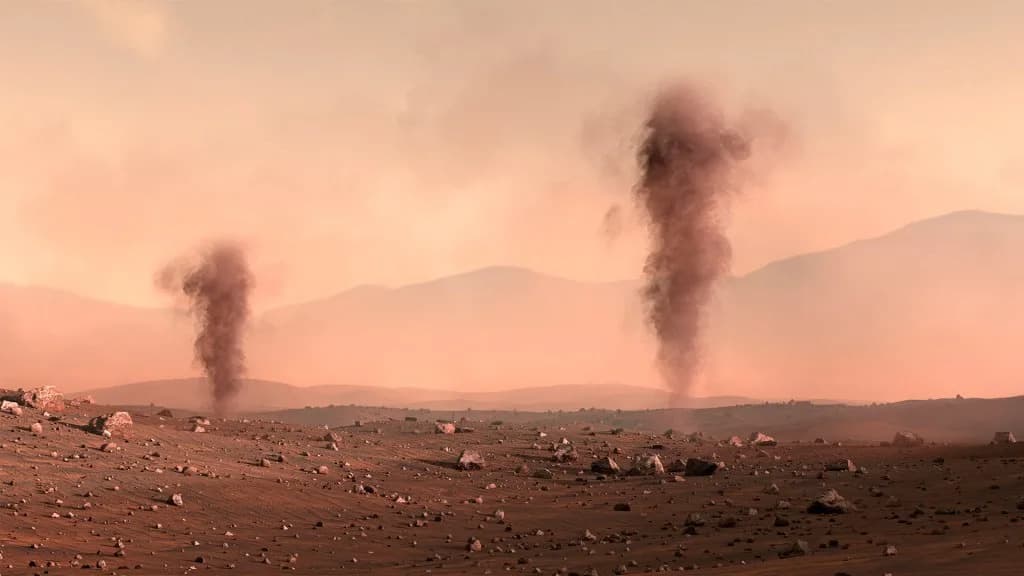
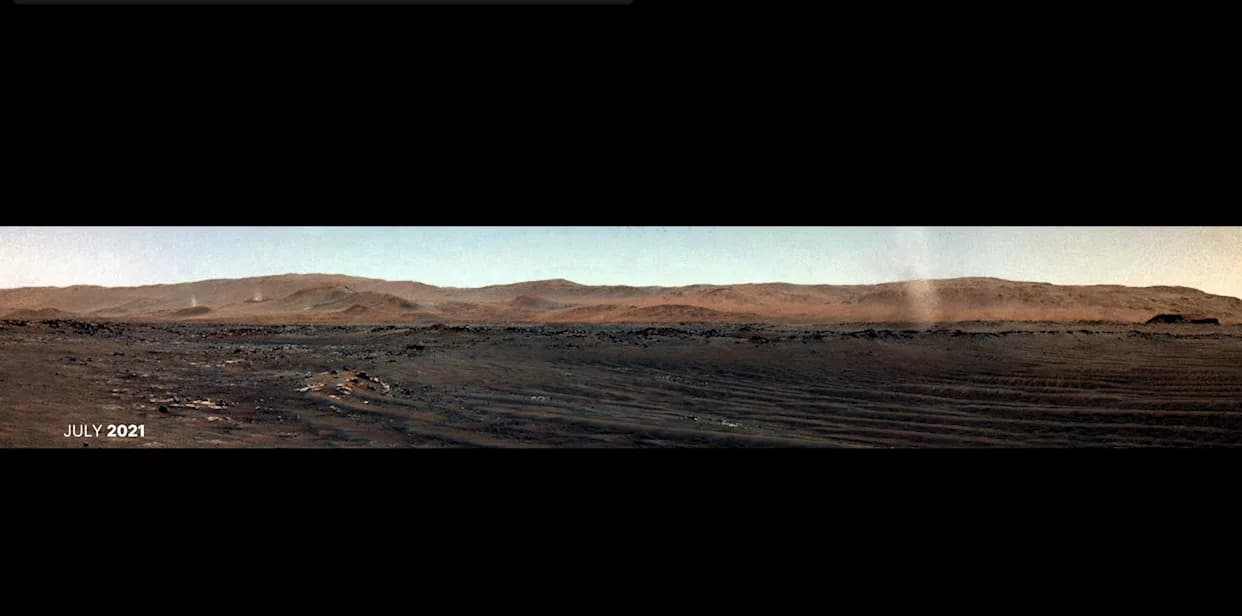
Mars may look quiet from afar, but up close it is anything but still. Beneath its thin atmosphere, dust storms roar, dust devils twist across plains, and fine sand grains constantly rub together. That persistent motion effectively turns the Red Planet into a vast natural generator of electricity.
A new laboratory study shows that those electrostatic discharges do more than briefly flash the Martian sky — they actively alter surface and atmospheric chemistry, producing reactive compounds and shifting isotopic fingerprints.
How the Experiments Worked
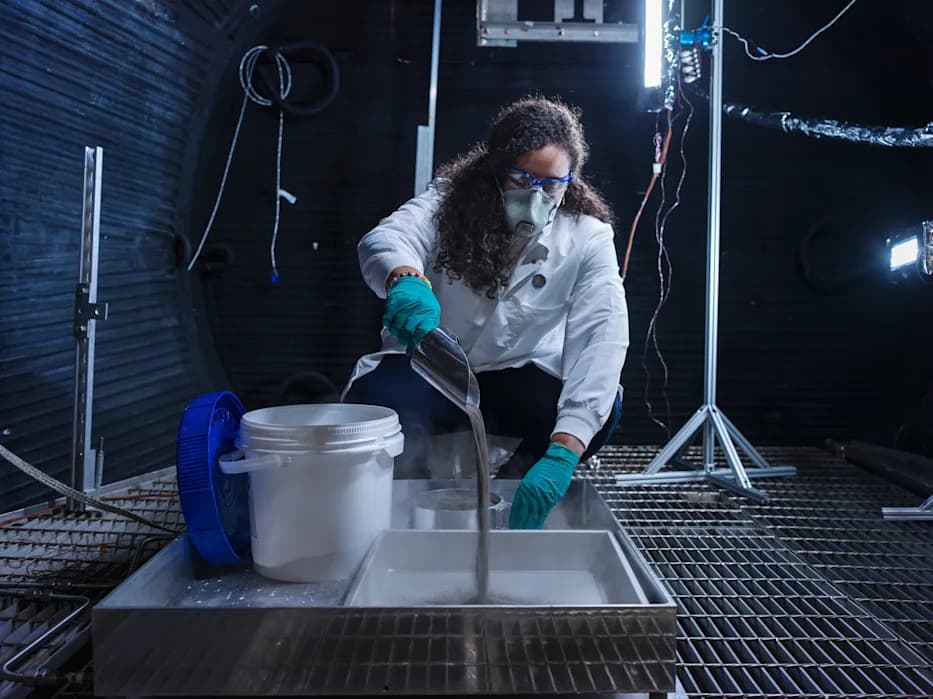
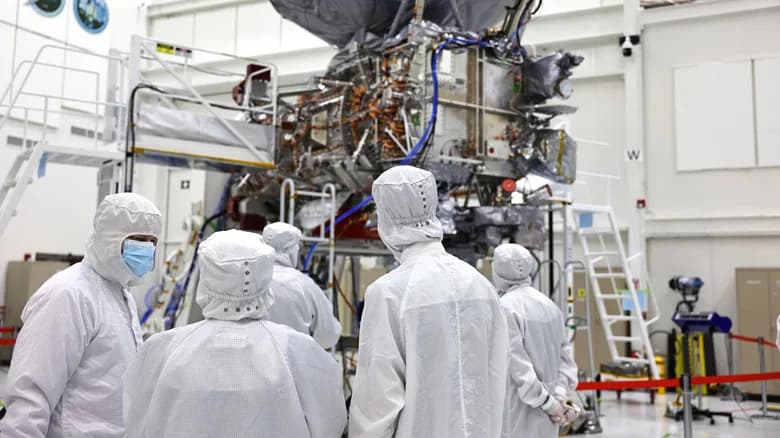
With NASA support, researchers built two dedicated simulation chambers, PEACh and SCHILGAR, that reproduce Mars' low-pressure, dry atmosphere and dusty surface. Inside these chambers, teams agitated fine dust grains to mimic the friction that occurs in real Martian dust storms and dust devils.
Friction charges the grains and can generate small electrostatic discharges, similar to faint lightning. Those discharges break apart gases and chlorine-bearing molecules, producing fragments that recombine into new chemical species.
Key Findings
The captured reaction products included volatile chlorine gases, activated oxides, airborne carbonates, and perchlorates — the very classes of compounds detected by orbiters and rovers on Mars. Crucially, measurements showed a consistent depletion of heavy isotopes for chlorine, oxygen, and carbon in the products.
Kun Wang, a planetary scientist at Washington University (not involved in the study), called this "the first experimental study to look at how electrostatic discharges can affect isotopes in a Martian environment."
Because isotopes are trace components, shifts of the observed magnitude imply a dominant fractionation process. The team therefore argues that dust-driven electrochemistry is the clearest explanation yet for Mars’ unusual isotopic signals.
New Model and Broader Implications
Combining laboratory results with previous experiments, the researchers developed a global model for Mars’ modern chlorine cycle. In this model, reactive species produced by dust-triggered electrical discharges fall back to the surface, mix into the regolith, and can percolate deeper over time, gradually reshaping mineralogy.
Over billions of years in Mars’ dry Amazonian epoch, this mechanism can account for the very light chlorine isotope values measured by NASA’s Curiosity rover — reported as low as 51 parts per thousand. While the experiments did not fully reproduce the most extreme rover measurements, they move isotopic signatures clearly in the observed direction.
Alian Wang, a co-author and planetary scientist at Washington University, described the heavy-isotope depletion across three mobile elements as a "smoking-gun" for the importance of dust-induced electrochemistry on modern Mars.
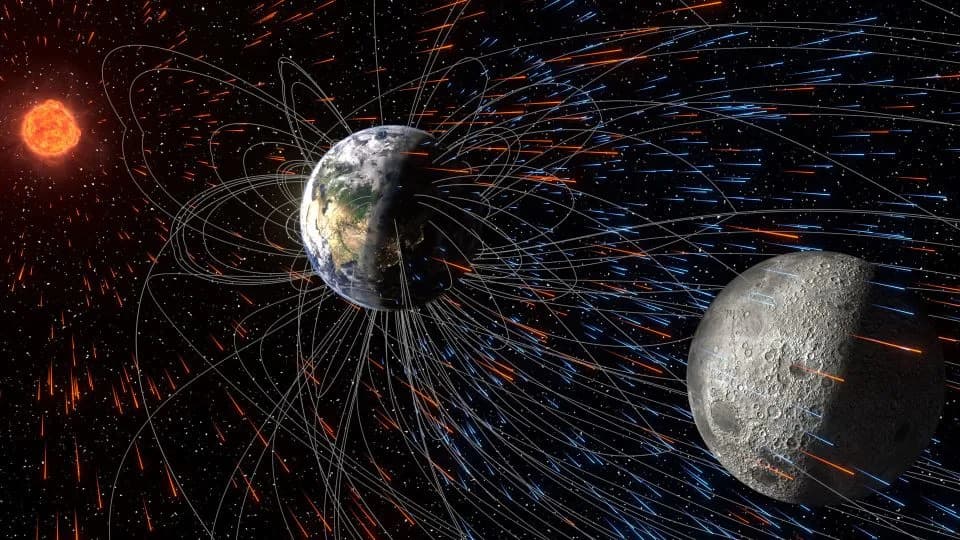
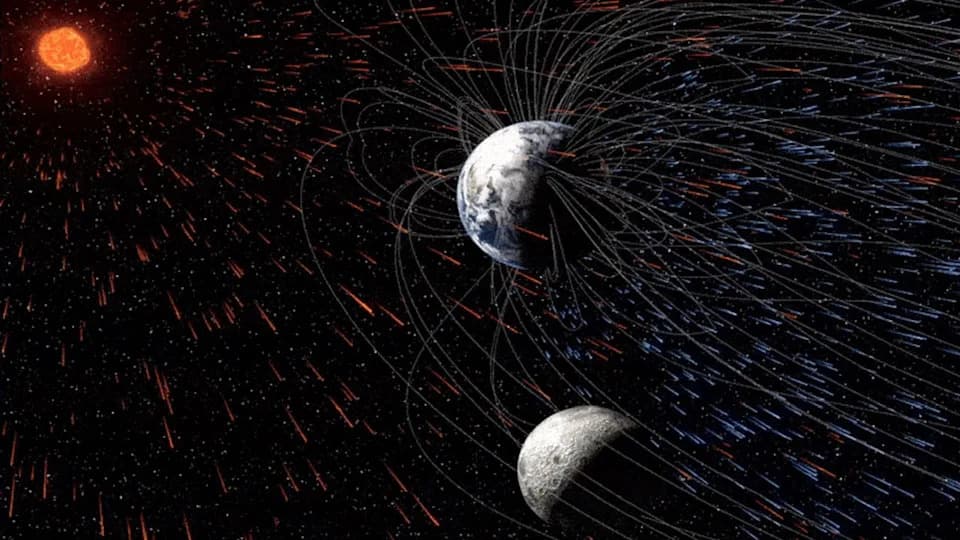
The study also suggests that similar electrically driven chemistry could operate on other worlds — during lightning on Venus, via energetic electrons at the Moon, or across bodies in the outer Solar System — making dust- and electricity-driven reactions a potentially widespread planetary process.
Next Steps
The researchers plan to refine their apparatus and explore additional conditions that might yield even stronger isotopic fractionation, helping to close the gap between laboratory results and rover measurements.
Publication: The study appears in Earth and Planetary Science Letters.
Help us improve.