
SYFY’s 2025 science roundup highlights major discoveries: asteroid 2024 YR4 was initially given a 1-in-62 Earth-impact estimate that later proved unfounded (a lunar strike remains possible); ALMA revealed thin, violent gas filaments near the Milky Way’s central black hole dubbed "space tornadoes"; Colossal Biosciences announced drexisting dire wolves and red wolves using ancient DNA and gene editing; Perseverance found minerals (vivianite, greigite) in Cheyava Falls that could be consistent with ancient microbes; and Hubble continues to operate after 35+ years.
SYFY’s Best Science of 2025: Space Tornadoes, Martian Microbes, Dire Wolves and More

SYFY’s 2025 Best of Science: Space Tornadoes, Martian Microbes & More
The close of 2025 invites a look back at the year’s most striking scientific advances — from near-Earth asteroid scares to possible signs of ancient life on Mars and ambitious genetic restoration projects. Researchers worldwide pushed technical and conceptual boundaries, producing discoveries that reshaped our sense of the near and far universe.
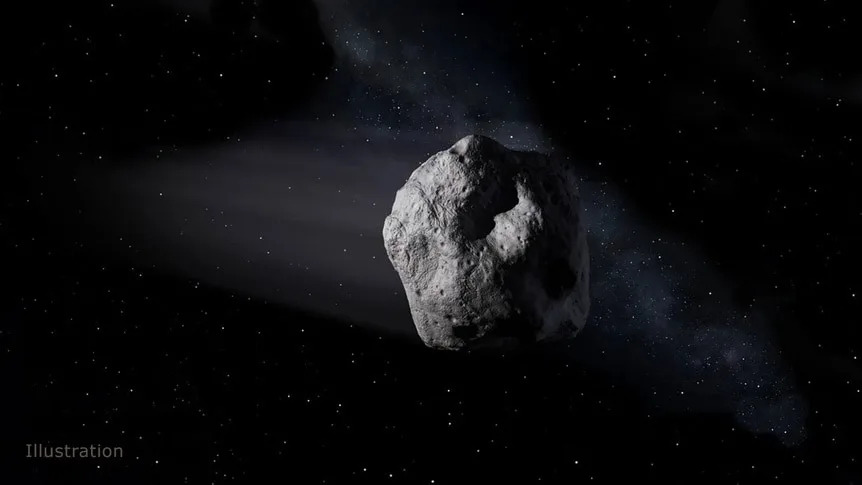
Asteroid
Asteroid Near-Miss: 2024 YR4
A rocky visitor first spotted at the end of 2024, 2024 YR4 briefly drew alarm when early orbit calculations suggested a 1-in-62 chance of Earth impact in 2032. Those initial odds reflected limited observations and large positional uncertainties. With follow-up tracking, astronomers dramatically refined the orbit and ruled out an Earth impact. Models still allow a small possibility of a future lunar collision when the asteroid returns to the inner Solar System.
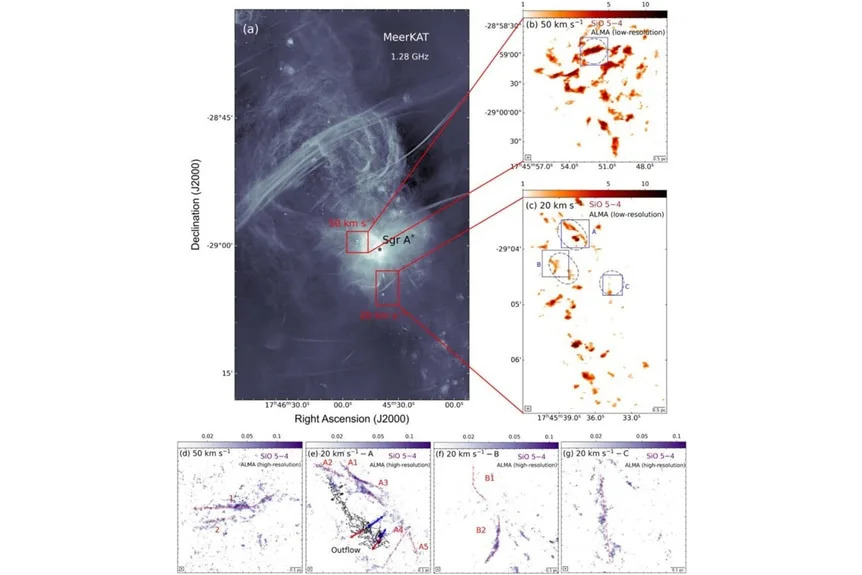
A diagram analyzing space tornadoes.
Space Tornadoes at the Galactic Center
Using ALMA’s high-resolution millimeter and submillimeter arrays, teams uncovered narrow, rapidly evolving filaments of gas near the Milky Way’s central supermassive black hole. Researchers liken these features to "space tornadoes": violent, short-lived streams that redistribute material across the galactic center and may influence how gas and dust cycle through active regions.
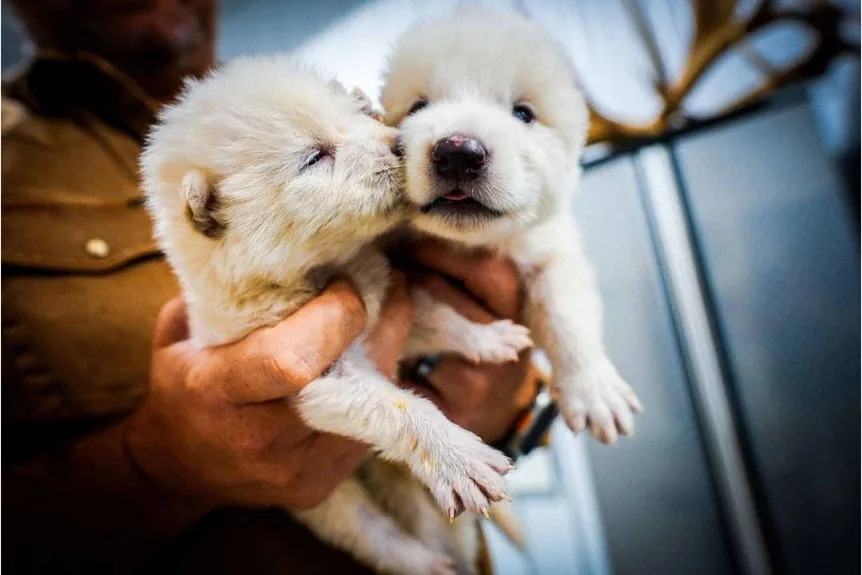
Dire wolf pups held in someone's hands.
"Our research contributes to the fascinating Galactic Center landscape by uncovering these slim filaments as an important part of material circulation," said corresponding author Xing Lu. "We can envision these as space tornados: they are violent streams of gas, they dissipate shortly, and they distribute materials into the environment efficiently."
De-Extinction: Colossal’s Dire Wolves and Conservation Goals
Colossal Biosciences announced in April that it had produced animals described as dire wolves by editing modern gray-wolf genomes to express genes identified in ancient dire wolf DNA from a 13,000-year-old tooth and a 73,000-year-old skull. The company reports three animals live on a private preserve. Alongside this announcement, Colossal also reported creating rescue-line red wolves, highlighting the potential conservation applications of gene-editing tools to restore genetic diversity in endangered species.
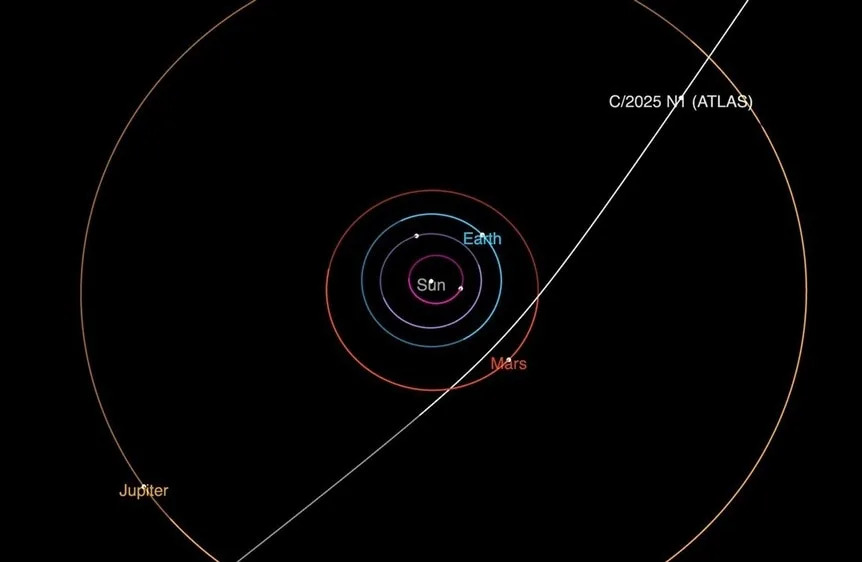
Orbit of Comet 31/ATLAS
Interstellar Visitor: 3I/Atlas
Astronomers confirmed a third interstellar object, labeled 3I/Atlas, discovered by the ATLAS survey. As with prior interstellar visitors ('Oumuamua and Comet Borisov), 3I/Atlas inspired speculation about exotic origins. However, continued observations over months show motion and behavior consistent with an interstellar asteroid rather than an engineered probe.
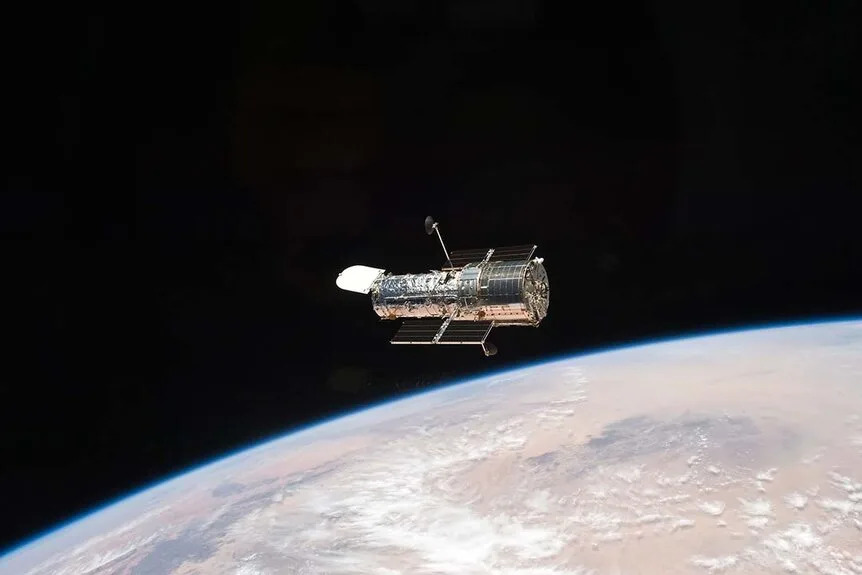
Hubble Space Telescope
Hubble’s Longevity
The Hubble Space Telescope, launched on April 24, 1990, continues to return valuable data more than 35 years after launch. Though operating with reduced redundancy (currently running on a single gyro), Hubble still delivers high-quality images and spectroscopy that complement both ground-based observatories and newer space telescopes.
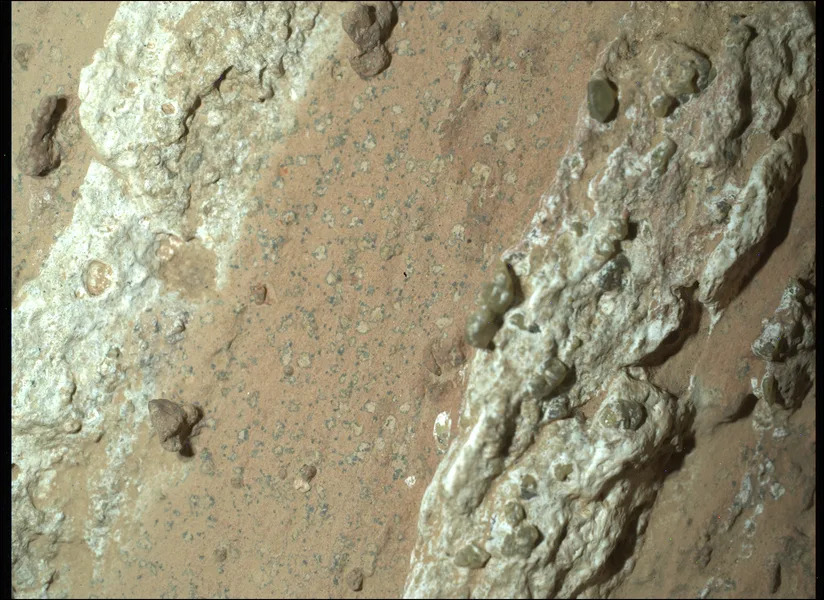
1 PIA26368 Perseverance Finds A Rock With Leopard Spots
Signs of Ancient Life? Perseverance and Cheyava Falls
NASA’s Perseverance rover drilled into a rock dubbed Cheyava Falls at Jezero Crater and found mineral signatures that intrigued astrobiologists. Onboard instruments PIXL and SHERLOC detected iron-bearing minerals vivianite and greigite. On Earth, vivianite forms in wet, organic-rich environments and greigite can be a byproduct of microbial processes. These findings make Cheyava Falls a compelling specimen for potential biosignatures, though definitive proof will require return of samples to Earth for exhaustive laboratory analysis.
Why These Stories Matter
Whether refining impact risk assessments, revealing dynamic processes around our galaxy’s core, testing genetic tools that could aid conservation, or finding stronger evidence for ancient habitable conditions on Mars, the year’s discoveries emphasize the combination of careful observation, new instruments and bold experimentation driving modern science.
For more science reporting and analysis, check out related programming such as The End Is Nye, streaming on SYFY.


