Most of Iran's 90 million people remain cut off from the global internet more than a week after authorities imposed a nationwide blackout on the night of January 8 as protests swelled into mass demonstrations. A limited domestic intranet and some phone services have been restored, but SMS texting and full internet access remain restricted. HRANA reported 2,615 fatalities — a figure Tehran rejects — while the government blames foreign adversaries and has staged pro-government rallies and vowed tough judicial measures. Economic relief in the form of small electronic coupons has been introduced amid continued uncertainty and heavy security deployments.
Iran in Limbo: Nationwide Internet Blackout Deepens Unrest — What Comes Next?
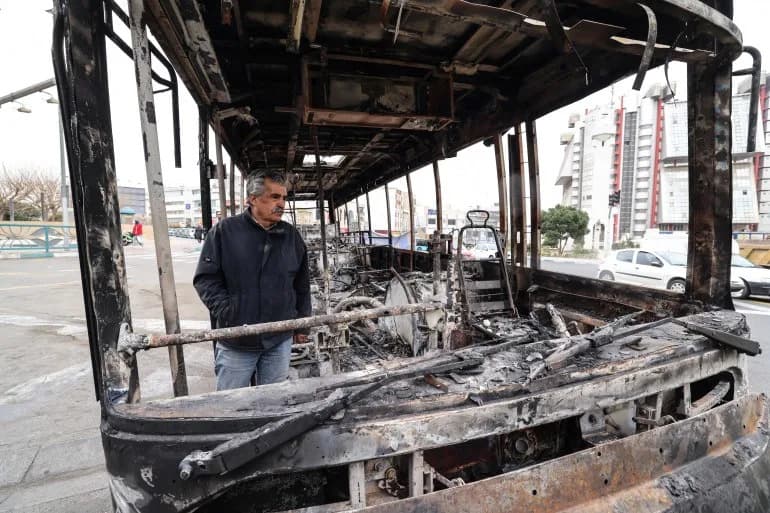
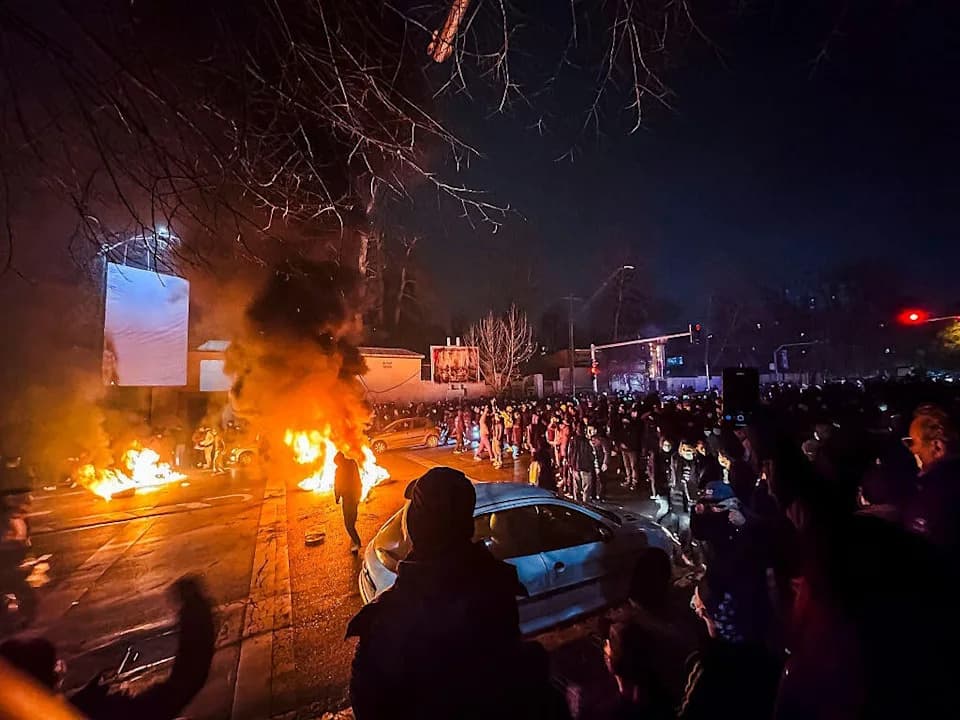
A man stands by the wreckage of a burned bus in Tehran’s Sadeghieh Square on January 15, 2026, following deadly protests across Iran, initially caused by economic grievances [Atta Kenare/AFP]
Tehran — Most of Iran's roughly 90 million people remain largely cut off from the global internet more than a week after authorities imposed an unprecedented nationwide communications blackout amid protests that began in December and quickly turned deadly.
Communications Cut Off
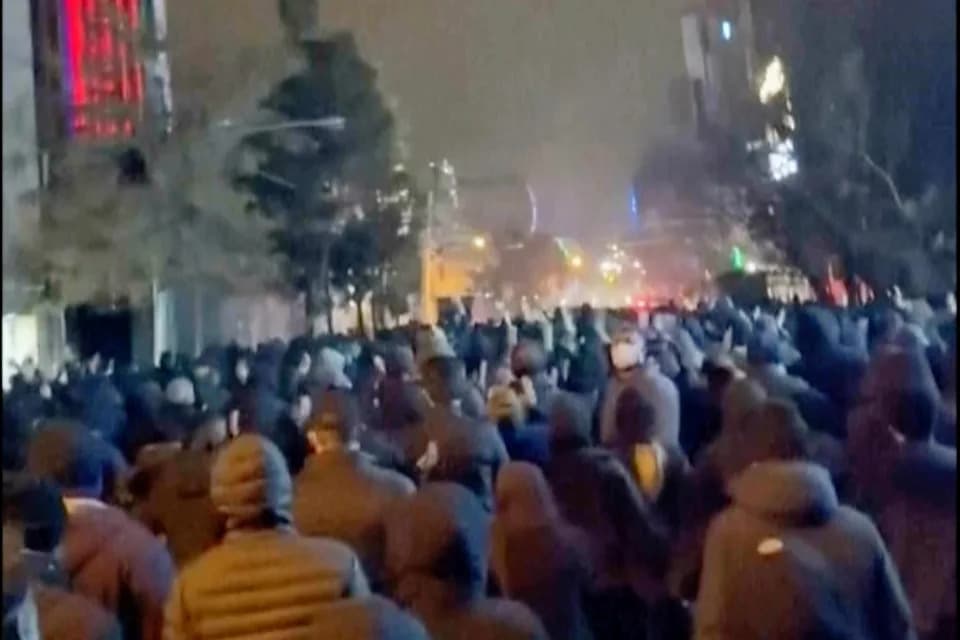
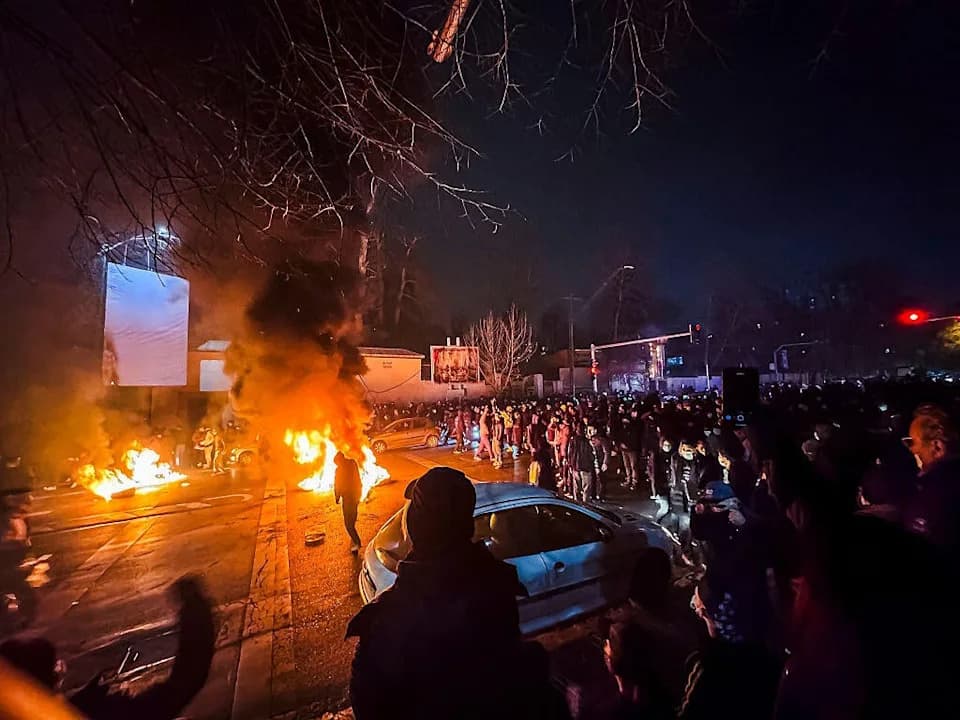
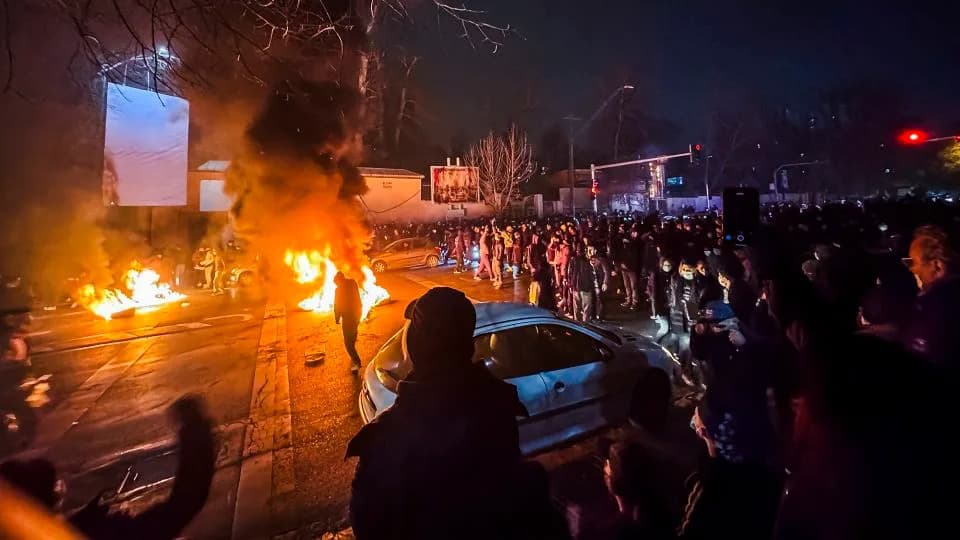
On the night of January 8, the government severed access to the global internet across all 31 provinces as demonstrations that began with shopkeepers closing businesses over rising prices swelled into mass protests aimed at the clerical leadership. Mobile networks were also shut down, leaving many unable to contact emergency services during the first critical hours.
In the days that followed, authorities partially restored a domestic intranet designed to provide access only to local websites and services. Local telephone lines returned in many areas, but SMS messaging remains widely blocked, and since Tuesday only outgoing international calls have been allowed. The state continues to send frequent one-way mass text messages urging citizens not to fall for what it calls the plots of "enemies" and to report suspicious activity.
Casualties and Conflicting Claims
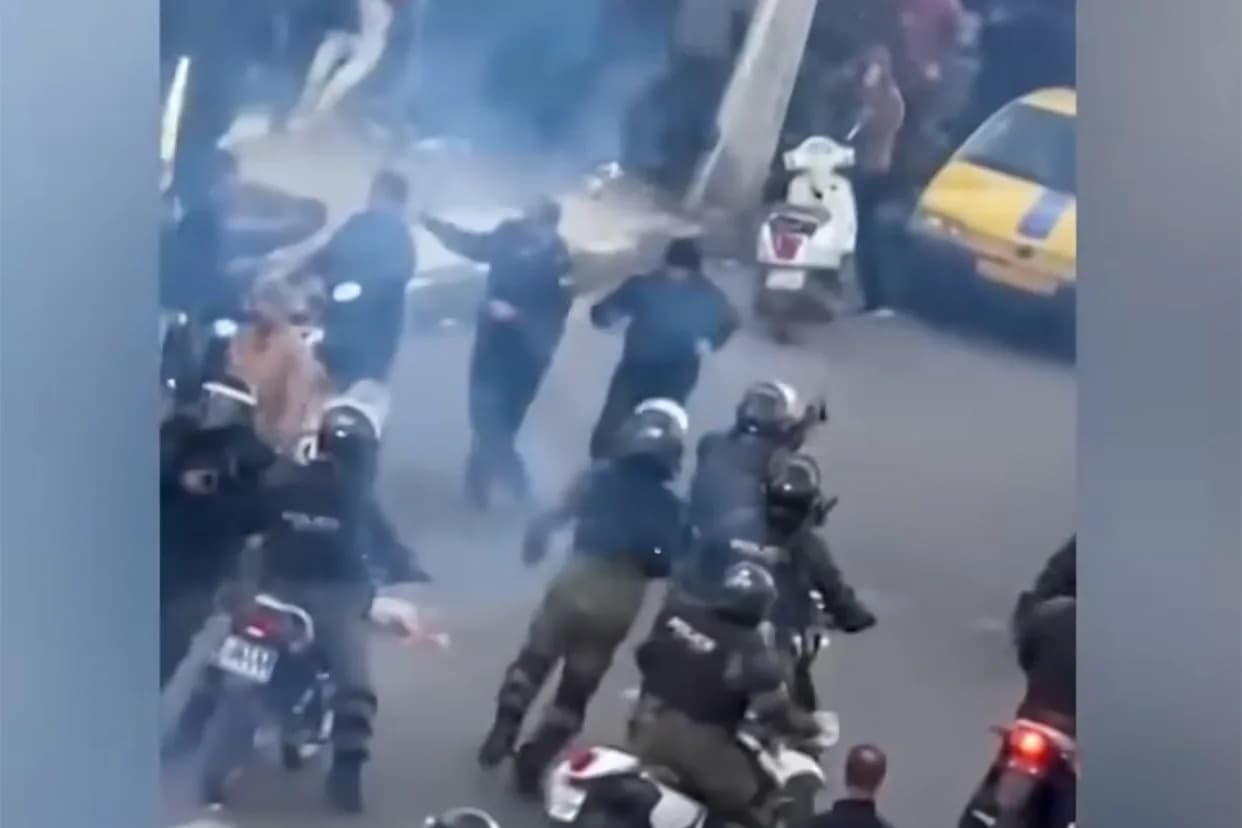
The government has not published an official death toll from clashes between protesters and security forces, which were most violent on the nights of January 8 and 9. The United States–based Human Rights Activists News Agency (HRANA) reported 2,615 fatalities on Wednesday, a figure Tehran has called exaggerated and politically motivated. Independent verification of casualty figures remains difficult because of the communications blackout; international outlets including Al Jazeera say they cannot confirm the numbers.
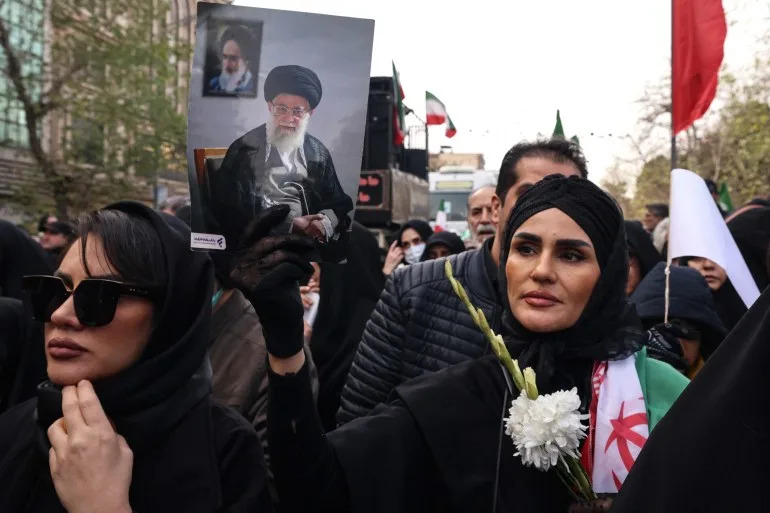
An Iranian woman holds a portrait of Iran’s Supreme Leader Ayatollah Ali Khamenei during a funeral of security forces personnel killed in recent protests in Tehran, on January 14, 2026 [Atta Kenare/AFP]
“I certainly deny the numbers and figures they have said. It is an exaggeration, it is a misinformation campaign,” Iran's Minister of Foreign Affairs Abbas Araghchi said in a televised interview, accusing opponents of inflating figures to justify aggression against Iran.
Iranian officials have acknowledged that protesters, including children, women and unarmed civilians, have died but insist that much of the violence was carried out by what they call "terrorists" and foreign-backed "elements" trained and armed by the United States, Israel and their allies. Conversely, authorities have also claimed security personnel were killed, with some unverified assertions that some were burned or beheaded.
Government Response and Domestic Measures
In recent days the government has organised large pro-government rallies and public funerals for security personnel in several cities, while state television has branded participants as "the real people of Iran." Supreme Leader Ayatollah Ali Khamenei said such demonstrations had thwarted a foreign plot. The judiciary has set up special courts prioritising protest-related cases; Chief Justice Gholam-Hossein Mohseni-Ejei vowed "no mercy" for those he labelled rioters.
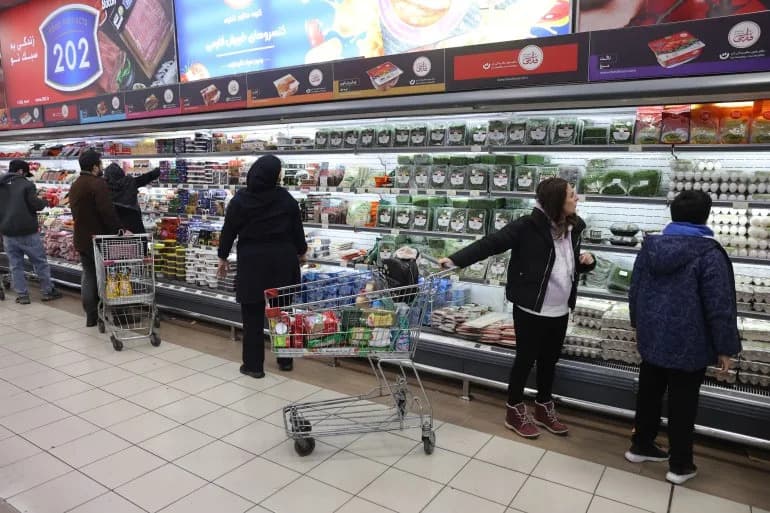
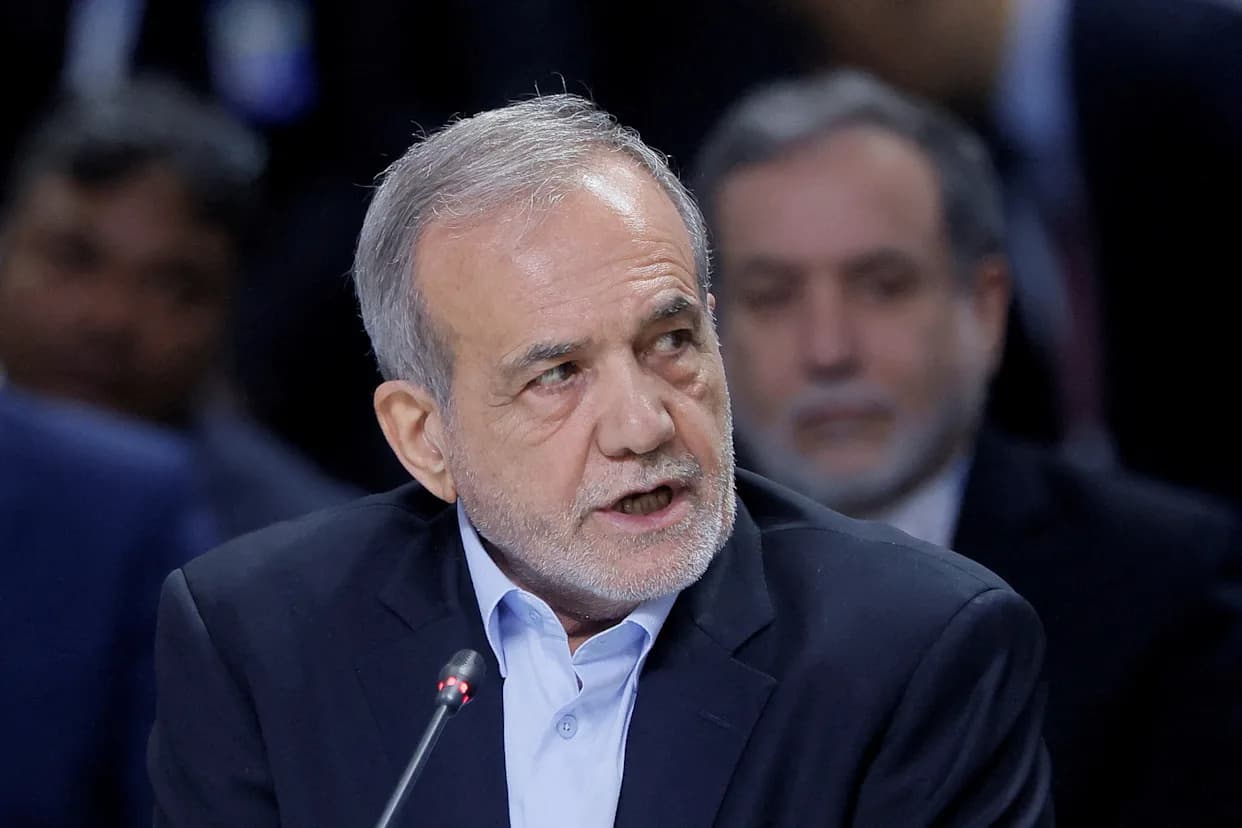
President Masoud Pezeshkian gave his first televised interview since the unrest began, focusing on condemning violent "terrorists" and outlining economic measures rather than addressing the ongoing digital blackout. The administration has started distributing electronic coupons—worth under $7 per person per month for four months—to buy subsidised essential goods as inflation continues to erode household purchasing power.
International Reaction and Risks
At an emergency United Nations Security Council meeting, Iranian officials blamed the United States and Israel for hijacking initially peaceful protests. The UN has urged restraint and warned against the use of violence on demonstrators, while international concern persists about the risk of broader confrontation amid threats of military action from abroad.
Outlook
Streets in Tehran and other cities have been comparatively quiet since the deadliest nights, but heavy security deployments, checkpoints and armed patrols suggest a tense, uncertain near-term future. With communications restricted, independent reporting is constrained and the true scope of casualties and arrests remains unclear. Analysts say the protests reflect long-standing grievances over corruption, economic hardship, a depreciating currency and social restrictions — grievances that, combined with a disruptive digital blackout, leave Iran in an unstable limbo.
Help us improve.