Hubble images of interstellar object 3I/ATLAS show a strong sunward "anti-tail" and three small, symmetric jets that have drawn attention. Harvard astronomer Avi Loeb suggested the geometry could reflect localized ice pockets on a rotating nucleus or, more controversially, a technological origin. Most astronomers favor a natural comet explanation, and Breakthrough Listen’s Green Bank observations found no radio signals. Continued observations are urged because only three interstellar objects have been identified so far.
Hubble Sees Symmetric Jets on Interstellar Visitor 3I/ATLAS — Natural Comet or Something Else?
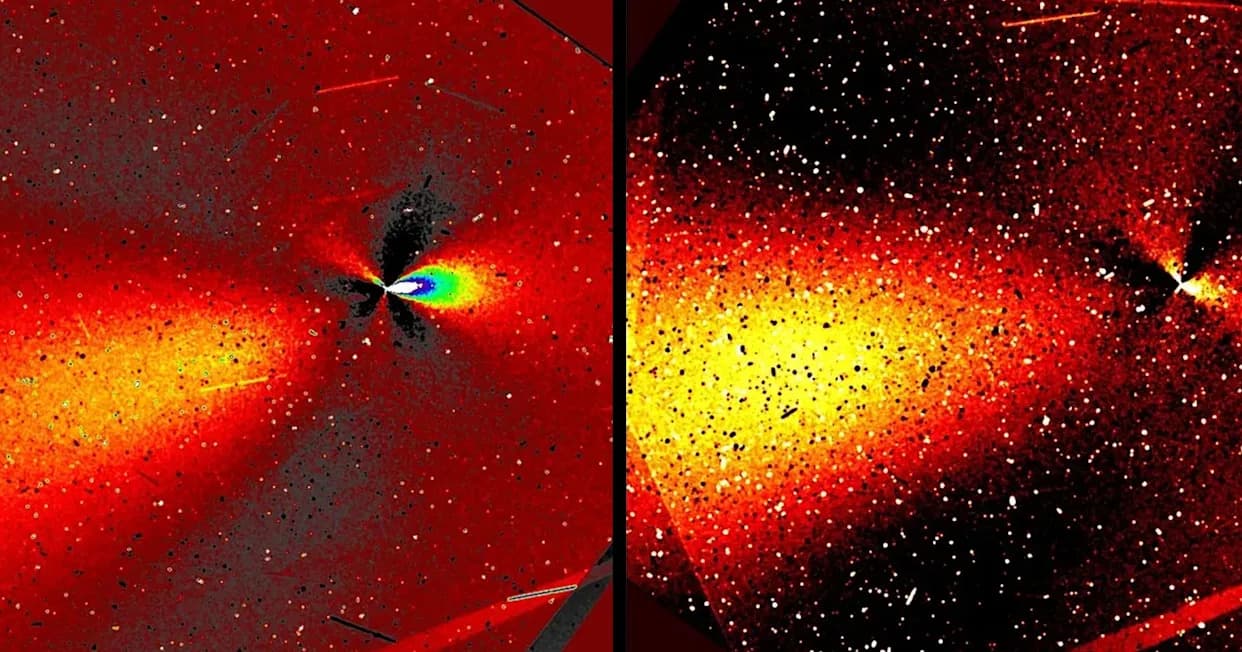
Three symmetrical jets jutting out of interstellar object 3I/ATLAS are showing up in Hubble observations, puzzling astronomer Avi Loeb.
The interstellar visitor 3I/ATLAS, which made its closest approach to Earth on December 19 and is now receding from the solar system, continues to draw attention after new Hubble Space Telescope images revealed an unusual jet pattern.
Images taken in November and December and highlighted by Harvard astronomer Avi Loeb show a dominant sunward-pointing "anti-tail" and three smaller, remarkably symmetric jets spaced around the object. The anti-tail is consistent with sunlight-driven loss of material from the sunlit side of the object, a behavior commonly seen in comets made of water and carbon-dioxide ices.
What the Jets Could Mean
Loeb has suggested that the three symmetric jets might arise from localized pockets of ice on a rotating nucleus, with jets activated as those areas are heated. He also emphasized the apparent geometric alignment between the jets' rotation axis and the Sun-facing anti-tail, arguing that such a configuration might be unlikely to occur by chance and asking whether it could indicate an artificial origin.
"Are the symmetric triple-jet inner structure or the unlikely alignment of the rotation axis with the direction of the Sun, technological signatures? Or can they be a natural outcome of gas dynamics?" — Avi Loeb
Scientific Response
Most researchers urge caution. Many scientists, including teams at NASA, point out that the bulk of observational evidence makes 3I/ATLAS look like a natural comet—featuring a coma, unelongated nucleus, and activity consistent with sublimating ices. The geometric coincidence noted by Loeb may be explainable by natural gas-dust dynamics, viewing geometry, or transient activity on the nucleus.
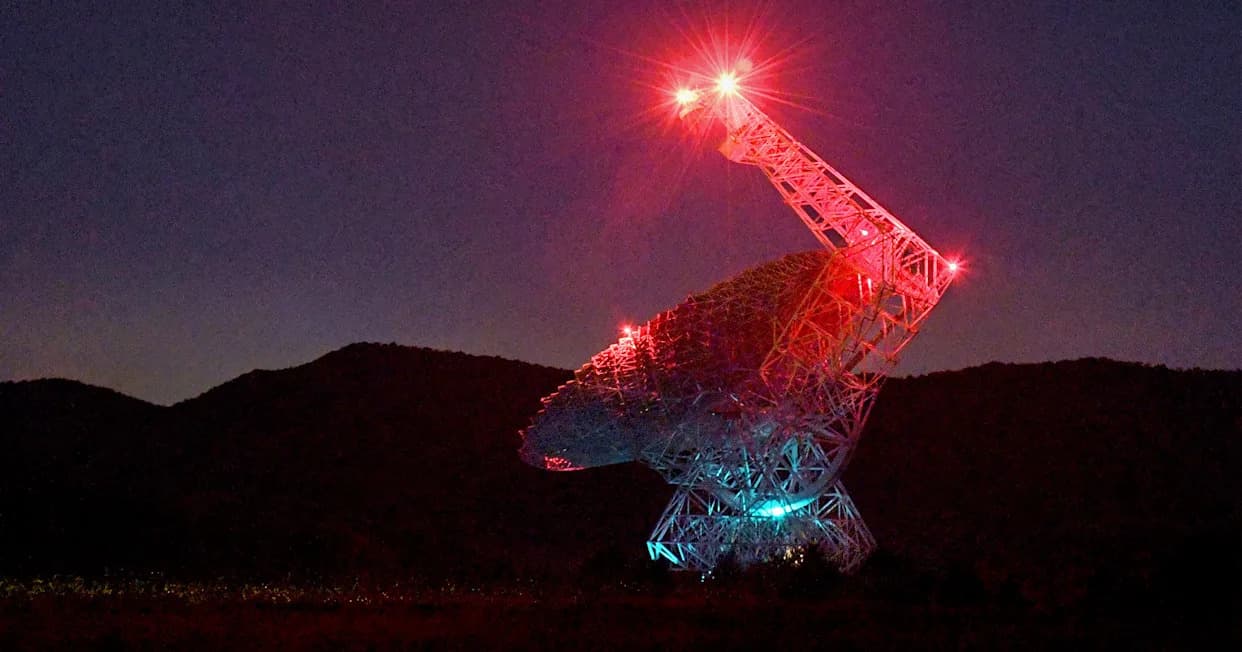
Adding to the evidence for a natural origin, an international team associated with the Breakthrough Listen project reported in a yet-to-be-peer-reviewed paper that the Green Bank Telescope found no candidate radio signals from 3I/ATLAS during its December 19 closest approach.
Context And Why It Matters
3I/ATLAS is the third confirmed interstellar object to be observed in our solar system, after 1I/’Oumuamua (2017) and 2I/Borisov (2019). Unlike ’Oumuamua’s unusual shape and motion, 3I/ATLAS shows mostly typical cometary behavior, which has reduced enthusiasm for artificial-origin scenarios among many astronomers. Nevertheless, because so few interstellar visitors have been observed, continued monitoring and careful analysis are considered important.
Future observations and detailed modeling of jet formation, nucleus rotation, and viewing geometry will help clarify whether the symmetric jets are a natural consequence of cometary physics or remain an unexplained anomaly.
Sources: Hubble Space Telescope images; Avi Loeb blog post; Breakthrough Listen / Green Bank Telescope report; statements from NASA and other researchers.
Help us improve.