
NASA’s Perseverance rover found traces of ancient redox chemistry in a Martian lakebed—an intriguing but ambiguous potential biosignature that could result from life or from geology. Historic cases such as Viking’s 1976 Labeled Release experiment and the 1996 Allan Hills 84001 meteorite show how difficult it is to separate biological signals from abiotic processes. Atmospheric findings on Venus and the exoplanet K2-18b have likewise provoked debate and follow-up studies. Definitive answers will require returning Perseverance’s samples to Earth and exhaustive efforts to rule out non-biological explanations.
Where NASA Is Searching for Alien Life — From Mars' Redox Clues to Alien Atmospheres

A composite view of Mars taken by the Viking I and II probes.NASA/USGS
In September, NASA announced a tantalizing discovery on Mars: the Perseverance rover detected traces of ancient redox chemistry in a dried lakebed. Redox reactions—chemical exchanges of electrons—can be produced by living organisms or by purely geological processes, so the finding raises the possibility of a biosignature while leaving the question far from settled.
Ambiguous clues like this are a persistent theme in the search for life beyond Earth. For decades scientists have encountered compounds, textures and atmospheric signals that could be biological or entirely abiotic. Distinguishing between those origins is the central challenge of astrobiology.
Why Biosignatures Are Hard To Define
The term "potential biosignature" is not fixed. Nonbiological chemistry can yield complex structures—crystals, polymers and mineral textures—that mimic biological fingerprints. As Sean McMahon, who leads the Planetary Paleobiology Group at the University of Edinburgh, puts it: "If you ask the question—how complicated can non-biological chemistry get?—the answer is biological chemistry, because biological chemistry comes from non-biological chemistry."
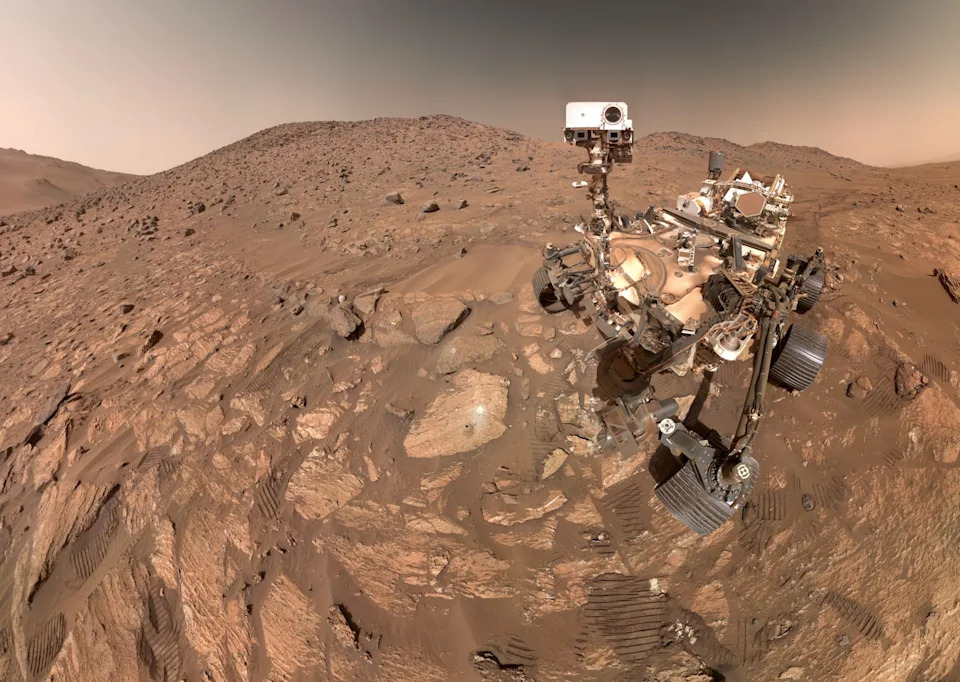
NASA's Perseverance Mars rover took this composite selfie in July 2024. To the left of the rover near the center of the image is the arrowhead-shaped rock nicknamed "Cheyava Falls," which has features that may bear on the question of whether Mars was home to microscopic life in the distant past.NASA/JPL-Caltech/MSSS
Frances Westall, emeritus research director at France's Center for Molecular Biophysics, recalls the long path to confirming 3.45-billion-year-old Australian microfossils. Her team’s work showed that some of Earth’s earliest life—chemolithotrophs—can be extremely subtle and hard to detect without the right instruments.
"I had to wait until there was a suitable instrument that could measure these small things and detect the very small amounts of carbon," Westall said. "It just took ages and ages, but finally, we managed to get the smoking gun results that we really wanted."
Lessons From Past Controversies
Several high-profile episodes illustrate how ambiguous evidence can spark debate. In 1976, NASA's Viking landers ran the Labeled Release experiment, which mixed Martian soil with water and nutrients to look for metabolic gases. The test initially produced the gases expected from microbial activity, but the result was inconsistent in repeat trials and later shown to be plausibly explained by nonbiological soil chemistry. Most scientists now regard the Viking results as inconclusive.
In 1996, researchers reported possible microfossils in the Allan Hills 84001 meteorite, prompting media headlines about "possible discovery of life on Mars." Subsequent work favored abiotic explanations for the structures, but the episode stimulated public interest and research investment in astrobiology.
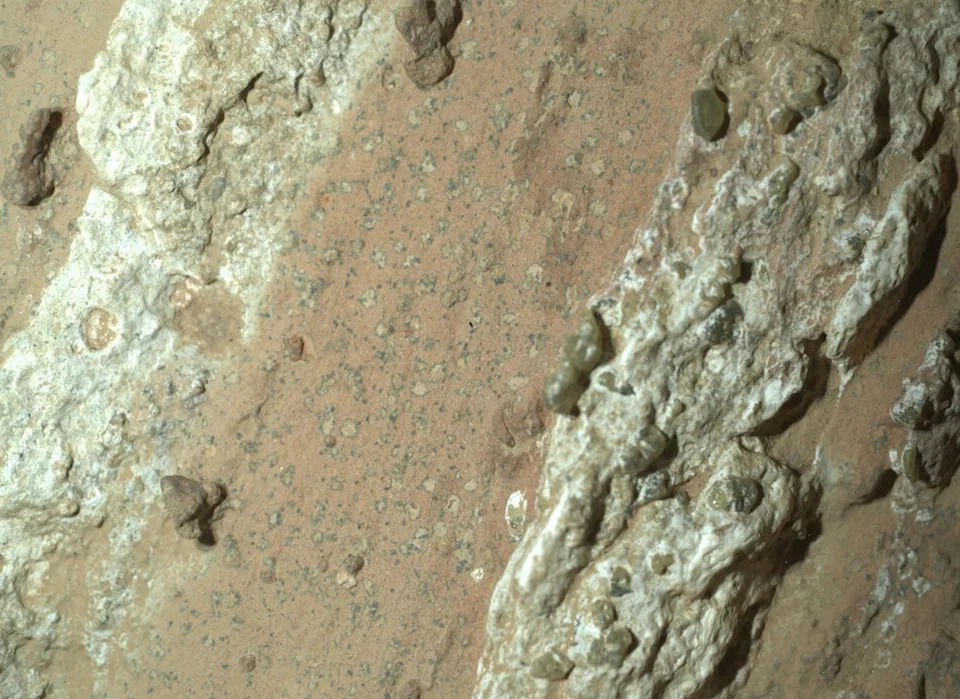
NASA's Perseverance Mars rover captured this image of a rock nicknamed "Cheyava Falls" in Mars' Jezero Crater in July 2024. Scientists are particularly interested in the irregularly shaped "leopard spots," which may indicate that billions of years ago, chemical reactions within this rock could have supported microbial life.NASA/JPL-Caltech/MSSS
Atmospheric Signals and Exoplanet Mysteries
Beyond surface samples, astronomers search planetary atmospheres for chemical imbalances that life might produce. In 2021, a team reported phosphine in Venus's atmosphere—an unexpected molecule because on Earth it is largely associated with biological processes. That result sparked vigorous debate and follow-up studies exploring abiotic sources.
Earlier this year, observers suggested a potential atmospheric biosignature on the exoplanet K2-18b, about 124 light years away. Both cases underline the same pattern: an unexplained observation, followed by painstaking work to enumerate non-biological alternatives.
Why Perseverance’s Findings Matter—And What Comes Next
Perseverance's detection of ancient redox reactions does not prove life, but it identifies a compelling target for deeper study. The definitive test will be laboratory analysis of returned samples. NASA plans a Mars Sample Return campaign to fetch material cached by Perseverance and bring it to Earth for the most sensitive instruments. That campaign would greatly increase our ability to rule out abiotic explanations—but it faces funding and technical challenges.
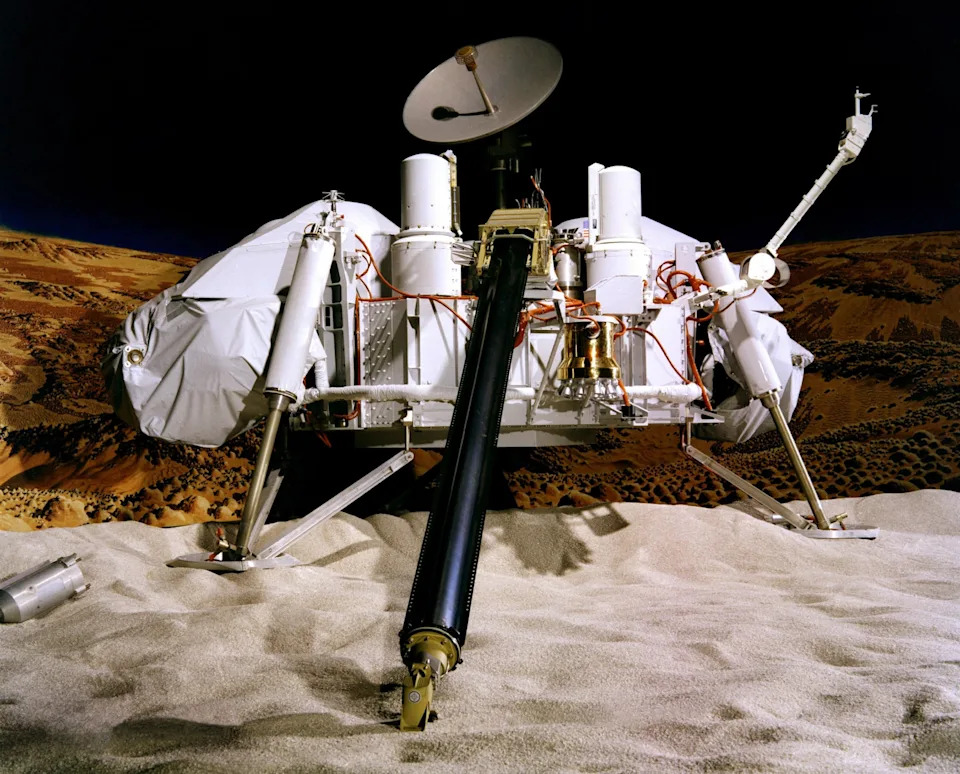
The NASA Viking Project found a place in history when it became the first U.S. mission to land a spacecraft successfully on the surface of Mars. Above, a model of the Viking landers is seen at NASA's Jet Propulsion Laboratory.NASA/JPL-Caltech/University of Arizona
Astrobiologists emphasize that proving extraterrestrial life will require exhaustive elimination of plausible non-biological processes, corroborating lines of evidence, and, in many cases, instruments or techniques we do not yet possess. The search is as much careful detective work as it is discovery-driven exploration.
"The way that we're going to find life begins with making an observation that we can't explain, and then the real work is figuring out all the possible explanations and doing the scientific detective work," McMahon says.
For now, Perseverance’s findings add a fresh, scientifically credible lead to a long list of intriguing—but ambiguous—clues. Whether those clues eventually point to life remains an open question, likely to be answered only with patience, new missions and rigorous lab work.
Author: Becky Ferreira is the author of First Contact: The Story of Our Obsession With Aliens.


