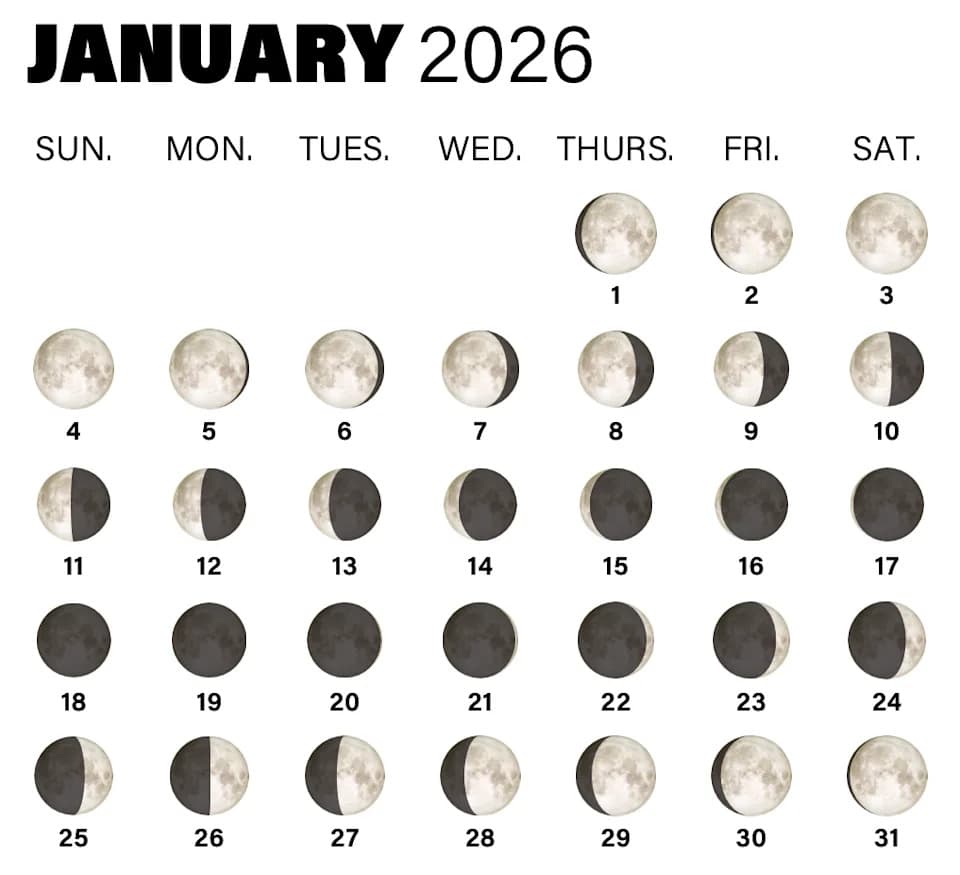
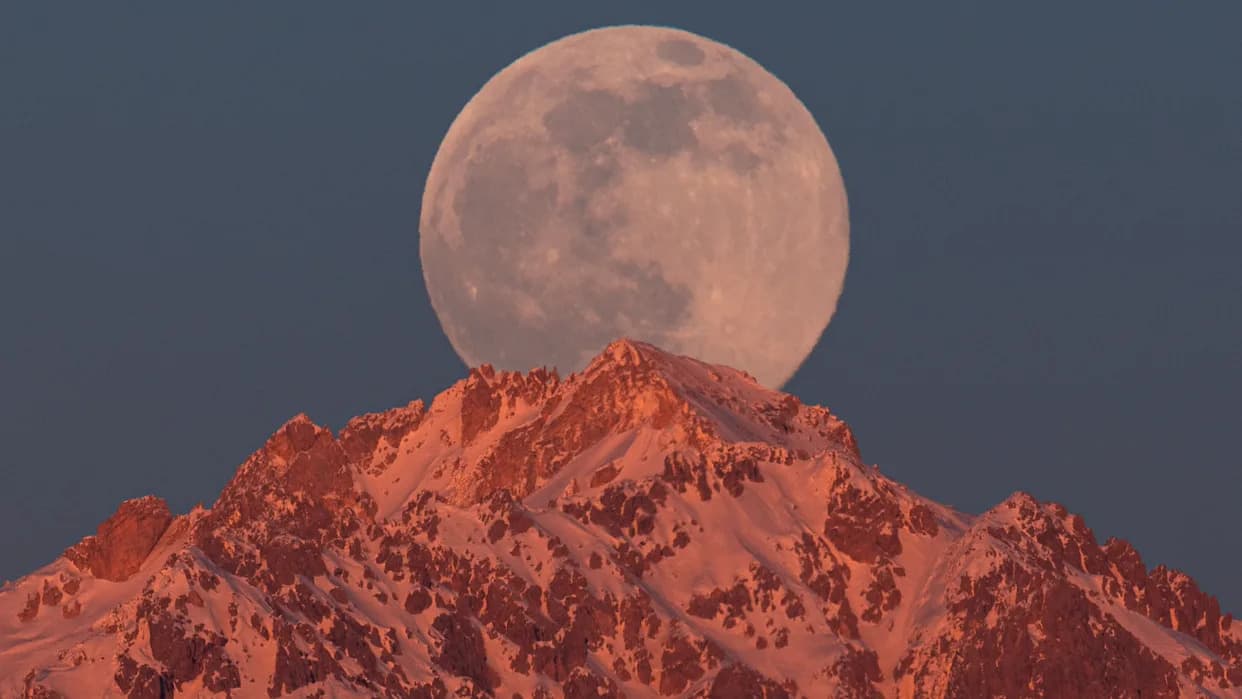
Look east around 8:30 p.m. local time on Jan. 5 to see the 87% illuminated waning gibbous Moon within about 10° of the bright star Regulus in Leo. Observers across parts of eastern Europe, Asia and the Pacific may witness a brief occultation — the Moon passing directly in front of Regulus — beginning at 10:19 a.m. EST (1519 GMT) on Jan. 6 for regions including Russia, China and Kazakhstan and ending at 1:27 p.m. EST (1837 GMT) near the Midway and Wake Islands. Check local timing and consider binoculars, a tripod, or a telescope for the best views.
Watch Tonight: Waning Gibbous Moon Passes Near — And May Occult — Bright Star Regulus
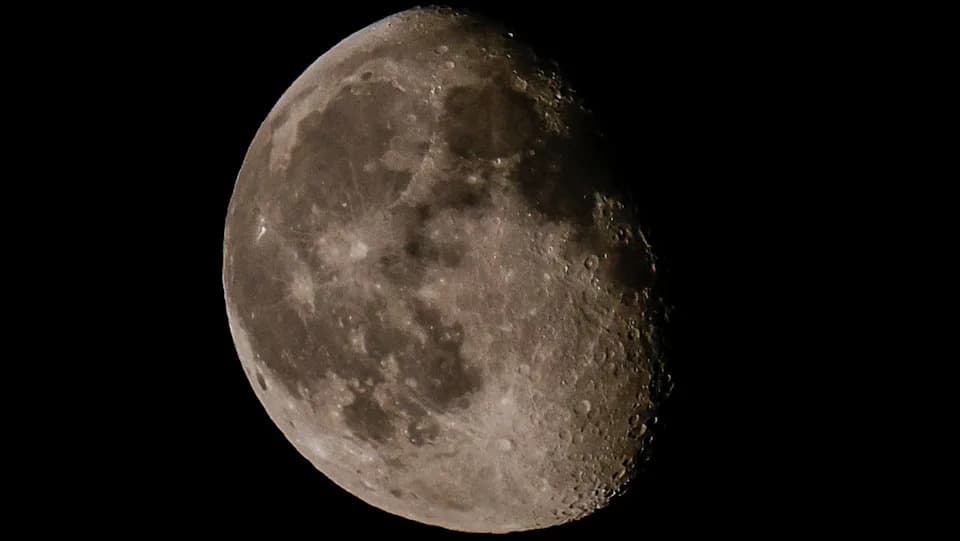
A waning gibbous moon brightens the night sky. | Credit: Photo by DAVID GANNON/AFP via Getty Images
The waning gibbous Moon will pass very close to the bright star Regulus on the night of Jan. 5–6. Observers in the right locations may even see the lunar disk move directly in front of the star in a brief occultation, temporarily blocking Regulus's light.
When and Where To Look
Look toward the eastern horizon at about 8:30 p.m. local time on Jan. 5 to spot the Moon, roughly 87% illuminated, lying less than 10° from Regulus in the constellation Leo — a separation about the width of an outstretched fist at arm's length. As the night progresses the Moon will appear to draw nearer to Regulus; by sunset on Jan. 6 the lunar disk will have moved to the lower-left of the star and will continue eastward into Virgo over the following days.
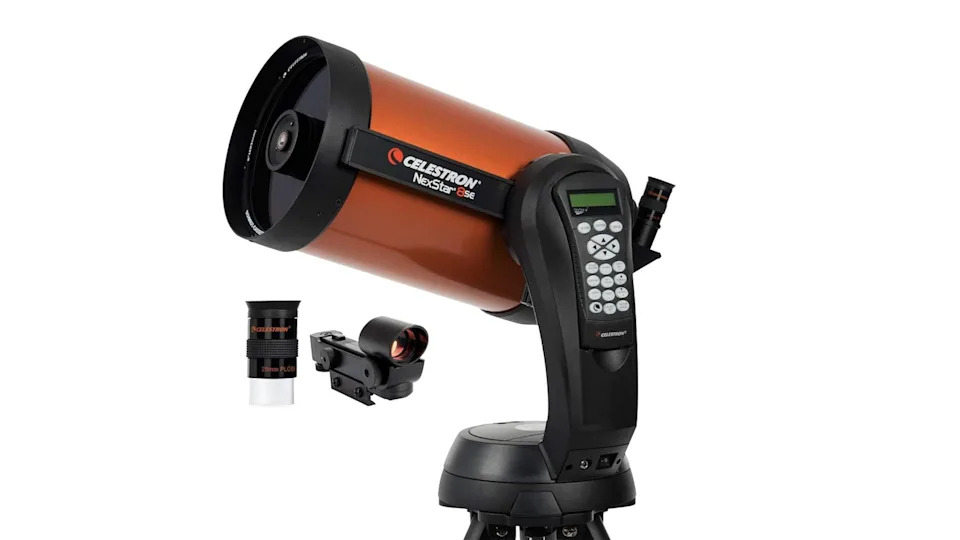
Celestron NexStar 8SE
Occultation — Who Can See It
Parts of eastern Europe, Asia and the central Pacific lie in the occultation path. According to the astronomy resource In-The-Sky, the event begins for viewers in regions of Russia, China and Kazakhstan at 10:19 a.m. EST (1519 GMT) on Jan. 6. The occultation then crosses the Pacific, with Japan and South Korea also in the path; the final visible sightings are near the Midway and Wake Islands, where the event ends at 1:27 p.m. EST (1837 GMT).
Why This Happens
Occultations of stars by the Moon occur when a star lies very near the ecliptic — the narrow band of sky along which the Sun, Moon and planets appear to travel. Regulus is positioned extremely close to the ecliptic, so the Moon's monthly path can carry it directly in front of the star for observers along the correct ground track.
Tips For Viewing And Photographing
- Naked Eye/Binoculars: The pairing is easy to find with the unaided eye or binoculars; the star will appear as a point of light near the bright lunar disk.
- Telescopes: A small telescope or spotting scope will show the star near the lunar limb; larger apertures will reveal the brief disappearance during an occultation if you are in the path.
- Photography: Use a stable tripod. Wide-field lenses (50–200mm equivalent) frame the Moon and Regulus together; longer focal lengths and video capture improve the chance of recording the actual occultation. Experiment with short exposures and higher ISO to balance lunar detail and the star’s point of light. Consider continuous video or rapid-sequence imaging for occultation timing.
- Check Local Predictions: Occultation times differ by location — always verify local start/stop times and visibility maps from reliable sources such as In-The-Sky or your local astronomy club.
Final Notes
This is a pleasant, accessible event for casual stargazers and photographers alike. If you capture an image of the Moon with Regulus, Space.com’s editors invite you to share photos, comments, and your name and location at spacephotos@space.com.
Help us improve.