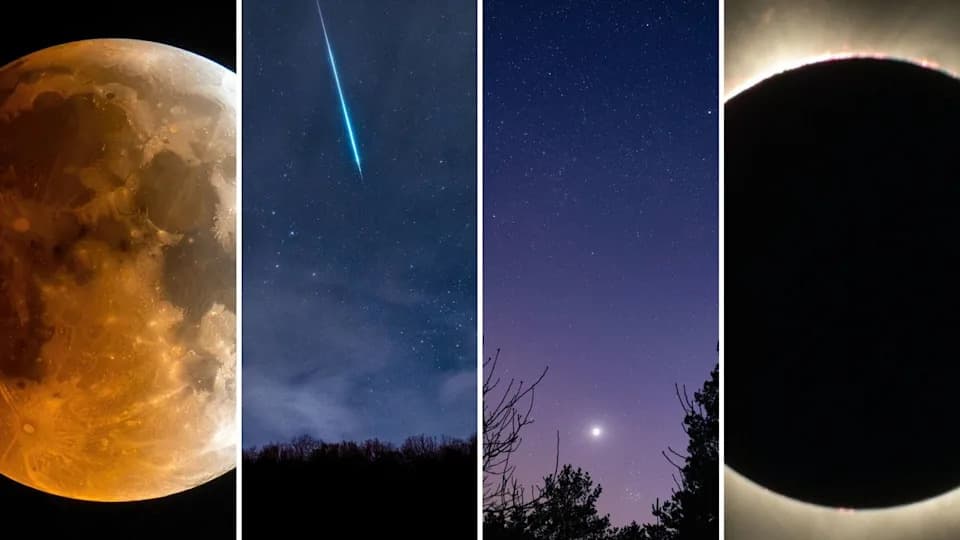
A total lunar eclipse on March 3 will turn the Moon reddish and be visible across the U.S. West Coast, Australia and much of Asia. Observers in San Francisco, Los Angeles and Seattle can expect totality at 3:33 a.m. EST (12:33 a.m. PST), with totality lasting just under an hour. Partial phases continue for several hours and end around 5:17 a.m. PST. Lunar eclipses are safe to view with the naked eye; binoculars or a small telescope will enhance the view.
Total Lunar Eclipse Will Turn the Moon Blood-Red Across U.S. West Coast, Australia and Asia on March 3
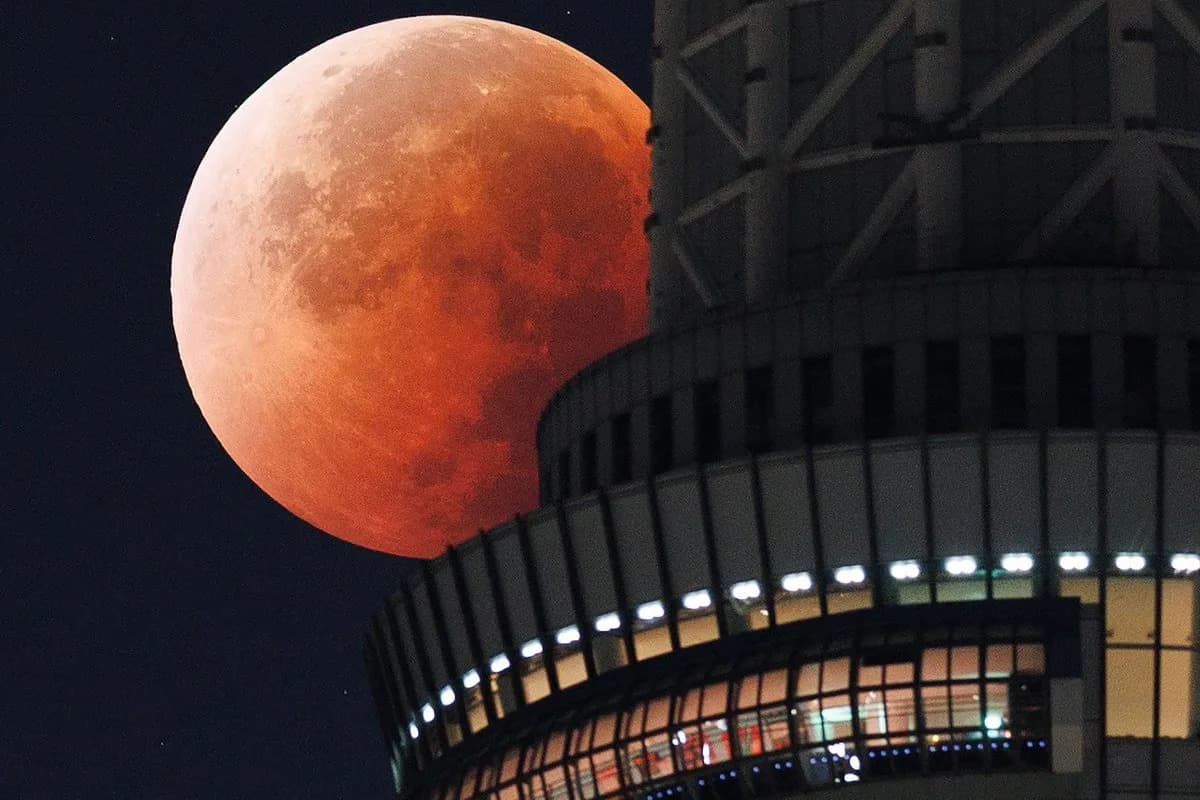
A total lunar eclipse will turn the moon a bloody red next month. This is why
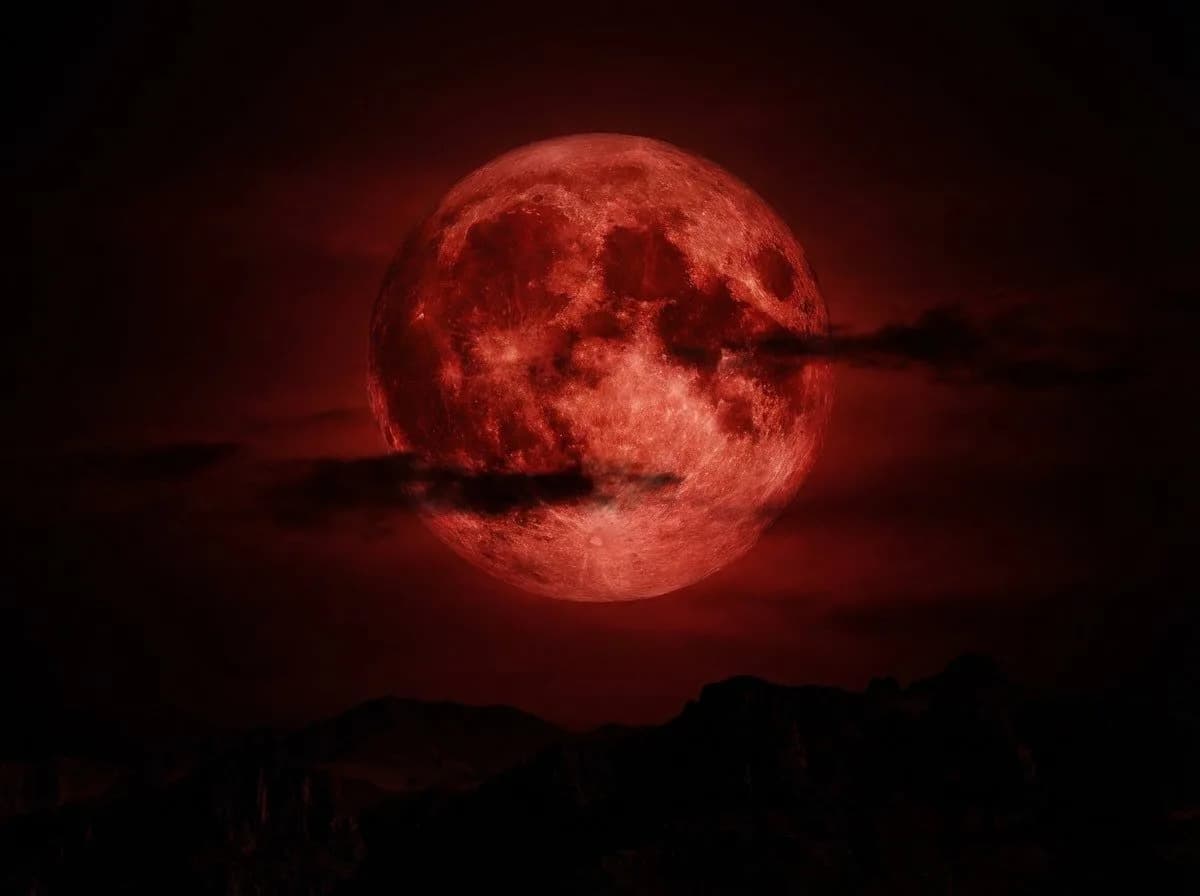
A blood-red “blood moon” will drift across skies over the United States West Coast, Australia and much of Asia on March 3, when a total lunar eclipse casts the Moon into Earth’s deepest shadow.
NASA says the dramatic coloration is caused by sunlight filtering through Earth’s atmosphere as the Moon passes through the planet’s umbra — the darker of Earth’s two shadows. Shorter blue wavelengths scatter out, while red and orange wavelengths are refracted into the shadow and illuminate the Moon with coppery tones.
Where and when to watch
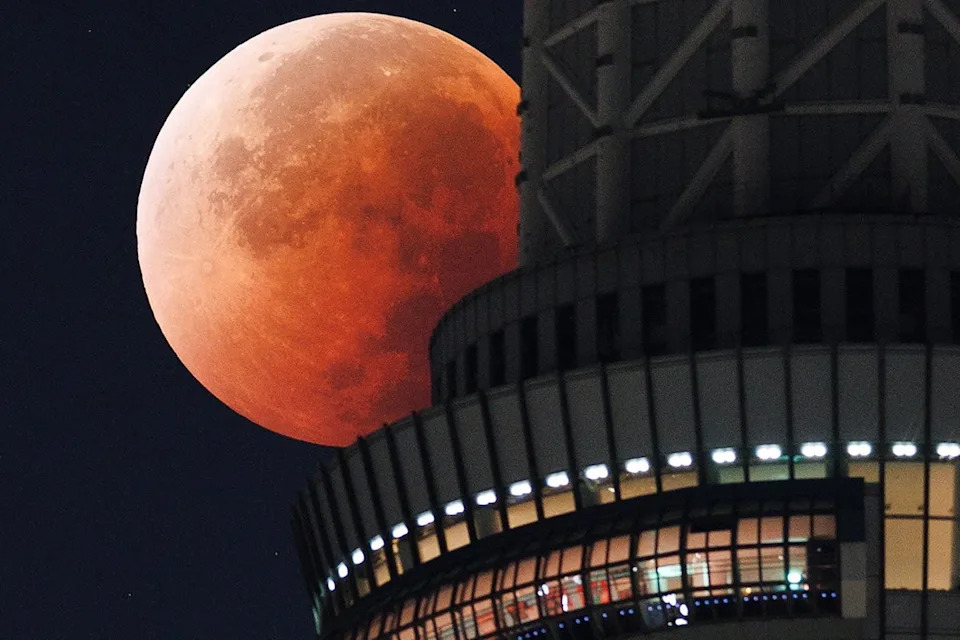
The blood moon emerges over Tokyo, Japan, last September. Another will grace the skies over Asia and the U.S. in March (JIJI Press/AFP via Getty Images)
The best views in the United States will be along the West Coast in the early morning hours. Observers in San Francisco, Los Angeles and Seattle are expected to see totality — when the Moon is completely inside Earth’s umbra — at 3:33 a.m. Eastern Standard Time (12:33 a.m. Pacific Standard Time).
Totality will last just under an hour. The partial phases of the eclipse will extend for several hours and are expected to continue until about 5:17 a.m. PST (8:17 a.m. EST).
Viewing tips
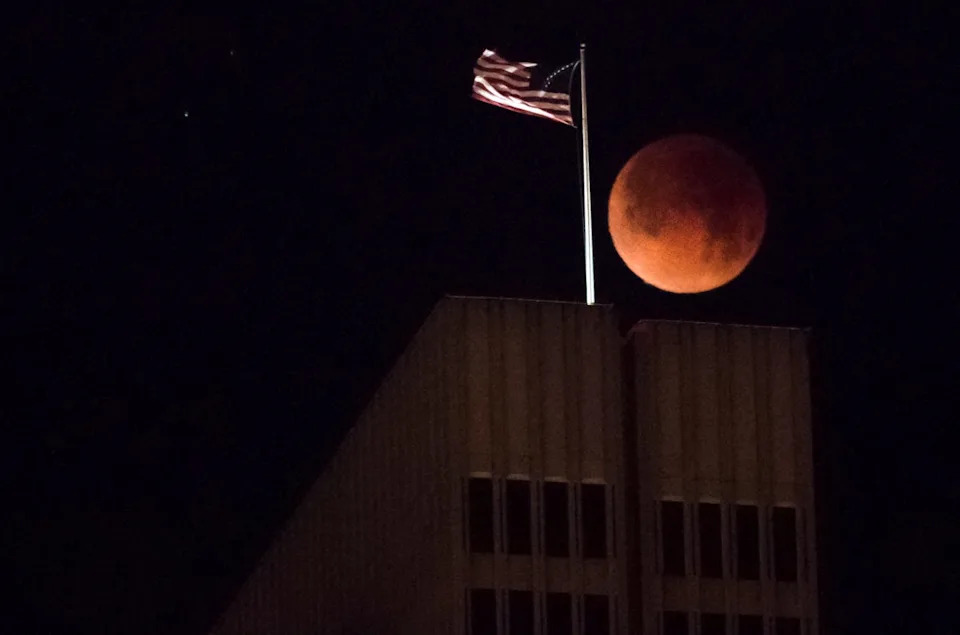
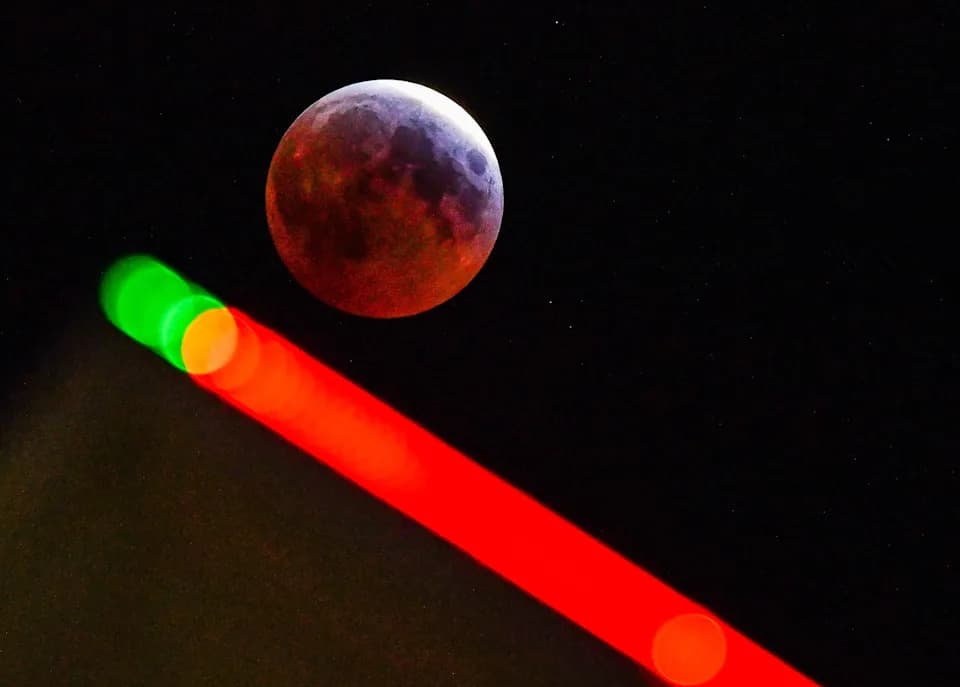
A blood moon is seen over a building in San Francisco, California, in January 2018 (AFP via Getty Images)
Unlike solar eclipses, lunar eclipses are safe to watch with the naked eye and do not require special filters. A pair of binoculars or a small telescope will enhance surface detail, but they are not necessary. For the best experience, find a dark location away from bright lights and allow your eyes a few minutes to adjust to the darkness.
What to expect
During totality the Moon will take on a range of reddish hues — sometimes described as copper, rust, or “blood” red — depending on atmospheric conditions on Earth (for example, dust or aerosols can deepen the color).
Future eclipses
The next total lunar eclipse after this event is slated for December 21, 2028. A partial lunar eclipse — when the Moon only crosses part of Earth’s umbra and is never fully obscured — is scheduled for August 28 of the same general timeframe.
Help us improve.