Archaeologists in County Wicklow have identified the Brusselstown Ring within the Baltinglass hillfort cluster as a candidate for the largest clustered prehistoric settlement found in Britain and Ireland, with airborne surveys indicating over 600 suspected house platforms. Targeted excavations date occupation to the Late Bronze Age and Early Iron Age (c. 1193–410 BC) and tested variations in house size for social differentiation. The team also uncovered a possible Bronze/Iron Age water cistern and calls for further research to confirm the settlement's scale, function and regional significance.
Researchers Uncover Possible Largest Clustered Prehistoric Village in Britain and Ireland
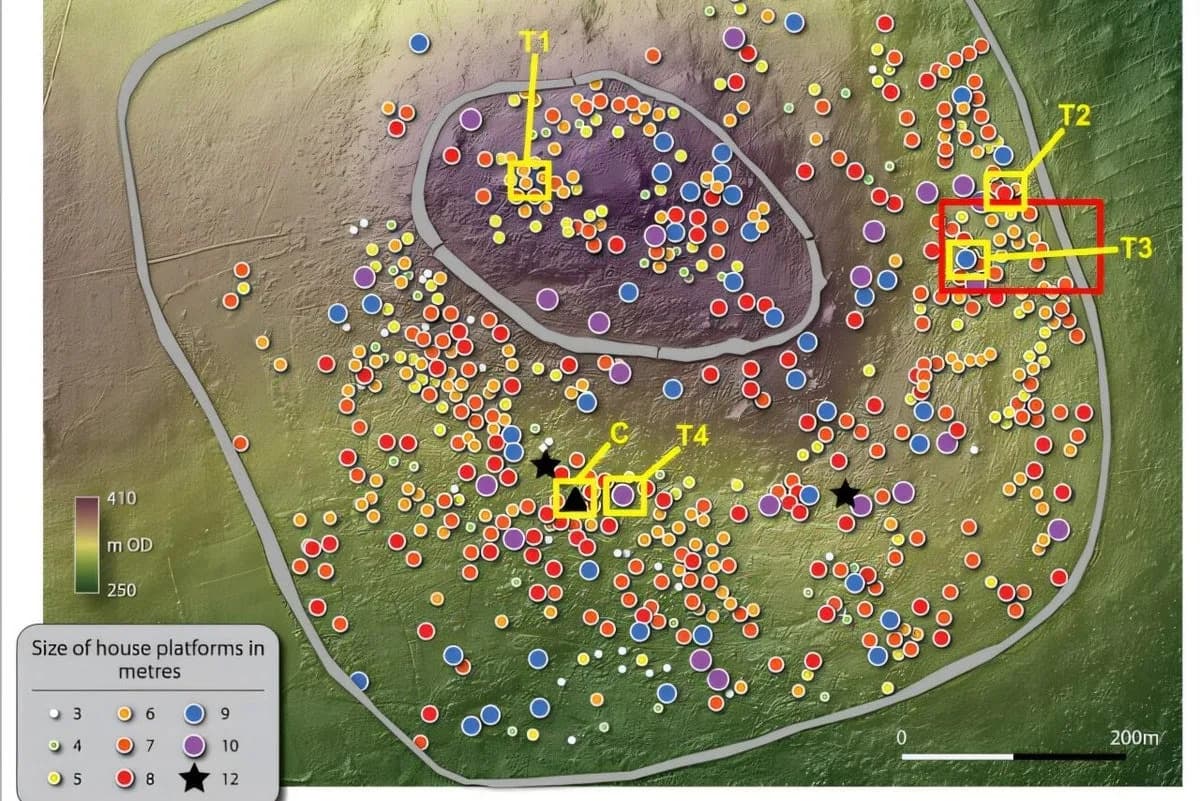
Largest clustered village in all of prehistoric Britain and Ireland unearthed
Archaeologists working in County Wicklow, Ireland, have identified what may be the largest clustered prehistoric settlement recorded in Britain and Ireland, centred on the Baltinglass hillfort cluster and the distinctive Brusselstown Ring.
Discovery and Setting
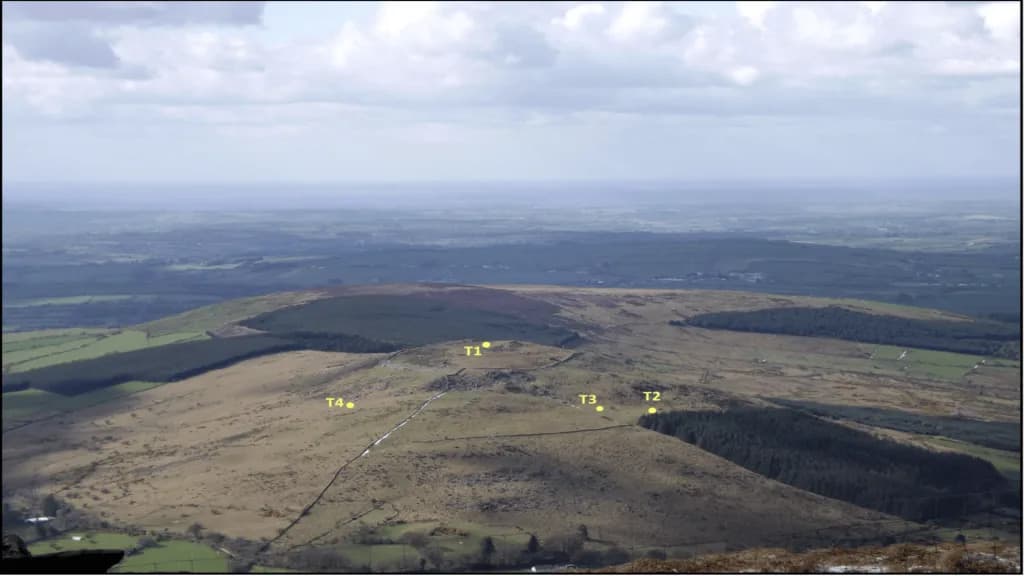
Airborne surveys and targeted excavations reveal a dense complex of suspected house platforms on a necklace of hilltop enclosures along the south‑western edge of the Wicklow Mountains. The Baltinglass cluster contains up to 13 large hilltop enclosures, including at least seven major hillforts and several smaller enclosures. Within this network, the Brusselstown Ring—an enclosure defined by two widely spaced ramparts—stands out for its exceptionally high number of suspected dwelling platforms.
The Brusselstown Ring: Size and Layout
Survey data indicate more than 600 suspected house platforms at the Brusselstown Ring: 98 within the inner enclosure and about 509 between the inner and outer enclosing elements. If confirmed, this would make Brusselstown the largest clustered hillfort settlement yet recorded in prehistoric Ireland and Britain, far larger than the previously noted Mullaghfarna mound in County Sligo, which had been associated with roughly 150 house platforms in earlier phases.
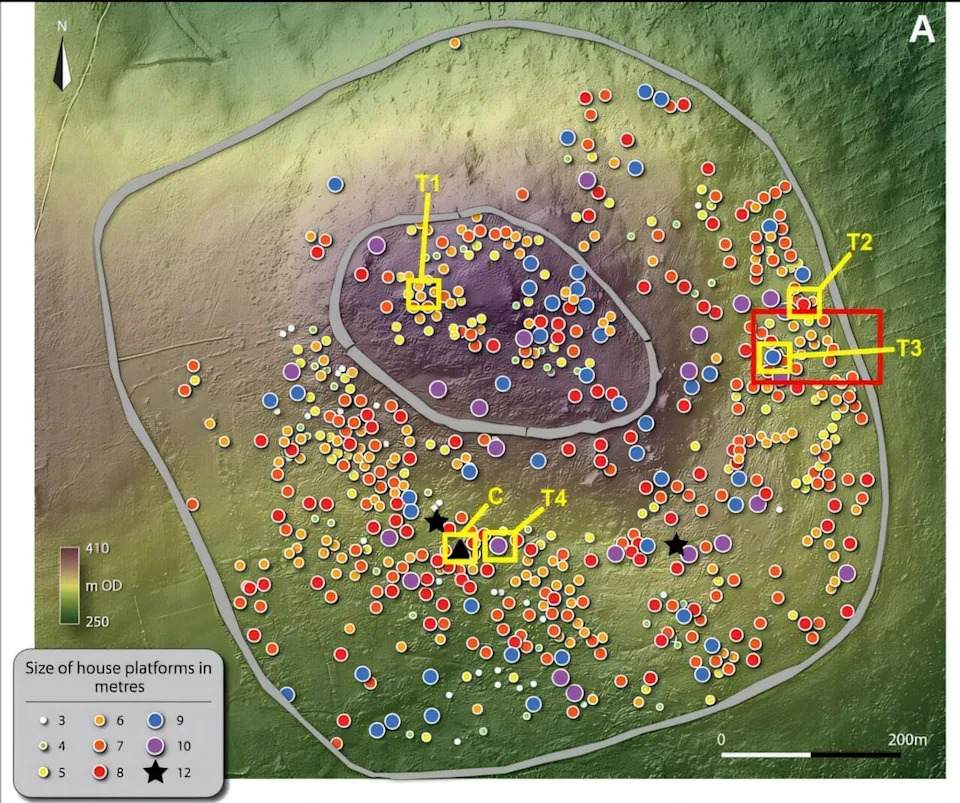
Map of Brusselstown Ring showing locations of what may be roundhouse footprints, test trenches and the possible water cistern (Antiquity (2025))
Dating, Excavations and Social Implications
Excavation trenches were opened on house platforms of varying diameters (6 m, 7 m, 8 m and 12 m) to test whether house size correlated with evidence for social differentiation. Radiocarbon and contextual dating place the settlement firmly in the Late Bronze Age and Early Iron Age, with modeled ranges cited at roughly 1193–410 BC. Researchers note that a nucleated, high‑density settlement like this appears to have emerged at hilltop locations in Ireland around 1200 BC, suggesting processes of local centralization or proto‑urbanization in northern Europe earlier than previously thought.
Possible Water Cistern
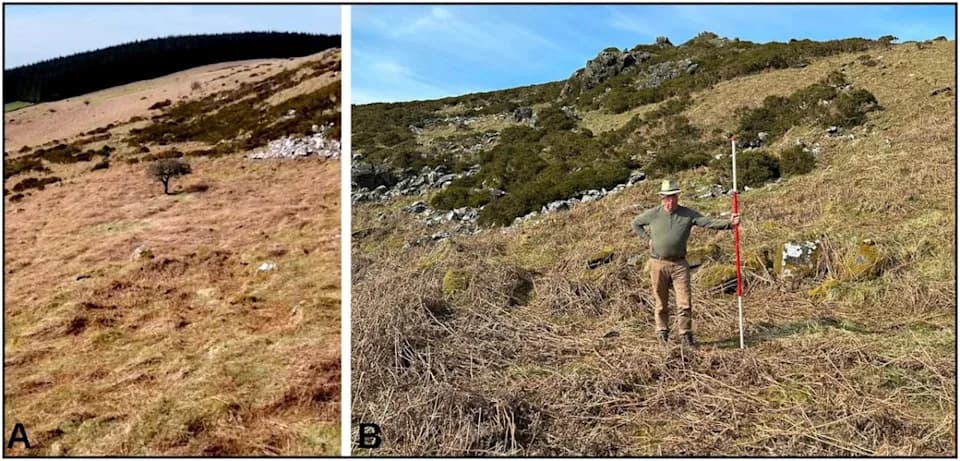
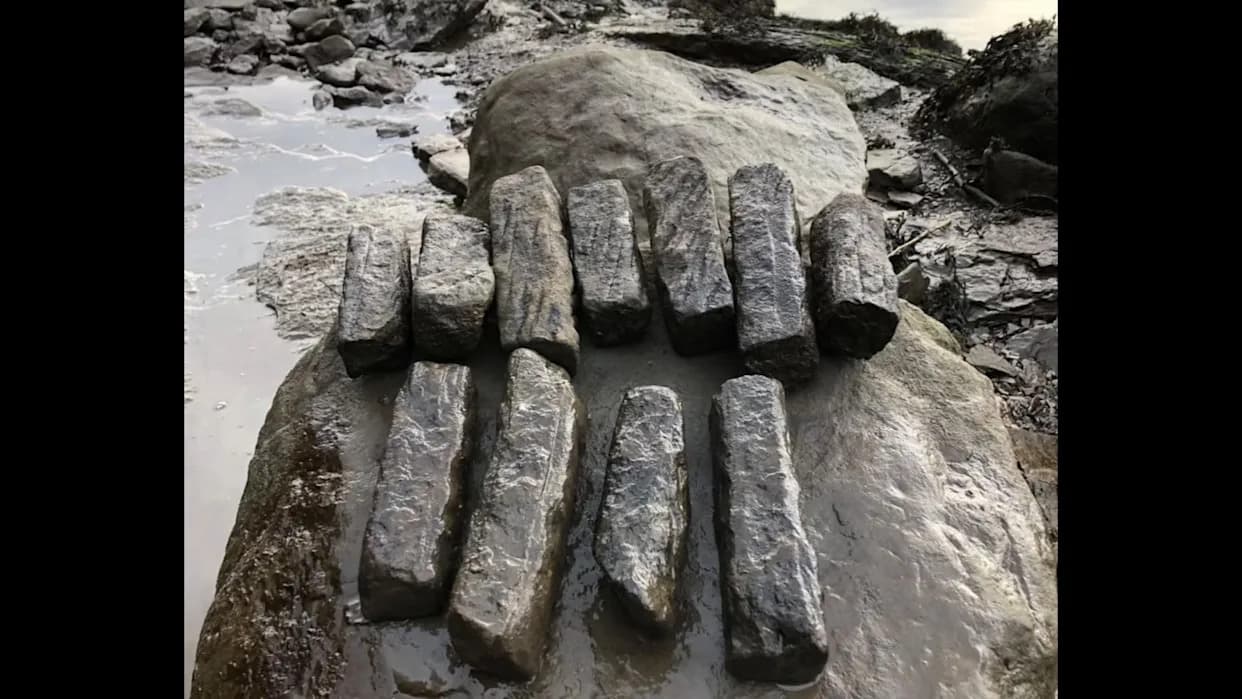
Archaeologists also exposed an unusual stone‑lined feature near one trench: a flat, stone‑bounded interior that earlier surveys suggested may have been fed by a stream. The team proposes this could be a Bronze/Iron Age water cistern—potentially the first identified in an Irish hillfort—but they emphasize that further investigation is needed to confirm its function and date.
Regional Trajectory and Next Steps
The site's sequence appears to mirror that of smaller nucleated hilltop settlements in Ireland, with evidence pointing toward gradual decline and eventual abandonment around the third century BC. Researchers report no clear link between the site's decline and the climatic shift toward cooler, wetter conditions around 750 BC, but they call for more extensive excavation, environmental sampling and landscape survey to clarify patterns of occupation, economy and organization across the Baltinglass cluster.
Note: While airborne survey and initial trenches provide compelling evidence of a very large nucleated settlement, many of the house platforms remain unexcavated. Continued fieldwork is required to confirm counts, functions and dates.
Help us improve.