Durham University archaeologists excavated a River Wear site near Newcastle in 2025 and recovered more than 800 whetstones — the largest such deposit recorded in northwest Europe. OSL dating places the tools at about 104–238 CE, with underlying soils dated 42–184 CE, matching Roman occupation. A sandstone source across the river and 11 stone anchors indicate quarrying and river transport tied to military supply. The site also produced later artifacts ranging from Tudor finds to English Civil War cannonballs.
Over 800 Roman Whetstones Unearthed on the River Wear — Largest Find of Its Kind in Northwest Europe
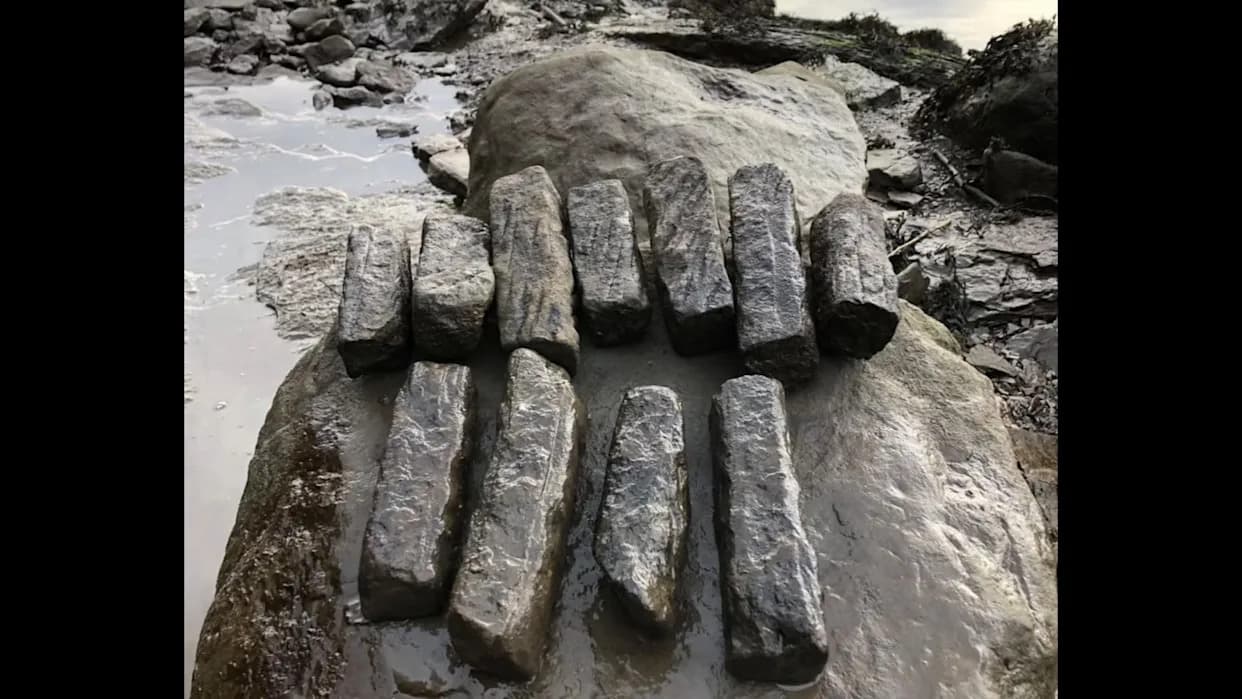
The tools were dated using Optically Stimulated Luminescence testing.
Archaeologists from Durham University have uncovered more than 800 Roman-era whetstones during a six-month excavation on the banks of the River Wear near Newcastle in 2025. This is the largest concentration of whetstones recorded in northwest Europe and sheds new light on the region’s role supplying the Roman military.
What Was Found
The team recovered over 800 whetstones (traditional sharpening stones for blades and weapons) plus five stone anchors at the main site. Together with six anchors uncovered at a neighboring site in 2022, the total tally of anchors now points to substantial river traffic — likely used to move quarried stone across the Wear.
Dating The Site
Archaeologists applied Optically Stimulated Luminescence (OSL) to date both the sediments and the tools. OSL measures the tiny amounts of energy minerals store from sunlight and, when stimulated in a lab, reveals how long an object has been buried. Sediment beneath the whetstones gave dates of roughly 42–184 CE, while samples taken from the stones themselves dated to about 104–238 CE — consistent with Roman occupation of Britain.
Why So Many Whetstones?
All of the whetstones showed some form of breakage or damage. The working interpretation is that craftsmen discarded pieces that failed to meet strict military specifications. According to Durham University, the Roman army “was particular about the uniformity of its equipment,” which would explain why imperfect tools were thrown away in large numbers at this spot.
Evidence Of Quarrying And Transport
Across the river, researchers identified a sandstone formation likely exploited as a source for the whetstones. The combination of a nearby sandstone outcrop and the anchors suggests a local production-and-transport system: quarried sandstone was shaped into whetstones and ferried across the Wear by boat.
Multi-Period Use Of The Site
The site contains deposits from multiple eras. In addition to Roman-era material, excavators also uncovered a stone and a wooden jetty, chisels, a Tudor-era leather shoe, and cannonballs and shot dating to the English Civil Wars (1642–1651), showing the location’s long-term importance for riverside activity and transport.
Significance: The discovery illuminates a previously underappreciated regional industrial network that supplied standardized equipment to the Roman military and highlights the River Wear’s role as a transport artery over many centuries.
Help us improve.