Researchers tested whether people across cultures share intuitions about the value of different body parts and whether those intuitions align with legal compensations. In a study of 614 participants from the U.S. and India, lay judgments about losses (for example, an eye, a finger, a tooth) closely matched relative values found in ancient and modern codes such as the Code of Ur‑Nammu and the Law of Æthelberht. The results suggest common human perceptions of bodily function may underlie laws about bodily harm, while acknowledging context—occupation, environment and culture—can shift priorities.
An Eye for an Eye: Why Humans Across Cultures Agree on the Value of Body Parts

These values seem due more to shared intuitions than local customs or social practices.arturbo/E+ via Getty Images
The biblical lex talionis — “eye for eye, tooth for tooth, hand for hand, foot for foot” (Exodus 21:24–27) — has long shaped ideas about fairness after bodily harm. Scholars across linguistics, history, archaeology and anthropology have documented how societies rank the importance of different body parts. But do people everywhere and across time share the same intuitions about those values?
Our recent study tested whether common-sense intuitions about the functional importance of body parts align with legal compensations found in ancient and modern codes. We compared judgments from laypeople in two countries with documented valuations in legal traditions spanning millennia.
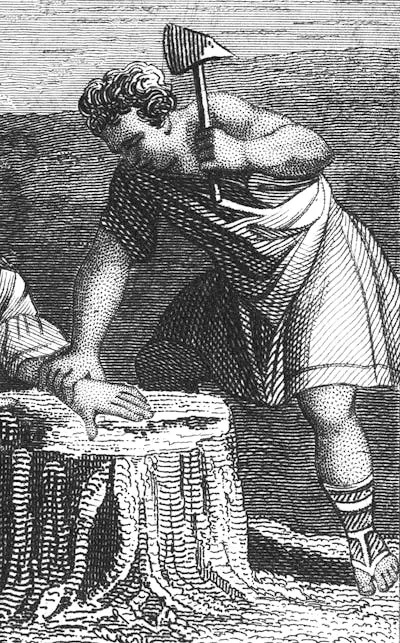
‘Hand for hand’ is one embodiment of fair retribution.mikroman6/Moment via Getty Images
How the Study Worked
We recruited 614 participants from the United States and India, excluding anyone with professional medical or legal training to focus on untutored, everyday intuitions. Participants read prompts describing specific body parts (for example, “one arm,” “one eye,” “the nose,” “one molar tooth”) and answered one of three questions: how difficult daily life would be after losing the part, how much compensation a lawmaker should assign for that loss, or how angry someone would feel if another person damaged that part.
We chose the body parts because they appear in five legal sources we analyzed: the Law of Æthelberht (Kent, c. 600 CE), the Guta lag (Gotland, 1220 CE), the Code of Ur‑Nammu (ancient Nippur, c. 4,100 years ago), and modern workers’ compensation statutes from the United States, South Korea and the United Arab Emirates.

Key Findings
Valuations by laypeople correlated strongly with those implied by ancient and modern legal codes. Parts rated as more important by American participants tended to be rated similarly by Indian participants and were generally consistent with the relative compensations in the legal sources. For instance, both laypeople and lawmakers typically regard an index finger as more valuable than a ring finger, and an eye as more valuable than an ear.
Several patterns suggest these shared intuitions reflect functional reality. Participants and legal codes treated losing multiple units as worse than losing a single unit (losing two fingers is worse than one) and treated losing a component as less severe than losing the whole (a thumb is less serious than an entire hand, which is in turn less serious than an arm). Ancient laws also distinguished injuries likely to cause permanent disability from those likely to heal, indicating sensitivity to long-term functional effects.
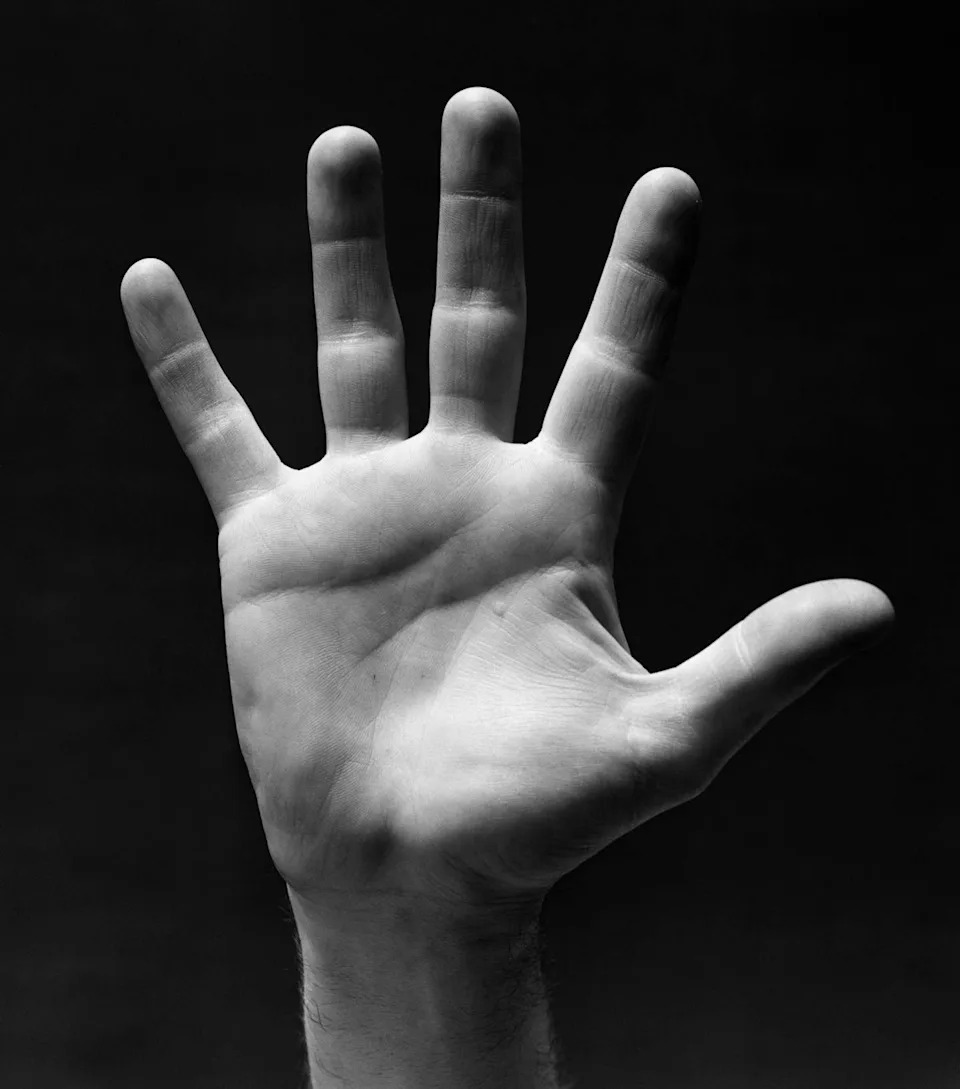
People’s evaluations are precise: They even agree on the relative value of each finger.H. Armstrong Roberts/ClassicStock via Getty Images
Why This Matters
Compensation systems (from wergild to modern workers’ comp) balance fairness and social stability: undercompensation invites grievance, overcompensation risks conflict. Shared, intuitive rankings of body-part value help communities converge on “just enough” remedies. Our findings suggest that, despite cultural differences in many moral domains, valuations of bodily damage may spring from common human intuitions about bodily function.
Limitations and Open Questions
Context matters. Occupational roles, local ecology and cultural practices can shift priorities — a hunter’s reliance on sight differs from a shaman’s, and in violent societies upper-body strength may be particularly valued. Our sample covered two contemporary countries and excluded trained professionals; future research should extend to more cultures, historical data and occupational groups to test boundary conditions.
Conclusion
Across centuries and continents, ordinary people’s intuitions about the relative value of body parts appear to track legal practices for compensating injury. These convergent patterns point to a degree of universality in how humans appraise bodily function — a practical foundation for laws that seek to repair harm and preserve social peace.
Authors and Source: This summary is adapted from work by Yunsuh Nike Wee (Oklahoma State University), Daniel Sznycer (Oklahoma State University) and Jaimie Arona Krems (UCLA), originally published via The Conversation. The authors report no conflicts of interest affecting the research beyond their academic appointments.
Help us improve.