Iraq’s new parliament convened under a cloud of uncertainty after the Federal Supreme Court weakened Prime Minister Mohammed Shia al‑Sudani by placing his cabinet in caretaker status. Al‑Sudani’s RDC won roughly 46 of 329 seats but he has been compelled back into the Shia Coordination Framework (SCF), which controls about 180 MPs, including 80–90 aligned with pro‑Iran armed factions. Those gains by sanctioned militia‑linked figures complicate government formation and risk straining relations with the US, EU and Gulf states, while Iran’s diminished regional influence may limit its ability to broker a Shia consensus.
Who Really Won Iraq’s Elections? The Rise Of Armed Factions And A Fragile Government Outlook
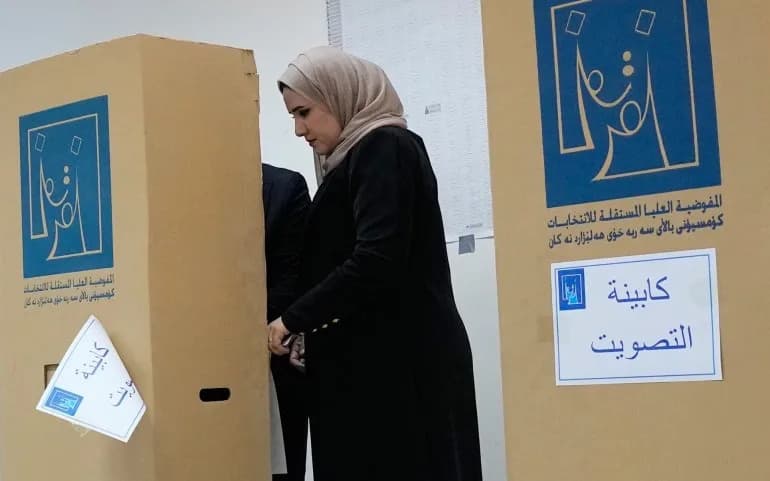
An Iraqi woman votes in the parliamentary election at a polling centre in Baghdad, Iraq, on November 11, 2025 [Hadi Mizban/AP Photo]
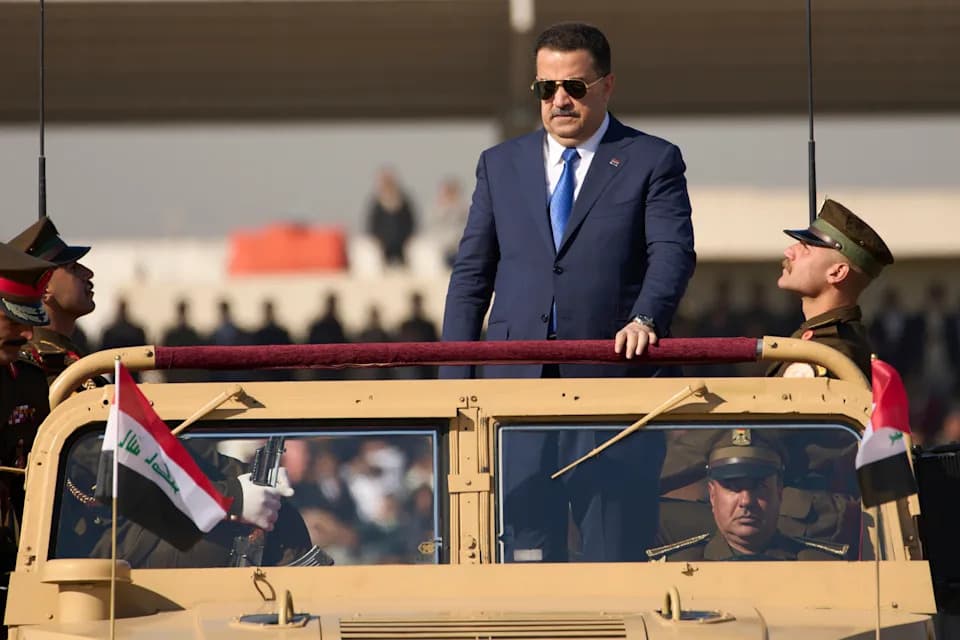
Baghdad — Iraq’s newly elected parliament met for its first session amid uncertainty over who will form the next government and who will lead it. The central question is whether incumbent Prime Minister Mohammed Shia al‑Sudani, whose powers were curtailed by the Federal Supreme Court (FSC) in November and whose cabinet now serves in a caretaker capacity, can retain or rebuild a governing majority.
Political Stakes And Electoral Math
Al‑Sudani’s Reconstruction and Development Coalition (RDC) won an estimated 46 of 329 seats after the election, a respectable showing but not a governing majority. The FSC ruling, however, forced him back under the umbrella of the Shia Coordination Framework (SCF) — the alliance that originally nominated him — eroding the leverage his independent list had delivered.
The SCF now controls roughly 180 parliamentary seats. Of those, about 80–90 are aligned with pro‑Iran armed factions, up sharply from roughly 17 seats in 2021. That shift reshapes the balance within the Shia bloc and complicates the choice of prime minister.
Armed Factions And International Pressure
Several of the most prominent new parliamentary actors have ties to armed groups and are already subject to US sanctions. Notable figures include Popular Mobilisation Forces (PMF) chief Faleh al‑Fayyad, Labour Minister Ahmed al‑Asadi (also linked to the Jund al‑Imam brigades), Asaib Ahl al‑Haq leader Qais al‑Khazali, and Khadamat leader Shibl al‑Zaidi. Their increased parliamentary presence raises concerns in Washington, Brussels, Gulf capitals and London.
US policy has long practised de facto "non‑engagement" with senior officials from sanctioned armed factions while maintaining normal relations with other government members. Senior Iraqi officials say the United States has warned that it will not accept individuals tied to these groups occupying government posts. How Washington responds — whether with targeted sanctions or broader measures that could affect institutions such as the State Oil Marketing Organisation (SOMO) or Iraq's access to US Federal Reserve facilities — will depend on the final composition of the cabinet.
Formation Process And Constitutional Timetable
When parliament convened, members were sworn in and prepared to elect a speaker (customarily a Sunni by the muhasasa sectarian allocation), followed by the presidency (customarily Kurdish). The president then nominates the candidate put forward by the largest Shia bloc to become prime minister. Supreme Judicial Council President Faiq Zaidan urged politicians to respect the constitutionally mandated 90‑day timetable for forming a government, and the FSC ratified results unusually quickly. Still, history suggests extended negotiations are likely — in 2021 government formation took more than 300 days.
Regional Dynamics And Iran’s Role
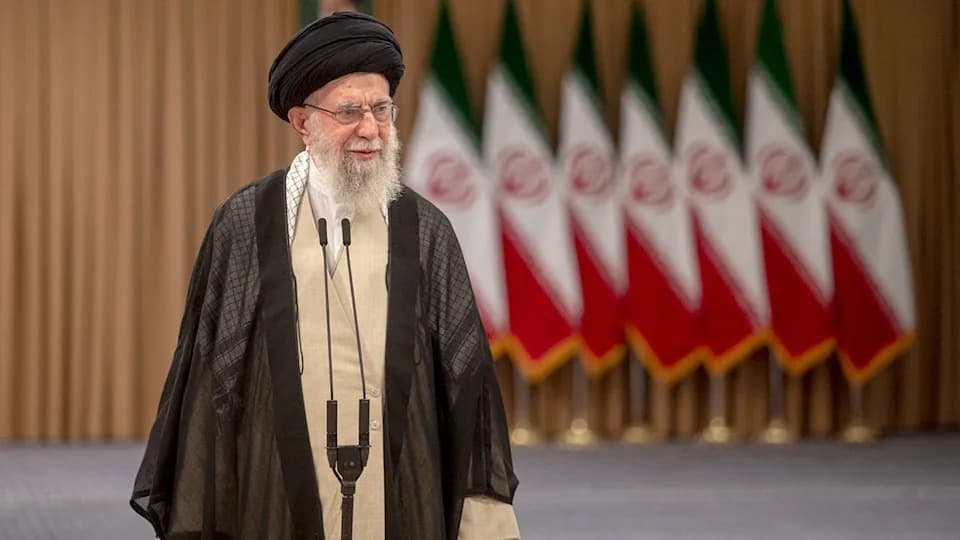
Traditionally, Tehran has played a decisive role in brokering consensus among competing Shia parties over the premiership. But Iran’s regional capacity to exert the same influence appears diminished amid economic strain from sanctions, the degradation of some proxy capabilities, and pressure from Israeli and US strikes. That weakening may limit Iran’s ability to steer outcomes in Baghdad this cycle.
What Comes Next
The key questions now are whether the SCF will back al‑Sudani or nominate another Shia candidate, how the alliance will accommodate the emergence of powerful armed‑faction deputies, and how external powers — particularly the United States and Gulf states — will react if those groups take formal government roles. Negotiations over cabinet posts, the premiership and the role of armed groups in state institutions will determine Iraq’s near‑term domestic stability and international relationships.
Bottom line: The election reshuffled Iraq’s parliamentary map, elevating armed factions inside the formal politics and forcing traditional powerbrokers to reconcile internal splits while managing intense international scrutiny.
Help us improve.