Caretaker Prime Minister Mohammed Shia al‑Sudani has agreed to step aside to allow former premier Nouri al‑Maliki to seek formation of Iraq’s next government after the Coordination Framework failed to endorse a single candidate. The incoming administration will face major economic and political hurdles, foremost among them the future of the Popular Mobilization Forces, which retain autonomy despite 2016 efforts to place them under military control. Meanwhile, Iraq’s judiciary, led by Judge Faiq Zidan, has pushed for "exclusive state control of weapons," drawing praise from some politicians and strong rejection from powerful pro‑Iran militias.
Caretaker PM Al-Sudani Steps Aside, Clearing Path for Rival Nouri al‑Maliki Amid Militia, Judicial Showdown
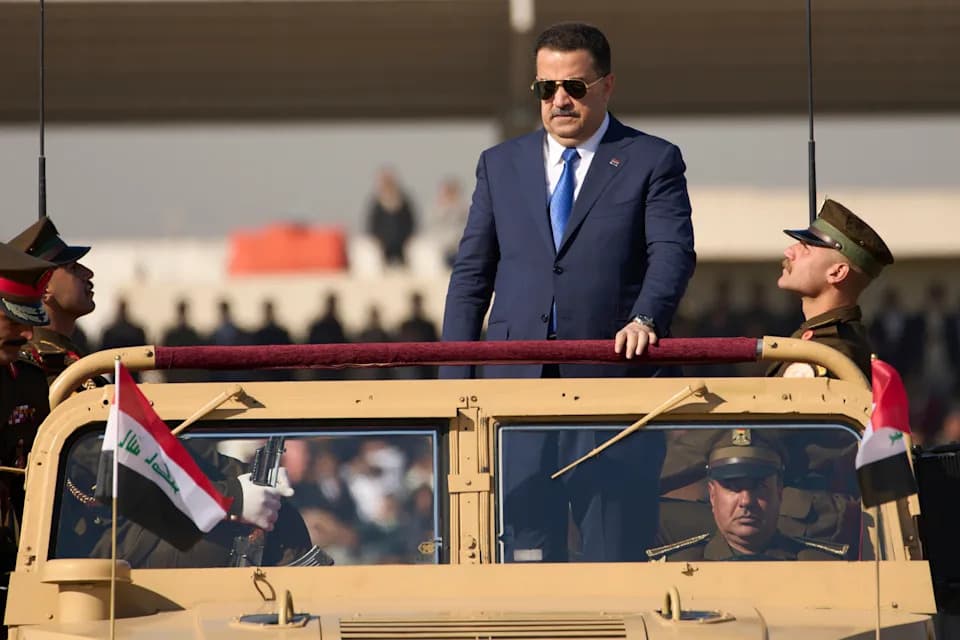
Iraqi Prime Minister Mohammed Shia al-Sudani, center, rides in a Humvee during the Army Day celebrations in Baghdad, Iraq, Tuesday, Jan. 6, 2026. (AP Photo/Hadi Mizban)(ASSOCIATED PRESS)
Iraq’s caretaker prime minister, Mohammed Shia al‑Sudani, whose Reconstruction and Development Coalition won the largest share of seats in November’s parliamentary elections, has agreed to withdraw and give rival former prime minister Nouri al‑Maliki room to pursue government formation, two Iraqi officials said Tuesday.
The officials — one a senior leader in al‑Sudani’s coalition and the other a government source — spoke on condition of anonymity because they were not authorized to discuss the matter publicly. Al‑Sudani’s office did not respond to requests for comment.
Al‑Sudani’s bloc captured 46 of the 329 seats in parliament; al‑Maliki’s coalition won 30. Both men had sought the backing of the Coordination Framework, a bloc of Iran‑aligned Shiite parties that helped bring al‑Sudani to power in 2022. The officials said the Framework could not settle on a single candidate and left the choice to the contenders themselves. Following a private meeting, al‑Sudani agreed to step aside in favor of al‑Maliki.
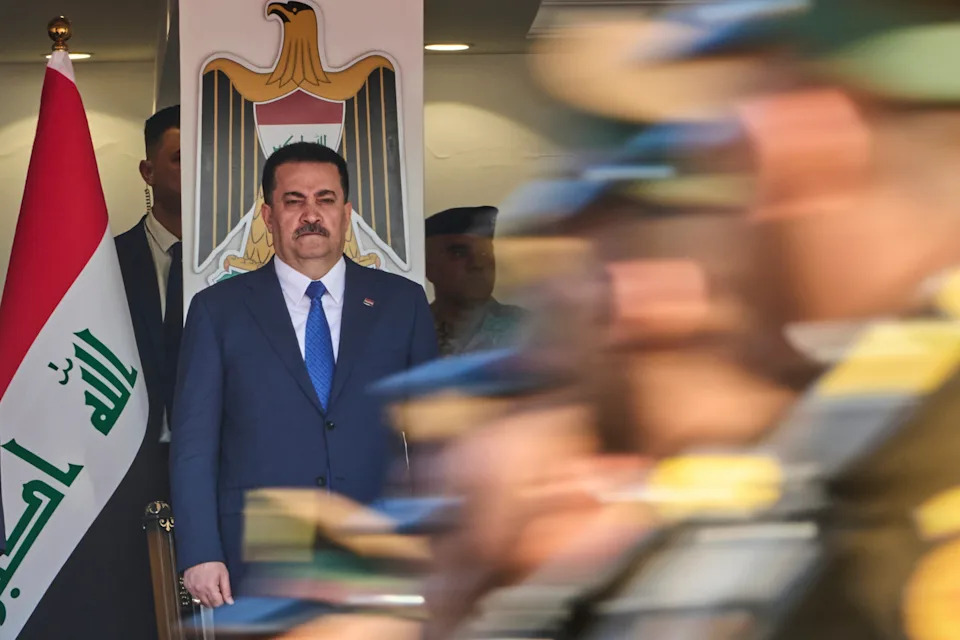
Iraqi Prime Minister Mohammed Shia al-Sudani attends the Army Day celebrations in Baghdad, Iraq, Tuesday, Jan. 6, 2026.(AP Photo/Hadi Mizban)(ASSOCIATED PRESS)
The move shifts the focus to delicate coalition bargaining and the formation of an incoming government that will confront severe economic and political challenges. Central among them is the future of Iraq’s armed groups — especially the Popular Mobilization Forces (PMF), a coalition of mostly Shiite militias that coalesced to fight the Islamic State more than a decade ago.
Although the PMF was formally placed under the Iraqi military’s authority in 2016, many of its units retain substantial autonomy and political influence. The United States has repeatedly urged Baghdad to curtail or disarm Iran‑backed factions — a difficult prospect given their entrenched role in Iraq’s security and politics.
Judiciary Joins the Debate Over Weapons
As politicians debate how to form a new government, Iraq’s judiciary has inserted itself into arguments over non‑state weapons and the role of militias.
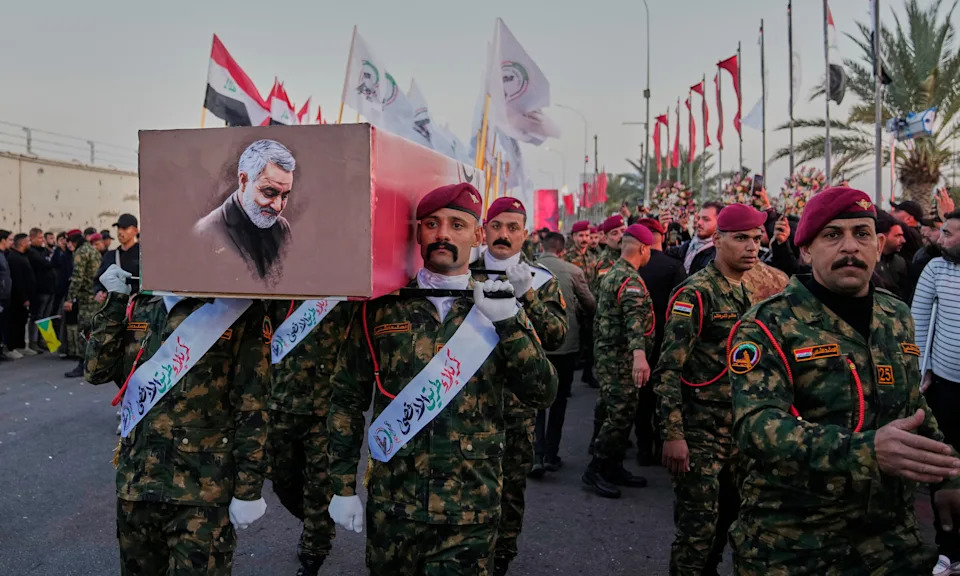
Members of the Popular Mobilization Forces mourners carry coffins during a symbolic funeral for Gen. Qassem Soleimani, who was killed in a U.S. drone strike in Baghdad, during a ceremony to mark the sixth anniversary of his death, in Baghdad, Iraq, Friday, Jan. 2, 2026. (AP Photo/Hadi Mizban)(ASSOCIATED PRESS)
In a speech earlier this month, Judge Faiq Zidan, head of Iraq’s Supreme Judicial Council, argued that "exclusive state control of weapons" is essential now that the threat from organized terrorism has diminished. He said a functioning state requires respect for the law, unified decision‑making and central control of arms.
"There is no longer a need for weapons outside the Iraqi state following the defeat of terrorism," Zidan said.
Some political actors welcomed Zidan’s comments as a step toward strengthening institutions and consolidating state authority. Powerful armed factions pushed back.
The Iraqi Resistance Coordination group — which includes militant formations such as Kataib Hezbollah, Kataib Sayyid al‑Shuhada and Asaib Ahl al‑Haq — issued a statement rejecting any discussion of its weapons. The group described its arsenal as "a guarantee to defend the country and its sacred sites" and said any talks must wait "until full sovereignty is achieved," rejecting what it called foreign interference.
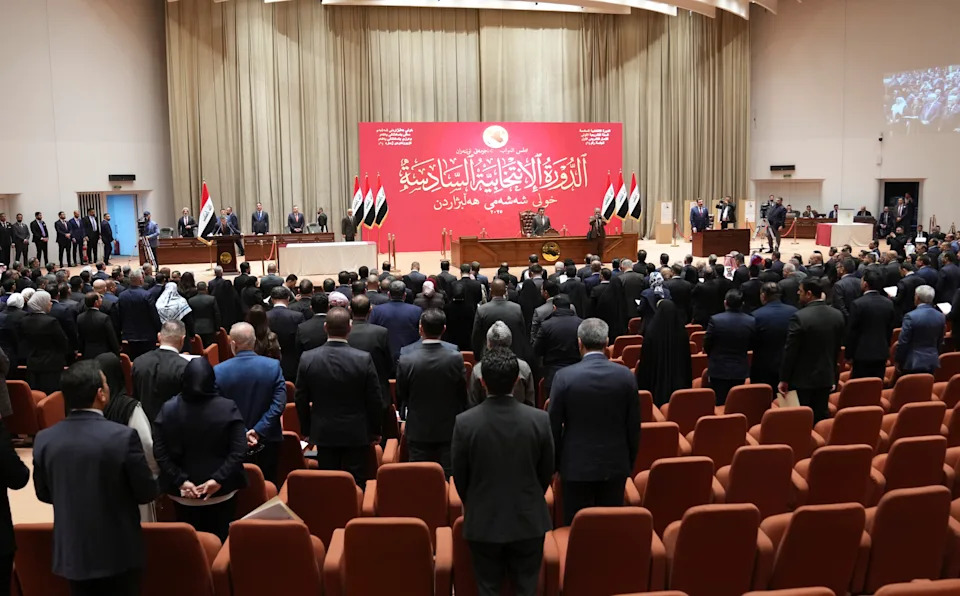
Newly elected lawmakers attend the first parliament session, in Baghdad, Iraq, Monday, Dec. 29, 2025. (Iraqi Parliament Media Office via AP)(ASSOCIATED PRESS)
A judicial official, speaking on condition of anonymity, said Zidan has "laid out a comprehensive legal framework for the disarmament process" and that the judiciary would provide legal cover and backing to an incoming government seeking to disarm recalcitrant factions. The judiciary has also taken a firmer stance on enforcing constitutional deadlines for naming the speaker of parliament and the president in the post‑election period.
Analyst Ihsan Al‑Shammari, a professor at the University of Baghdad, said the courts’ intervention represents one of the most assertive judicial moves since the 2003 establishment of Iraq’s current political system following the U.S.‑led invasion that toppled Saddam Hussein.
The coming weeks will test whether political elites, the judiciary and armed groups can find a path toward a stable, unified government — and whether Baghdad can reassert state control over security institutions without sparking renewed violence or political paralysis.
Help us improve.