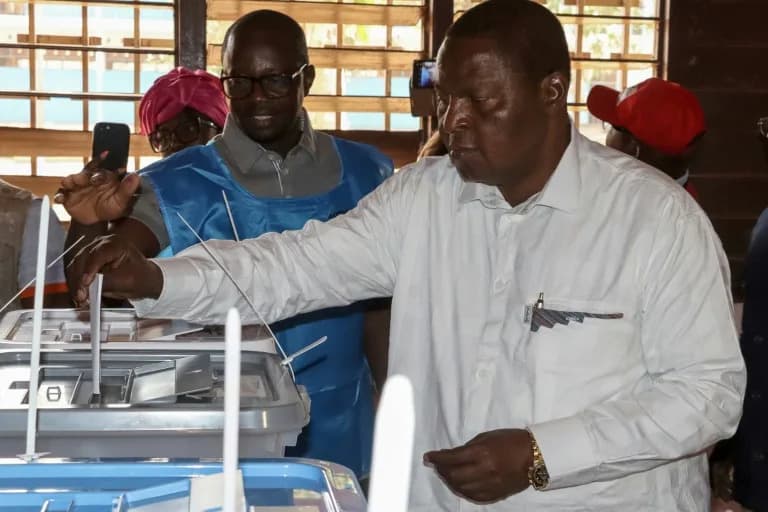
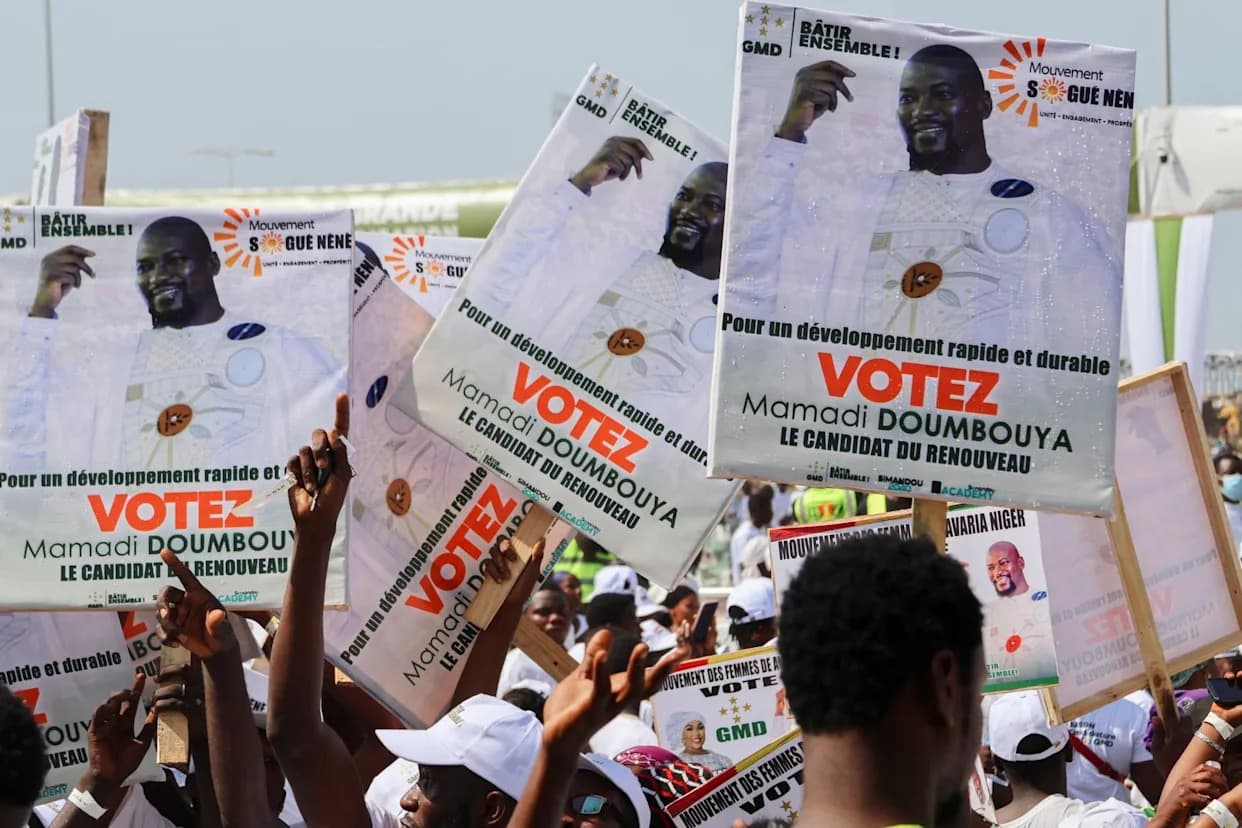
Provisional results from Benin’s January 11 legislative election show the ruling coalition has won all 109 seats in the National Assembly, with the Progressive Union for Renewal taking 60 seats and the Republican Bloc 49. A new electoral code requiring parties to obtain 20% of the national vote and 20% in each of 24 districts excluded the main opposition, The Democrats, which won about 16%. The outcome consolidates the presidential bloc ahead of the April presidential election and follows a foiled coup attempt in December.
Benin Election Shock: Ruling Coalition Wins All Parliamentary Seats, Main Opposition Excluded
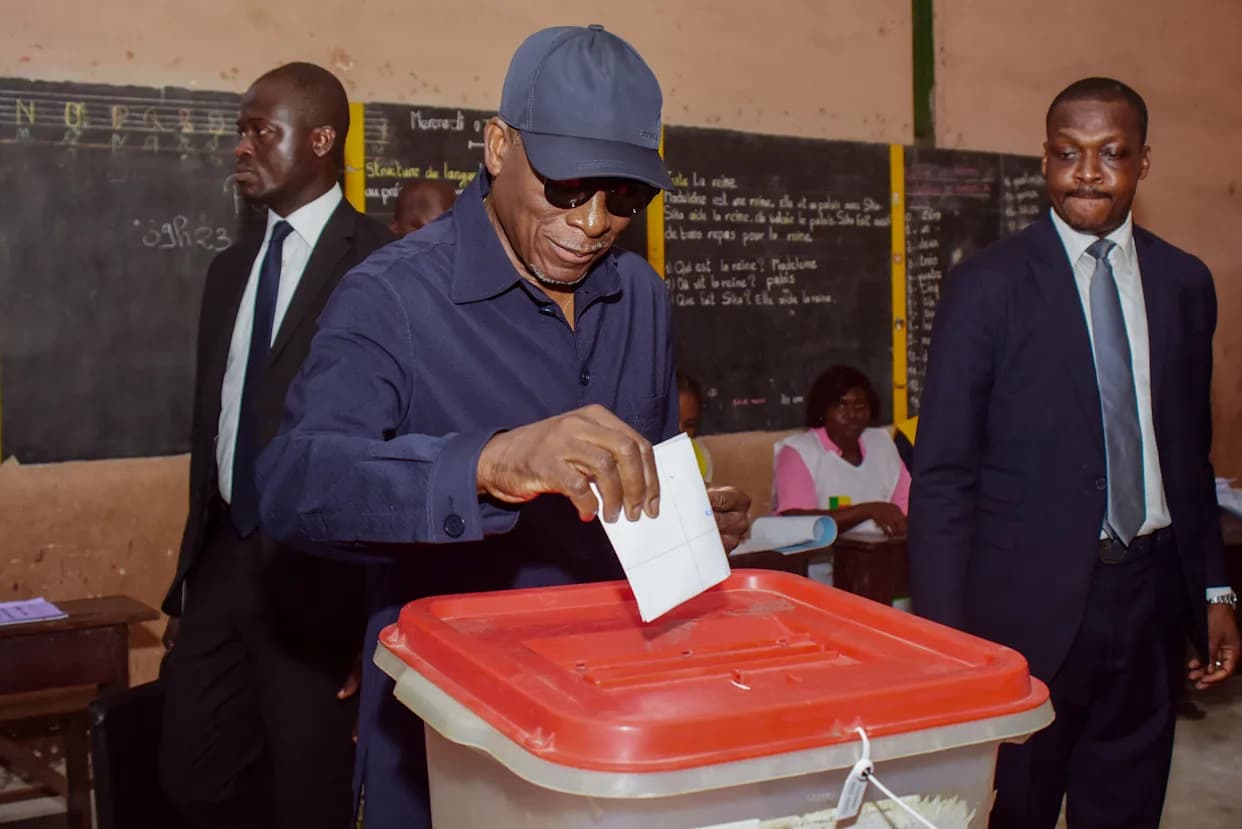
Benin President Patrice Talon votes at a polling station in Cotonou on January 11, 2026 [Charles Placide Tossou/Reuters]
Provisional results from the January 11 legislative vote show President Patrice Talon’s allied parties have won every seat in Benin’s National Assembly, leaving the main opposition without representation.
The electoral commission announced that of the five parties contesting the vote, only two — the Progressive Union for Renewal and the Republican Bloc, both aligned with President Talon — met the new, strict threshold for seat allocation.
The Progressive Union for Renewal will hold 60 seats and the Republican Bloc 49, giving the presidential bloc full control of the 109-seat assembly.
How The Threshold Worked
Under a recently adopted electoral code, a party must secure at least 20% of the national vote and 20% of the vote in each of Benin’s 24 electoral districts to qualify for seats. The main opposition party, The Democrats, won roughly 16% of the national vote and therefore failed to meet the threshold.
The Democrats also failed to collect the necessary number of signatures to register a presidential candidate, and the same registration requirement kept them out of municipal contests held alongside the legislative election.
“These results confirm the struggle that [The Democrats] party has been waging for about two years,” Guy Mitokpe, the party’s spokesperson, said. “We denounced this electoral code, saying that it heavily favoured parties aligned with the president. It’s an exclusionary electoral code.”
Political Context And Implications
The results strengthen the presidential bloc’s position ahead of the April presidential election. President Talon, 67, who has led Benin for a decade, is barred by term limits from seeking re-election. Finance Minister Romuald Wadagni — widely viewed as Talon’s handpicked successor — is expected to run and benefit from the bloc’s parliamentary dominance.
Voter turnout in the legislative election was 36.7%, roughly the same as the 37% turnout recorded in the 2023 legislative polls. The vote took place weeks after a brief but deadly coup attempt on December 7 that authorities say was foiled.
Separately, a constitutional reform approved in November extended the presidential term to seven years while setting a two-term limit, changes that add further uncertainty to Benin’s political landscape as the country heads into the presidential contest.
Help us improve.